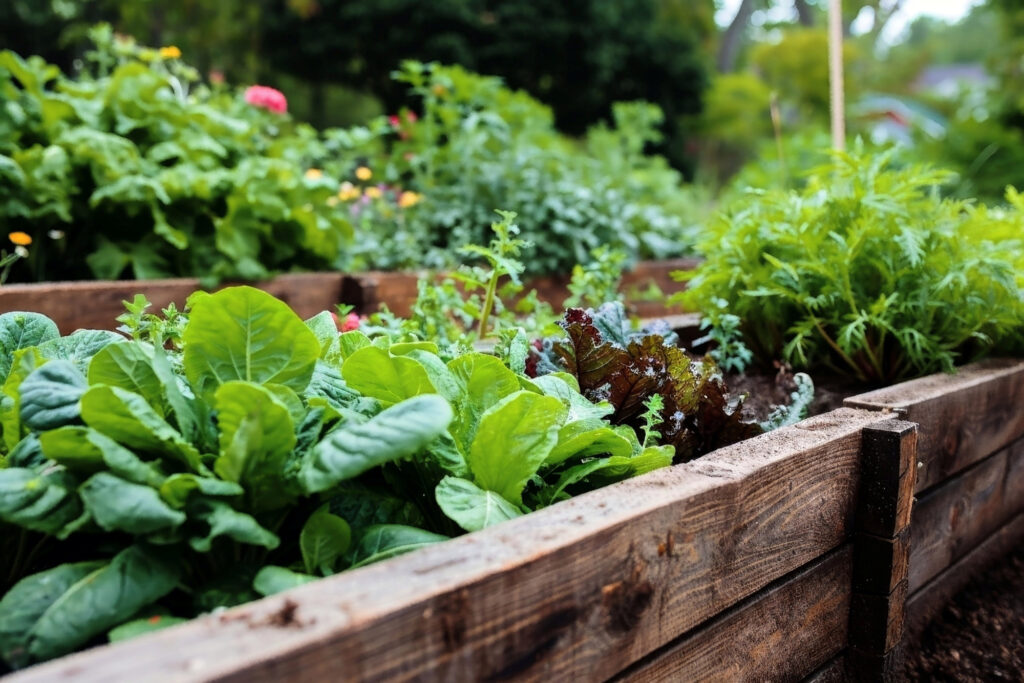
Raised bed gardening is one of the easiest ways to create an organized, productive growing space, especially when your existing soil is difficult to work with or you want more control over where and how you garden.
A raised bed is simply a defined growing area where the soil surface sits above the surrounding ground. Some raised beds are only a few inches high and have no permanent sides, while others are built from wood, metal, stone, brick, or other materials and may stand several feet above ground level.
Raised beds can be used for vegetables, herbs, strawberries, flowers, pollinator plants, and even small shrubs. They are particularly popular with vegetable gardeners because they make it easier to control soil quality, organize crops, keep pathways separate from growing areas, and reach plants without repeatedly walking on the soil.
You do not need an elaborate raised-bed system to get started. One carefully placed bed can teach you almost everything you need to know before expanding your garden.
🌱 What Is a Raised Garden Bed?
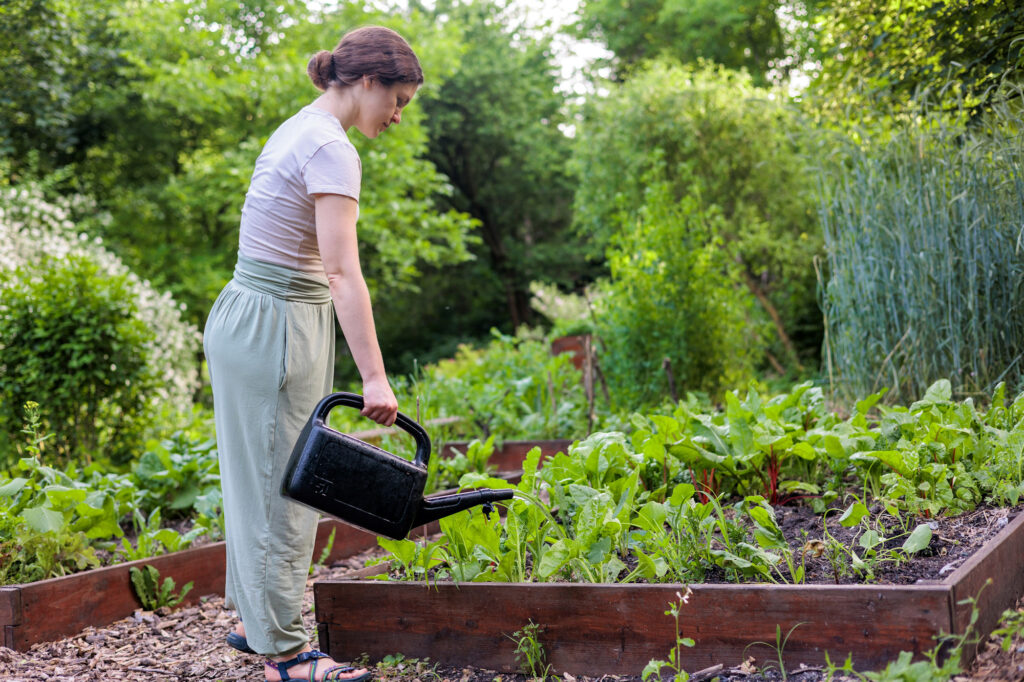
A raised garden bed is a growing area elevated above the surrounding ground.
At its simplest, a gardener can mound soil into a slightly elevated bed without using any frame at all. Framed beds use sides to hold the growing medium in place and can range from a few inches tall to waist height.
The major difference between a raised bed and an ordinary in-ground garden is that you normally do not walk on the growing area.
Instead, you work from surrounding paths.
Keeping feet out of the bed reduces soil compaction and allows the growing area to remain loose enough for roots, water, and air to move through it more easily.
Raised beds can also make it easier to separate garden soil from surrounding turf, organize crop rotations, install irrigation, and create accessible growing spaces.
🌿 Why Garden in Raised Beds?
Raised beds are popular because they solve several common gardening problems at once.
They can be particularly helpful when native soil is heavy, rocky, poorly drained, compacted, or otherwise difficult to cultivate. Because you control much of the material going into the bed, you can create a growing environment suited to vegetables and other garden plants without trying to completely transform the soil across an entire yard.
Raised beds also provide clearly defined boundaries.
Instead of wondering where a garden bed ends and the lawn begins, you have permanent growing spaces separated by pathways. This makes garden planning, mulching, watering, and weed management much more straightforward.
For gardeners who find kneeling or bending difficult, taller beds can also bring plants closer to a comfortable working height.
Raised beds are not automatically better than in-ground gardens, however. If you already have excellent garden soil, good drainage, and convenient growing space, an ordinary in-ground garden can be just as productive.
Think of raised beds as one useful gardening system rather than something every gardener must have.
☀️ Choose the Right Location First
Location matters much more than the appearance of the raised bed.
For most vegetables, choose a site that receives plenty of direct sunlight. Fruiting crops such as tomatoes, peppers, cucumbers, beans, and squash generally perform best with six or more hours of direct sunlight, and many appreciate considerably more.
Leafy greens and some root crops may tolerate somewhat less light.
Observe the proposed location during different parts of the day before building anything permanent. A sunny-looking space in the morning may become shaded by a house, fence, or tree during the afternoon.
Also think about convenience.
A raised bed located near the house and a water source is much easier to care for than one placed at the far end of the property simply because an empty corner happened to be available.
The garden you see regularly is also the garden where you are more likely to notice ripening vegetables, thirsty plants, insects, and weeds before they become problems.
🌳 Watch for Tree Roots
Avoid positioning raised beds immediately beside large trees whenever possible.
Tree roots do not recognize the boundary of a garden bed. They may eventually grow into the rich, regularly watered soil inside the bed and compete with vegetables for moisture and nutrients.
Tree canopies may also cast increasing shade as the growing season progresses.
If a tree is young, consider its future size rather than only the shade it produces today.
Roots from some vigorous trees can travel surprisingly far, so take the surrounding landscape into account before installing permanent beds.
📏 How Wide Should a Raised Bed Be?
One of the most important rules of raised-bed design is simple:
You should be able to reach the center without stepping into the bed.
For beds accessible from both sides, about 4 feet wide or less works well for many adult gardeners. A narrower bed may be more comfortable for shorter gardeners, children, or anyone with limited reach.
If the bed can be reached from only one side—perhaps because it is positioned beside a wall or fence—it should generally be considerably narrower.
Do not make a bed six or eight feet wide simply because you have room.
The entire point is to keep the growing soil free from foot traffic.
Before building, stand where the future path will be and reach toward the proposed center. Design the bed around what is comfortable for the people who will actually use it.
📐 How Long Should a Raised Bed Be?
Raised beds can be almost any practical length.
Four-, six-, and eight-foot beds are common because lumber and many prefabricated beds are readily available in those dimensions.
Longer is not necessarily better.
Several smaller beds can actually make crop planning easier because different plant families can be separated, irrigation can be adjusted more easily, and crop rotation becomes more straightforward.
Shorter wooden sides may also be less prone to bowing than very long unsupported boards.
Consider pathways as well. A twenty-foot bed may technically fit, but walking around it every time you need to reach the opposite side quickly becomes annoying.
Design for the way you will move through the garden.
📏 How Deep Should a Raised Bed Be?
Raised beds do not have to be several feet deep for vegetables to grow successfully.
When a raised bed is open to healthy soil beneath it, plant roots can continue growing beyond the constructed portion of the bed.
Relatively shallow beds can therefore work well over ordinary garden soil.
Deeper beds become more useful when the ground beneath is highly compacted, contaminated, covered by pavement, or otherwise unavailable to plant roots.
Root vegetables also appreciate a generous depth of loose soil, although carrots do not necessarily require a waist-high bed.
If accessibility is the goal, taller beds can reduce bending and kneeling substantially.
The deeper the bed, however, the more material it takes to fill it. Calculate the soil volume before building so the cost does not come as a surprise.
🧑🌾 Raised Beds for Accessibility
One of the greatest advantages of raised-bed gardening is the ability to adapt the garden to the gardener.
Beds can be built high enough to reduce bending or allow someone to garden from a seated position.
Pathways also matter.
A beautiful tall bed does not provide much accessibility if the surrounding paths are narrow, uneven, muddy, or impossible to navigate with a wheelchair, walker, or garden cart.
Plan the bed and pathways together.
Allow comfortable access to the center of the growing area, provide enough space to turn and move around corners, and keep hoses and tools out of travel routes.
Gardening should adapt to the people using the space.
🪵 Choosing Materials for a Raised Bed
Raised beds can be constructed from many materials, each with advantages and disadvantages.
Common options include:
- Wood
- Corrugated or galvanized metal
- Brick
- Stone
- Concrete blocks
- Composite materials
- Prefabricated raised-bed kits
Wood is popular because it is relatively easy to work with and has a natural appearance. Cedar and other naturally durable woods can last well outdoors but may be expensive.
Metal beds are durable, widely available, and often quick to assemble.
Stone and masonry can create extremely long-lasting beds but require more labor and can be expensive.
Whichever material you choose, make sure it is appropriate for garden use—particularly when growing food.
Avoid railroad ties treated with creosote and reclaimed wood of unknown origin or chemical treatment.
🪵 Does a Raised Bed Have to Be Made of Cedar?
No.
Cedar is popular because of its natural resistance to decay, but it is not the only possible raised-bed material.
Its primary disadvantage is cost.
Depending on availability and budget, gardeners may choose another suitable lumber, metal, masonry, composite products, or an unframed mound.
A bed does not need to look like something from a garden catalog to grow excellent vegetables.
Durability, safety, affordability, and functionality matter much more than whether every raised bed in the garden matches.
🔩 Should You Buy a Raised Bed Kit?
Prefabricated raised-bed kits can make installation considerably easier.
Metal and composite kits are especially popular because they require little cutting and can often be assembled with basic tools.
They can be a good choice if you do not enjoy carpentry or simply want to start gardening quickly.
Before buying a kit, look beyond the photograph.
Check:
- Actual dimensions
- Material thickness
- Height
- Fastener quality
- Whether edges are safely finished
- Bracing on longer beds
- Warranty
- Replacement parts
- Soil volume required
A very inexpensive bed may still be perfectly adequate, while a premium system may provide features you do not need.
Choose based on your garden rather than the popularity of the product.
🧮 Calculate How Much Soil You Need
Raised beds can require considerably more soil than they appear to.
To estimate the volume of a rectangular bed, multiply:
Length × Width × Depth
Keep the units consistent.
For example, a bed that measures 8 feet long by 4 feet wide by 1 foot deep contains:
8 × 4 × 1 = 32 cubic feet
Because bulk landscape soil is commonly sold by the cubic yard, remember that:
27 cubic feet = 1 cubic yard
So that hypothetical bed requires a little more than one cubic yard of material.
Calculating before ordering can prevent both expensive overbuying and the frustrating discovery that you have filled only half the bed.
🌎 What Should You Fill a Raised Bed With?
The goal is to create soil that drains adequately, holds useful moisture, provides nutrients, and maintains enough structure for roots and soil organisms.
For most ordinary raised beds, that means using real mineral soil combined with good-quality finished compost or other suitable organic matter.
Do not fill an entire deep bed with pure compost.
Compost is an amendment, not a perfect substitute for soil. Excessive amounts can create nutrient problems and the material may settle considerably as it continues decomposing.
A blend dominated by good-quality topsoil with a moderate proportion of finished compost is a sensible starting point.
Whenever possible, buy soil and compost from a reputable supplier and ask what is actually contained in a product marketed as “raised bed mix.”
Marketing names are not a substitute for knowing what you are buying.
♻️ Can You Fill the Bottom With Logs and Branches?
You may encounter advice recommending that deep raised beds be filled partially with logs, branches, leaves, grass clippings, cardboard, or other organic waste before soil is added on top.
These systems are sometimes inspired by hügelkultur, a gardening method involving woody material.
A small amount of appropriate organic material may eventually decompose, but filling a conventional raised vegetable bed with large amounts of undecomposed material can produce considerable settling and make nutrient and moisture management less predictable.
If your goal is simply to reduce the amount of soil required in an extremely tall bed, be thoughtful about what goes underneath.
Do not fill the root zone with trash, treated lumber, plastics, construction debris, or questionable material merely to occupy space.
For ordinary beds, a straightforward soil-and-compost system is easier for beginners to understand and maintain.
📦 Should You Put Cardboard Under a Raised Bed?
Cardboard is sometimes placed underneath new beds to suppress existing grass and weeds.
A layer of plain, non-glossy cardboard can temporarily block light while eventually breaking down, but it is not essential in every situation.
If the existing ground contains aggressive perennial weeds, simply covering them may not solve the problem permanently.
Remove troublesome weeds before building whenever practical.
Also remember that plant roots ultimately benefit from access to the soil below the bed. Avoid installing an unnecessarily permanent barrier between good native soil and the raised bed.
The goal should be to suppress unwanted vegetation without creating a long-term obstacle to roots and drainage.
🚫 Do You Need Landscape Fabric Under a Raised Bed?
Landscape fabric is usually unnecessary beneath an ordinary raised bed built over healthy soil.
A permanent fabric barrier can interfere with the integration of the raised-bed soil and the native soil beneath it, and aggressive weeds can eventually grow through or around fabric.
Over time, removing degraded landscape fabric can become a frustrating job.
There are situations where barriers may be used for specific reasons, but “put fabric under every raised bed” is not a universal gardening rule.
If you are building directly over contaminated soil or another unusual surface, the bed design deserves more careful planning than a standard backyard installation.
🐿️ What About Hardware Cloth?
Hardware cloth serves a different purpose from landscape fabric.
Gardeners dealing with burrowing rodents such as voles or gophers sometimes attach suitable metal mesh to the bottom of a raised bed before filling it.
This can create a physical barrier while still allowing drainage.
Whether it is necessary depends entirely on local pest pressure.
If burrowing animals have never been a problem in your garden, there may be no reason to add it.
Solve problems you actually have rather than automatically adding another layer to every bed.
🌱 Improve the Soil Beneath the Bed
If the raised bed will sit directly over ordinary garden soil, consider loosening the soil surface before filling the bed, especially if it is severely compacted.
You do not need to excavate deeply or completely remove the native soil.
The goal is simply to create a transition between the new growing medium and the ground beneath it so roots, water, and soil organisms can move between the two zones more easily.
This is particularly useful for crops with deeper root systems.
Avoid working native soil while it is saturated, because digging wet clay-rich soil can cause compaction and structural damage.
🧪 Test Raised-Bed Soil
Raised beds can develop nutrient and pH problems just like any other garden.
In fact, because gardeners control what goes into the bed, it can be tempting to keep adding compost and fertilizer every year whether they are needed or not.
Periodic soil testing provides a better basis for making decisions.
A laboratory soil test can help you understand pH and nutrient levels and may provide amendment recommendations.
This is especially useful after a bed has been gardened intensively for several seasons.
More fertilizer is not automatically better.
Healthy plant growth depends on balance.
For additional information on understanding garden soil, visit Gardening Soil 101 and our Gardening Basics hub.
💧 Raised Beds Can Dry Out Faster
One of the tradeoffs of raised-bed gardening is that elevated soil can sometimes dry more quickly than an in-ground garden.
This varies with bed depth, soil mixture, temperature, wind, plant density, mulch, and the material used for the bed.
Hot summer weather can increase water demand significantly.
Check the soil rather than watering automatically.
Insert a finger into the soil or examine moisture below the immediate surface. A dry crust on top does not always mean the entire root zone is dry.
When watering is required, aim to moisten the root zone thoroughly rather than repeatedly applying tiny amounts that wet only the surface.
💦 Drip Irrigation Works Well in Raised Beds
Raised beds are particularly easy places to install drip irrigation or soaker hoses because the growing area has permanent boundaries.
Drip tubing can be arranged along rows or between plants so water reaches the soil rather than spraying paths and surrounding areas.
Simple systems can also be connected to timers.
However, an automatic timer should not replace observation.
Rainfall, plant size, temperature, and the season all change how much irrigation plants require.
Check the bed periodically to make sure emitters are functioning and that water is actually reaching the soil evenly.
Leaks and clogged emitters can go unnoticed if irrigation operates when nobody is looking.
🍂 Mulch Your Raised Beds
Mulch can reduce many of the problems associated with raised beds.
An appropriate layer helps slow evaporation, suppress weeds, protect the soil surface from heavy rain, and moderate soil temperature.
Vegetable beds can be mulched with materials such as clean straw, shredded leaves, or other suitable organic mulches.
As those materials decompose, they contribute organic matter to the soil.
Keep mulch slightly away from the immediate stems of plants rather than piling it tightly around them.
And remember that mulch does not eliminate the need to check soil moisture—it simply helps slow water loss.
🥕 What Can You Grow in a Raised Bed?
Almost every common garden vegetable can be grown in raised beds when the bed provides enough soil, sun, water, and space.
Good choices include:
- Tomatoes
- Peppers
- Lettuce
- Spinach
- Kale
- Carrots
- Radishes
- Beets
- Onions
- Garlic
- Peas
- Bush beans
- Pole beans
- Cucumbers
- Zucchini
- Herbs
- Strawberries
Larger sprawling crops such as pumpkins, melons, and winter squash can also grow in raised beds, but their vines may consume substantial space unless allowed to trail outside the bed.
Tall crops and trellised vegetables should be positioned so they do not unnecessarily shade shorter plants.
Our Vegetable Gardening hub provides detailed guidance for many of these crops.
🍅 Growing Tomatoes in Raised Beds
Tomatoes can thrive in raised beds because the loose soil makes it easy for roots to develop and permanent beds simplify support and irrigation.
Give each plant enough room for its mature size rather than squeezing as many tomatoes as possible into the bed.
Good airflow can help reduce disease problems.
Install stakes, cages, or trellising systems while plants are still young. Trying to force a large tomato plant into a support after it begins sprawling is much more difficult.
Consistent moisture is especially important.
Large swings between very dry and very wet soil can contribute to fruit problems and plant stress.
For a complete growing guide, visit How to Plant Tomatoes.
🥕 Root Vegetables Love Loose Soil
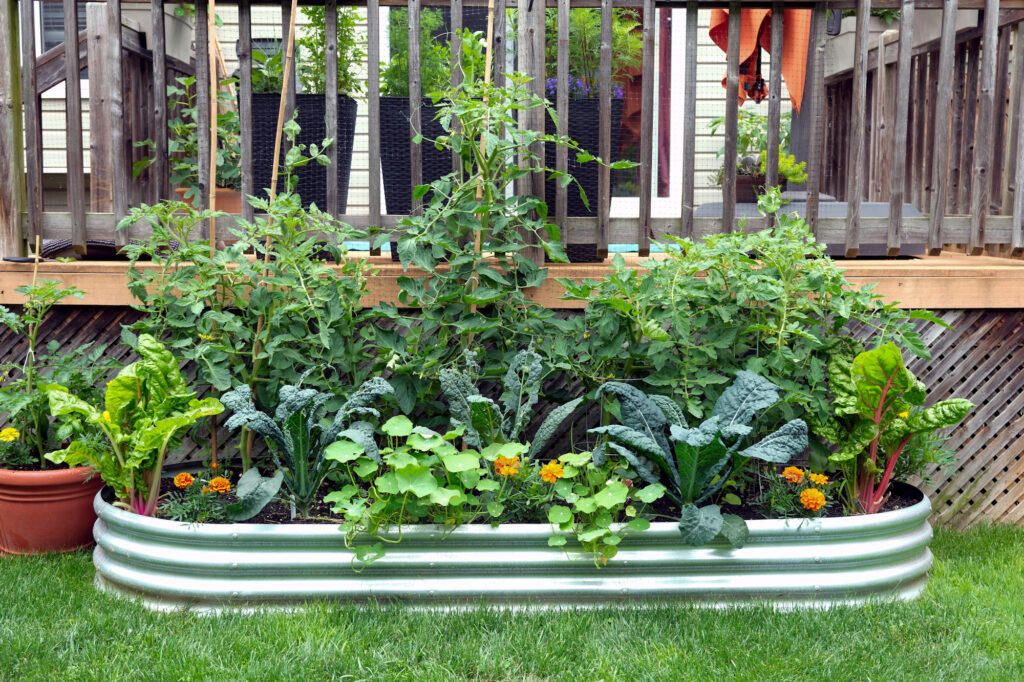
Raised beds can be excellent places for carrots, radishes, beets, onions, garlic, and other crops that develop edible portions underground.
Loose soil with relatively few stones gives roots room to expand.
Carrots are particularly prone to becoming forked or misshapen when they encounter compacted soil, rocks, or other obstacles.
Avoid excessive nitrogen fertilization when growing root crops. Producing enormous leafy tops is not necessarily the same as producing high-quality roots.
See our guides to Growing Carrots, Growing Radishes, and Growing Beets for crop-specific advice.
🥬 Raised Beds Are Excellent for Greens
Leafy vegetables fit especially well into raised-bed gardens because many can be planted relatively intensively and harvested repeatedly.
Lettuce, spinach, kale, arugula, chard, and other greens can provide substantial harvests from a relatively small space.
Many also prefer cool weather, making them useful before and after warm-season crops.
Spring spinach might occupy a section before tomatoes need the space. Fall greens can follow crops that finish producing during late summer.
This approach allows the bed to remain productive through more of the year.
🫛 Grow Up Instead of Out
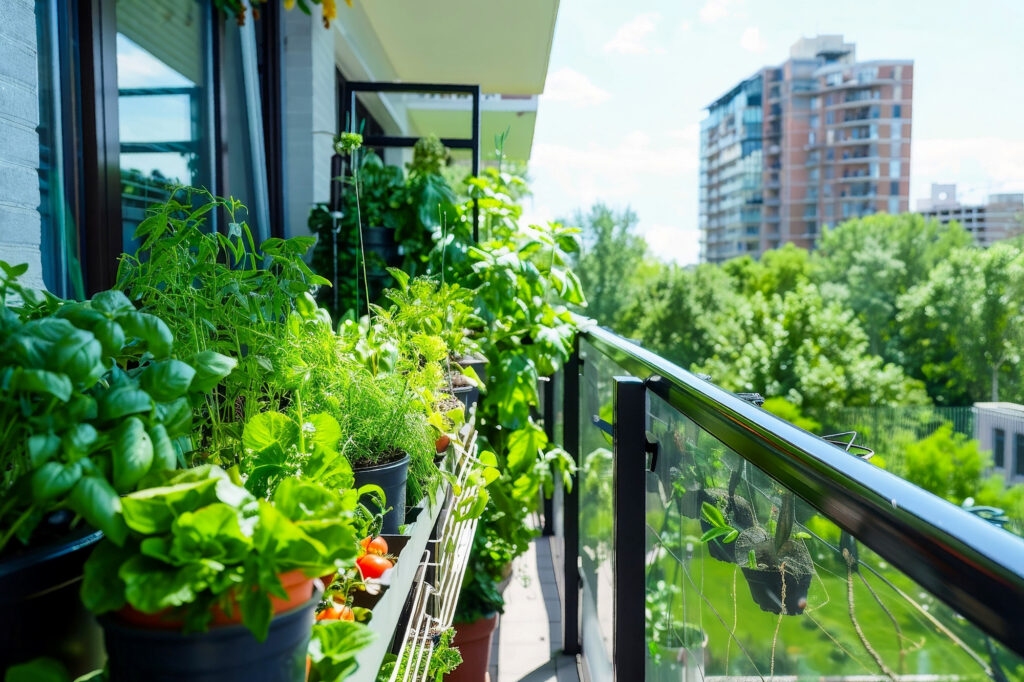
Vertical gardening is especially valuable when raised-bed space is limited.
Peas, pole beans, cucumbers, and some other climbing plants can be trained onto trellises.
Trellised crops use vertical space that would otherwise remain empty while leaving more of the soil surface available for additional plants.
Install strong supports before vines become large.
Place tall trellises thoughtfully so they do not cast unwanted shade across the rest of the bed.
Arches between beds can even create additional growing space without occupying the center of either bed.
🌿 Add Herbs to Raised Beds
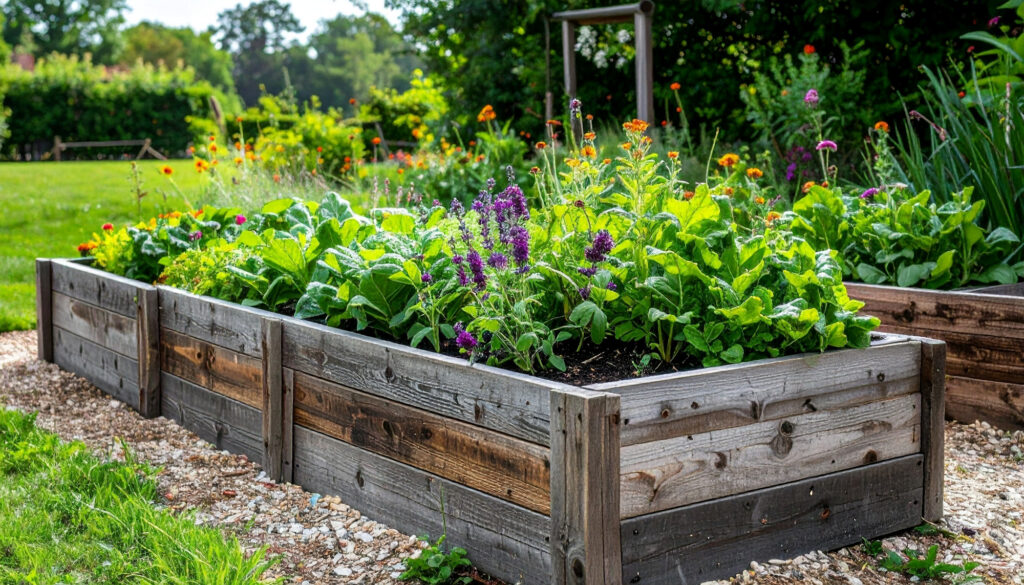
Herbs fit naturally into raised-bed gardens.
Basil, parsley, dill, cilantro, chives, thyme, oregano, and many other herbs can grow alongside vegetables when their light, soil, and water requirements are compatible.
Some perennial herbs may eventually deserve their own space.
Mint, in particular, can spread aggressively through underground stems and may be easier to control in a container than directly in a permanent raised bed.
For more guidance, visit our Herbs & Fruit hub.
🌸 Raised Beds Can Grow Flowers Too
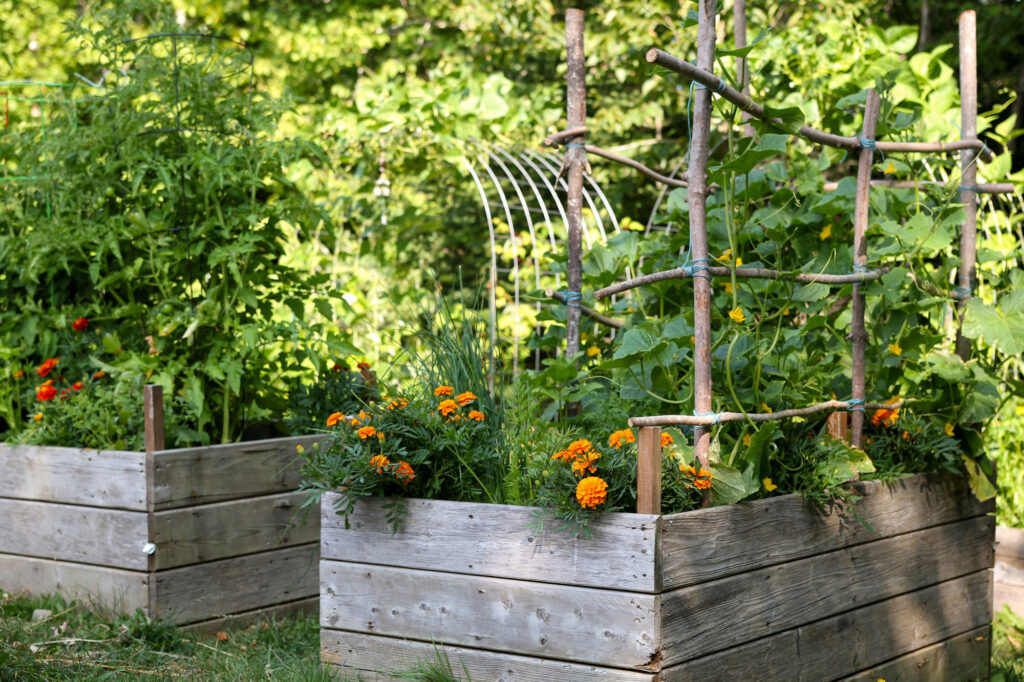
Raised beds do not need to contain only food.
Flowers can attract pollinators, provide cutting material, add color, and make the vegetable garden much more enjoyable.
Compact annuals can be tucked around bed edges, while taller flowers can occupy corners or designated beds.
Marigolds, zinnias, cosmos, nasturtiums, calendula, and other annuals are popular choices depending on the garden and climate.
Do not assume that simply planting a particular flower will magically repel every vegetable pest. Grow flowers primarily because they contribute beauty, biodiversity, or pollinator resources rather than relying on exaggerated companion-planting claims.
Explore our Flower Gardening hub for more ideas.
📐 Plan Plant Spacing Carefully
Raised beds often encourage closer spacing than traditional row gardens because gardeners do not need to leave walking paths between every row.
That does not mean spacing can be ignored.
Every plant still needs enough light, root space, water, and airflow to grow successfully.
Overcrowding can create competition and may make some disease problems more likely.
Consider mature plant size rather than the appearance of tiny seedlings.
A tomato transplant that occupies a few inches in May can become several feet wide by midsummer.
Use intensive spacing thoughtfully rather than treating the raised bed as a challenge to fit in as many plants as physically possible.
🧭 Put Tall Plants Where They Will Not Shade Everything Else
Sun orientation becomes important when combining crops of different heights.
Tomatoes, corn, trellised beans, peas, and cucumbers can cast substantial shade.
In the Northern Hemisphere, positioning taller crops toward the north side of a bed can often reduce the amount of shade they cast on shorter vegetables.
The exact arrangement depends on bed orientation, local sun angles, nearby structures, and the season.
Watch how sunlight actually moves across your garden instead of relying entirely on a diagram.
The best garden plan is the one adapted to your property.
🔄 Practice Crop Rotation When Possible
Growing the same plant family in exactly the same soil every year can allow certain pests and diseases to become more persistent.
Crop rotation means changing where plant families grow from season to season.
For example, tomatoes, potatoes, peppers, and eggplants all belong to the nightshade family. Replacing tomatoes with potatoes does not create a meaningful family rotation.
Rotation is easier when you have several separate raised beds rather than one enormous bed.
It can be difficult in a very small garden, and it is not a complete solution to plant disease, but it is a useful management tool when space permits.
Keep a simple garden map each year so you remember what grew where.
🔁 Use Succession Planting
A raised bed does not need to be planted once in spring and remain unchanged until winter.
Succession planting allows you to use the same space for multiple crops.
Early radishes may be harvested before peppers become large. Spring peas can be followed by a summer crop. Spinach may grow before tomatoes and return again during fall.
Another form of succession planting involves sowing small amounts of quick crops every few weeks instead of planting the entire seed packet at once.
This can provide a steadier harvest of radishes, lettuce, or other fast-growing vegetables.
Think of the bed as changing throughout the year rather than as a fixed arrangement.
📅 Make a Simple Raised-Bed Planting Plan
Beginners do not need an elaborate garden-planning system.
Sketch the shape of each bed on paper and write down what you intend to grow.
Consider:
- Mature plant size
- Height
- Sunlight
- Plant family
- Harvest timing
- Support requirements
- Whether another crop can follow it
Record the variety names as well.
Gardeners frequently assume they will remember which tomato or lettuce they planted, only to discover several months later that every label has disappeared and memory is less dependable than expected.
A basic plan also becomes an invaluable reference when deciding what to grow the following year.
🏷️ Label Your Plants
Labels are particularly helpful when direct-sowing several vegetables that look nearly identical as seedlings.
Carrots, radishes, lettuce varieties, onions, and herbs can become surprisingly confusing when planted in neighboring sections.
Labels should include at least the crop and variety.
Recording the planting date can also be useful.
Even if outdoor labels fade or disappear, keep a backup garden notebook or photograph of your layout.
Good records become more valuable each season.
🌱 Direct Sow or Transplant?
Both methods work well in raised beds.
Some vegetables are particularly well suited to direct sowing. These include carrots, radishes, peas, beans, and many other crops whose roots are best left undisturbed.
Tomatoes, peppers, broccoli, and numerous other vegetables are commonly transplanted as young plants.
Transplants give gardeners a head start but usually cost more than seed.
Direct sowing is inexpensive and simple but depends more heavily on favorable germination conditions.
Use the method appropriate for the particular crop rather than deciding that one method is universally better.
🐛 Raised Beds Do Not Eliminate Pests
Raised beds sometimes create the impression that gardening will become pest-free.
Unfortunately, insects, birds, squirrels, rabbits, deer, slugs, and plant diseases are perfectly capable of finding an elevated garden.
Raised sides may discourage certain crawling or burrowing pests but provide little protection from many others.
The advantage is that defined beds make barriers easier to install.
Hoops can support insect netting, row covers, or frost protection. Hardware cloth can help with certain burrowing animals, while taller fencing may be needed for larger wildlife.
Identify the problem before buying a solution.
🐌 Check Beds for Slugs and Snails
Raised beds can still provide excellent habitat for slugs and snails, particularly in damp gardens with plenty of shelter.
Check underneath boards, mulch, containers, and dense foliage when damage appears.
Young seedlings can be especially vulnerable.
Reducing unnecessary hiding places, avoiding excessive irrigation, hand-picking, and other management strategies may help depending on the severity of the problem.
Before applying any pest-control product to an edible garden, read and follow its label carefully.
🐝 Let Raised Beds Support Pollinators
Vegetable gardens benefit enormously from pollinating insects.
Cucumbers, squash, melons, and numerous other crops depend heavily on insect pollination.
Adding flowers near or within the garden can provide additional nectar and pollen resources.
Consider flowers that bloom at different times so the garden offers something beyond a single short flowering period.
Our Eco-Friendly Gardening hub explores pollinator gardening, beneficial insects, integrated pest management, and reduced chemical use in more detail.
🌱 Cover Crops Can Protect Empty Beds
Raised beds do not necessarily need to sit completely bare between crops.
Cover crops can protect soil, add organic matter, reduce erosion, and contribute to soil-health management.
The best cover crop depends on your climate, season, bed use, and what you plan to grow next.
In very small gardens, mulch may be easier to manage than a living cover crop.
But gardeners interested in maintaining productive beds over many years may find cover cropping worth exploring.
Whatever method you use, avoid leaving good garden soil exposed unnecessarily for long periods.
🍂 What to Do With Raised Beds in Fall
Fall is a good time to remove diseased plant material, harvest remaining crops, record what grew where, and prepare beds for the colder months.
Healthy plant residues may be composted when appropriate.
Beds can be covered with mulch or planted with suitable cover crops rather than left completely bare.
Fall is also an excellent time to add a modest layer of finished compost when soil conditions indicate it would be useful.
Do not assume that a raised bed needs to be completely emptied and refilled every year.
Good soil should be maintained, not discarded.
Our Seasonal Gardening hub covers garden tasks throughout the year.
❄️ Raised Beds During Winter
Cold-climate raised beds may freeze more thoroughly than surrounding ground because more of the soil is exposed to cold air.
That does not mean anything is wrong with the bed.
Perennial plants grown in raised beds should be hardy enough for the conditions they will experience, and container-like elevated beds may expose roots to greater cold than ordinary in-ground plantings.
For annual vegetable beds, winter is a good time to protect the soil surface and make plans for the following season.
Do not work frozen or saturated soil unnecessarily.
Allow winter to do what winter does.
🌱 Refresh Raised-Bed Soil in Spring
Raised-bed soil often settles over time as organic matter decomposes and fine particles shift.
This is normal.
You do not need to replace the entire contents.
Top up the bed with appropriate soil or finished compost as needed, based on soil condition and test results.
Gently loosen areas that have become compacted without repeatedly turning the entire bed upside down.
One of the advantages of permanent beds is that soil structure can improve from year to year when it is protected from foot traffic and excessive disturbance.
🧪 Do Not Add Compost Automatically Every Year
Compost is valuable, but more is not always better.
Continually adding large quantities without testing can cause some nutrients to accumulate to unnecessarily high levels.
Treat compost as a soil amendment rather than an unlimited garden cure.
Monitor how the soil behaves, observe plant growth, and periodically test the soil.
The aim is to maintain healthy soil rather than continually adding things to it simply because another gardening season has begun.
🌾 Keep the Pathways Comfortable
Raised beds work only if you can move comfortably around them.
Leave pathways wide enough for normal garden work and whatever equipment you use.
If you routinely move a wheelbarrow or garden cart, make sure it can actually pass between beds.
Path materials might include:
- Wood chips
- Gravel
- Pavers
- Grass
- Compacted aggregate
- Other stable surfaces
The best option depends on accessibility, drainage, weeds, budget, and how permanent the garden will be.
Avoid designing attractive beds so close together that gardening becomes awkward.
🌿 Control Weeds Around the Beds
Raised-bed soil may contain fewer weed seeds initially, but weeds will eventually arrive.
Wind, birds, compost, garden soil, surrounding plants, and footwear can all introduce seeds.
Pull weeds while they are small.
Mulch can greatly reduce germination.
Pathway weeds deserve attention too, especially aggressive perennial species capable of spreading into beds.
Permanent paths covered with an appropriate mulch can reduce maintenance and give the entire garden a more deliberate appearance.
🪴 Can You Put Raised Beds on Concrete?
Raised beds can be used on patios and other hard surfaces, but they function more like very large containers when there is no soil beneath them.
Drainage becomes especially important.
Water needs somewhere to escape without creating a permanently saturated root zone or causing unwanted runoff problems.
Deep beds may also become extremely heavy once filled and watered, which matters on decks, rooftops, balconies, and other structures.
Do not install large raised beds on an elevated structure without knowing its load capacity.
For hard-surface gardens, large containers may sometimes be simpler than permanent beds.
🧱 Can You Put Raised Beds on Grass?
Yes.
Many raised beds are installed directly over existing lawn.
Mow the grass short first and deal with persistent perennial weeds before filling the bed.
Plain cardboard is sometimes used temporarily to suppress turf, although it is not mandatory.
Over time, ordinary lawn grasses beneath a sufficiently filled and actively gardened bed generally lose access to light.
Avoid digging up an entire lawn simply to install a bed unless removal serves another purpose.
🐕 Think About Pets and Children
Raised beds can help define where gardening happens and where foot traffic should stay.
That is useful in households with children or dogs, although sides alone may not keep enthusiastic pets from jumping into the soil.
If necessary, low fencing or another barrier can protect young seedlings.
Be particularly thoughtful about fertilizers, pesticides, sharp stakes, tools, and other garden products in spaces accessible to children and animals.
Store products according to label instructions and put tools away after use.
A family garden should be designed around everyone who uses the yard.
⚠️ Common Raised-Bed Gardening Mistakes
Raised beds simplify many gardening tasks, but they do not make plants immune to poor growing conditions.
Some of the most common beginner mistakes include:
- Building beds too wide to reach the center
- Placing beds in insufficient sunlight
- Buying a tall bed without calculating soil costs
- Filling beds with poor-quality material
- Using far too much compost
- Planting too closely
- Forgetting that raised beds can dry quickly
- Installing weak supports after plants are already large
- Continually adding fertilizer without soil testing
- Making pathways too narrow
- Growing the same crop family in the same spot every year
- Assuming raised beds eliminate pests and weeds
Most of these problems are much easier to prevent during planning than correct after the garden is built.
💰 How Much Does a Raised Bed Garden Cost?
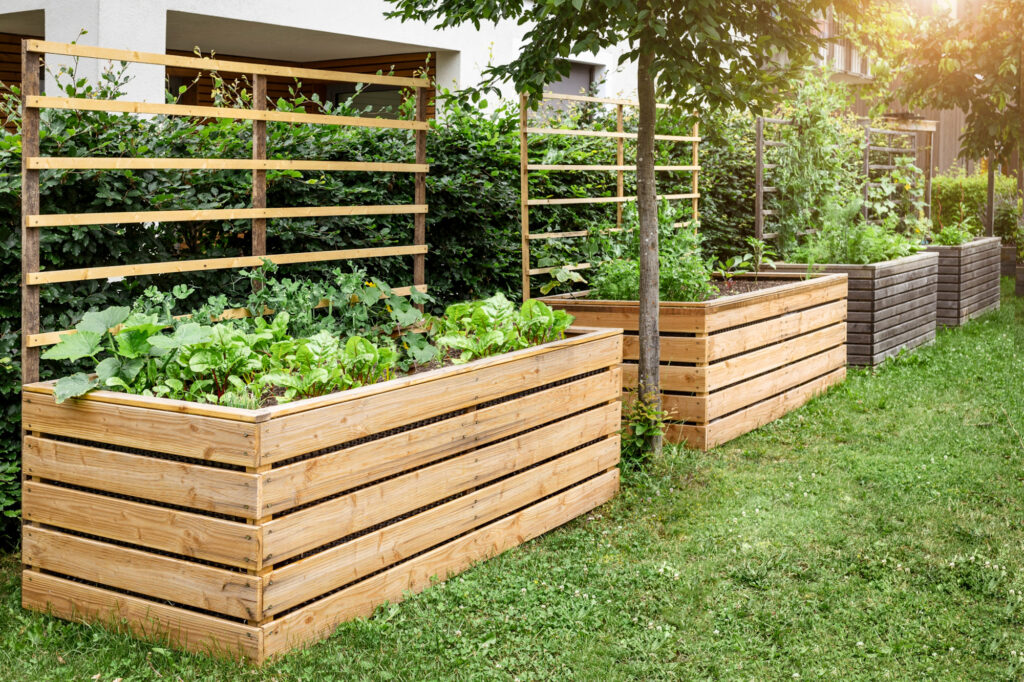
The cost can range from almost nothing to hundreds of dollars per bed.
An unframed mound made from existing garden soil may require very little expense.
At the other extreme, tall premium metal beds filled entirely with purchased soil can become costly.
The major expenses are generally:
- Bed materials
- Soil or growing mix
- Compost
- Irrigation
- Trellises or supports
- Path materials
- Plants or seeds
You do not need to build the ultimate garden in one year.
Starting with one modest bed lets you learn what features actually matter to you before committing to a much larger system.
🛒 What Do You Actually Need to Get Started?
A basic first raised bed requires surprisingly little.
At minimum, you need:
- A sunny growing location
- A defined bed
- Good-quality soil
- A way to water
- Seeds or transplants
- A few simple hand tools
Mulch, drip irrigation, trellises, row covers, automatic timers, soil thermometers, and other equipment can be useful but are not prerequisites.
Our Garden Tools & Products hub can help you decide which tools are genuinely useful and which can wait.
Start with the garden first.
Add equipment when the plants give you a reason.
🌻 A Simple First Raised-Bed Plan
If this is your first season, keep the experiment manageable.
A single bed around 4 feet wide and 6 to 8 feet long can provide enough room to learn without becoming overwhelming.
You might grow one or two tomatoes along the north side with sturdy supports, several peppers or bush beans, a small section of carrots or beets, and lettuce or radishes around areas that will later be occupied by larger plants.
Add a few herbs or flowers along the edges if space permits.
Do not worry about filling every inch.
Your goal during the first year is not maximum production. It is learning how quickly the bed dries, where shadows fall, which crops thrive, how much food the space produces, and what you would change next year.
Those lessons are worth more than squeezing in another dozen seedlings.
🌱 Build One Bed and Learn From It
Raised-bed gardening is appealing because it makes the garden feel manageable.
The growing space has boundaries. Paths have a purpose. Soil can improve from year to year. Supports and irrigation can remain in predictable locations, and crop planning becomes easier once you understand the space.
But the bed itself does not grow the vegetables.
Successful gardening still comes down to sunlight, healthy soil, appropriate water, suitable plants, good timing, and regular observation.
Start with one well-planned bed rather than six rushed ones.
Fill it with good soil. Grow vegetables you actually enjoy eating. Keep notes. Notice how quickly the soil dries. Pay attention to which crops need more space than you expected and which produce more food than you imagined.
Then use what you learn to improve the next season.
That is how a simple wooden or metal rectangle filled with soil gradually becomes a garden.
🔗 Related Articles
- Gardening Basics
- Vegetable Gardening
- Herbs & Fruit
- Flower Gardening
- Eco-Friendly Gardening
- Seasonal Gardening
- Garden Tools & Products
- Gardening Soil 101: Enhancing Your Garden’s Growth and Vitality
- How to Plant Tomatoes
- Growing Carrots: A Comprehensive Guide
- Strategies for Successfully Growing Radishes
- Essential Tips for Growing Beets
- Growing Peas: A Comprehensive Guide for Gardeners
📚 Sources & Further Reading
- University of Minnesota Extension — Raised Bed Gardens
- Penn State Extension — Soil Health in Raised Beds
- Oregon State University Extension — Raised Bed Gardening
- Oregon State University Extension — Gardens Are for Everyone
- Oregon State University Extension — How to Use Compost in Gardens and Landscapes