Cosmos comes in far more forms than the familiar tall pink flowers often seen in cottage gardens. Modern and heirloom varieties can produce white, blush, crimson, burgundy, pale yellow, apricot, orange, striped, picotee, double, tubular, ruffled, and even cup-shaped flowers, while plant heights range from compact varieties little more than a foot tall to cutting-garden plants reaching 4 feet or more.
Most of the named ornamental cultivars gardeners encounter belong to Cosmos bipinnatus, the classic garden cosmos. These plants generally have very finely divided foliage and flowers in white, pink, rose, crimson, burgundy, apricot, and increasingly unusual pastel shades.
Cosmos sulphureus provides a different look. Its flowers naturally lean toward yellow, gold, orange, and red-orange, and many cultivars have a somewhat bushier appearance.
The best cosmos variety therefore depends on what you want from the plant. A container gardener may love compact Sonata or Cosmic Orange, while someone growing bouquets will probably prefer tall Double Click, Versailles, Sensation, Apricotta, or Rubenza.
This guide compares 25 of the best cosmos varieties by color, height, flower form, and garden use so you can choose the right plants rather than simply buying the first packet labeled “cosmos.”
🌸 25 Cosmos Varieties at a Glance
| Variety | Species | Flower Color/Form | Approx. Height | Best Use |
|---|---|---|---|---|
| Sensation Mix | C. bipinnatus | White, pink, rose, crimson; single | 4–4½ ft. | Meadows, cutting |
| Sonata Series | C. bipinnatus | White, pink, carmine; single | 12–18 in. | Containers, fronts |
| Apollo Series | C. bipinnatus | White, pink, carmine; large single | 18–26 in. | Containers, beds |
| Xanthos | C. bipinnatus | Pale lemon yellow; single | About 24 in. | Pastel gardens |
| Apricot Lemonade | C. bipinnatus | Apricot, cream, blush | 20–28 in. | Containers, pastel beds |
| Capriola | C. bipinnatus | White with red-pink edging | 24–30 in. | Borders |
| Sweet Sixteen | C. bipinnatus | Pink-white with frilled center | 30–36 in. | Cottage gardens |
| Apricotta | C. bipinnatus | Apricot, peach, blush | 3–4 ft. | Cutting gardens |
| Rubenza | C. bipinnatus | Cranberry to antique rose | 2½–4 ft. | Cutting, dark palettes |
| Dazzler | C. bipinnatus | Rich crimson-carmine | 3–5 ft. | Cutting, back borders |
| Radiance | C. bipinnatus | Rose with dark crimson eye | 3–5 ft. | Cottage gardens |
| Daydream | C. bipinnatus | Pale pink with darker center | About 4 ft. | Romantic gardens |
| Velouette | C. bipinnatus | Burgundy and white striped | 30–40+ in. | Dramatic borders |
| Picotee | C. bipinnatus | White/pink with darker edging | 3¼–5 ft. | Cutting, cottage gardens |
| Sea Shells | C. bipinnatus | Mixed colors; tubular petals | 3–4 ft. | Novelty, cutting |
| Cupcakes Blush | C. bipinnatus | White, blush, pink; cup-shaped | 3–4 ft. | Specialty cutting |
| Double Click Rose Bon Bon | C. bipinnatus | Rose pink; double | 42–46 in. | Bouquets |
| Double Click Snowpuff | C. bipinnatus | White; semi-double/double | 42–48 in. | Weddings, cutting |
| Versailles Mix | C. bipinnatus | White, blush, pink, carmine | 40–48 in. | Professional cutting |
| Psyche White | C. bipinnatus | White; semi-double/ruffled | About 3 ft. | White gardens |
| Fizzy White | C. bipinnatus | White; semi-double | About 3 ft. | Cutting, borders |
| Sensation Pinkie | C. bipinnatus | Purplish pink; single | About 2–3 ft. | Pollinator, cutting |
| Bright Lights | C. sulphureus | Yellow, orange, red-orange | About 3–4 ft. | Mass planting |
| Cosmic Orange | C. sulphureus | Orange; semi-double | About 14 in. | Containers, edging |
| Ladybird Mixed | C. sulphureus | Yellow, orange, red | 12–20 in. | Containers, front borders |
Heights are approximate rather than guaranteed. Cosmos responds strongly to soil fertility, water, sunlight, spacing, and climate. You can compare those factors in How Tall Do Cosmos Grow? Heights by Species & Variety.
🌸 1. Sensation Mix
Sensation Mix Cosmos is one of the classic choices for anyone who wants the traditional cosmos look.
The flowers are large, open, and single, typically appearing in shades of white, soft pink, deeper rose, magenta, and crimson around yellow central disks. Plants usually reach approximately 48–54 inches, although environmental conditions can produce some variation.
Sensation is particularly effective in large groups because its simple flower form looks natural rather than overly formal. It works beautifully in cottage gardens, meadow-style plantings, pollinator gardens, and cutting gardens.
The stems are long enough for bouquets, and the exposed flower centers are readily accessible to visiting insects.
Choose Sensation Mix if you want one packet capable of creating the classic multicolored cosmos garden.
Best for: cottage gardens, cosmos flower fields, pollinator beds, and cutting.
🌸 2. Sonata Series
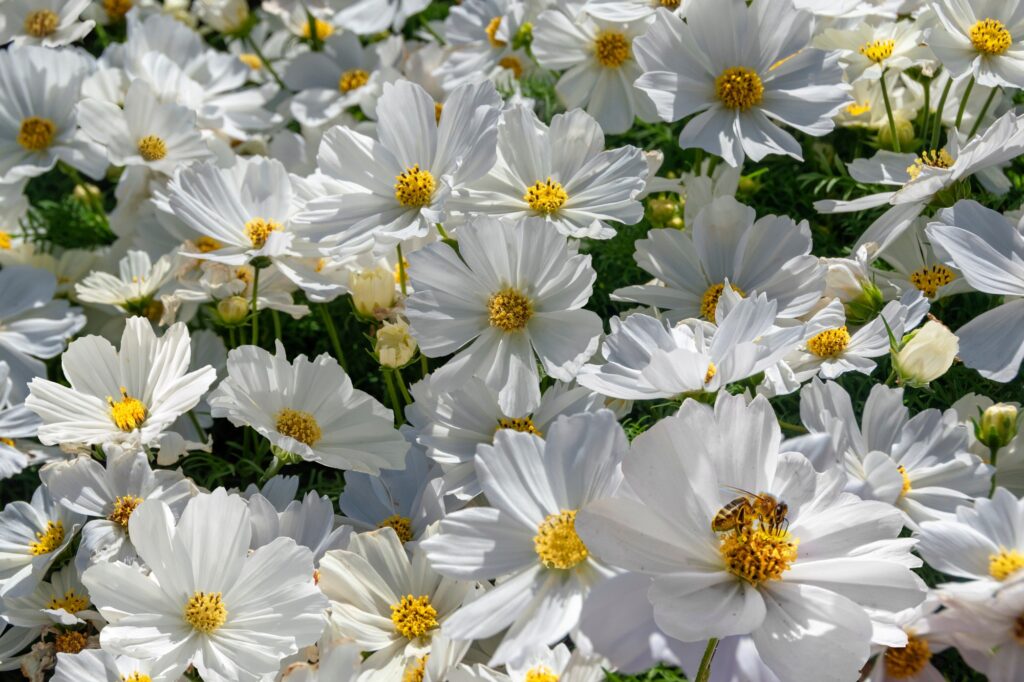
Cosmos Sonata proves that garden cosmos does not need to become 4 or 5 feet tall.
The Sonata Series was developed for a much more compact habit, with many plants remaining around 12–18 inches tall depending on selection and growing conditions.
Flower colors include white, pink, blush, carmine, and mixtures.
Despite the short plants, Sonata retains the familiar open daisy-like flower shape and finely divided foliage associated with Cosmos bipinnatus.
This makes it one of the best choices for gardeners who love cosmos but have only:
- Containers
- Small beds
- Patio gardens
- Front borders
Because of its short stature, Sonata is also less likely to require staking.
Best for: pots, smaller gardens, border fronts, and gardeners who want compact cosmos.
🌺 3. Apollo Series
Cosmos Apollo is another compact C. bipinnatus series, but its flowers can be impressively large relative to the size of the plant.
Typical plants reach roughly 18–26 inches tall and develop a naturally branching, bushy habit.
Colors include white, pink, and bright carmine, along with other Apollo selections and mixes.
The broad single flowers can approach approximately 4 inches across, creating much more visual impact than gardeners might expect from a plant only around 2 feet tall.
Apollo is an especially good alternative to tall traditional cosmos where strong wind or limited space makes 4-foot plants inconvenient.
Best for: containers, compact flower beds, edging, and large flowers on short plants.
💛 4. Xanthos
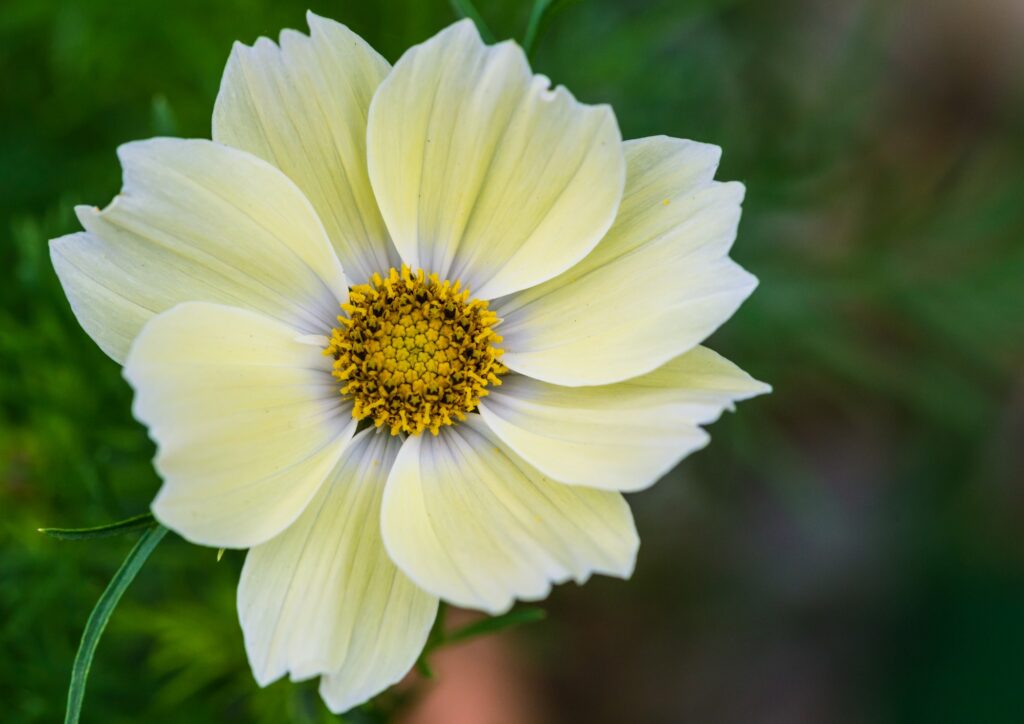
Cosmos Xanthos helped change what gardeners expect from Cosmos bipinnatus.
Traditional garden cosmos was historically dominated by white, pink, rose, and crimson. Xanthos brought a distinctive soft lemon-yellow color into the species.
Its flowers are single with yellow centers, and the petals can soften toward creamy white at the edges or as the blooms mature.
Plants generally reach around 24 inches tall, making Xanthos significantly shorter than traditional Sensation-type cosmos.
It works beautifully with:
- White flowers
- Lavender
- Pale pink
- Apricot
- Soft blue companions
Xanthos is especially valuable for gardeners building a pastel palette rather than a bright primary-color garden.
Best for: pastel gardens, containers, shorter borders, and unusual color combinations.
🍋 5. Apricot Lemonade
Apricot Lemonade Cosmos is one of the most unusual modern cosmos varieties.
Its flowers may contain a blend of:
- Cream
- Pale lemon
- Apricot
- Blush pink
- Soft mauve
The colors can vary considerably from flower to flower, which is part of the attraction.
Apricot Lemonade usually stays around 20–28 inches tall, making it considerably more compact than many cutting varieties.
It is particularly attractive with muted modern garden colors rather than intense reds and oranges.
Do not confuse Apricot Lemonade with Apricotta. Both offer warm peach-apricot tones, but Apricotta is generally much taller and better suited to long cut stems.
Best for: containers, pastel gardens, cottage borders, and peach-toned planting schemes.
🌺 6. Capriola
Cosmos Capriola produces striking bicolored flowers without becoming excessively tall.
The petals are primarily white but feature rosy-red to pink edging and a deeper red or purple-red area toward the center.
Some flowers develop particularly dramatic markings that look almost painted.
Capriola usually grows around 24–30 inches tall, placing it between dwarf cosmos and traditional tall cutting varieties.
That medium height makes it easy to integrate into an ordinary flower bed.
It is an especially useful alternative to tall Picotee-type cosmos when you want patterned flowers but do not want a plant approaching 5 feet.
Best for: mixed borders, bicolor gardens, medium-height beds, and compact cottage gardens.
🌸 7. Sweet Sixteen
Cosmos Sweet Sixteen stands out because of its flower structure.
The outer petals are pale pink to white with deeper pink markings, while an additional inner row of smaller petals creates a ruffled or collarette-like center.
The flower is therefore more elaborate than a simple single cosmos but usually not as densely double as the Double Click series.
Plants commonly reach approximately 30–36 inches tall.
Sweet Sixteen works particularly well in cottage gardens where its slightly irregular, romantic flowers can mingle naturally with other annuals.
Best for: cottage gardens, romantic borders, flower-form collections, and informal bouquets.
🍑 8. Apricotta
Cosmos Apricotta is one of the standout modern warm-colored cosmos cultivars.
Its flowers combine shades of:
- Apricot
- Peach
- Blush
- Rose
- Soft pink
Individual flowers can vary, creating a layered watercolor effect rather than one flat color.
Apricotta generally reaches 3–4 feet tall, making it an excellent cutting variety.
Its longer stems distinguish it from shorter Apricot Lemonade.
If your goal is an apricot cosmos for patio containers, Apricot Lemonade is usually easier.
If your goal is peach-colored bouquet stems, Apricotta is one of the best choices.
Best for: cutting gardens, wedding flowers, pastel bouquets, and warm cottage-garden palettes.
🍷 9. Rubenza
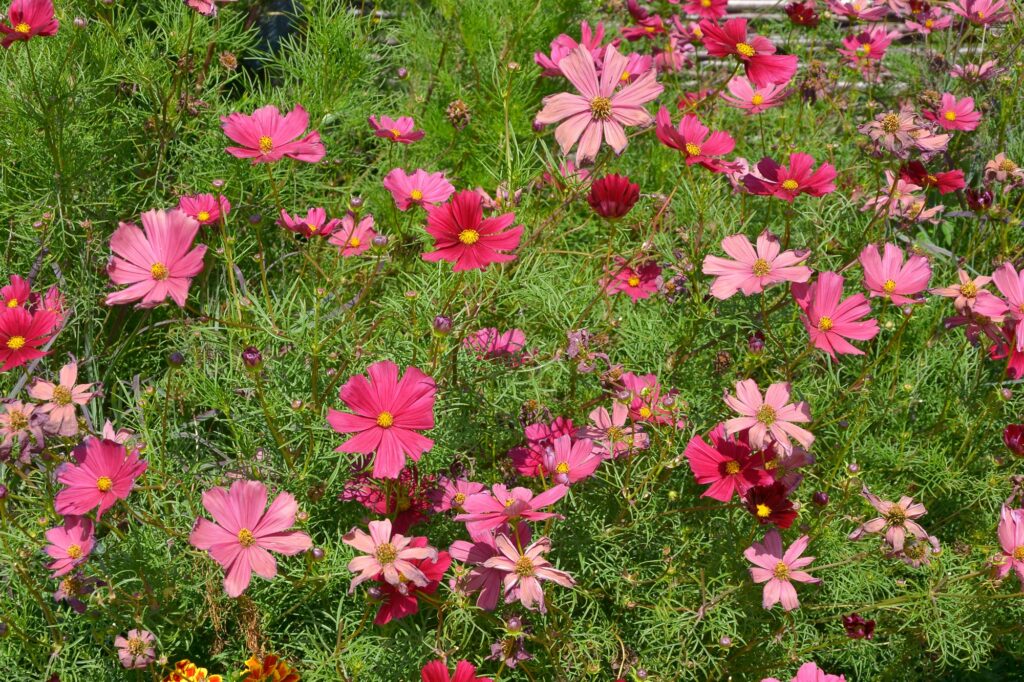
Cosmos Rubenza offers one of the richest color transitions in the genus.
New flowers open in deep cranberry, ruby, or wine-red shades and gradually fade toward dusty rose or antique pink as they mature.
A single plant can therefore appear to carry several colors simultaneously.
Height varies by source and conditions, with plants commonly falling around 2½–4 feet tall.
Rubenza looks particularly effective beside:
- White cosmos
- Apricotta
- Pale pink flowers
- Silver foliage
- Burgundy foliage
Its open single flowers also make it preferable to densely double cosmos when pollinator access is a major goal.
Best for: cutting gardens, burgundy palettes, romantic planting schemes, and pollinator-friendly flowers.
❤️ 10. Dazzler
Cosmos Dazzler is a classic choice for intense color.
Its flowers are generally rich carmine to crimson, with exposed yellow centers providing sharp contrast.
Plants commonly reach around 3–5 feet tall depending on conditions.
Dazzler works particularly well toward the back of a border or throughout a cutting garden where its tall branching stems have room to develop.
Unlike Rubenza, which changes noticeably as each flower ages, Dazzler tends to retain a brighter crimson appearance.
If you want a bold classic red cosmos rather than a muted wine-red flower, Dazzler is an excellent choice.
Best for: cutting gardens, bold color, tall borders, and cottage gardens.
🌺 11. Radiance
Cosmos Radiance combines pink and crimson in a classic bicolor pattern.
The outer portions of the petals are usually rose-pink or carmine, while deeper crimson markings surround the yellow central disk.
The result is more structured than the soft fading of Daydream and less sharply edged than many Picotee flowers.
Radiance is a traditional tall cosmos, commonly reaching approximately 3–5 feet.
Its large open flowers make it particularly valuable for both cut flowers and pollinator-friendly borders.
Best for: traditional cottage gardens, cutting, bicolor displays, and tall flower beds.
💗 12. Daydream
Daydream Cosmos offers one of the softest bicolor patterns among garden cosmos.
The petals are pale pink to nearly white toward their outer portions and develop a darker rosy pink zone close to the center.
Instead of a hard line between two colors, the transition often looks soft and watercolor-like.
Plants generally grow around 4 feet tall, although vigorous plants can become taller.
Daydream is particularly effective in:
- Romantic gardens
- Wedding cutting gardens
- Pastel borders
- White-and-pink planting schemes
Its flower centers remain open and accessible rather than becoming buried beneath multiple layers of petals.
Best for: romantic gardens, cutting, soft pink palettes, and pollinator beds.
🍷 13. Velouette
Cosmos Velouette is one of the most dramatic patterned cosmos cultivars.
Flowers combine deep wine-red or burgundy with white, but the exact pattern varies.
Some flowers appear mostly burgundy with white streaks.
Others may be heavily striped.
Still others can look almost half white and half red.
Plants commonly reach around 30–40 inches or somewhat taller under favorable conditions.
Because every flower can look slightly different, Velouette is particularly rewarding where people can see the blooms up close.
Best for: dramatic gardens, cut flowers, unusual bicolors, and collector plantings.
🌸 14. Picotee
Picotee Cosmos is a classic tall patterned cosmos.
Flowers usually have pale white-to-pink petals outlined or flushed along the edges with deeper rose or crimson.
The pattern can vary, but the dark edging gives Picotee a more graphic look than soft bicolor cultivars such as Daydream.
Plants can reach approximately 3¼–5 feet tall, so this is not a compact edging flower.
Use it toward the middle or back of a bed, or grow it specifically for cutting.
Picotee should also be distinguished from newer selections such as Fizzy Rose Picotee, which can have semi-double flowers.
Best for: cutting gardens, cottage beds, patterned flowers, and tall borders.
🐚 15. Sea Shells
Sea Shells Cosmos is instantly recognizable.
Instead of ordinary flat ray petals, the petals are rolled or tubular, creating a fluted shell-like appearance.
The mix commonly includes:
- White
- Pink
- Rose
- Crimson
- Fuchsia tones
Plants usually grow around 3–4 feet tall.
Sea Shells is particularly useful when you want visual variety without relying entirely on unusual colors. Even a white Sea Shells bloom looks distinctly different from an ordinary white cosmos because of its tubular petals.
The central disk remains relatively exposed, giving the flowers a more open structure than heavily doubled types.
Best for: novelty gardens, cutting, flower-form collections, and cottage gardens.
🧁 16. Cupcakes Blush
Cosmos Cupcakes Blush has one of the most unusual flower forms in the genus.
The outer ray florets are partially fused together, creating a pleated cup or bowl around the flower center.
Colors may range through:
- White
- Cream
- Blush
- Soft pink
Some flowers also develop additional petal-like structures around the center.
Plants generally reach around 3–4 feet tall.
Cupcakes Blush usually takes somewhat longer to reach flowering maturity than many standard cutting cosmos, so it rewards gardeners who allow it enough growing season.
Best for: specialty cut flowers, novelty gardens, wedding palettes, and unusual flower forms.
💗 17. Double Click Rose Bon Bon
Cosmos Double Click Rose Bon Bon is one of the best cosmos varieties for fluffy rose-pink flowers.
The blooms can be:
- Semi-double
- Fully double
- Heavily ruffled
rather than the standard single daisy form.
Plants are tall, generally reaching around 42–46 inches, making Rose Bon Bon particularly well suited to cutting.
Because double flowers have more petals covering the center, they are not as easy for pollinating insects to access as single-flowered cosmos.
For a wildlife-friendly garden, consider growing Rose Bon Bon alongside open single cultivars such as Rubenza, Dazzler, or Sensation.
Best for: bouquets, romantic gardens, pink flower schemes, and cutting beds.
🤍 18. Double Click Snowpuff
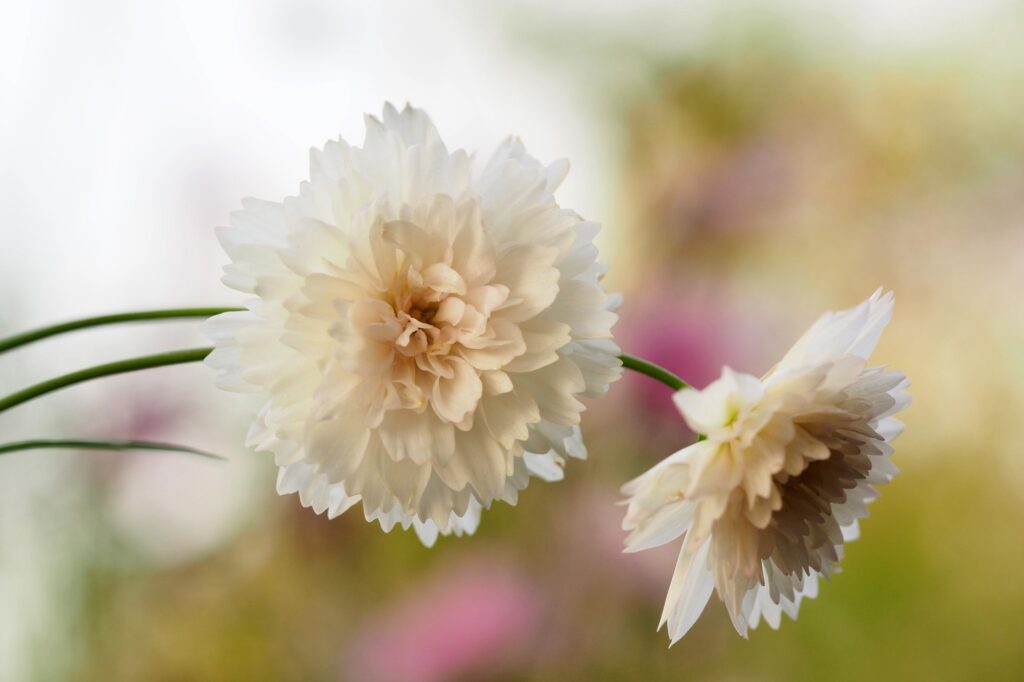
Cosmos Double Click Snowpuff provides the white counterpart to the highly decorative Double Click style.
Flowers can be semi-double or fully double, with ruffled white petals creating a fluffy appearance.
A small amount of blush may occasionally appear.
Plants commonly reach around 42–48 inches, producing useful stems for cutting.
Snowpuff is especially attractive in:
- White gardens
- Wedding flower gardens
- Moon gardens
- Pastel cutting beds
The flowers have a much fuller appearance than ordinary white cosmos.
Best for: white gardens, wedding flowers, bouquets, and tall cutting beds.
💐 19. Versailles Mix
Versailles Mix was developed with cutting in mind.
Plants grow approximately 40–48 inches tall and produce strong stems carrying flowers around 2½ inches across.
The mixture includes shades such as:
- Blush pink
- White
- Carmine red
- Pink with deeper pink markings
Versailles tends to produce straighter, stronger cutting stems than a casual meadow strain, making it especially appealing to gardeners who care about bouquet quality.
It can also flower under shorter-day conditions, which has contributed to its popularity in professional flower production.
If you want cosmos primarily for the vase rather than as a loose landscape planting, Versailles deserves serious consideration.
Best for: dedicated cutting gardens, flower farmers, bouquets, and strong stems.
🤍 20. Psyche White
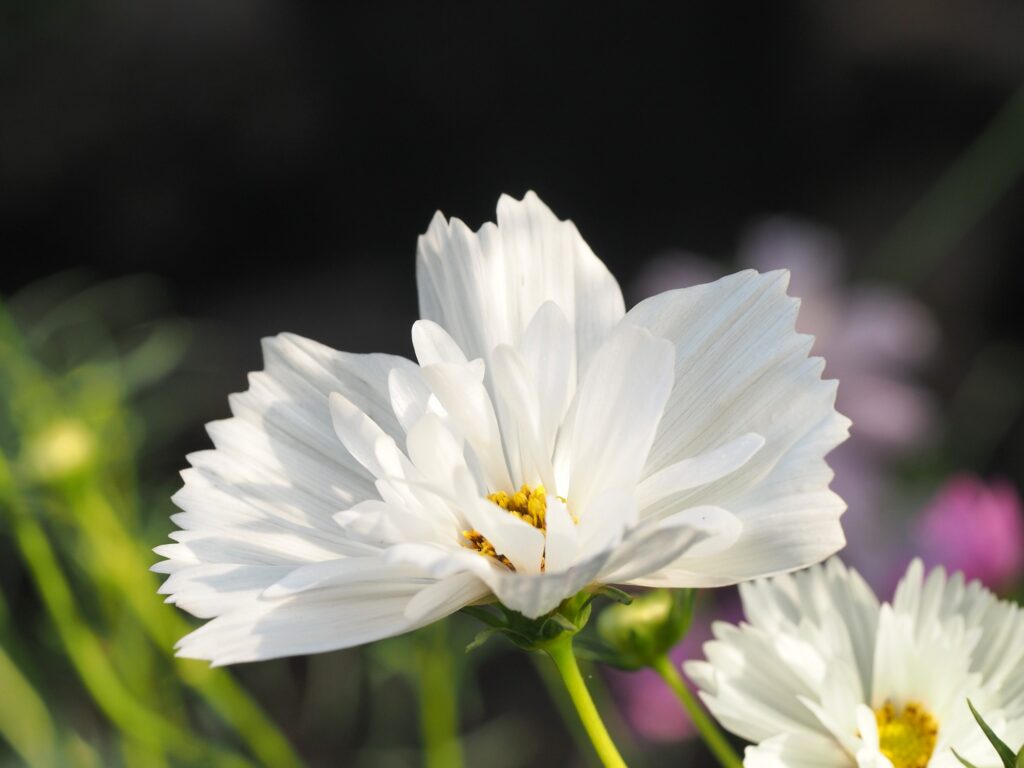
Psyche White is a beautiful choice for gardeners who want white cosmos with more texture than a standard single flower.
The flowers are semi-double and ruffled, creating a soft informal appearance while still showing some of the yellow center.
Plants reach approximately 3 feet tall, though individual growing conditions can alter final height.
Psyche White combines well with:
- Apricotta
- Rubenza
- Daydream
- Blue annuals
- Silver foliage
It is also a good option for white gardens where Double Click Snowpuff feels too densely petaled.
Best for: white gardens, cutting, cottage gardens, and semi-double flower displays.
🤍 21. Fizzy White
Fizzy White is another semi-double white Cosmos bipinnatus, generally reaching about 3 feet tall.
Its clear white flowers have yellow centers and additional inner petals that give the bloom more volume than a standard single without becoming fully pompon-like.
This makes Fizzy White a useful middle ground between:
Simple white cosmos and heavily doubled Snowpuff.
The broader Fizzy Series also includes pink and picotee effects, but Fizzy White is particularly useful in elegant monochromatic plantings.
Best for: white borders, cutting gardens, cottage gardens, and gardeners who prefer semi-double rather than fully double cosmos.
💗 22. Sensation Pinkie
Sensation Pinkie is a named selection within the classic Sensation group.
Its flowers are single and purplish pink, giving it the traditional open cosmos appearance while providing a more consistent color than a mixed packet.
The RHS places it within approximately the 0.5–1 meter height range, so gardeners can generally expect a medium-to-tall plant.
Sensation Pinkie is particularly useful if you love the classic Sensation growth habit but want to design a more controlled pink garden rather than accepting a random mixture of colors.
Its exposed central disk also makes it a useful pollinator-friendly choice.
Best for: pink gardens, pollinator beds, cutting, and cottage borders.
🔥 23. Bright Lights
Bright Lights shifts away from Cosmos bipinnatus and into Cosmos sulphureus.
Its flowers occur in fiery shades of:
- Golden yellow
- Orange
- Red-orange
- Bicolors
Plants are generally tall enough to create substantial landscape impact, often around 3–4 feet, although seed sources and growing conditions report variable heights.
The foliage is somewhat different from the extremely threadlike leaves of C. bipinnatus, helping give the plants a distinct appearance.
Bright Lights is particularly effective in large summer plantings where pale pink cosmos would look too restrained.
It also performs beautifully in large meadow-style cosmos fields.
Best for: hot-color gardens, mass planting, summer displays, and informal cutting.
🧡 24. Cosmic Orange
Cosmic Orange provides the intense orange color of Cosmos sulphureus without the height of Bright Lights.
The RHS describes plants at around 35 centimeters, or roughly 14 inches tall.
Flowers are orange and semi-double, appearing from summer into autumn.
That compact habit makes Cosmic Orange excellent for spaces where traditional tall cosmos would overwhelm neighboring plants.
It is particularly effective in:
- Containers
- Border fronts
- Patio gardens
- Low mass plantings
Cosmic Orange also pairs beautifully with dark purple foliage, blue flowers, or pale-yellow annuals.
Best for: containers, front borders, compact hot-color gardens, and mass bedding.
❤️ 25. Ladybird Mixed
Ladybird Mixed is another compact Cosmos sulphureus selection.
Plants generally reach around 12–20 inches tall and produce single to semi-double flowers in bright shades of:
- Yellow
- Orange
- Red
The result is cheerful, warm, and much shorter than classic tall garden cosmos.
Ladybird is one of the best choices for gardeners who want a cosmos border but do not want plants leaning over paths or obscuring everything behind them.
Because the plants remain compact, they also work well in larger containers.
Best for: containers, low borders, edging, hot-color gardens, and small spaces.
🌱 Best Dwarf Cosmos Varieties

If you need plants around 1 to 2 feet tall, some varieties are much better choices than trying to prune a naturally tall cosmos repeatedly.
The standouts are Sonata, Apollo, Xanthos, Apricot Lemonade, Cosmic Orange, and Ladybird Mixed.
Sonata is especially useful where you want the familiar pink-and-white C. bipinnatus appearance in a compact plant.
Apollo offers larger blooms.
Xanthos provides pale yellow.
Apricot Lemonade introduces peach and blush.
Cosmic Orange and Ladybird bring the fiery C. sulphureus palette into small gardens.
For more detailed measurements, see How Tall Do Cosmos Grow? Heights by Species & Variety.
💐 Best Cosmos Varieties for Cut Flowers
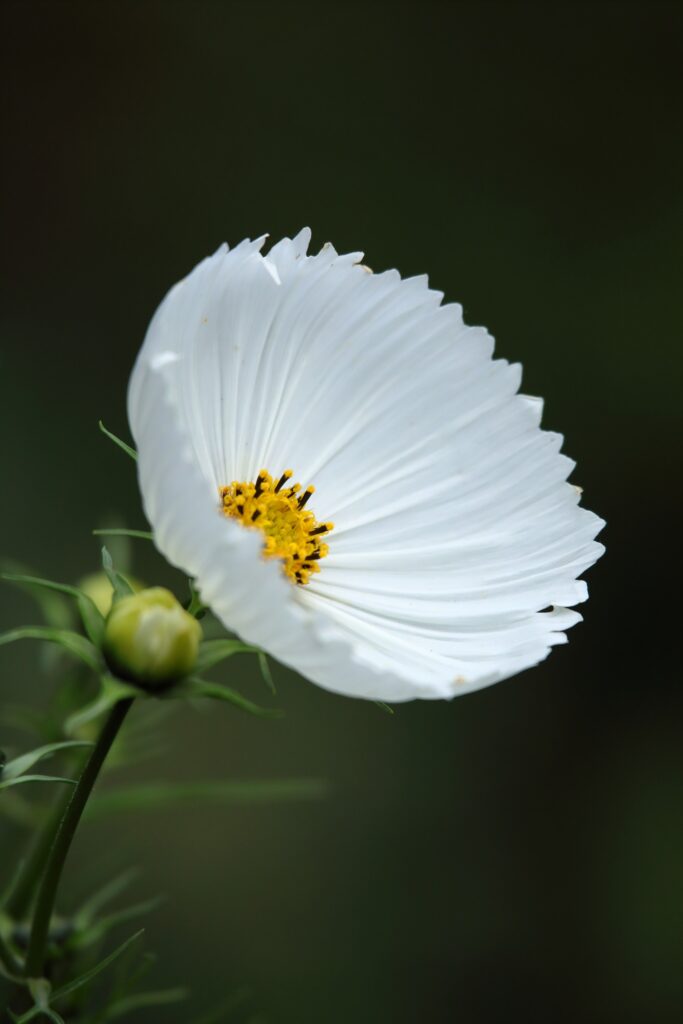
For bouquets, taller stems usually make harvesting and arranging much easier.
Some of the strongest choices are Versailles Mix, Double Click Rose Bon Bon, Double Click Snowpuff, Sensation Mix, Apricotta, Rubenza, Dazzler, Radiance, Sea Shells, and Cupcakes Blush.
The best variety depends on the style of arrangement.
For classic airy flowers, choose Sensation.
For strong professional cutting stems, consider Versailles.
For fluffy romantic flowers, Double Click is difficult to beat.
For unusual shapes, Sea Shells and Cupcakes stand out immediately.
For sophisticated color palettes, Apricotta and Rubenza are among the strongest choices.
🐝 Best Cosmos Varieties for Pollinators
Single-flowered cosmos generally provides easier access to pollen and nectar than densely double types.
Good choices include:
Sensation Mix, Xanthos, Capriola, Apricotta, Rubenza, Dazzler, Radiance, Daydream, Picotee, and Sensation Pinkie.
This does not mean double-flowered cosmos has no value in a garden. It simply means the dense extra petals can make access more difficult.
A balanced planting can include elaborate doubles for cutting alongside open singles for visiting insects.
🪴 Best Cosmos Varieties for Containers
Container gardening works best with genuinely compact cultivars.
Excellent choices include:
Sonata, Apollo, Xanthos, Apricot Lemonade, Cosmic Orange, and Ladybird Mixed.
Capriola can also work in a sufficiently large pot.
Tall 4-foot cosmos can technically grow in containers, but they need much larger pots, dry quickly, and may become top-heavy.
Compact genetics are a much easier solution.
🤍 Best White Cosmos Varieties
For white flowers, several choices provide dramatically different effects.
Psyche White gives you ruffled semi-double flowers.
Fizzy White provides a clean semi-double flower.
Double Click Snowpuff creates a dense fluffy look.
The Sonata Series also includes white selections if you need a compact plant.
For naturalistic planting, a simple single white cosmos often blends more easily with other flowers than an elaborate double.
For cutting and wedding work, Snowpuff, Psyche White, and Fizzy White are especially appealing.
💗 Best Pink Cosmos Varieties
Pink is the signature color of Cosmos bipinnatus, so the options are enormous.
Sensation Mix gives a range of pinks.
Sensation Pinkie provides a more consistent purplish pink.
Daydream offers pale petals with a darker center.
Sweet Sixteen adds a frilled inner collar.
Double Click Rose Bon Bon provides dense rose-pink doubles.
Capriola combines white and pink-red markings.
There is no single “best” pink cosmos because these plants differ as much in flower form as they do in color.
🍑 Best Apricot and Peach Cosmos
Modern breeding has made apricot one of the most exciting cosmos colors.
The two most important choices are Cosmos Apricotta and Apricot Lemonade Cosmos.
Choose Apricotta for:
Longer stems, cutting gardens, taller borders, and richer peach-rose tones.
Choose Apricot Lemonade for:
Containers, shorter borders, soft cream-lemon-apricot shades, and compact planting.
They complement one another well enough that you could grow both.
🍷 Best Dark Red and Burgundy Cosmos
For dark colors, Cosmos Rubenza, Cosmos Dazzler, and Cosmos Velouette each offer something different.
Rubenza provides changing cranberry-to-antique-rose tones.
Dazzler is brighter and more consistently crimson.
Velouette combines deep burgundy with white markings.
A garden containing all three would have considerably more visual variation than a simple “red cosmos” seed mix.
💛 Best Yellow Cosmos
There are two main directions for yellow cosmos.
For a soft pastel effect, choose Cosmos Xanthos, a pale-yellow C. bipinnatus.
For strong golden yellow, choose a Cosmos sulphureus selection such as Ladybird or Bright Lights.
These plants may share the word “yellow,” but the finished garden looks completely different.
Xanthos is delicate and pastel.
Sulphur cosmos is usually hotter and more saturated.
🧡 Best Orange Cosmos
For orange, Cosmos sulphureus is the natural choice.
Cosmic Orange is best where you need a compact plant.
Bright Lights is better for a large, tall planting.
Ladybird Mixed provides several warm colors in a short plant.
A broad field of orange sulphur cosmos can create one of the most dramatic late-summer displays in the genus.
🌸 Best Unusual Cosmos Flower Forms
If ordinary single flowers feel too familiar, look at flower structure rather than color.
Sea Shells produces tubular petals.
Cupcakes Blush produces a fused cup-shaped outer flower.
Sweet Sixteen develops a frilled central collar.
Double Click creates fluffy semi-double and double flowers.
Psyche White and Fizzy White offer lighter semi-double forms.
Growing several together is an excellent way to demonstrate the diversity covered in Cosmos Flower Types.
🌿 Which Cosmos Variety Is Easiest to Grow?
Most annual cosmos is relatively uncomplicated if given:
Full sun, well-drained soil, moderate water while establishing, and little excessive fertilizer.
Classic single-flowered types such as Sensation are especially forgiving.
The more specialized cultivars are not necessarily difficult, but some may have slightly longer maturity times or less uniform flower forms.
If you are planting cosmos for the first time, Sensation Mix, Sonata, Bright Lights, or a basic C. bipinnatus mix provides an easy introduction.
☀️ Give Cosmos Full Sun
Nearly all of these varieties perform best in full sun.
Too much shade encourages plants to stretch.
The results can include:
- Weak stems
- Reduced flowering
- Increased lodging
Aim for at least six hours of direct sunlight, with more generally preferable.
🌱 Don’t Overfertilize
Cosmos is one of those flowers that can look worse when treated too generously.
Rich soil and heavy nitrogen feeding may result in huge green plants with disappointing flower production.
This is particularly important with tall cultivars such as:
Sensation, Dazzler, Radiance, Double Click, Versailles, and Apricotta.
A plant genetically capable of becoming 4 feet tall can become even more unwieldy under excessive fertility.
💧 Water Young Plants, Then Ease Back
Young seedlings need regular moisture while roots develop.
Established cosmos is more tolerant of periods of dryness.
Constant heavy watering can encourage excessive vegetative growth.
Water according to weather and actual soil moisture rather than on a rigid daily schedule.
✂️ Pinch Tall Cutting Varieties
Tall cosmos grown for bouquets can benefit from early pinching.
Removing the central growing tip encourages the plant to produce additional side branches.
The result can be:
- More stems
- More flowers
- Fuller plants
Compact cultivars such as Sonata, Apollo, Cosmic Orange, and Ladybird already have naturally shorter habits and usually need less intervention.
🌸 Deadhead for a Longer Season
Cosmos can flower for months if plants are prevented from putting all their energy into mature seed.
Remove faded flowers or cut stems for bouquets regularly.
This encourages continued branching and bud production.
You can learn more about the complete flowering cycle in When Do Cosmos Bloom? Flowering Season & How Long Blooms Last.
🌱 Can Different Cosmos Varieties Cross-Pollinate?
Cultivars belonging to the same compatible species can cross.
That is particularly relevant when growing many Cosmos bipinnatus cultivars together.
If you save seeds from Rubenza growing beside Apricotta, Sea Shells, Sensation, and Double Click, the next generation may not reproduce the mother plant exactly.
Seedlings may vary in:
- Color
- Height
- Pattern
- Flower form
- Degree of doubleness
For an informal garden, this unpredictability can be fun.
If you want a named cultivar to remain consistent, purchase fresh correctly labeled seed or use appropriate controlled seed-saving techniques.
🌺 Variety vs. Species vs. Series
Cosmos terminology can become confusing.
A plant such as Rubenza is a named cultivar of Cosmos bipinnatus.
Sonata and Apollo are cultivar series containing multiple related selections.
Sensation Mix is a mixture within the Sensation group.
Meanwhile, Cosmos sulphureus is an entirely separate species.
For a complete explanation of botanical naming, see What Is the Scientific Name of Cosmos? Genus, Species & Classification.
🌸 Which Cosmos Variety Should You Grow?
If you want the classic cosmos experience, grow Sensation Mix.
If you need compact plants, choose Sonata or Apollo.
If you want pale yellow, choose Xanthos.
If you want peach or apricot, grow Apricotta for cutting or Apricot Lemonade for a shorter plant.
If you want deep burgundy, choose Rubenza.
If you want bright crimson, choose Dazzler.
If you want dramatic striping, choose Velouette.
If you want tubular petals, choose Sea Shells.
If you want cup-shaped flowers, grow Cupcakes Blush.
If you want fluffy doubles, grow Double Click Rose Bon Bon or Snowpuff.
If you want professional cutting stems, try Versailles Mix.
If you want orange flowers in a compact plant, choose Cosmic Orange.
If you want a large fiery field, choose Bright Lights.
And if you cannot decide, plant several.
Cosmos varieties generally share compatible cultural requirements, so creating a mixed collection is far easier than building a garden from plants with completely different needs.
🌸 Is It Worth Growing Several Cosmos Varieties Together?
Absolutely.
A collection of carefully chosen cultivars can provide variation in:
- Height
- Color
- Flower form
- Bloom timing
- Cutting usefulness
The key is arranging them according to mature size.
Short Sonata, Apollo, Xanthos, Apricot Lemonade, Ladybird, and Cosmic Orange belong near the front of a bed.
Medium cultivars such as Capriola and Sweet Sixteen work well through the middle.
Tall Sensation, Apricotta, Dazzler, Radiance, Double Click, Versailles, Sea Shells, and Picotee belong farther back or in dedicated cutting rows.
For a full layout strategy, see Creating a Cosmos Flower Bed.
🌸 Choosing the Best Cosmos for Your Garden
The enormous variety within cosmos is one reason this seemingly simple annual deserves more attention.
A gardener could plant nothing but Cosmos bipinnatus and still create a collection containing lemon yellow Xanthos, cranberry Rubenza, peach Apricotta, striped Velouette, tubular Sea Shells, bowl-shaped Cupcakes Blush, fluffy Double Click flowers, compact Sonata plants, and towering Sensation stems.
Add Cosmos sulphureus and the palette expands into gold, orange, tangerine, and fiery red.
There is no universal best cosmos variety.
The best cultivar is the one whose mature height, flower form, color, and purpose fit the space where you intend to grow it.
For containers, choose compact genetics rather than trying to restrain a 4-foot plant.
For bouquets, choose long-stemmed cutting cultivars.
For pollinators, include open single flowers.
For a meadow, use vigorous simple varieties that look good in quantity.
For a collector’s garden, mix unusual forms such as Sea Shells, Cupcakes, Sweet Sixteen, and Double Click.
With 25 varieties this different, cosmos can fill almost every role from a 14-inch container plant to a 4-foot cut flower—and that diversity is exactly what makes the genus so rewarding to grow.
🔗 Related Articles
- Cosmos Flower Types
- Cosmos Care
- Creating a Cosmos Flower Bed
- How to Grow a Cosmos Flower Field: Seed, Spacing & Meadow-Style Planting
- How Tall Do Cosmos Grow? Heights by Species & Variety
- When Do Cosmos Bloom? Flowering Season & How Long Blooms Last
- Cosmos bipinnatus
- Cosmos sulphureus
- Sensation Mix Cosmos
- Cosmos Sonata
- Cosmos Apollo
- Cosmos Xanthos
- Apricot Lemonade Cosmos
- Cosmos Capriola
- Cosmos Sweet Sixteen
- Cosmos Apricotta
- Cosmos Rubenza
- Cosmos Dazzler
- Cosmos Radiance
- Daydream Cosmos
- Cosmos Velouette
- Picotee Cosmos
- Sea Shells Cosmos
- Cosmos Cupcakes Blush
- Cosmos Double Click Rose Bon Bon
- Cosmos Double Click Snowpuff
📚 Sources & Further Reading
- Royal Horticultural Society — Cosmos Growing Guide
- Royal Horticultural Society — Cosmos bipinnatus
- Royal Horticultural Society — Cosmos sulphureus
- Royal Horticultural Society — Psyche White
- Royal Horticultural Society — Fizzy White
- Royal Horticultural Society — Sensation Pinkie
- Royal Horticultural Society — Cosmic Orange
- Royal Horticultural Society — Ladybird Mixed
- Johnny’s Selected Seeds — Versailles Mix Cosmos
- Johnny’s Selected Seeds — Bright Lights Cosmos
- North Carolina State Extension — Cosmos sulphureus ‘Bright Lights’