You do not need a backyard to enjoy gardening. A sunny windowsill, a shelf beside a bright window, a kitchen counter filled with herbs, or a quiet corner occupied by a favorite houseplant can bring gardening indoors throughout the year.
Indoor plants can add color, texture, and a sense of life to rooms where outdoor gardening simply is not possible. They also give gardeners something to tend during winter, provide opportunities to experiment with propagation, and make it possible to grow everything from tropical foliage plants to orchids and fresh culinary herbs.
Successful indoor gardening begins with the same principle that works outdoors: choose a plant that fits the conditions you actually have. Light, water, temperature, humidity, soil, and container size all influence how a houseplant grows. Learn to recognize those conditions, and caring for indoor plants becomes much easier.
🌿 Start With the Right Indoor Plant
It is tempting to choose a houseplant entirely because of its appearance, but the best plant is one that can thrive where you intend to place it.
Before bringing a new plant home, look at the available light. Consider whether the room stays warm throughout winter, whether heating or air-conditioning vents create drafts, and how much attention you realistically want to give the plant.
Some houseplants tolerate occasional missed waterings and a range of indoor conditions. Others require consistent moisture, higher humidity, or brighter light and may be better choices once you have more experience.
There is nothing wrong with beginning with forgiving plants. Spider plants, snake plants, pothos, Chinese evergreen, and several other familiar houseplants have remained popular partly because they can adapt to ordinary homes more readily than some demanding tropical species.
Once you become comfortable reading your plants, you can gradually experiment with more particular varieties.
☀️ Understand Indoor Light
Light is often the most important—and most misunderstood—part of houseplant care.
Even a room that looks bright to human eyes may provide considerably less light than plants receive outdoors. Light intensity also declines quickly as you move away from a window.
A plant sitting directly beside a window may therefore experience very different conditions from one placed across the same room.
Terms such as bright indirect light, medium light, and low light are useful starting points, but your actual conditions depend on window direction, surrounding buildings and trees, curtains, season, and the plant’s distance from the glass.
Plants that are not receiving enough light may become stretched or sparse as they reach toward the brightest part of the room. Growth may slow, leaves may become smaller, and flowering plants may stop blooming.
Too much intense direct sunlight can cause a different set of problems, including bleached or scorched foliage.
Instead of forcing a favorite plant into an unsuitable location, try to match plants to the light your home naturally provides.
💡 Consider Grow Lights When Natural Light Is Limited
A lack of bright windows does not necessarily mean you cannot grow plants indoors.
Grow lights can supplement natural light in darker rooms, during winter, or in spaces where you want to grow plants away from windows. They can also be particularly helpful when starting seeds or maintaining plants that require more light than your home naturally provides.
Position and duration matter. A light located too far from the foliage may contribute very little useful light, while leaving supplemental lights operating continuously is unnecessary. Plants benefit from a regular period of darkness as well as light.
The requirements vary by plant, so adjust your lighting setup based on what you are actually growing rather than applying one schedule to every indoor plant.
💧 Water the Plant, Not the Calendar
One of the easiest ways to struggle with houseplants is to decide that every plant gets watered on a particular day.
Plants do not use water according to our calendars.
The speed at which potting mix dries depends on the type and size of plant, light level, room temperature, humidity, pot size, container material, and growing medium. A plant growing rapidly beside a bright window may need water considerably sooner than the same species sitting in lower light.
Instead of watering automatically, check the potting mix.
For many common houseplants, feeling the soil with your finger is a simple way to determine whether it is beginning to dry. Some plants prefer the potting mix to remain somewhat moist, while others should dry considerably between waterings.
Learn what your particular plant prefers.
When you do water, apply enough to moisten the root zone thoroughly and allow excess water to drain from the bottom of the container. Empty standing water from saucers rather than leaving pots continually submerged.
Consistently saturated soil can deprive roots of oxygen and contribute to root problems.
🚿 Overwatering Is More Than “Too Much Water”
Overwatering does not necessarily mean you poured an enormous amount of water into a pot at one time.
A more common problem is watering too frequently, so the root zone remains wet for too long.
You can thoroughly water a plant and still have good watering habits if the pot drains properly and the plant is allowed to reach an appropriate level of dryness before the next watering.
Problems occur when water cannot drain or when more water is added before the roots need it.
Yellow leaves, wilting, and leaf drop can sometimes occur with excessive water—but those symptoms can have many other causes as well. Do not assume every yellow leaf means the plant needs another drink.
Check the soil first.
🪴 Use Containers With Drainage
A beautiful decorative pot may look perfect in your room, but plants also need functional containers.
Drainage holes allow excess water to escape instead of collecting around the root system. This makes it much easier to water thoroughly without keeping the plant permanently saturated.
If you love a decorative container that has no drainage hole, consider using it as a cachepot. Keep the plant in a separate nursery or growing pot with drainage holes, place that pot inside the decorative container, and remove it for watering.
After the excess water drains away, the growing pot can be returned to its decorative cover.
Container material also matters. Unglazed terracotta is porous and can allow potting mix to dry faster, while plastic and glazed containers generally retain moisture longer.
Neither is automatically better. Choose a pot that works with the plant and with your watering habits.
🌎 Choose the Right Potting Mix
Ordinary garden soil is rarely the best choice for indoor containers.
Soil taken directly from the yard may become dense and poorly aerated in a pot. Indoor plants generally perform better in a potting medium designed to provide a balance of moisture retention, drainage, and air around the roots.
Different plants may require different mixes.
Orchids, for example, are often grown in a much coarser medium than ordinary tropical foliage plants. Succulents and cacti generally benefit from mixes that drain rapidly, while plants that naturally prefer more consistent moisture may perform better in mixes that retain more water.
Do not assume one bag of potting mix is ideal for every plant in your collection.
Learning how the root system naturally grows is one of the best ways to understand what kind of potting medium a plant needs.
🔄 Know When to Repot a Houseplant
Houseplants do not need to be moved into larger pots simply because a new growing season begins.
Repot when the plant actually needs it.
Roots emerging heavily from drainage holes, a root ball that has become densely crowded, or potting mix that dries unusually quickly can all suggest that a plant may benefit from additional root space. Sometimes the plant simply needs fresh potting medium rather than a dramatically larger container.
Jumping from a small pot into an enormous one can create problems because the excess potting mix may remain wet long after the plant has used the moisture surrounding its roots.
Moving up gradually is generally easier to manage.
Our complete How to Repot a Plant guide explains how to recognize when repotting is necessary, select a container, prepare the plant, and help it adjust afterward.
🌡️ Protect Houseplants From Temperature Extremes
Most common tropical houseplants appreciate the relatively comfortable temperatures people maintain inside their homes.
Problems can arise when plants are placed beside drafty doors, directly above heating vents, close to air-conditioning outlets, or against very cold window glass.
A plant that appears perfectly positioned during summer may encounter dramatically different conditions once heating systems begin operating in winter.
Watch for sudden environmental changes.
Moving a plant from one location to another can also cause temporary stress as it adjusts to different light, humidity, and temperature conditions. Some species respond by dropping leaves or slowing their growth.
Unless the new location is clearly harmful, give the plant time to adjust rather than moving it repeatedly around the house.
💦 Understand Indoor Humidity
Many familiar houseplants originate in climates that are more humid than the average heated home during winter.
That does not mean every houseplant requires tropical greenhouse conditions, but some plants can struggle when indoor air becomes extremely dry.
Brown leaf edges can sometimes be associated with dry conditions, although they can also have other causes. Plants such as many ferns and certain tropical species tend to appreciate more humidity than drought-tolerant succulents.
If humidity is genuinely a problem, a room humidifier can make a meaningful difference. Grouping plants together may also slightly increase humidity immediately around their foliage.
Repeated misting is often less useful than gardeners expect because the increase in humidity is brief.
As with watering, match humidity conditions to the needs of the individual plant rather than treating every houseplant the same way.
🌱 Fertilize According to Plant Growth
Houseplants require nutrients, but excessive fertilizer can be just as problematic as inadequate nutrition.
Plants that are actively growing generally use more nutrients than plants growing very slowly during winter. Indoor light levels frequently decrease during colder months, which can slow growth even though household temperatures remain comfortable.
For many houseplants, fertilizer is therefore more useful during periods of active growth.
Follow the directions for the fertilizer you use and avoid assuming that doubling the amount will produce twice the growth. Excess soluble salts can accumulate in container media and potentially damage roots.
If a plant is declining, fertilizer should not automatically be the first response. Check light, watering, drainage, root health, pests, and environmental conditions first.
Fertilizer cannot compensate for fundamentally unsuitable growing conditions.
🍃 Keep Leaves Clean
Houseplant foliage naturally collects dust over time.
For broad-leaved plants, gently wiping the leaves with a damp cloth can improve their appearance and remove accumulated dust. Smaller plants may sometimes be rinsed gently with lukewarm water.
Cleaning foliage also gives you an excellent opportunity to inspect plants closely.
Look at the undersides of leaves, along stems, around leaf joints, and near the soil surface. Many insect problems are much easier to manage when discovered early.
Avoid unnecessary leaf-shine products unless you have verified that they are appropriate for the particular plant. Healthy foliage generally looks attractive without additional coatings.
🐛 Check Regularly for Houseplant Pests
Even plants living indoors can develop pest problems.
Spider mites, mealybugs, scale insects, fungus gnats, aphids, and other small pests can arrive on newly purchased plants or find their way indoors by other means.
Make a habit of examining plants rather than waiting until an infestation becomes severe.
Webbing, sticky residue, discolored leaves, small cottony masses, bumps on stems, or tiny insects moving around the foliage can all indicate different problems.
When bringing a new plant home, consider keeping it separated from the rest of your collection temporarily while you inspect it for pests.
Correct identification should come before treatment. Different pests require different approaches, and not every speck or mark on a leaf is caused by an insect.
🌿 Learn to Read the Leaves
Plants communicate problems through changes in their growth.
Leaves may yellow, curl, develop brown edges, fade, become soft, drop, or stop growing normally. Unfortunately, one symptom can have many possible causes.
Yellowing leaves, for example, can accompany excessive moisture, natural leaf aging, root problems, poor light, nutrient issues, or other stress.
This is why troubleshooting houseplants requires looking at the entire situation.
Ask yourself:
Has the watering changed?
Has the plant recently been moved?
Is the pot draining?
Is the light different because the season changed?
Are insects visible?
Is the plant beside a heating vent?
Has it become severely rootbound?
Treating symptoms without investigating the cause can make matters worse.
The more time you spend observing your plants, the easier these patterns become to recognize.
🌱 Propagate Your Favorite Plants
Propagation is one of the most enjoyable parts of indoor gardening.
Instead of purchasing another plant, you may be able to create one from a cutting, division, offset, plantlet, or another part of a plant you already own.
Different species require different propagation methods.
Spider plants make propagation particularly approachable because established plants commonly produce small plantlets. Our How to Successfully Propagate Spider Plants guide explains several ways to turn those plantlets into new plants.
Snake plants can also be multiplied. See How to Successfully Propagate a Snake Plant for a closer look at division and leaf-cutting methods.
Propagation gives you inexpensive new plants, provides replacements for aging specimens, and makes it easy to share favorite houseplants with friends and family.
🕷️ Grow Spider Plants
Spider plants (Chlorophytum comosum) are familiar houseplants with arching leaves and an appealing cascading growth habit.
One of their most distinctive features is their ability to produce long stems bearing small plantlets, often called spiderettes. These make spider plants particularly enjoyable for anyone who wants to experiment with propagation.
Spider plants generally appreciate bright to moderate indirect light and a potting medium that drains well. They can adapt to a range of household conditions, although plants growing in very low light may grow more slowly.
Once a spider plant begins producing numerous plantlets, you can leave them attached for the cascading effect or use them to start an entirely new collection.
Visit How to Successfully Propagate Spider Plants when you are ready to multiply yours.
🐍 Grow and Propagate Snake Plants
Snake plants are another familiar choice for indoor gardeners.
Their upright leaves make them useful where floor or table space is limited, and their ability to tolerate a range of indoor light conditions has helped make them common in homes and offices.
They still need appropriate care. “Low-light tolerant” does not mean a plant needs no light at all, and consistently saturated potting mix can be problematic.
Snake plants can be propagated through division or leaf cuttings, although the results can differ depending on the particular cultivar.
Our How to Successfully Propagate a Snake Plant guide walks through the process.
❤️ Grow Anthuriums Indoors
Anthuriums bring something different to an indoor plant collection.
These tropical plants are known for glossy leaves and distinctive colorful structures commonly mistaken for flowers. The showy portion is actually a modified leaf called a spathe, while the small true flowers are borne on the central spadix.
Anthuriums generally appreciate bright indirect light and conditions that provide adequate moisture without leaving their roots continuously waterlogged.
They can be particularly rewarding for indoor gardeners who want a plant capable of producing dramatic color as well as attractive foliage.
Our Growing Anthuriums: Tips and Secrets for a Thriving Indoor Garden guide explores their care in greater detail.
🌸 Caring for Orchids
Orchids have a reputation for being difficult, but much of the confusion comes from treating them like ordinary potted foliage plants.
The orchid family is enormous, and different orchids have different requirements. The types commonly sold as houseplants frequently need excellent airflow around their roots and should not simply be planted in dense ordinary garden soil.
Light and watering are particularly important.
Orchids can also appear inactive after flowering, causing new growers to assume the plant is dying when it may simply be entering another stage of its normal growth cycle.
If you have recently brought home an orchid—or are trying to encourage an older plant to bloom again—visit The Ultimate Guide to Caring for Orchids.
🌿 Grow Fresh Herbs Indoors
Indoor gardening can be practical as well as decorative.
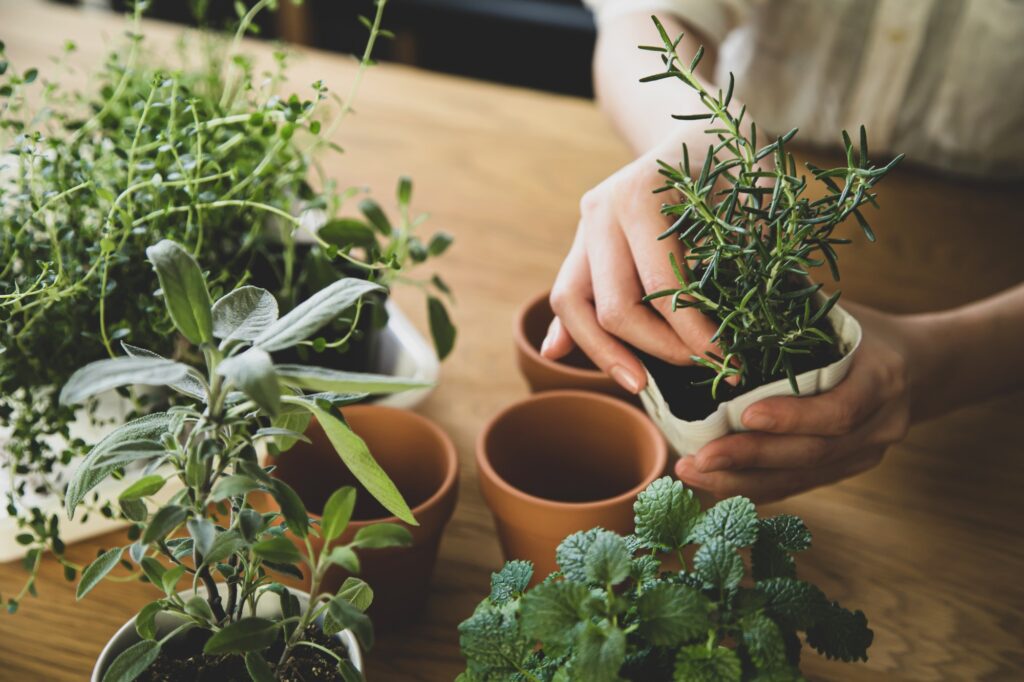
Fresh herbs growing near the kitchen make it possible to harvest small amounts exactly when you need them. Basil, parsley, chives, mint, thyme, and several other herbs can be grown indoors when they receive conditions suited to their needs.
Light is usually one of the biggest challenges. Many culinary herbs naturally grow in sunny outdoor locations, so a dim kitchen counter may not provide enough energy for strong growth.
A bright window or supplemental grow light can dramatically expand the possibilities.
Our Indoor Herb Gardening: Cultivating Flavor and Freshness at Home guide provides a broader introduction to creating an indoor herb garden.
Dill lovers can also explore The Ultimate Guide to Growing Dill: From Garden to Kitchen.
🌱 Start Garden Seeds Indoors
Your indoor garden does not have to consist entirely of permanent houseplants.
Indoor seed starting allows vegetable and flower gardeners to begin certain plants before outdoor growing conditions are suitable. This can be particularly helpful for crops that need a long warm growing season.
Seedlings need adequate light, appropriate moisture, suitable temperatures, and enough time to develop without becoming severely crowded before they are moved outdoors.
Tomatoes are a familiar example. Our When to Start Tomato Seeds Indoors guide explains how timing relates to outdoor transplanting.
For more food-growing information, visit our Vegetable Gardening hub.
❄️ Adjust Houseplant Care With the Seasons
Plants living indoors still experience seasonal changes.
Day length changes. Light intensity shifts. Heating systems dry the air during winter. Rooms near windows may become colder, while containers may take longer to dry.
Many indoor plants grow more slowly during periods of reduced light, which generally means they also use water more slowly.
The watering routine that worked perfectly in July may therefore be too frequent in December.
Spring brings another transition. Increasing light and active growth may cause plants to use water more quickly, and it can be a convenient time to evaluate whether plants need repotting or feeding.
Instead of using exactly the same routine twelve months of the year, allow the plants themselves and their growing conditions to guide you.
🌤️ Moving Houseplants Outdoors for Summer
Some indoor plants can enjoy spending warmer months outdoors, but the move needs to be handled carefully.
Outdoor sunlight is dramatically more intense than most indoor light. A plant accustomed to living beside a window can scorch when it is suddenly placed in direct afternoon sun.
Acclimate plants gradually, beginning in a sheltered location with filtered light or gentle morning sun.
Outdoor containers may also dry much faster because they are exposed to wind and warmer temperatures.
Before bringing plants back indoors later in the year, inspect them carefully for insects and other hitchhikers so you do not introduce a pest problem to the rest of your houseplant collection.
🏡 Choose Plants for the Conditions, Not the Room Name
Lists of the “best bathroom plants,” “best bedroom plants,” or “best kitchen plants” can be fun, but plants do not know what we call a room.
They respond to environmental conditions.
A bathroom with a large bright window may be an excellent place for moisture-loving tropical plants. A windowless bathroom may provide almost no usable natural light.
Likewise, a kitchen can be sunny, dark, warm, cool, humid, or dry depending on its layout.
Instead of choosing a plant because an article says it belongs in a particular room, evaluate the actual light, temperature, humidity, and available space.
Then choose a plant that fits.
🐶 Consider Pets and Children When Choosing Plants
Houseplants should also suit the people and animals sharing your home.
Some common indoor plants can cause problems if chewed or swallowed by pets or children. Toxicity varies widely by plant and by the amount ingested.
If you have curious pets or young children, identify plants before bringing them home and check reliable plant-safety information rather than relying on social-media claims or common names alone.
A hanging basket or high shelf may reduce access in some situations, but determined cats in particular can reach places that appear inaccessible.
Plant selection is the safest starting point when accidental ingestion is a realistic concern.
🛒 Inspect Plants Before Bringing Them Home
A healthy indoor garden often begins at the store.
Before buying a plant, examine the foliage and stems carefully. Look underneath leaves and around leaf joints for insects, webbing, sticky residue, unusual bumps, or cottony material.
Check whether the plant appears excessively wilted or whether the potting medium smells unpleasant or remains extremely saturated.
A bargain plant can be enjoyable to rescue, but understand that bringing an infested plant into a large collection may create much more work than expected.
When practical, isolate new plants temporarily until you are confident they are healthy.
⚠️ Common Indoor Plant Mistakes
Most houseplant failures come from a relatively small number of mistakes.
Watering on a rigid schedule can keep some plants continually wet while allowing others to become too dry.
Ignoring light requirements can leave a sun-loving plant slowly declining in a dark corner.
Using containers without drainage makes moisture management unnecessarily difficult.
Repotting into an enormous container can surround a small root system with more wet potting mix than it can use.
Fertilizing a struggling plant heavily can add another source of stress when the actual problem is light, roots, drainage, or pests.
Moving plants constantly makes it harder for them to adjust to their environment.
The solution to most of these problems is observation rather than more products.
Look at the plant, check the soil, examine the roots when appropriate, evaluate the light, and make one thoughtful adjustment at a time.
📝 Keep Track of Your Indoor Garden
A small collection is easy to remember. Twenty or thirty houseplants can become another matter entirely.
Consider keeping simple notes about your plants. Record when you repot them, where they grow best, which ones dry quickly, when flowering begins, and when you first notice pests or other problems.
You can also take occasional photographs.
Over time, these records help reveal patterns. Perhaps one window is ideal during winter but becomes too intense in summer. Perhaps an anthurium consistently flowers after a particular seasonal change. Maybe one pot dries twice as quickly as the others.
This kind of observation gradually turns general houseplant advice into knowledge tailored to your own home.
🌱 Expand Your Indoor Garden Gradually
Houseplants have a way of multiplying.
One plant becomes three, propagation adds several more, and before long every bright window seems to contain something green.
There is no need to build a huge collection immediately.
Start with a few plants whose requirements match your home. Learn how quickly their soil dries, how their leaves respond to changing light, and what healthy new growth looks like.
Once those plants are thriving, add something different.
Perhaps you begin with an adaptable spider plant, move on to an anthurium, experiment with an orchid, grow a pot of herbs, and eventually learn to propagate your favorites.
Indoor gardening becomes much easier when each new plant adds to what you already know.
🌿 Bring Gardening Indoors
An indoor garden may consist of one plant or a room filled with greenery.
It can be practical, supplying fresh herbs for the kitchen, or purely decorative. It can give outdoor gardeners something to tend during winter and apartment gardeners a way to enjoy growing plants without having a yard at all.
The basic principles remain remarkably consistent: give plants appropriate light, water according to their needs, provide healthy roots with suitable potting media and drainage, and pay attention when their growth changes.
You do not have to follow a perfect houseplant routine.
Learn what each plant needs, observe how it responds to your home, and make adjustments as you go.
Before long, gardening does not stop at the back door.
🔗 Related Articles
- Gardening Basics
- Flower Gardening
- Vegetable Gardening
- How to Repot a Plant
- How to Successfully Propagate Spider Plants
- How to Successfully Propagate a Snake Plant
- Growing Anthuriums: Tips and Secrets for a Thriving Indoor Garden
- The Ultimate Guide to Caring for Orchids
- Indoor Herb Gardening: Cultivating Flavor and Freshness at Home
- The Ultimate Guide to Growing Dill: From Garden to Kitchen
- When to Start Tomato Seeds Indoors