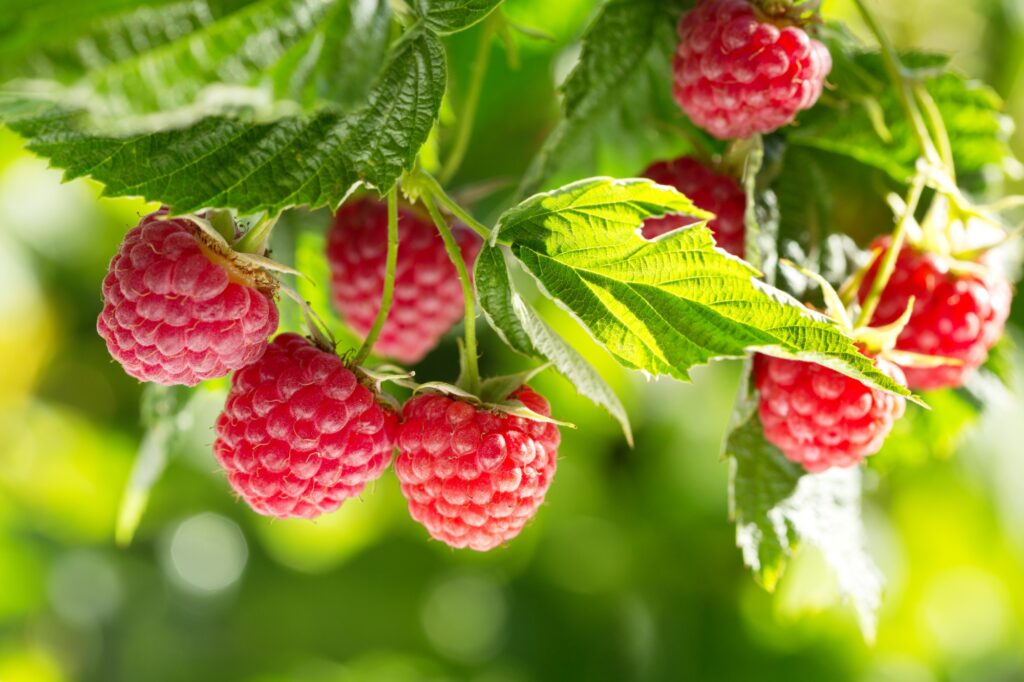
Raspberries are one of the most rewarding perennial fruits for the home garden. A relatively small planting can produce bowls of fragrant berries for fresh eating, baking, jam, smoothies, desserts, and freezing, often for many years once the plants become established.
They are also more diverse than the familiar red raspberry suggests. Gardeners can grow red, yellow, black, and purple raspberries, and the plants may produce either one summer crop on second-year canes or an additional late-summer to fall crop on first-year canes.
The key to successful raspberry care is understanding the plant’s unusual growth cycle. The root system and crown are perennial, but most individual canes live for only two years. First-year canes are called primocanes. In traditional summer-bearing raspberries, those canes survive winter and become floricanes, which flower, fruit, and then die during their second season.
Primocane-fruiting raspberries work a little differently because they can produce fruit on first-year growth. Once you know which type you are growing, pruning becomes much easier.
Give raspberries full sun, good drainage, consistent moisture, room to spread, and regular pruning, and a well-managed patch can produce fruit for many seasons.
🍓 Raspberries at a Glance
- Botanical genus: Rubus
- Plant type: Perennial bramble with mostly biennial canes
- Family: Rosaceae
- Sun: Full sun
- Soil: Fertile, well-drained soil
- Soil pH: Generally about 5.5 to 6.5
- Planting time: Early spring in many climates
- Water: Consistent moisture, especially during flowering and fruit development
- Fruit colors: Red, yellow, black, and purple
- Fruiting habits: Summer-bearing or primocane-fruiting
- Pollination: Most cultivars are self-fertile
- Support: Trellising is useful for many types
- Pruning: Essential
- Harvest: Pick berries when fully colored and easily detached
- Propagation: Suckers, division, tip layering, or root cuttings depending on type
🌱 How Raspberry Plants Grow
Raspberry plants have a long-lived crown and root system that continually produce new canes.
Individual canes normally follow a two-year cycle.
First Year: Primocane
The cane emerges from the crown or roots and grows vigorously.
In summer-bearing raspberries, it usually does not fruit during this first season.
Second Year: Floricane
The same cane survives winter, develops side branches, flowers, and produces berries.
After fruiting, the floricane dies.
At the same time, new primocanes are already growing to produce the next crop.
Understanding this cycle is the foundation of raspberry pruning.
🌿 What Is a Primocane?
A primocane is a first-year raspberry cane.
It tends to be:
- Green or reddish
- Flexible
- Vigorous
- Leafy
In summer-bearing raspberries, these canes must be preserved because they will produce next year’s berries.
In primocane-fruiting raspberries, the upper portion of the cane may produce fruit during its first year.
🍓 What Is a Floricane?
A floricane is a second-year cane.
In traditional summer-bearing raspberries, floricanes:
- Flower.
- Produce berries.
- Finish fruiting.
- Die.
Once a floricane has produced its crop, cut it to the ground.
Leaving dead fruiting canes in the planting creates unnecessary congestion and can increase disease problems.
🍓 Summer-Bearing vs. Primocane-Fruiting Raspberries
This distinction determines how you prune.
Summer-Bearing Raspberries
Summer-bearing raspberries usually produce one main crop in early to midsummer.
Fruit develops on second-year floricanes.
After harvest:
- Remove the floricanes that just fruited.
- Keep healthy new primocanes for next year.
Primocane-Fruiting Raspberries
These are sometimes called everbearing or fall-bearing raspberries.
They can produce a late-summer or fall crop on the upper part of first-year primocanes.
If those canes are left through winter, their lower portions can produce another crop the following summer.
This allows either a one-crop or two-crop pruning system.
🍓 What Does “Everbearing” Really Mean?
The term can be misleading.
Everbearing raspberries do not continuously produce fruit all year.
They are generally primocane-fruiting types capable of producing:
- A fall crop on first-year cane tips
- Another crop the following summer from lower sections of those same canes
Many gardeners simplify management by cutting every cane to the ground each winter and growing only a single fall crop.
🔴 Red Raspberries
Red raspberries are the most familiar garden type.
They spread readily through underground roots and can form a widening patch.
They are available as both:
- Summer-bearing cultivars
- Primocane-fruiting cultivars
Red raspberries are generally cold hardy, although exact hardiness varies by cultivar.
🟡 Yellow Raspberries
Yellow raspberries are essentially color variants of red raspberries.
Their berries may be:
- Pale yellow
- Gold
- Amber
- Apricot-toned
They have similar growing requirements and may also be summer-bearing or primocane-fruiting.
Their flavor is often mild and sweet.
⚫ Black Raspberries
Black raspberries are botanically different from most red raspberries.
They generally have:
- Dark purple-black fruit
- Arching canes
- A richer, more concentrated flavor
Black raspberries usually do not spread aggressively through root suckers the way red raspberries do.
Instead, long cane tips may touch the ground and root naturally.
This is called tip layering.
Black raspberries usually require somewhat different pruning than red raspberries.
🟣 Purple Raspberries
Purple raspberries are hybrids, usually involving red and black raspberry ancestry.
They often produce:
- Large fruit
- Deep red-purple berries
- Strong raspberry flavor
- Vigorous plants
Their pruning and growth characteristics can resemble black raspberries.
☀️ How Much Sun Do Raspberries Need?
Raspberries produce their best crops in full sun.
Aim for at least 6 to 8 hours of direct sunlight per day.
Good sunlight encourages:
- Strong cane growth
- More flowers
- Better fruit set
- Sweeter berries
- Faster drying after rain
Raspberries can tolerate light shade, but heavier shade generally reduces yield and fruit quality.
🌱 Best Soil for Raspberries
Raspberries prefer fertile, well-drained soil rich in organic matter.
Ideal soil should be:
- Loose
- Moisture-retentive
- Well drained
- Moderately fertile
Sandy loam is excellent.
Heavy clay can work if drainage is improved, but raspberries are highly vulnerable to problems in persistently saturated soil.
🧪 What Soil pH Do Raspberries Prefer?
A pH of approximately 5.5 to 6.5 is generally suitable.
Raspberries prefer moderately acidic soil.
Test the soil before automatically adding lime.
If you are establishing a permanent raspberry bed, correcting major pH or fertility problems beforehand is much easier than trying to do so after the roots have spread.
💧 Good Drainage Is Essential
Poorly drained soil can cause serious raspberry problems.
Waterlogged roots are vulnerable to Phytophthora root rot and other decline.
Avoid:
- Low spots
- Heavy compacted clay
- Locations where water stands after rain
A raised bed or broad berm can be useful where drainage is marginal.
📅 When Should You Plant Raspberries?
Early spring is one of the best planting times in many climates.
Bare-root raspberry plants are commonly planted while dormant.
Container-grown plants provide greater flexibility, although cool spring conditions still reduce transplant stress.
Fall planting may work in climates where winters are mild enough for roots to establish safely.
🌱 Bare-Root vs. Container Raspberries
Both are suitable.
Bare-Root Plants
Advantages include:
- Lower cost
- Easy planting
- Good availability in spring
Keep the roots moist until they go into the soil.
Never leave bare-root raspberries exposed to sun or wind for extended periods.
Container Plants
Container-grown raspberries may be planted later.
Check roots before planting and loosen any severe circling.
🌿 Choose Healthy Nursery Plants
Start with certified or reputable nursery stock.
Avoid digging unknown raspberries from:
- Roadsides
- Abandoned gardens
- Wild bramble patches
Wild or neglected plants may carry:
- Viruses
- Rust diseases
- Cane diseases
- Insect pests
Starting with healthy plants helps protect a raspberry bed you hope to keep for many years.
🌱 Preparing the Raspberry Bed
Before planting:
- Remove perennial weeds.
- Test the soil.
- Correct drainage problems.
- Add finished compost if the soil needs organic matter.
- Install trellis posts if your planting system requires them.
Perennial weeds are especially troublesome once raspberry roots and canes fill the bed.
Preparing thoroughly at the beginning saves considerable work later.
📏 How Far Apart Should Raspberries Be Planted?
Spacing varies according to raspberry type and training system.
Red and Yellow Raspberries
Plants are often placed roughly 2 to 3 feet apart within rows.
Allow around 8 to 10 feet between rows where ample access is needed.
Black and Purple Raspberries
These generally need more space.
A spacing of roughly 3 to 4 feet between plants is common.
Always consider cultivar vigor and local recommendations.
🌱 How Deep Should Raspberries Be Planted?
Plant raspberries at approximately the depth they were growing at the nursery.
The crown should generally be at or just slightly below soil level.
Avoid excessively deep planting.
Spread bare roots naturally rather than twisting them into a small hole.
Backfill gently and water thoroughly.
🌿 Step 1: Prepare the Planting Site
Choose an area receiving abundant sun and good airflow.
Remove weeds and loosen compacted soil.
Avoid sites with persistent drainage problems.
🕳️ Step 2: Dig the Planting Hole
Dig a hole wide enough to spread the roots without bending them sharply.
The hole does not need to be extremely deep.
🌱 Step 3: Position the Plant
Set the crown close to the natural soil level.
Spread the roots outward.
For container plants, keep the root ball level with surrounding soil unless nursery soil has buried the crown too deeply.
🌿 Step 4: Backfill
Replace the soil around the roots.
Firm gently.
Do not pack the soil hard enough to remove all pore space.
💧 Step 5: Water Thoroughly
Water immediately after planting.
Continue monitoring moisture as the plants establish.
A newly planted raspberry has much less ability to withstand drought than an established patch.
✂️ Step 6: Cut Back Bare-Root Plants if Recommended
Bare-root raspberry canes are often shortened at planting.
This reduces stress and encourages new canes to emerge from the crown or root system.
Exact recommendations depend on plant type and nursery preparation.
If the nursery has already pruned the plants, additional cutting may not be necessary.
🍂 Step 7: Mulch
Apply an organic mulch around the row.
Suitable materials include:
- Straw
- Shredded leaves
- Wood chips
- Fine bark
Mulch helps reduce weeds and maintain more even soil moisture.
Do not bury the crowns beneath a thick wet layer.
💧 How Often Should You Water Raspberries?
Raspberries have relatively shallow roots and benefit from consistent moisture.
A general target of roughly 1 to 2 inches of water per week during active growth can be useful, adjusted for:
- Rainfall
- Soil type
- Temperature
- Mulch
- Plant size
The most important periods include:
- Flowering
- Fruit set
- Berry development
Avoid waterlogging.
🍓 Consistent Moisture Improves Berry Size
Drought during fruit development can cause:
- Smaller berries
- Reduced yields
- Poorly filled fruit
- Cane stress
Deep irrigation is preferable to repeated shallow sprinkling.
Drip irrigation and soaker hoses are especially useful in raspberry rows.
🚿 Avoid Frequent Overhead Watering
Keeping foliage and fruit constantly wet can encourage:
- Botrytis gray mold
- Cane diseases
- Other fungal problems
If overhead watering is necessary, irrigate early enough in the day for foliage to dry before night.
🌾 Do Raspberries Need Fertilizer?
Raspberries need enough nitrogen to produce strong new canes, but excessive nitrogen creates problems.
Too much can result in:
- Excessive cane growth
- Dense foliage
- Reduced airflow
- Greater disease pressure
- Poor winter hardening
Use soil-test recommendations where possible.
Established plants are often fertilized in early spring before rapid growth.
Avoid heavy nitrogen applications late in the season.
🌿 Do Raspberries Need a Trellis?
Most raspberry patches benefit from some form of support.
A trellis:
- Keeps canes upright
- Makes berries easier to harvest
- Improves airflow
- Separates cane generations
- Keeps fruit cleaner
- Reduces storm damage
Black and purple raspberries can sometimes be managed more like freestanding bushes through tipping, while long red raspberry rows are often supported between wires.
🪵 Simple Raspberry Trellis
A basic system can consist of strong end posts with wires running down each side of the row.
The wires help keep canes contained inside a narrow hedge.
Some systems use:
- One wire
- Two wires
- Crossarms with parallel wires
The best design depends on raspberry type and row length.
The goal is support and organization, not tying every cane rigidly in place.
📐 Keep Raspberry Rows Narrow
Red raspberries spread through underground roots and may produce new shoots outside the original row.
Allowing the patch to become extremely wide creates:
- Poor airflow
- Difficult harvesting
- More disease pressure
- Smaller fruit
Maintain a relatively narrow row, often around 1 to 2 feet wide, by removing shoots emerging too far from the desired planting.
✂️ How to Prune Summer-Bearing Red Raspberries
After the summer crop finishes:
- Identify the floricanes that produced fruit.
- Cut those canes to ground level.
- Leave healthy new primocanes.
- Remove weak or diseased canes.
- Thin remaining canes if overcrowded.
The new primocanes will become next year’s floricanes.
❄️ Winter Pruning for Summer Raspberries
During late winter or early spring, inspect the surviving canes.
Remove:
- Dead canes
- Winter-damaged sections
- Weak growth
- Excess canes
Keep the strongest well-spaced canes.
In a hedgerow system, you may maintain several sturdy canes per linear foot rather than allowing every shoot to survive.
🍓 How to Prune Primocane-Fruiting Red Raspberries
There are two methods.
✂️ One-Crop Pruning
This is the easiest approach.
During winter or very early spring:
Cut every cane to the ground.
New primocanes emerge in spring and produce berries later that summer or fall.
Advantages include:
- Very simple pruning
- Fewer overwintering cane diseases
- One concentrated crop
- Easy cleanup
For many home gardeners, this is the most convenient system.
🍓 Two-Crop Pruning
If you want both summer and fall fruit:
- Allow first-year primocanes to fruit at their tips in fall.
- Leave those canes standing through winter.
- Remove only the section that fruited.
- Allow lower portions to produce a summer crop.
- Remove the entire cane after that second crop.
At the same time, new primocanes grow for the next fall harvest.
This extends the season but makes pruning more complicated.
⚫ How to Prune Black Raspberries
Black raspberries respond well to summer tipping.
When new primocanes reach an appropriate height, often around 2½ to 3 feet, remove a few inches from the tip.
This encourages lateral branches.
Those laterals produce fruit the following season.
During dormancy:
- Thin canes.
- Shorten laterals.
- Remove weak or damaged wood.
Exact heights and lateral lengths vary with cultivar and climate.
🟣 How to Prune Purple Raspberries
Purple raspberries are often managed similarly to black raspberries.
Summer tipping encourages branching.
During dormant pruning:
- Remove weak canes.
- Thin the crown.
- Shorten fruiting laterals as appropriate.
After harvest, remove floricanes that have completed fruiting.
🌿 How Can You Tell Old Raspberry Canes From New Ones?
Primocanes are usually:
- Greener
- More flexible
- Smooth or freshly thorned
- Vigorous
Floricanes become:
- Brown
- Woody
- Branched
- Drier after harvest
Once fruit has been picked, spent floricanes become increasingly obvious.
Cut them out rather than leaving them mixed among the living canes.
🍓 Do Raspberries Need Two Plants for Pollination?
Most garden raspberries are self-fertile.
One cultivar can generally produce fruit.
However, bees and other insects still improve pollination by moving pollen around the flowers.
A planting full of pollinating insects typically develops fuller, better-shaped berries.
🐝 Raspberry Flowers Support Pollinators
Raspberry blossoms are valuable to:
- Honeybees
- Bumblebees
- Solitary bees
- Other beneficial insects
Avoid applying insecticides to open flowers.
Nearby plants such as Bee Balm, Coreopsis, and Coneflower can help provide floral resources before and after raspberry bloom.
🍓 Why Is a Raspberry Made of Little Sections?
A raspberry is an aggregate fruit.
Each small bead is called a drupelet.
Each drupelet develops from a separate ovary within one flower.
Successful pollination helps produce a full, well-shaped berry.
Poor pollination can lead to berries with missing or undeveloped sections.
🍓 When Do Raspberries Fruit?
Timing depends on cultivar.
Summer-bearing raspberries generally ripen:
- Early summer
- Midsummer
Primocane-fruiting varieties may begin producing:
- Late summer
- Early fall
and continue until frost in favorable conditions.
Planting both types can create a much longer raspberry season.
🍓 When Will Newly Planted Raspberries Produce?
A new raspberry planting may provide a small crop relatively quickly, but full production usually takes several seasons.
Summer-bearing plants often spend the first season producing primocanes.
Those become fruiting floricanes the following year.
Primocane-fruiting varieties may produce some berries during their first year if growth is strong and the season is long enough.
🍓 When Are Raspberries Ready to Pick?
A ripe raspberry should be:
- Fully colored
- Plump
- Aromatic
- Easy to remove
When gently pulled, the berry should slide away from its receptacle with little resistance.
If you have to tug firmly, it is usually not fully ripe.
🍓 Why Are Raspberries Hollow When Picked?
This is one way raspberries differ from blackberries.
When a raspberry is picked, the receptacle remains attached to the plant.
The harvested berry therefore has a hollow center.
Blackberries generally retain the receptacle inside the fruit when picked.
🍓 Do Raspberries Ripen After Picking?
No, not significantly.
Raspberries are non-climacteric fruit.
They should be allowed to ripen on the plant.
An underripe raspberry picked too soon will not become substantially sweeter afterward.
🌅 When Is the Best Time to Harvest Raspberries?
Harvest in the morning after dew has dried.
Cool berries are firmer and generally keep better.
Avoid picking during rain.
Wet raspberries deteriorate quickly.
During peak production, check plants every day or two.
🧺 Handle Raspberries Gently
Raspberries are extremely delicate.
Pick into shallow containers.
Do not stack them deeply.
The weight of fruit on top can crush berries below.
Refrigerate them promptly after harvest.
🚿 Should You Wash Raspberries Before Storing Them?
Usually, no.
Extra moisture encourages mold and rapid deterioration.
Store berries dry and wash them shortly before eating or processing.
If fruit is visibly wet from rain, spread it carefully and allow surface moisture to dry before refrigeration when practical.
❄️ Can You Freeze Raspberries?
Yes.
Freezing is one of the best ways to preserve a large harvest.
For individually frozen berries:
- Gently wash them.
- Dry thoroughly.
- Spread in a single layer on a tray.
- Freeze until firm.
- Transfer to freezer containers.
Frozen raspberries are excellent for:
- Smoothies
- Sauces
- Baking
- Jam
🍯 Ways to Use Raspberries
Raspberries can be eaten fresh or used for:
- Jam
- Jelly
- Pie
- Tarts
- Muffins
- Cakes
- Syrup
- Yogurt
- Oatmeal
- Smoothies
For canning and preserving, use tested recipes from reliable food-preservation sources.
🐦 Birds and Raspberries
Birds quickly learn when raspberries begin ripening.
Netting can protect a small planting, but use it carefully.
Loose netting can trap:
- Birds
- Snakes
- Other wildlife
Install it tightly and inspect it regularly.
Frequent harvesting is also important.
🦌 Do Deer Eat Raspberries?
Yes.
Deer may browse:
- Leaves
- Young canes
- Fruit
Thorns provide only limited protection.
Where deer pressure is heavy, fencing is the most dependable solution.
🐇 Do Rabbits Eat Raspberry Canes?
Rabbits may damage young plants and canes, particularly during winter.
Protect vulnerable plantings with fencing or wire mesh where rabbit pressure is severe.
🪰 Spotted-Wing Drosophila
Spotted-wing drosophila is one of the most important pests of raspberries in many regions.
Unlike ordinary fruit flies that favor overripe or damaged fruit, spotted-wing drosophila can lay eggs inside ripening healthy fruit.
Larvae may then develop inside the berries.
Helpful management practices include:
- Picking frequently
- Refrigerating fruit immediately
- Removing overripe berries
- Removing dropped fruit
- Monitoring local pest reports
Late-season primocane raspberries can be particularly vulnerable because populations of the fly often increase as summer progresses.
🪲 Japanese Beetles
Japanese beetles may skeletonize raspberry leaves and feed on ripe berries.
For small plantings, hand-picking is often practical.
Drop beetles into soapy water.
Avoid spraying open flowers with broad-spectrum insecticides that may harm pollinators.
🐛 Raspberry Cane Borer
Raspberry cane borers can damage shoots.
A characteristic symptom may be a wilted cane tip with rings of punctures below the wilted area.
Pruning below damaged sections can remove larvae before they move farther down the cane.
Dispose of infested material.
🐛 Raspberry Crown Borer
Raspberry crown borer larvae can feed within the crown and roots.
Affected plants may show:
- Weak canes
- Wilting
- Poor growth
- Cane death
Severe infestations can weaken or kill entire plants.
Remove badly affected plants when necessary and follow regional management recommendations.
🕷️ Spider Mites
Hot, dry conditions can encourage spider mites.
Symptoms may include:
- Fine stippling on leaves
- Bronzed foliage
- Fine webbing during heavy infestations
Plants suffering drought stress are often more vulnerable.
Maintain proper irrigation and encourage natural predators.
🍄 Common Raspberry Diseases
Potential diseases include:
- Anthracnose
- Spur blight
- Cane blight
- Botrytis gray mold
- Phytophthora root rot
- Orange rust
- Viral diseases
Good sanitation, healthy nursery stock, proper spacing, and drainage reduce many problems.
🍄 Raspberry Anthracnose
Anthracnose may cause:
- Small gray lesions on canes
- Purple margins
- Sunken spots
- Reduced cane vigor
Severely infected canes may crack or become more vulnerable to winter injury.
Improve airflow and remove heavily affected cane material.
🌿 Spur Blight
Spur blight commonly affects red raspberries.
Symptoms often develop around the bases of leaves on first-year canes.
Affected areas may become brown or purple.
Good pruning and avoiding excessively dense rows help reduce disease pressure.
🌿 Cane Blight
Cane blight commonly enters through wounds.
Symptoms may include:
- Dark lesions
- Cane dieback
- Wilting side branches
Avoid unnecessarily damaging canes during:
- Cultivation
- Harvest
- Trellis work
Remove diseased cane sections.
🌧️ Botrytis Gray Mold
Botrytis can quickly destroy ripe raspberries during cool or wet weather.
Symptoms include:
- Soft berries
- Gray fuzzy fungal growth
- Rapid fruit decay
Reduce the risk by:
- Maintaining airflow
- Harvesting frequently
- Avoiding prolonged fruit wetness
- Removing rotten fruit
- Refrigerating berries promptly
💧 Phytophthora Root Rot
Phytophthora is one of the reasons drainage is so important.
Symptoms may include:
- Weak cane growth
- Yellowing
- Wilting
- Cane collapse
- Root decay
The disease is especially troublesome in waterlogged soil.
Do not establish raspberries where the soil remains saturated after rain.
🟠 Orange Rust
Orange rust is especially important on black and purple raspberries.
Affected plants may produce bright orange spores on leaf undersides.
The disease becomes systemic throughout the plant.
Infected plants should generally be removed completely.
Do not propagate from affected plants.
🦠 Raspberry Viruses
Viruses can cause symptoms such as:
- Mottled foliage
- Stunted growth
- Poor fruit production
- Crumbly berries
There is generally no cure for a virus-infected plant.
Starting with disease-free nursery stock and removing seriously affected plants are important preventive measures.
🍓 What Causes Crumbly Raspberries?
Crumbly fruit may fall apart when picked.
Possible causes include:
- Viral disease
- Poor pollination
- Mite damage
- Environmental stress
If the problem occurs repeatedly throughout the patch, investigate plant health rather than assuming it is simply a normal variety characteristic.
❓ Why Are My Raspberries Small?
Possible reasons include:
- Drought
- Too many canes
- Poor pollination
- Shade
- Low fertility
- Disease
- Variety genetics
Maintaining a narrow, well-thinned row with steady moisture often improves fruit size.
❓ Why Are My Raspberries Sour?
They may have been harvested too soon.
A fully ripe raspberry should detach easily and develop its characteristic flavor.
Other factors affecting sweetness include:
- Cultivar
- Sunlight
- Weather
- Plant stress
Do not pick berries just because they have begun turning red.
❓ Why Aren’t My Raspberries Producing Fruit?
Possible causes include:
- The plants are too young.
- Summer-bearing primocanes have not reached their second year.
- Floricanes were pruned off accidentally.
- Winter cold killed the canes.
- The planting receives too much shade.
- Disease weakened the plants.
First determine whether you have a summer-bearing or primocane-fruiting cultivar.
That often explains the pruning and fruiting pattern.
❓ Why Did My Raspberry Canes Die After Fruiting?
That is normal.
A floricane has completed its life cycle once it produces berries.
Cut it to the ground.
The perennial plant survives through its crown and roots, while new primocanes replace the old canes.
❓ Why Are Raspberry Leaves Turning Yellow?
Potential causes include:
- Poor drainage
- Drought
- Nutrient deficiency
- Root disease
- Incorrect soil pH
- Natural leaf aging
If an entire planting is yellow and weak, examine drainage and roots first.
🌱 Do Raspberries Spread?
Red and yellow raspberries can spread vigorously through underground roots.
New shoots may emerge some distance from the original crown.
Black and purple raspberries behave differently and spread mainly when cane tips root where they touch the ground.
Keep the patch within bounds through regular pruning and sucker removal.
🌱 Propagating Red Raspberries From Suckers
Red raspberries are easy to propagate from healthy suckers.
During dormancy or early spring:
- Choose a vigorous shoot.
- Dig carefully around it.
- Retain attached roots.
- Separate it from the parent root system.
- Replant promptly.
- Water thoroughly.
Propagate only from healthy disease-free plants.
⚫ Propagating Black Raspberries by Tip Layering
Black raspberries commonly root from cane tips.
To deliberately propagate:
- Bend a long healthy cane toward the ground.
- Bury the tip beneath a few inches of soil.
- Keep it moderately moist.
- Wait for roots to form.
- Separate the rooted plant from the parent later.
This mimics the plant’s natural propagation strategy.
🚫 Don’t Let Raspberries Take Over the Garden
A neglected red raspberry patch can expand surprisingly quickly.
Remove new shoots growing:
- Into paths
- Into neighboring beds
- Into lawns
Keeping the planting confined to a defined row makes harvesting and disease management much easier.
🌿 Don’t Plant Unknown Wild Raspberries Nearby
Wild brambles can serve as sources of:
- Viruses
- Rust
- Cane diseases
- Insect pests
If possible, keep a managed raspberry planting separated from large patches of wild or neglected Rubus plants.
🍅 Be Careful With Previous Garden Sites
Raspberries can be affected by Verticillium wilt.
Avoid establishing them where susceptible crops have experienced serious wilt problems.
Potential previous hosts include:
- Tomatoes
- Potatoes
- Peppers
- Eggplants
If the history of a site is questionable, choose another location.
🪴 Can Raspberries Grow in Containers?
Yes, particularly compact primocane-fruiting cultivars.
Choose a large container with:
- Drainage holes
- Substantial soil volume
- Stable support
A container of roughly 15 to 20 gallons or larger gives roots much more room than a small decorative pot.
Use high-quality potting mix rather than garden soil.
💧 Container Raspberries Need Frequent Monitoring
Containers dry faster than garden soil.
Check moisture regularly during:
- Hot weather
- Flowering
- Fruiting
Water thoroughly and allow excess moisture to drain.
Do not leave the container standing continuously in water.
❄️ Protect Container Raspberries in Winter
Roots above ground experience more severe cold than roots protected by garden soil.
In cold climates, container raspberries may need:
- Insulation
- A sheltered location
- Temporary relocation to an unheated protected area
Choose a cultivar sufficiently hardy for your region.
🌱 Can Raspberries Grow in Raised Beds?
Yes.
Raised beds are useful where native soil drains poorly.
They also make it easier to:
- Control soil
- Contain roots
- Manage weeds
However, raspberries are perennial.
Design the bed as a long-term planting rather than expecting to return it to annual vegetables the following season.
🌸 Companion Plants for Raspberries
Raspberries do not require special companion plants.
However, a diverse planting nearby can support pollinators and beneficial insects.
Good possibilities include:
Keep large companion plants far enough away that they do not compete heavily with the raspberry roots.
🌿 Keep Weeds Under Control
Weeds compete with the shallow raspberry root system.
Mulch helps reduce weed pressure.
Hand-pull weeds near plants rather than cultivating deeply.
Deep hoeing can damage roots and crowns.
🍂 Raspberry Care in Fall
After harvest:
- Remove spent floricanes from summer-bearing plants.
- Remove diseased canes.
- Clean up rotting berries.
- Train healthy primocanes.
- Continue watering during severe drought.
- Avoid heavy late nitrogen feeding.
Primocanes that will survive winter need time to harden properly before freezing weather.
❄️ Raspberry Care in Winter
Winter tasks depend on raspberry type.
You may need to:
- Thin canes.
- Repair trellises.
- Remove damaged tips.
- Cut primocane-fruiting raspberries to the ground if using a one-crop system.
- Protect vulnerable cultivars from extreme cold.
Snow cover can provide useful insulation.
🌱 Raspberry Care in Spring
As growth resumes:
- Finish dormant pruning.
- Remove winter-damaged canes.
- Secure canes to supports.
- Apply fertilizer if needed.
- Refresh mulch.
- Check irrigation.
- Remove weeds.
New primocanes will soon begin appearing.
☀️ Raspberry Care in Summer
Summer tasks include:
- Watering
- Harvesting
- Checking for spotted-wing drosophila
- Removing ripe fruit frequently
- Tipping black and purple raspberry primocanes where appropriate
- Removing summer-bearing floricanes after harvest
Regular attention during fruiting season greatly improves berry quality.
🍓 How Long Do Raspberry Plants Live?
Individual canes live for only two years, but the root systems and crowns can remain productive much longer.
A healthy raspberry planting may remain productive for 10 years or more, although disease buildup and declining vigor eventually make replacement worthwhile.
Starting a new patch in clean soil can restore productivity when an old planting declines.
🍓 Are Raspberries Easy to Grow?
Yes, once you understand which canes to prune.
The basic process is:
- Choose a raspberry suited to your climate.
- Decide between summer-bearing and primocane-fruiting types.
- Plant in full sun.
- Use well-drained, moderately acidic soil.
- Keep rows narrow.
- Install support where useful.
- Maintain consistent moisture.
- Mulch to reduce weeds.
- Identify primocanes and floricanes.
- Remove spent floricanes.
- Thin excess canes.
- Harvest berries only when fully ripe.
- Pick frequently.
- Refrigerate fruit promptly.
- Watch for spotted-wing drosophila and cane diseases.
- Remove plants showing serious systemic disease.
The biggest mistakes are poor drainage, allowing rows to become overcrowded, removing the wrong canes, harvesting too early, and keeping declining or diseased plants indefinitely.
🍓 Final Thoughts
Raspberries can produce an extraordinary amount of fruit from a relatively small garden space, but successful raspberry care depends on understanding the plant’s rhythm.
The roots and crown remain alive for years while individual canes continually replace one another. In traditional summer-bearing raspberries, first-year primocanes grow one season, fruit as floricanes the next, and then die. Primocane-fruiting varieties add another possibility by producing berries on new growth during their first year.
Once that pattern becomes familiar, pruning is straightforward.
Give raspberries abundant sunlight, fertile but well-drained soil, consistent moisture, and enough room for air to move between canes. Keep red raspberry rows from spreading excessively, support long canes where necessary, and remove old floricanes as soon as their work is finished.
When harvest arrives, patience matters. Raspberries should be fully colored, aromatic, and easy to detach. They will not become significantly sweeter after picking.
A ripe raspberry eaten directly from the plant is one of the great rewards of a home fruit garden — and with good pruning and care, a healthy patch can provide thousands of them over its lifetime.
🔗 Related Articles
- Blackberry Care: How to Plant, Grow & Harvest Blackberries
- How to Plant Strawberries
- Apple Tree Care: How to Plant, Grow & Harvest Apples
- Pear Tree Care: How to Plant, Grow & Harvest Pears
- Plum Tree Care: How to Plant, Grow & Harvest Plums
- Bee Balm Care
- Coneflower Care
- Yarrow Care
📚 Sources & Further Reading
- University of Minnesota Extension — Growing Raspberries in the Home Garden
- Penn State Extension — Raspberry and Blackberry Production Guide
- Oregon State University Extension — Growing Raspberries in Your Home Garden
- University of Maine Cooperative Extension — Growing Raspberries and Blackberries
- Cornell Cooperative Extension — Raspberries