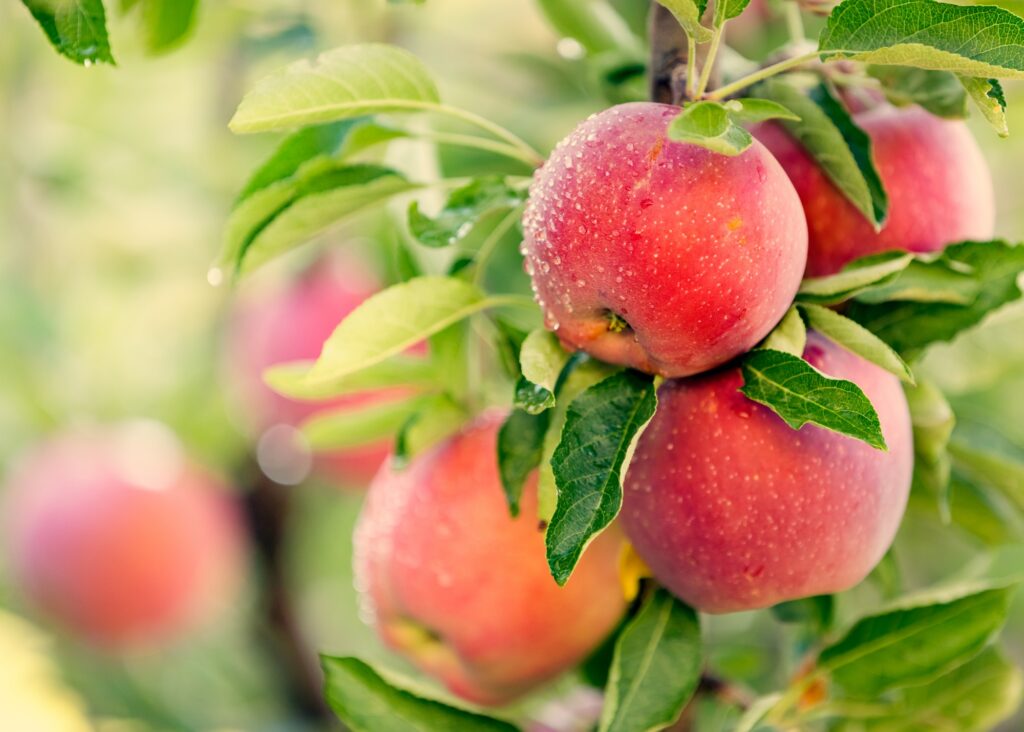
Apple trees are among the most rewarding fruit trees to grow at home. A healthy tree can provide fragrant spring blossoms, summer shade, food for pollinating insects, and a harvest ranging from crisp snacking apples to varieties suited for pies, cider, applesauce, and long winter storage.
They are also more complex than simply planting a seed and waiting for fruit.
Most cultivated apple trees are grafted, meaning the apple variety you want is joined to a separate rootstock that controls characteristics such as mature size, anchorage, disease susceptibility, and how quickly the tree begins bearing. Most apple varieties also need pollen from a different compatible apple or crabapple nearby before they will set a good crop.
Climate matters too. Apple cultivars vary dramatically in cold hardiness, heat tolerance, disease resistance, harvest season, and the amount of winter chilling they require.
Once you choose the right combination of cultivar and rootstock, however, much of apple-tree care comes down to a few fundamentals: full sun, good drainage, correct planting depth, consistent moisture during establishment, annual pruning, fruit thinning, and regular monitoring for pests and diseases.
🍎 Apple Trees at a Glance
- Botanical name: Malus domestica
- Plant type: Deciduous fruit tree
- Family: Rosaceae
- Sun: Full sun
- Soil: Fertile, well-drained soil
- Soil pH: Generally around 6.0 to 7.0
- Mature size: Determined largely by rootstock
- Bloom season: Spring
- Harvest: Summer through late fall, depending on cultivar
- Pollination: Most varieties need a different compatible apple or crabapple
- Water: Consistent during establishment and fruit development
- Pruning: Annually
- Fruit thinning: Usually beneficial
- Propagation: Primarily grafting or budding
- Major pest concerns: Codling moth, apple maggot, aphids, mites, scale
- Major disease concerns: Apple scab, fire blight, cedar-apple rust, powdery mildew
- Lifespan: Potentially decades with appropriate care
🌳 Choosing the Right Apple Tree
The most important apple-tree decisions happen before planting.
Do not select a tree solely because you recognize the apple from the grocery store.
Consider:
- Climate
- Winter hardiness
- Chill requirements
- Disease resistance
- Harvest season
- Pollination compatibility
- Mature tree size
- Rootstock
- Intended use of the fruit
A variety that performs beautifully in one region may struggle in another.
Whenever possible, choose cultivars with a proven record in your climate.
🍏 What Is an Apple Cultivar?
Names such as Honeycrisp, Gala, Fuji, Granny Smith, McIntosh, Golden Delicious, and Pink Lady refer to cultivars.
Trees grown from the seed of these apples generally do not reproduce the same variety.
An apple seed contains a genetically unique combination from two parent trees.
That is why named apple cultivars are reproduced through grafting.
A grafted Honeycrisp tree produces Honeycrisp apples because its fruiting wood comes from the original Honeycrisp genetic line.
🌱 What Is Apple Rootstock?
The rootstock is the lower portion of a grafted tree.
It provides the root system while the upper portion, called the scion, produces the desired apples.
Rootstock can influence:
- Mature tree height
- Time to first fruit
- Anchorage
- Cold hardiness
- Soil adaptability
- Disease susceptibility
- Root suckering
- Need for permanent support
Two trees carrying exactly the same apple cultivar can grow to very different sizes if grafted onto different rootstocks.
🌳 Standard Apple Trees
Standard or seedling rootstocks generally produce the largest trees.
They may eventually reach:
- 20 feet tall
- 25 feet tall
- Occasionally larger
Standard trees typically:
- Live a long time
- Develop strong root systems
- Tolerate a wider range of conditions
- Produce very large crops at maturity
Their disadvantages include:
- Long wait for fruit
- Difficult pruning
- Difficult harvesting
- Greater pest-management challenges
A standard tree may take six to eight years or longer to produce substantial crops.
🌳 Semi-Dwarf Apple Trees
Semi-dwarf rootstocks produce intermediate-sized trees.
They can be a good compromise for home gardens.
Advantages include:
- Smaller mature size than standards
- Earlier fruiting
- Easier pruning
- Easier harvesting
- Good crop potential
The exact mature height depends on the rootstock, cultivar, soil, climate, and pruning system.
Do not assume that every tree labeled “semi-dwarf” will mature at exactly the same size.
🌳 Dwarf Apple Trees
Dwarf rootstocks can produce trees small enough for modest yards.
Depending on the specific rootstock, a mature tree may remain roughly 8 to 12 feet tall, although size varies.
Dwarf trees often begin bearing only a few years after planting.
They are easier to:
- Prune
- Thin
- Harvest
- Protect from pests
However, many dwarf rootstocks have relatively weak anchorage.
Some need permanent staking or trellising.
A dwarf apple tree should not automatically be treated like a miniature standard tree.
Know the rootstock before removing its support.
🪴 Are Dwarf Apple Trees Better?
Not necessarily.
Dwarf trees are excellent where space is limited and easy harvesting is a priority.
Standard or larger semi-dwarf trees may be preferable where:
- Space is plentiful
- Drought tolerance matters
- Strong anchorage is desirable
- Long-term tree size is not a problem
There is no universally best rootstock.
Choose according to your site and gardening goals.
❄️ Apple Trees and Chill Hours
Most apples require a period of winter cold before they resume normal spring growth.
This is usually discussed in terms of chill hours or other chill-accumulation models.
Requirements vary tremendously among cultivars.
A variety adapted to a cold northern winter may perform poorly in a warm climate because it does not receive enough chilling.
Symptoms of inadequate chilling may include:
- Delayed bud break
- Uneven flowering
- Weak leaf development
- Poor fruit set
Warm-winter regions should use low-chill cultivars recommended locally.
Cold climates need cultivars hardy enough to survive their minimum winter temperatures.
🌡️ Cold Hardiness Is Not the Same as Chill Requirement
These two concepts are often confused.
Cold hardiness describes how much winter cold a tree can survive.
Chill requirement describes how much cool weather the tree needs to complete dormancy properly.
A tree could theoretically need substantial winter chilling but still be damaged by extremely low temperatures.
Choose cultivars suitable for both aspects of your climate.
☀️ How Much Sun Do Apple Trees Need?
Apple trees need plenty of sunlight.
Aim for at least 6 to 8 hours of direct sunlight, with eight or more hours preferable in many climates.
Good sunlight supports:
- Flower production
- Fruit color
- Sugar development
- Strong wood
- Better airflow
- Faster drying after rain
A heavily shaded apple tree may survive but produce disappointing crops.
🌬️ Give Apple Trees Good Airflow
An open location reduces the amount of time foliage remains wet after rain or dew.
This can help limit diseases such as apple scab.
Avoid crowding apple trees tightly between:
- Buildings
- Dense hedges
- Large trees
- Overgrown shrubs
Allow enough space for the tree’s mature canopy.
🌱 Best Soil for Apple Trees
Apple trees prefer deep, fertile, well-drained soil.
Ideal soil should:
- Drain reasonably quickly after rain
- Retain enough moisture for steady growth
- Contain organic matter
- Allow roots to spread freely
Apples tolerate several soil textures but struggle in persistently saturated ground.
Excellent drainage is more important than creating extremely rich soil.
🧪 What Soil pH Do Apple Trees Prefer?
A soil pH around 6.0 to 7.0 generally works well.
Slightly acidic soil is often ideal.
If you are establishing an orchard or correcting an existing problem, test the soil first.
Do not automatically add:
- Lime
- Sulfur
- Epsom salt
- Wood ash
- Large amounts of fertilizer
Soil amendments should solve an identified problem.
💧 Avoid Waterlogged Soil
Apple roots require oxygen.
A location that remains saturated for long periods can cause:
- Poor root growth
- Declining vigor
- Root disease
- Tree death
Avoid depressions where water regularly collects.
If drainage is poor, improve the site before planting or consider another location.
📅 When Should You Plant an Apple Tree?
Early spring is an excellent planting time in many temperate climates.
Bare-root apple trees are commonly planted as soon as the ground is workable.
Container-grown trees can be planted during a broader window, although mild conditions are still preferable.
Fall planting may work well in climates with relatively mild winters.
Avoid planting during:
- Extreme heat
- Frozen ground
- Severe drought
- Saturated conditions
🌳 Bare-Root vs. Container Apple Trees
Both can establish successfully.
Bare-Root Trees
Bare-root trees are dormant and sold without soil surrounding the roots.
Advantages include:
- Lower cost
- Easy root inspection
- Convenient shipping
- Good early-spring establishment
Keep the roots damp before planting.
Never allow them to dry completely.
Container Trees
Container-grown trees offer more flexible planting times.
Check the root system carefully before planting.
Roots circling the pot should be loosened or corrected so they can grow outward into surrounding soil.
🌱 How to Plant an Apple Tree
Correct planting depth is one of the most important factors in long-term tree health.
The tree’s root flare should sit at or slightly above the surrounding soil level.
The graft union should remain above ground.
For detailed planting fundamentals, see How to Plant a Tree.
🕳️ Step 1: Dig a Wide Hole
Dig a planting hole roughly two to three times wider than the root system.
Do not make it unnecessarily deep.
The tree should rest on firm soil.
If the hole is dug too deeply and refilled with loose material, the tree may settle after planting and end up buried too far.
🌳 Step 2: Find the Root Flare
The root flare is where the trunk begins broadening into major roots.
Nursery soil sometimes covers this point.
Remove excess soil around the trunk until you identify the actual flare.
Do not assume the top of the nursery container represents the correct planting depth.
🌱 Step 3: Check the Graft Union
The graft union is usually visible as a swelling or change in the lower trunk.
Keep it several inches above the final soil surface.
If the scion develops roots above the graft, a dwarf tree can potentially lose some of the size control provided by its rootstock.
✂️ Step 4: Inspect the Roots
Remove roots that are:
- Dead
- Broken
- Severely damaged
Spread bare roots naturally.
Correct severely circling roots on container-grown trees.
Do not bend large roots sharply just to make them fit into a small hole.
Make the hole wider instead.
🌿 Step 5: Backfill the Hole
Use primarily the native soil removed from the planting hole.
Avoid creating a small pocket filled with rich potting mix.
Roots ultimately need to grow into the surrounding soil.
Firm the soil gently around the roots without heavily compacting it.
💧 Step 6: Water Thoroughly
Water deeply after planting.
This settles soil around the roots and reduces large air pockets.
Continue monitoring moisture closely during the first growing season.
Newly planted trees do not yet have a large root system capable of reaching water far from the trunk.
🍂 Step 7: Mulch the Root Zone
Apply about 2 to 3 inches of coarse organic mulch around the tree.
Good choices include:
- Wood chips
- Shredded bark
- Shredded leaves
Keep mulch several inches away from the trunk.
Never pile it against the bark.
A broad, shallow mulch ring is far better than a mulch volcano.
🌿 Keep Grass Away From Young Trees
Grass competes aggressively with young fruit trees for:
- Water
- Nutrients
- Root space
Maintain a grass-free mulch circle around newly planted apples.
This also protects the trunk from:
- Lawn mowers
- String trimmers
Mechanical damage at the base can severely injure a young tree.
📐 How Far Apart Should Apple Trees Be Planted?
Spacing depends largely on rootstock.
A standard tree may need 20 feet or more of space.
Semi-dwarf trees generally need less.
Dwarf trees may be placed substantially closer together, especially when grown on a support system.
Always use the expected mature size of the particular rootstock rather than generic “apple tree” spacing.
🐝 Do Apple Trees Need Two Trees?
Most apple cultivars require pollen from a different compatible apple variety.
The second tree should:
- Bloom at roughly the same time
- Produce compatible pollen
- Be close enough for pollinating insects to move between them
A flowering crabapple can sometimes serve as the pollen source if its bloom period overlaps.
Planting two different cultivars is usually the simplest solution.
🍏 Can Two Trees of the Same Variety Pollinate Each Other?
Generally not effectively.
Two Honeycrisp trees, for example, are genetically the same cultivar.
For cross-pollination, choose a genetically different compatible apple.
This is why planting “two apple trees” is not enough unless they are the right two trees.
🌸 Can Crabapple Trees Pollinate Apples?
Yes.
Many crabapples produce abundant flowers and compatible pollen.
A crabapple growing nearby may provide excellent pollen for a fruiting apple cultivar when their bloom periods overlap.
This can be especially useful in small yards where another ornamental crabapple already grows nearby.
🍎 What About Triploid Apple Varieties?
A few apple cultivars are triploid.
Triploid apples can produce excellent fruit but generally produce poor-quality or ineffective pollen for pollinating neighboring trees.
If you plant a triploid cultivar, you may need two additional compatible diploid apple cultivars that can pollinate each other while also providing pollen for the triploid.
This is worth checking before purchasing.
Pollination charts from nurseries and Extension services can help.
🌸 Early, Midseason & Late Blooming Apples
Apple cultivars do not all flower at exactly the same time.
They are often grouped roughly into:
- Early bloom
- Midseason bloom
- Late bloom
Pollination partners need enough overlap in flowering for bees to transfer pollen effectively.
A very early cultivar and a very late cultivar may not provide enough overlap.
🐝 Encourage Pollinating Insects
Apples depend heavily on bees and other insects for pollination.
Avoid applying insecticides to open blossoms.
A garden containing flowers across the growing season can help maintain pollinator populations.
Early flowers such as Crocus can provide forage before apple bloom, while summer flowers such as Bee Balm and Coneflower continue feeding pollinators afterward.
🌧️ Weather Can Affect Apple Pollination
Even perfectly matched cultivars may produce a poor crop after bad spring weather.
Cold, rainy, or windy conditions can reduce bee activity during bloom.
Hard frost can also damage flowers.
A year with thousands of blossoms but few apples does not automatically indicate a pollination incompatibility.
Weather may be responsible.
❄️ Protect Apple Blossoms From Late Frost
Flower buds become increasingly vulnerable as they open.
A spring freeze can kill blossoms or damage developing fruit.
Avoid planting in low frost pockets where cold air settles.
Slightly elevated locations often offer better air drainage.
Large mature apple trees are difficult to cover, so cultivar selection and site placement are the most practical long-term defenses.
💧 How Often Should You Water Apple Trees?
Young apple trees need consistent moisture while establishing.
Water deeply rather than applying tiny amounts every day.
Frequency depends on:
- Rainfall
- Soil type
- Temperature
- Mulch
- Tree size
- Drainage
Check the soil before watering.
It should remain moderately moist but not saturated.
🍎 Water During Fruit Development
Established apple trees can tolerate occasional dry periods, but severe drought during fruit development may reduce:
- Apple size
- Fruit quality
- Next year’s flower-bud development
Consistent moisture is particularly important for young trees and dwarf trees with relatively restricted root systems.
Mulch helps reduce moisture fluctuations.
🌾 Do Apple Trees Need Fertilizer?
Sometimes — but more is not necessarily better.
Excessive nitrogen can produce:
- Long succulent shoots
- Excessive foliage
- Delayed fruiting
- Poor fruit color
- Greater susceptibility to certain diseases
A soil test is useful before establishing the planting.
Afterward, annual shoot growth and leaf appearance can help indicate whether additional fertility is needed.
Avoid automatically fertilizing every apple tree heavily each spring.
⚠️ Do Not Put Fertilizer in the Planting Hole
Concentrated fertilizer in direct contact with young roots can cause injury.
Plant the tree properly first.
If fertilizer is needed, apply it later according to soil-test and regional recommendations.
Healthy root establishment is more important than forcing immediate top growth.
🌿 How Fast Should a Young Apple Tree Grow?
Growth varies with:
- Rootstock
- Cultivar
- Climate
- Soil
- Age
A young tree should make steady annual growth without producing excessively long, weak shoots.
Too little growth may indicate:
- Drought
- Weed competition
- Root problems
- Poor nutrition
- Disease
Extremely vigorous growth may indicate excessive nitrogen or overly severe pruning.
✂️ Why Apple Trees Need Pruning
Annual pruning helps maintain:
- Strong branch structure
- Sunlight penetration
- Airflow
- Fruit quality
- Manageable height
- Easier harvesting
An unpruned apple tree may still fruit, but the canopy often becomes crowded and difficult to manage.
Starting while the tree is young makes the process far easier.
🌳 Central-Leader Training
Many free-standing apple trees are trained to a central-leader system.
This means maintaining one dominant upright trunk with tiers of scaffold branches extending outward.
The overall shape resembles a broad pyramid.
Lower branches remain longer than upper branches so sunlight can reach the entire canopy.
Other training systems are used for modern high-density orchards, espalier, and specialized dwarf trees.
📐 Good Branch Angles Matter
Very upright branches grow vigorously but are often weaker and less fruitful.
Branches emerging at broader angles are generally:
- Structurally stronger
- Less vegetatively aggressive
- More likely to form fruiting wood
Young flexible branches can be trained to angles around 60 degrees from the trunk using spreaders or similar devices.
Do not force branches downward below horizontal.
✂️ When Should You Prune Apple Trees?
Late winter or very early spring before active growth begins is a common pruning period.
The branch structure is easy to see while the tree is dormant.
Remove:
- Dead branches
- Diseased branches
- Broken wood
- Crossing limbs
- Inward-growing branches
- Selected water sprouts
- Poorly positioned growth
Avoid removing an excessive percentage of the canopy in one year.
Heavy pruning stimulates vigorous regrowth.
🚫 Never Top an Apple Tree
Topping means cutting major branches back indiscriminately.
This causes:
- Large wounds
- Dense water-sprout growth
- Weak attachments
- Poor structure
- Increased future maintenance
If an apple tree has become too tall, reduce its height gradually using selective pruning cuts.
Choosing a suitable rootstock at planting time is much easier than controlling a tree that was always destined to become enormous.
🌱 What Are Water Sprouts?
Water sprouts are vigorous upright shoots that often appear after:
- Heavy pruning
- Excess nitrogen
- Branch injury
They usually produce little fruit in their current orientation.
Remove unwanted water sprouts, preferably while young.
However, not every vertical shoot must automatically be cut. Some can occasionally be retained and trained if replacement wood is needed.
🌱 Remove Root Suckers
Shoots arising from the root system or below the graft union are usually rootstock growth.
They will not produce the same apples as the grafted cultivar.
Remove suckers close to their point of origin.
Do not allow them to become established competing trunks.
🍎 Should You Remove Apples From a Young Tree?
It can be beneficial.
A newly planted tree has limited energy.
Allowing it to carry a heavy crop immediately can slow root and branch establishment.
On very young trees, particularly dwarf trees that begin flowering quickly, removing most or all developing fruit during the first season may help the tree establish.
The following year, allow only a modest crop if the tree remains small.
🍏 Why Apple Trees Need Fruit Thinning
Apple trees often set far more fruit than they can mature properly.
Leaving every apple on the tree may result in:
- Small fruit
- Broken limbs
- Reduced quality
- Poor flower-bud formation for the following year
- Biennial bearing
Thinning allows the tree to concentrate resources on fewer apples.
📏 How Far Apart Should Apples Be Thinned?
After the tree’s natural early fruit drop, remove excess apples.
A practical target is approximately:
- One fruit per cluster
- About 6 inches between remaining apples
Keep the largest, healthiest fruit.
Remove apples that are:
- Damaged
- Deformed
- Diseased
- Insect-injured
- Unusually small
🌱 What Is June Drop?
Apple trees naturally shed some developing fruit.
This usually happens several weeks after bloom and is commonly called June drop, although exact timing varies.
Wait until much of this natural shedding has occurred before completing hand thinning.
Do not mistake normal fruit drop for a serious tree problem.
🔄 What Is Biennial Bearing?
Some apple cultivars tend to alternate between:
- One enormous crop
- One very small crop
This is called biennial or alternate bearing.
A huge crop can use so much of the tree’s energy that fewer flower buds form for the following year.
Proper fruit thinning can help reduce this cycle.
🍎 When Will an Apple Tree Produce Fruit?
Bearing age depends strongly on rootstock.
Dwarf trees may begin producing within roughly two to four years.
Semi-dwarf trees generally take somewhat longer.
Standard trees may need six to eight years or more.
Cultivar, climate, pruning, soil, and tree health also influence bearing age.
Patience is part of fruit-tree growing.
🌸 Why Is My Apple Tree Flowering but Not Producing Apples?
Possible causes include:
- No compatible pollinator
- Frost damage
- Poor weather during bloom
- Low bee activity
- Young tree age
- Excessive nitrogen
- Heavy pruning
Start by investigating pollination and spring weather.
❓ Why Doesn’t My Apple Tree Flower?
Possible explanations include:
- The tree is too young.
- Excessive nitrogen is stimulating vegetative growth.
- The tree was pruned too severely.
- The cultivar lacks adequate winter chilling.
- The site is too shaded.
- A heavy previous crop caused alternate bearing.
If a young tree is healthy but not flowering, more time may be all it needs.
🐛 Common Apple Tree Pests
Apple trees can host numerous insects.
Important pests vary by region but may include:
- Codling moth
- Apple maggot
- Aphids
- Scale insects
- Mites
- Plum curculio
- Japanese beetles
- Borers
Routine observation is one of the best management tools.
Inspect:
- Leaves
- Developing fruit
- Bark
- New shoots
- Fallen apples
Identify the pest before choosing a treatment.
🐛 Codling Moth
Codling moth larvae are responsible for the classic “worm in the apple.”
Larvae tunnel into fruit and often feed near the core.
Signs may include:
- Small entry holes
- Brown frass
- Internal tunnels
- Premature fruit drop
Management varies by region and may involve:
- Sanitation
- Monitoring traps
- Timed treatments
- Removing infested fruit
Pick up dropped apples rather than leaving larvae to complete their life cycle beneath the tree.
🪰 Apple Maggot
Apple maggot flies lay eggs beneath apple skin.
Larvae tunnel through the flesh, creating winding brown trails.
Fruit may become:
- Dimpled
- Soft
- Misshapen
- Internally damaged
Management can include:
- Traps
- Fruit bagging
- Sanitation
- Regional insect-control recommendations
Remove fallen infected fruit promptly.
🪲 Plum Curculio
Although its name emphasizes plums, plum curculio can also damage apples in regions where the insect occurs.
Adults leave characteristic feeding and egg-laying scars.
Young apples may:
- Become distorted
- Drop prematurely
- Contain larvae
Removing fallen fruit reduces opportunities for larvae to develop.
🐜 Aphids on Apple Trees
Aphids feed on young leaves and shoots.
Large populations can cause:
- Curled foliage
- Sticky honeydew
- Distorted growth
Many aphids are controlled naturally by:
- Lady beetles
- Lacewing larvae
- Parasitic wasps
- Other predators
Avoid treating minor infestations unnecessarily.
🍄 Apple Scab
Apple scab is one of the most common apple diseases in regions with wet spring weather.
Symptoms may include:
- Olive-green leaf spots
- Dark lesions
- Premature leaf drop
- Scabby fruit
- Cracked fruit
Disease-resistant cultivars can dramatically reduce management needs.
Other helpful practices include:
- Removing infected fallen leaves
- Pruning for airflow
- Avoiding overly dense canopies
🔥 Fire Blight
Fire blight is a bacterial disease affecting apples, pears, and related plants.
Symptoms may include:
- Blackened blossoms
- Wilted shoots
- Dark leaves
- Crooked “shepherd’s crook” shoot tips
- Branch cankers
Young succulent growth is especially vulnerable.
Avoid excessive nitrogen because it encourages the type of rapid tender growth most susceptible to infection.
Disease-resistant cultivars are valuable where fire blight is common.
🌲 Cedar-Apple Rust
Cedar-apple rust has an unusual life cycle requiring both apples or crabapples and certain junipers.
Apple symptoms may include bright yellow-orange spots on leaves and sometimes fruit.
On junipers, the disease produces unusual galls that develop orange gelatinous structures during wet spring weather.
Disease-resistant apple cultivars can simplify management considerably.
Removing nearby junipers is not always practical because spores can travel substantial distances.
🍄 Powdery Mildew
Powdery mildew can appear as a white or gray powdery coating on:
- Leaves
- Shoots
- Flower clusters
It may distort new growth and weaken heavily affected trees.
Good airflow and cultivar resistance help.
Unlike many fungal diseases, powdery mildew does not require standing water on leaf surfaces to infect plants.
🟤 Sooty Blotch and Flyspeck
These fungal diseases create superficial dark markings on apple skins.
The fruit may look unattractive but is often still edible after washing or peeling when no other decay is present.
They are particularly common in humid conditions.
Pruning for better air movement can reduce favorable conditions.
🍎 What Is Bitter Pit?
Bitter pit is a physiological disorder associated with inadequate calcium distribution within developing fruit.
Affected apples develop dark sunken spots, often more noticeable after harvest.
It does not automatically mean that simply adding calcium around the tree will solve the problem.
Factors influencing bitter pit can include:
- Cultivar susceptibility
- Excess nitrogen
- Excess potassium
- Irregular water
- Very large fruit
- Vigorous shoot growth
Balanced tree management is important.
🍎 Why Are My Apples Small?
Possible causes include:
- Too many apples on the tree
- Drought
- Poor fertility
- Heavy shade
- Disease
- Pest damage
- Variety characteristics
Failure to thin is one of the most common reasons homegrown apples remain small.
A tree carrying hundreds of fruits cannot devote the same resources to each one as a properly thinned tree.
🍏 Why Are Apples Falling Before They’re Ripe?
Some early fruit drop is normal.
Excessive premature dropping may result from:
- Insects
- Disease
- Drought
- Heat
- Heavy crop load
- Storm damage
- Natural June drop
Cut open fallen fruit and examine it.
Larvae or tunnels may reveal an insect problem.
🍎 Why Are My Apples Misshapen?
Possible causes include:
- Frost damage during bloom
- Poor pollination
- Insect feeding
- Disease
- Physical injury
Late spring frost can injure portions of a young fruit, leading to unusual shapes as the remaining tissue continues developing.
🍃 Why Are Apple Leaves Turning Yellow?
Possible causes include:
- Waterlogged soil
- Drought
- Nutrient deficiency
- Root damage
- Disease
- Natural autumn senescence
Look at the pattern.
A tree turning yellow in October is very different from a tree becoming yellow immediately after spring growth begins.
🍃 Why Are Apple Leaves Curling?
Possible causes include:
- Aphids
- Leaf-feeding insects
- Drought
- Herbicide exposure
- Disease
- Heat stress
Unfold curled leaves and inspect the undersides.
Aphids frequently hide inside protected curled foliage.
🌱 Why Is My Apple Tree Growing but Not Fruiting?
If an apple tree produces lots of shoots but few apples, investigate:
- Tree age
- Pollination
- Excess nitrogen
- Heavy pruning
- Chill requirements
- Shade
Repeated aggressive pruning and excessive fertilization can keep a tree in a juvenile, vegetative state.
Moderate growth is preferable to maximum growth.
🪴 Can Apple Trees Grow in Containers?
Dwarf apple trees can grow successfully in large containers.
Choose a rootstock specifically suited to compact growth.
The container must provide:
- Substantial soil volume
- Excellent drainage
- Stability
- Reliable irrigation
Many dwarf apples also need permanent support.
Container roots experience more temperature extremes than in-ground roots, so winter protection may be necessary in cold climates.
🌳 Can Apple Trees Be Espaliered?
Yes.
Apples are among the best fruit trees for espalier.
They can be trained against:
- Walls
- Fences
- Trellises
- Wire systems
Common forms include:
- Horizontal cordons
- Fans
- Candelabra shapes
Espalier saves space and can make pruning and harvesting easier, but it requires regular training.
🌳 Can You Grow Several Apple Varieties on One Tree?
Yes.
Nurseries sometimes sell multi-grafted or “family” apple trees carrying several cultivars on one rootstock.
These can be useful where space is limited.
However, they require attentive pruning because one cultivar may grow more vigorously than another and eventually dominate the tree.
The grafted varieties also need compatible bloom times if they are expected to pollinate one another.
🌱 Can You Grow an Apple Tree From a Seed?
Yes — but you will not get a predictable copy of the apple you ate.
Apple seedlings are genetically unique.
A seed from a delicious Honeycrisp could eventually produce fruit that is:
- Smaller
- Sourer
- Sweeter
- Later ripening
- Different in texture
- Poor quality
- Occasionally excellent
Seed-grown trees may also become large and take many years to fruit.
Growing apple seeds can be a fascinating experiment, but grafted trees are much better for predictable fruit.
🌳 Why Are Apple Trees Grafted?
Grafting preserves the genetics of a named cultivar while adding the benefits of a chosen rootstock.
This allows growers to control:
- Fruit variety
- Mature tree size
- Time to bearing
- Anchorage
- Cold hardiness
- Certain disease characteristics
Without grafting, famous apple cultivars could not be reproduced consistently.
🍎 When Are Apples Ready to Harvest?
Harvest timing varies dramatically.
Some cultivars ripen in midsummer.
Others are not ready until late fall.
Signs of maturity can include:
- Expected skin color
- Seeds turning brown
- Improved flavor
- Reduced starchiness
- Fruit releasing easily when lifted
Color alone is not enough because some red cultivars develop considerable color before they are fully ripe.
Taste is one of the best tests for the home gardener.
✋ How to Pick Apples
Cup the apple in your hand.
Lift it gently and give it a slight twist.
A mature apple should usually separate without hard pulling.
Avoid yanking downward because you can damage:
- Fruiting spurs
- Nearby apples
- Branches
Harvest carefully because bruised apples store poorly.
🍎 Not Every Apple Ripens at Once
Trees may require several picking rounds.
Fruit on sunny outer branches can mature before fruit deeper inside the canopy.
Check the tree every few days during harvest season.
Do not assume one picking date is correct for every apple.
❄️ How to Store Apples
Storage ability varies tremendously by cultivar.
Some early apples should be eaten relatively soon.
Late-season storage varieties may remain good for months under suitable conditions.
For home storage, keep sound apples:
- Cold
- Humid enough to prevent shriveling
- Dark
- Well ventilated
Refrigeration works well for modest quantities.
Do not allow apples to freeze.
⚠️ Store Only Healthy Apples
One rotten apple really can affect neighboring fruit.
Before storage, remove apples that are:
- Bruised
- Cut
- Insect-damaged
- Diseased
- Soft
- Cracked
Use imperfect fruit first.
Check stored fruit periodically and remove anything beginning to decay.
🍎 Apples Produce Ethylene
Ripening apples release ethylene gas.
Ethylene can speed the aging or ripening of certain nearby produce.
For long-term storage, avoid keeping large quantities of apples directly beside ethylene-sensitive fruits and vegetables.
Good ventilation helps.
🥧 Best Uses for Homegrown Apples
Different varieties excel at different purposes.
Some are best for:
- Fresh eating
- Baking
- Applesauce
- Cider
- Drying
- Long storage
A very sweet crisp apple may be wonderful fresh but turn soft in a pie.
A tart cooking apple may taste intense off the tree but create excellent sauce or baked desserts.
When planting several trees, consider choosing cultivars with different culinary uses and harvest dates.
❄️ Can You Freeze Apples?
Yes.
Apples can be:
- Peeled
- Cored
- Sliced
- Frozen
They can also be preserved as:
- Applesauce
- Apple butter
- Pie filling
- Dried apples
- Cider
When canning, always use tested food-preservation recipes.
Safe processing depends on the product and method.
🍂 Apple Tree Care in Fall
After harvest:
- Pick up fallen apples.
- Remove mummified fruit.
- Rake or manage heavily diseased leaves.
- Continue watering young trees during severe drought.
- Inspect trunks and branches.
- Avoid heavy late nitrogen applications.
Good sanitation can reduce the number of pests and disease organisms overwintering near the tree.
❄️ Apple Tree Care in Winter
Winter is a good time to:
- Inspect tree structure
- Plan pruning
- Check trunk guards
- Look for rodent damage
- Examine branches for cankers
Protect young trees where rabbits, voles, or deer are common.
🐇 Protect Apple Trees From Rabbits and Voles
Rodents may chew bark during winter.
Severe feeding can girdle a young tree.
Use an appropriate trunk guard.
Make sure it extends high enough to remain useful above expected snow accumulation.
Do not leave tightly constricting guards around growing trunks indefinitely.
🦌 Do Deer Eat Apple Trees?
Yes.
Deer may eat:
- Buds
- Leaves
- Young shoots
- Apples
Bucks may also rub antlers against young trunks.
A sturdy fence or protective cage is the most dependable solution where deer pressure is severe.
🐦 Birds and Apples
Birds may peck ripening apples.
Damage is often minor on large trees but can become frustrating on small plantings.
Bird netting can work on small dwarf trees, but it must be installed tightly and monitored so wildlife does not become trapped.
Harvesting promptly once fruit ripens also reduces losses.
🌱 Disease-Resistant Apple Varieties Can Save Work
Cultivar selection is one of the most powerful forms of pest management.
Some apple varieties have useful resistance to diseases such as:
- Apple scab
- Fire blight
- Cedar-apple rust
- Powdery mildew
No cultivar is completely trouble-free everywhere, but disease-resistant choices can dramatically reduce the need for treatments.
This matters especially for gardeners who want a lower-input home orchard.
🍎 Is an Apple Tree Easy to Grow?
Apple trees are moderately demanding but very manageable when the right cultivar and rootstock are chosen.
The basic process is:
- Choose a cultivar suited to your climate.
- Select the appropriate rootstock and mature size.
- Check chill requirements.
- Plant a compatible pollinating variety if necessary.
- Choose a sunny location.
- Plant in well-drained soil.
- Keep the root flare at the correct depth.
- Keep the graft union above the soil.
- Water consistently during establishment.
- Maintain a grass-free mulch circle.
- Train young branches to good angles.
- Prune annually.
- Avoid excessive nitrogen.
- Thin heavy fruit crops.
- Monitor regularly for pests and diseases.
- Harvest according to the cultivar’s normal season.
The biggest mistakes are choosing an unsuitable variety, ignoring rootstock size, overlooking pollination, planting too deeply, overfertilizing, and failing to thin overloaded trees.
🍎 Final Thoughts
Apple trees require more planning than many ornamental plants, but few garden trees offer as much in return.
They begin the season covered in spring flowers that feed visiting pollinators. Through summer, those flowers gradually become fruit. By autumn, a healthy tree may be carrying dozens — or hundreds — of crisp apples ready for eating, baking, preserving, or storing.
Success begins with selecting the right tree.
Choose an apple cultivar adapted to your climate and a rootstock appropriate for the amount of space you have. Make sure the tree’s chill requirements can be met, and check whether a second compatible apple or crabapple is needed for pollination.
When planting, pay careful attention to depth. Keep the root flare near the soil surface and the graft union above ground. Give the tree full sun, good drainage, consistent water during establishment, and a broad grass-free mulch zone.
As the tree matures, annual pruning and fruit thinning become increasingly important. Train branches while they are young, avoid excessive nitrogen, and resist the temptation to leave every baby apple on the tree. Fewer well-spaced fruits usually mean larger apples, stronger branches, and more consistent crops from year to year.
Disease-resistant cultivars can make home apple growing considerably easier, but every tree still benefits from regular observation. Catching codling moth, apple maggot, scab, fire blight, or other problems early is far easier than trying to rescue a severely affected tree later.
Eventually comes the reward: lifting a ripe apple from a branch and eating fruit only seconds after harvest.
Whether your goal is one small dwarf tree beside the patio or an entire backyard orchard, good apple-tree care begins with understanding the tree’s needs — and can reward that effort for decades.
🔗 Related Articles
- Pear Tree Care: How to Plant, Grow & Harvest Pears
- Plum Tree Care: How to Plant, Grow & Harvest Plums
- How to Plant a Tree
- Crocus Care
- Bee Balm Care
- Coneflower Care
📚 Sources & Further Reading
- University of Minnesota Extension — Growing Apples in the Home Garden
- University of Minnesota Extension — Pruning and Training Apple Trees
- Penn State Extension — Planting Pome Fruit in Home Fruit Plantings
- Utah State University Extension — Apple Production and Variety Recommendations for the Utah Home Garden
- Oregon State University Extension — Home Orchard Concepts From Start to Finish