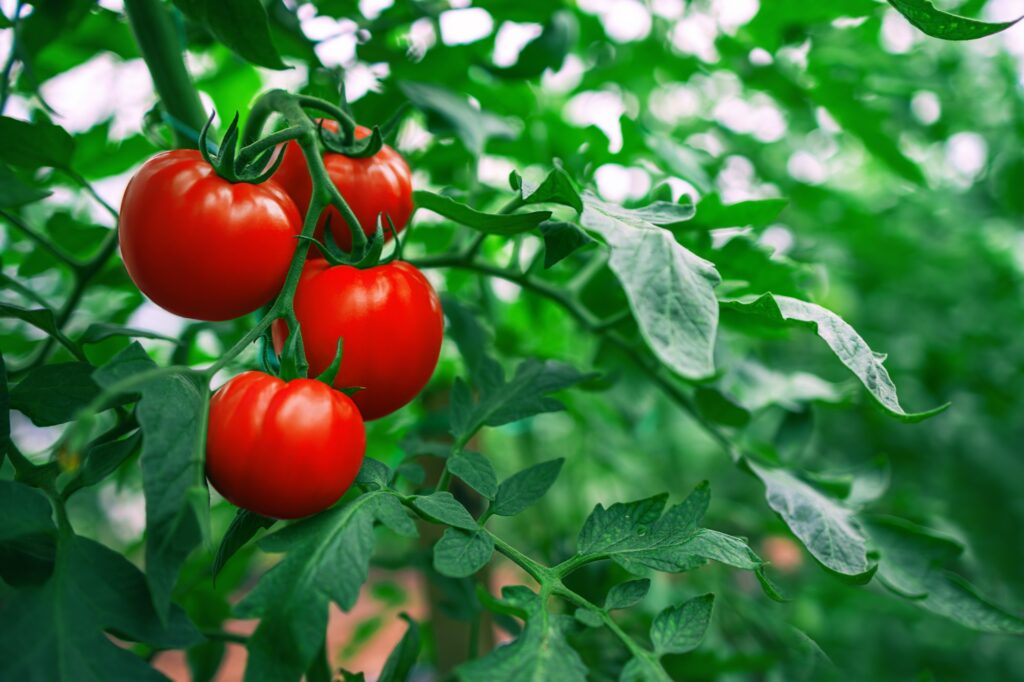
Tomatoes are one of the most popular crops in the home garden, and for good reason. A healthy tomato plant can produce pounds of fruit over the summer, and the flavor of a ripe tomato picked warm from the vine is difficult to match.
Success begins with planting correctly. Tomatoes need warm soil, plenty of sun, fertile but well-drained ground, and enough room for air to circulate around the foliage. They also benefit from one unusual planting technique: unlike most garden plants, tomato stems can develop additional roots when buried, so transplants can often be planted deeper than they were growing in their nursery pots.
Whether you are starting tomatoes from seed, planting seedlings from a garden center, or growing them in containers, giving them the right start makes everything that follows easier. Good planting depth, sturdy supports, consistent watering, and sensible fertilization can reduce problems later with weak growth, blossom-end rot, cracked fruit, disease, and poor production.
🍅 Tomato Planting at a Glance
- Botanical name: Solanum lycopersicum
- Plant type: Warm-season perennial usually grown as an annual
- Best planting time: After frost danger has passed
- Soil temperature: Preferably around 60°F or warmer
- Sun: Full sun
- Soil: Fertile, loose, well-drained soil
- Soil pH: About 6.0 to 6.8
- Plant spacing: About 18 to 36 inches, depending on variety
- Water: Consistent moisture
- Support: Cage, stake, trellis, or similar structure
- Days to harvest: Often about 55 to 90 days from transplanting, depending on variety
- Growing habit: Determinate or indeterminate
🌱 Should You Grow Tomatoes From Seed or Transplants?
Both methods work.
Growing from seed gives you access to far more varieties, including heirlooms and unusual colors that may not be sold as nursery plants.
Starting with transplants is faster and easier.
For many gardeners, especially beginners, nursery-grown transplants are the simplest option because the plants are already several weeks old when they go into the garden.
Seed starting is particularly useful when you want:
- Heirloom varieties
- Rare cultivars
- Specific cherry tomatoes
- Paste tomatoes
- Unusual colors
- Large numbers of plants
🌱 When Should You Start Tomato Seeds Indoors?
Start tomato seeds about 6 to 8 weeks before your expected last spring frost.
Starting too early is not necessarily better.
Seedlings kept indoors for too long can become:
- Leggy
- Root-bound
- Difficult to transplant
- More susceptible to stress
Tomato seedlings grow quickly under warm conditions and strong light.
The goal is to produce compact, sturdy plants that can be moved outdoors soon after the weather becomes suitable.
🌡️ When Should You Plant Tomatoes Outside?
Wait until frost danger has passed and both days and nights have warmed.
Tomatoes are sensitive to cold.
A useful guideline is to transplant when:
- Frost is no longer expected
- Night temperatures are consistently above about 50°F
- Soil has warmed to around 60°F or more
Planting too early often causes more harm than good.
Cold-stressed tomatoes may stop growing, develop purple foliage, or take weeks to recover.
A plant set out slightly later into warm soil can quickly catch up.
❄️ Can Tomato Plants Survive Frost?
No.
Tomatoes are frost-sensitive.
A light frost can severely damage foliage, while a hard freeze can kill the entire plant.
If an unexpected late frost is forecast after planting, protect tomatoes with:
- Frost cloth
- Row cover
- Large containers placed over individual plants overnight
- Temporary greenhouse protection
Remove covers after temperatures rise the next morning.
☀️ How Much Sun Do Tomatoes Need?
Tomatoes need full sun.
Aim for at least 6 to 8 hours of direct sunlight per day, with 8 or more hours ideal in many climates.
Insufficient sunlight can result in:
- Weak stems
- Fewer flowers
- Reduced fruit production
- Slower ripening
- More disease due to slower drying foliage
In extremely hot climates, some late-afternoon protection can occasionally help reduce fruit sunscald, but tomatoes still need abundant light overall.
🌱 Best Soil for Tomatoes
Tomatoes grow best in fertile, well-drained soil that holds moisture without staying waterlogged.
Ideal soil contains plenty of organic matter and has a loose texture that allows roots to spread.
Before planting, incorporate compost if the soil is low in organic matter.
Avoid planting tomatoes in areas where water sits after rain.
Constantly saturated roots are prone to disease and poor growth.
Raised beds can be especially useful where native soil drains poorly.
🧪 What Soil pH Do Tomatoes Prefer?
Tomatoes generally perform best in slightly acidic soil with a pH around 6.0 to 6.8.
Within this range, important nutrients remain readily available to the roots.
If tomatoes repeatedly struggle despite appropriate care, a soil test can reveal whether pH or nutrient deficiencies are contributing to the problem.
Avoid adding lime, sulfur, or large amounts of fertilizer without knowing whether they are actually needed.
🌿 Preparing the Tomato Bed
Prepare the planting area before transplanting.
Remove weeds and loosen compacted soil.
Incorporate compost into the upper soil if additional organic matter is needed.
Do not overwork wet soil, particularly heavy clay.
Compaction can restrict roots for the entire season.
If using raised beds, make sure the soil depth is sufficient for a substantial tomato root system.
🍅 Determinate vs. Indeterminate Tomatoes
Before deciding how far apart to plant tomatoes or what support to use, determine whether your variety is determinate or indeterminate.
Determinate Tomatoes
Determinate tomatoes grow to a relatively fixed size.
They tend to:
- Stay more compact
- Produce much of their crop within a shorter period
- Work well for canning
- Perform well in containers
- Require less aggressive support
Indeterminate Tomatoes
Indeterminate tomatoes continue growing and flowering until frost or disease stops them.
They can become extremely tall and produce fruit over a long season.
These plants generally need:
- More space
- Stronger support
- Regular tying or trellising
- More management
Many heirloom tomatoes are indeterminate.
📏 How Far Apart Should You Plant Tomatoes?
Spacing depends on the variety and support system.
As a general guide:
- Compact determinate tomatoes: about 18 to 24 inches apart
- Larger determinate tomatoes: about 24 to 30 inches apart
- Staked indeterminate tomatoes: about 18 to 24 inches apart
- Caged or sprawling indeterminate tomatoes: about 30 to 36 inches or more apart
Leave approximately 3 to 4 feet between rows when possible.
Good spacing improves airflow and makes it easier to harvest and inspect plants.
Crowded tomatoes are more vulnerable to foliar disease because leaves remain wet longer.
🌱 How Deep Should You Plant Tomatoes?
Tomatoes can be planted deeper than they grew in their nursery pots.
The buried section of stem can develop additional roots.
Remove the lowest leaves, then bury the stem so only the upper portion remains above ground.
This technique can produce a larger root system and help stabilize tall transplants.
Do not bury leaves underground.
Remove them cleanly first.
🌿 Why Can Tomato Stems Be Buried?
Tomato stems contain the ability to form adventitious roots.
These are roots that develop from stem tissue rather than from the original root system.
You may even notice small bumps along the lower stem of a tomato plant.
Under the right conditions, those bumps can develop into roots.
This makes tomatoes unusually forgiving when seedlings become tall or leggy.
📐 How to Plant a Leggy Tomato Seedling
If a transplant is unusually tall, you have two options.
Plant Deeply
Dig a deeper planting hole and bury much of the lower stem.
Plant Sideways
Dig a shallow horizontal trench.
Lay the lower stem gently along the trench and cover it with soil, leaving the top several inches above ground.
The buried stem develops additional roots.
This method is particularly useful when deep soil remains cold but the upper soil has warmed.
🌱 Step 1: Harden Off Tomato Seedlings
Do not move indoor-grown seedlings directly into full sun.
They need time to adjust.
About a week before transplanting, begin hardening them off.
Start with an hour or two outdoors in a protected area.
Gradually increase:
- Sun exposure
- Wind exposure
- Time outdoors
By the end of the hardening period, the seedlings should be able to tolerate normal outdoor conditions.
This reduces transplant shock and sunburn.
🌱 Step 2: Water Before Planting
Water tomato seedlings before transplanting.
A hydrated root ball is easier to remove from its container and less likely to fall apart.
Moist roots also handle transplant stress better than dry ones.
Avoid planting seedlings that are severely wilted.
🕳️ Step 3: Dig the Planting Hole
Dig a hole deep enough to bury part of the tomato stem.
Make it wide enough for the root ball to fit without crushing or twisting roots.
If the plant is very leggy, use a trench instead.
There is no need to create an excessively deep pit filled with amendments.
The surrounding garden soil should support most of the future root system.
✂️ Step 4: Remove Lower Leaves
Before planting deeply, remove the lowest leaves.
Use clean fingers or scissors.
Do not bury foliage.
Leaves trapped underground can decay and create unnecessary problems.
Leave a healthy cluster of leaves above the soil.
🌱 Step 5: Place the Tomato in the Hole
Carefully remove the plant from its container.
Handle it by the root ball or leaves rather than squeezing the stem.
Set it into the prepared hole.
If planting vertically, bury the lower stem.
If trench planting, gently curve the upper portion upward without sharply bending or snapping it.
Backfill with soil and press gently around the plant.
💧 Step 6: Water Thoroughly
Water immediately after planting.
This settles the soil around the roots and eliminates large air pockets.
A deep watering also helps connect the nursery root ball with the surrounding soil.
Keep the soil consistently moist during the first couple of weeks while roots establish.
🌾 Step 7: Add Mulch
Once the soil is warm, apply 2 to 3 inches of organic mulch around the plants.
Good options include:
- Straw
- Shredded leaves
- Grass clippings from untreated lawns
- Compost
- Fine bark mulch
Mulch helps conserve moisture and reduces soil splashing onto lower leaves.
That can be particularly useful because several tomato diseases spread when contaminated soil splashes onto foliage.
Keep mulch slightly away from the stem.
🪵 Step 8: Add Tomato Supports Early
Do not wait until plants are huge and collapsing.
Install stakes, cages, or trellises when you plant or shortly afterward.
Early installation prevents root damage later.
Support options include:
- Tomato cages
- Wooden stakes
- Metal stakes
- Cattle-panel trellises
- String trellises
- Florida weave systems
Choose a system strong enough for the mature variety.
A small decorative cage may not support a 7-foot indeterminate tomato loaded with fruit.
🧺 Are Tomato Cages Better Than Stakes?
Both work.
Cages require less pruning and allow plants to retain more stems.
Staking saves space and can improve airflow, but usually requires more tying and pruning.
Cages work especially well for:
- Determinate tomatoes
- Cherry tomatoes
- Gardeners who prefer minimal pruning
Stakes and trellises are particularly useful for:
- Indeterminate varieties
- Small gardens
- Intensive planting
- Gardeners who want easy access to fruit
🪢 How to Tie Tomato Plants
Use soft material that will not cut into stems.
Good choices include:
- Soft garden ties
- Cloth strips
- Stretchy plant tape
- Tomato clips
Tie stems loosely.
Leave room for growth.
Do not use bare wire or tight string directly around expanding stems.
💧 How Often Should You Water Tomatoes?
Tomatoes grow best with consistent moisture.
Irregular watering can contribute to:
- Blossom-end rot
- Fruit cracking
- Flower drop
- Reduced fruit size
- Wilt
- Poor growth
A common goal is about 1 to 2 inches of water per week, depending on soil, temperature, rainfall, and plant size.
Do not treat that number as an inflexible schedule.
Check the soil.
During hot summer weather, mature plants may require considerably more water.
🌅 What Time of Day Should You Water Tomatoes?
Morning is ideal.
Water at the base of the plant rather than routinely wetting the leaves.
Drip irrigation and soaker hoses work particularly well.
Morning watering gives any wet foliage time to dry.
This can help reduce conditions favorable to fungal diseases.
🚫 Avoid Constant Shallow Watering
Frequent light sprinkling keeps roots near the soil surface.
Instead, water deeply enough to moisten the main root zone.
Then allow the upper soil to begin drying slightly before watering again.
Deep roots make plants more resilient during hot weather.
🌿 Do Tomatoes Need Fertilizer?
Yes, but balance matters.
Tomatoes need nutrients to produce vigorous plants and fruit, but excessive nitrogen can create huge leafy plants with few tomatoes.
A soil test is the best guide.
If using fertilizer, choose one appropriate for fruiting vegetables and follow the label.
Avoid assuming that more fertilizer will result in more fruit.
⚠️ Too Much Nitrogen
One of the most common tomato fertilizing mistakes is excessive nitrogen.
Symptoms may include:
- Massive dark-green leaves
- Very tall vines
- Few flowers
- Poor fruit set
If a plant looks exceptionally lush but produces little fruit, additional high-nitrogen fertilizer is unlikely to help.
🌸 Do Tomatoes Need Extra Calcium?
Usually not if the soil already contains adequate calcium.
Blossom-end rot is often blamed on a lack of calcium in the soil, but the problem frequently occurs because irregular moisture prevents the plant from moving calcium efficiently into developing fruit.
Before adding calcium products, focus on:
- Consistent watering
- Healthy roots
- Proper soil pH
- Avoiding root damage
A soil test can tell you whether calcium is genuinely deficient.
🍅 What Is Blossom-End Rot?
Blossom-end rot appears as a dark, sunken patch at the bottom of developing tomatoes.
It is associated with calcium not reaching the fruit properly during development.
Common contributing factors include:
- Drought
- Irregular watering
- Root damage
- Excess salts
- Rapid growth
Remove badly affected fruit and stabilize soil moisture.
The plant can still produce healthy tomatoes later.
✂️ Should You Prune Tomato Plants?
It depends on the variety.
Determinate Tomatoes
Do not prune heavily.
Determinate plants produce a limited amount of growth, so excessive pruning can reduce the crop.
Indeterminate Tomatoes
Selective pruning can improve airflow and help control size.
Some gardeners remove lower leaves and selected suckers.
Others allow more stems for higher total production.
There is no need to strip a healthy plant severely.
🌿 What Are Tomato Suckers?
Suckers are shoots that grow from the angle between a leaf and the main stem.
On indeterminate tomatoes, each sucker can become another large stem capable of producing flowers and fruit.
Removing some suckers can create a more manageable plant.
Leaving them produces a bushier plant with more potential fruiting stems.
The best strategy depends on your support system and available space.
✂️ Should You Remove Lower Tomato Leaves?
Removing leaves touching the soil can be beneficial.
Lower foliage is particularly vulnerable to soil splash and disease.
As the plant grows, you can gradually remove damaged or badly crowded lower leaves.
Do not remove large amounts of healthy foliage unnecessarily.
Leaves produce the energy that supports fruit development.
🌸 Do You Need to Pollinate Tomato Flowers?
Usually not.
Tomato flowers are self-fertile.
Wind and vibration normally move pollen within the flower.
Bees, especially bumblebees, can improve pollination through buzz pollination.
In greenhouses or sheltered areas with little air movement, gently shaking flower clusters can help.
🌼 Why Are Tomato Flowers Falling Off?
Flower drop can occur because of:
- Excessive heat
- Cold nights
- Drought
- High humidity
- Very low humidity
- Excess nitrogen
- Poor pollination
- Plant stress
Hot weather is a common cause.
When temperatures become extremely high, flowers may fail to set fruit.
Plants often resume normal production when conditions improve.
🌡️ Best Temperature for Tomato Fruit Set
Tomatoes generally set fruit best during moderate warm weather.
Night temperatures that remain very high can reduce pollination.
Extreme daytime heat can also interfere with fruit set.
This is why tomatoes sometimes flower heavily during midsummer but produce few new fruits until temperatures moderate.
🌱 Can You Plant Tomatoes in Raised Beds?
Yes.
Raised beds are excellent for tomatoes.
They offer:
- Loose soil
- Good drainage
- Easier soil improvement
- Convenient supports
- Easier harvesting
Make sure the bed receives full sun.
Because raised beds can dry quickly, monitor moisture carefully during summer.
🪴 Can You Grow Tomatoes in Containers?
Yes.
Container tomatoes can be extremely productive.
Use a large pot with drainage holes.
For most full-size varieties, a container of at least 5 gallons is a practical minimum, with larger containers often performing better.
Compact patio varieties may grow in somewhat smaller containers.
Use quality potting mix rather than garden soil.
Container tomatoes require more frequent watering and feeding because the root system is confined.
🪴 Best Tomatoes for Containers
Determinate and dwarf varieties are particularly convenient for pots.
Cherry tomatoes can also perform exceptionally well, although indeterminate cherry varieties may still grow very tall.
Look for cultivars described as:
- Patio
- Dwarf
- Bush
- Determinate
- Container-friendly
Provide support even for many compact varieties because fruit can make branches heavy.
🔄 Can You Plant Tomatoes in the Same Spot Every Year?
It is better to rotate when possible.
Tomatoes belong to the nightshade family along with:
- Peppers
- Eggplants
- Potatoes
These crops can share certain soilborne diseases and pests.
Avoid repeatedly planting nightshade crops in the same bed if you have experienced disease problems.
A multi-year rotation can reduce some recurring issues.
🌿 Companion Plants for Tomatoes
Tomatoes can grow alongside numerous herbs and flowers.
Useful ornamental companions include:
Flowers can help increase garden diversity and attract pollinators and beneficial insects.
Avoid crowding companion plants immediately against tomato stems.
Airflow remains important.
🌿 Can You Plant Dill Near Tomatoes?
Yes, but placement matters.
Young dill can attract beneficial insects and works well around a vegetable garden.
Mature dill becomes tall and may compete for light if planted immediately beside tomatoes.
Position it where both crops have enough room.
For growing instructions, see Dill Care.
🌼 Do Marigolds Help Tomatoes?
Marigolds are commonly planted around tomatoes because they add color, attract insects, and can fit into vegetable beds without becoming extremely large.
Certain marigold species may also help manage some soil nematodes when used appropriately.
However, simply planting one marigold beside one tomato is not a universal pest-control solution.
Grow marigolds because they contribute to a diverse, flowering garden rather than expecting them to repel every tomato pest.
See Marigold Care.
🐛 Common Tomato Pests
Potential pests include:
- Tomato hornworms
- Aphids
- Whiteflies
- Flea beetles
- Cutworms
- Stink bugs
- Spider mites
- Fruitworms
Inspect plants regularly.
Early detection makes management much easier.
Avoid treating every caterpillar automatically without identifying it first.
Tomato hornworms and tobacco hornworms are large and can remove substantial foliage quickly, but other insects may be harmless or beneficial.
🐛 Tomato Hornworms
Tomato hornworms are large green caterpillars that blend remarkably well with tomato foliage.
Signs include:
- Missing leaves
- Stripped stems
- Dark droppings
- Damaged fruit
Hand-picking is often effective in a small garden.
If you find a hornworm covered with tiny white structures, it has likely been parasitized by beneficial wasps.
Leaving that caterpillar in the garden can help increase the beneficial wasp population.
🍄 Common Tomato Diseases
Tomatoes are susceptible to several diseases.
Potential problems include:
- Early blight
- Late blight
- Septoria leaf spot
- Fusarium wilt
- Verticillium wilt
- Bacterial spot
- Bacterial speck
- Anthracnose
Disease risk varies with region and weather.
Helpful prevention includes:
- Good spacing
- Mulching
- Watering at soil level
- Removing infected leaves
- Crop rotation
- Resistant varieties
- Cleaning garden tools
🍂 Why Are Lower Tomato Leaves Turning Yellow?
A few older lower leaves may yellow naturally.
More widespread yellowing can result from:
- Overwatering
- Nutrient deficiency
- Root problems
- Disease
- Poor drainage
If yellow leaves also have dark spots, investigate possible foliar disease.
Remove badly diseased leaves and avoid splashing soil onto the foliage.
❓ Why Is My Tomato Plant Wilting?
Wilting can result from both drought and root problems.
Possible causes include:
- Dry soil
- Extreme heat
- Root damage
- Waterlogged soil
- Vascular wilt diseases
A plant that wilts during hot afternoon weather but recovers in the evening may simply be temporarily losing water faster than the roots can replace it.
Persistent wilting deserves closer investigation.
❓ Why Are My Tomatoes Cracking?
Cracking often occurs when soil moisture changes abruptly.
A dry period followed by heavy rain or irrigation can cause fruit to expand faster than the skin can stretch.
Consistent watering and mulch help reduce this problem.
Some varieties are naturally more crack-resistant than others.
❓ Why Are My Tomatoes Splitting Around the Stem?
Concentric cracking around the stem can be associated with rapid growth, irregular water, and weather conditions.
Maintain consistent soil moisture.
Harvest ripe fruit promptly, particularly when heavy rain is forecast after a dry period.
❓ Why Are My Tomato Leaves Curling?
Leaf curl can result from:
- Heat
- Drought
- Heavy pruning
- Transplant stress
- Root disturbance
- Disease
- Herbicide exposure
Simple physiological leaf roll often affects older leaves during hot weather without seriously harming the plant.
If growth becomes distorted or unusually twisted, investigate other causes.
🌿 Herbicide Damage on Tomatoes
Tomatoes are highly sensitive to certain herbicides.
Damage can appear as:
- Twisted leaves
- Cupped foliage
- Narrow distorted growth
- Stunted shoots
Herbicide exposure can occur from drift, contaminated compost, contaminated manure, or grass clippings from treated lawns.
Do not use questionable compost or lawn clippings around vegetable crops.
❓ Why Are My Tomatoes Not Turning Red?
Ripening slows during extremely hot weather.
Tomatoes often develop color best when temperatures are warm but not excessively high.
Other reasons include:
- Variety
- Insufficient maturity
- Too much shade
- Late-season cool weather
Once tomatoes reach the mature-green or breaker stage, they can continue ripening after picking.
🍅 When Are Tomatoes Ready to Harvest?
Harvest timing depends on variety and intended use.
For the best garden flavor, pick tomatoes when they have developed their mature color and are slightly soft to gentle pressure.
Colors may include:
- Red
- Pink
- Yellow
- Orange
- Purple
- Brown
- Green when ripe
Do not assume every ripe tomato is red.
Know the expected color of your cultivar.
🍅 Can Tomatoes Ripen Off the Vine?
Yes.
Once a tomato reaches physiological maturity and begins changing color, it can continue ripening indoors.
This is useful when:
- Heavy rain is forecast
- Animals are eating fruit
- Frost is approaching
- Cracking is a problem
Place tomatoes at room temperature out of direct intense sunlight.
There is no need to place them on a sunny windowsill.
❄️ What Should You Do Before the First Fall Frost?
As frost approaches, harvest usable fruit.
Tomatoes that have begun showing color can usually finish ripening indoors.
Mature green fruit may also ripen successfully.
You can remove remaining plants after the crop is finished.
Do not compost heavily diseased vines unless your compost system reaches temperatures capable of destroying the relevant pathogens.
🌱 Can You Save Tomato Seeds?
Yes, especially from open-pollinated and heirloom varieties.
Hybrid tomato seeds may produce plants that differ considerably from the parent.
To save seed:
- Choose fully ripe fruit from healthy plants.
- Remove seeds and surrounding gel.
- Ferment briefly to help remove the gelatinous coating.
- Rinse thoroughly.
- Dry completely.
- Store in a cool, dry location.
Label seeds carefully with variety and year.
🍅 Are Tomatoes Easy to Grow?
Yes, although they do require regular attention.
The basic steps are straightforward:
- Start seeds 6 to 8 weeks before the last frost or buy transplants.
- Harden seedlings before planting.
- Wait until frost danger has passed.
- Choose a full-sun location.
- Use fertile, well-drained soil.
- Plant tomatoes deeply.
- Space plants adequately.
- Install supports early.
- Water consistently.
- Mulch after the soil warms.
- Fertilize sensibly.
- Monitor for pests and disease.
- Harvest regularly.
The most common mistakes are planting too early, crowding plants, inconsistent watering, weak support, and excessive nitrogen fertilizer.
🍅 Final Thoughts
Planting tomatoes successfully starts with warmth, sunlight, and enough space.
Wait until frost danger has passed and the soil has warmed before moving seedlings outside. Harden them gradually, then take advantage of the tomato plant’s unusual ability to produce roots from buried stems by planting transplants deeper than they grew in their containers.
Give plants full sun, fertile well-drained soil, and strong support from the beginning. Keep moisture consistent rather than alternating between drought and heavy watering, and mulch the bed once the soil is warm to conserve moisture and reduce soil splash.
Remember that determinate and indeterminate tomatoes behave very differently. Compact determinate varieties are excellent for containers and concentrated harvests, while indeterminate plants can continue climbing and producing fruit for months.
With the right start and steady care, a few well-grown tomato plants can become some of the most productive crops in the entire summer garden.
🔗 Related Articles
- How to Plant Corn
- How to Plant Sweet Potatoes
- Dill Care
- Marigold Care
- Zinnia Care
- Cosmos Care
- Salvia Care