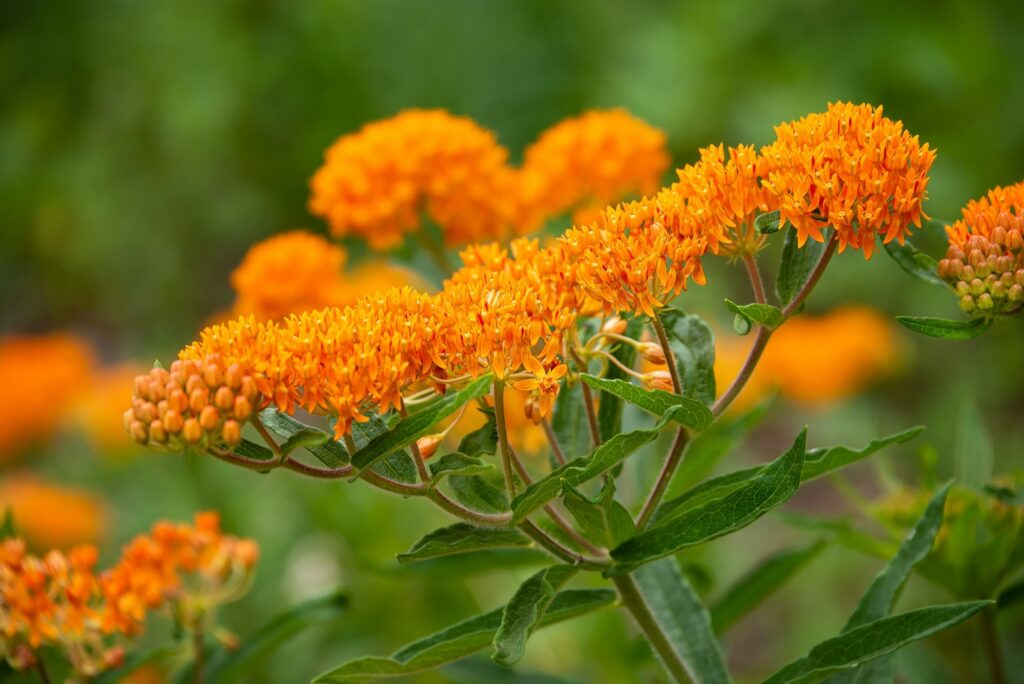
Butterfly weed (Asclepias tuberosa) is a colorful North American native perennial known for its brilliant orange flowers and its ability to attract butterflies, bees, and other pollinators. Once established, this tough wildflower handles heat, drought, and relatively poor soil with little fuss, making it an excellent choice for sunny borders, native plant gardens, pollinator gardens, and naturalized landscapes.
Unlike some other members of the milkweed family, butterfly weed has a relatively compact growth habit and does not usually spread aggressively through underground runners. Instead, it develops a deep taproot that helps it survive dry conditions but can make established plants difficult to transplant. Choosing the right location from the beginning is therefore one of the most important parts of successful butterfly weed care.
🌼 Butterfly Weed at a Glance
- Botanical name: Asclepias tuberosa
- Common names: Butterfly weed, butterfly milkweed, orange milkweed
- Plant type: Herbaceous perennial
- Mature height: About 1 to 3 feet
- Mature spread: About 1 to 2 feet
- Sun exposure: Full sun
- Soil: Well-drained; sandy, rocky, or average garden soil
- Soil pH: Slightly acidic to neutral
- Bloom time: Late spring through summer
- Flower color: Usually bright orange, with some yellow or reddish forms
- Hardiness: Generally USDA Zones 3–9
- Native range: Much of eastern and central North America
- Wildlife value: Nectar plant for butterflies and other pollinators; host plant for monarch caterpillars
☀️ How Much Sun Does Butterfly Weed Need?
Butterfly weed performs best in full sun, ideally receiving at least six hours of direct sunlight each day. Plants grown in abundant sunlight tend to remain sturdier, flower more heavily, and handle moisture more effectively than plants growing in excessive shade.
A small amount of afternoon shade may be tolerated, particularly in very hot climates, but deeply shaded locations are generally unsuitable. Too little light can result in lanky stems, reduced flowering, and weaker plants.
When selecting a site, look for an open area where surrounding shrubs, trees, or taller perennials will not eventually block most of the sunlight.
🌱 Best Soil for Butterfly Weed
Excellent drainage is more important than rich soil when growing butterfly weed. In the wild, the plant frequently grows in prairies, open fields, dry slopes, roadsides, and rocky areas where soil fertility may be modest.
Sandy, gravelly, or loamy soil can all work well as long as water drains freely. Heavy clay can present problems if it remains wet for long periods, particularly during winter.
Avoid heavily enriching the planting area with compost or fertilizer unless your soil is unusually poor. Butterfly weed is naturally adapted to relatively lean conditions, and excessively rich soil can encourage lush foliage at the expense of compact growth.
If you have dense soil, planting butterfly weed in a raised bed or slightly elevated location may help improve drainage.
💧 How Often Should You Water Butterfly Weed?
Newly planted butterfly weed needs regular moisture while its root system becomes established. Water when the upper portion of the soil begins to dry, but avoid keeping the ground constantly saturated.
Once established, butterfly weed becomes impressively drought tolerant because of its deep taproot. Mature plants growing in the ground may need little supplemental irrigation except during prolonged periods of hot, dry weather.
One of the easiest ways to damage butterfly weed is to overwater it. Consistently soggy soil can contribute to root and crown problems, particularly during cool weather.
When watering, soak the soil deeply rather than giving the plant frequent shallow sprinklings. Deep watering encourages roots to grow farther into the ground and helps improve long-term drought resistance.
🌡️ Temperature and Climate
Butterfly weed is adaptable to a wide range of climates and typically survives winters across USDA Hardiness Zones 3 through 9.
The plant dies back to the ground during winter in colder climates and reappears from its crown in spring. One characteristic gardeners should know is that butterfly weed can emerge surprisingly late.
It may remain dormant after many neighboring perennials have already begun growing. Avoid assuming the plant has died and digging it up too early in spring.
Once warm weather arrives, growth usually accelerates quickly.
Butterfly weed handles summer heat very well, especially after its roots are established.
🌿 How to Plant Butterfly Weed
Butterfly weed can be grown from nursery plants or started from seed. Because mature plants develop deep taproots, younger plants usually establish more successfully than large specimens that have spent a long time growing in containers.
Choose a permanent location with full sun and excellent drainage. Dig a hole approximately the same depth as the root ball and somewhat wider.
Place the plant at roughly the same depth it was growing in its container, fill around the roots with soil, and water thoroughly.
Avoid unnecessarily disturbing or breaking the roots while planting.
Space plants approximately 12 to 24 inches apart, depending on the desired appearance and the mature size of the variety.
🌰 Growing Butterfly Weed From Seed
Butterfly weed is relatively easy to grow from seed, although the seeds often germinate more successfully after experiencing a period of cold, moist conditions known as cold stratification.
Seeds sown outdoors in fall can naturally receive winter temperatures before germinating when conditions become favorable in spring.
Gardeners starting seeds indoors can imitate winter conditions by placing seeds in a moist medium and refrigerating them for several weeks before sowing.
After stratification, sow the seeds shallowly in a seed-starting mixture and keep the medium lightly moist rather than saturated.
Young butterfly weed seedlings initially devote considerable energy to root development, so top growth may seem slow.
Plants grown from seed may not produce substantial flowers during their first year. Stronger flowering typically develops as the plants mature.
✂️ Does Butterfly Weed Need Pruning?
Butterfly weed requires very little pruning.
Removing spent flower clusters during summer can make the plant look tidier and may sometimes encourage additional flowering. However, gardeners hoping to collect seeds or allow the plant to self-seed should leave at least some faded flowers in place.
By late summer or fall, elongated seed pods develop. When mature, the pods split open and release flat brown seeds attached to silky fibers that allow them to travel on the wind.
After frost kills the foliage, stems may be cut back to several inches above the ground. They can also be left standing through winter to provide habitat and visual structure before being cut back in late winter or early spring.
🌾 Should You Fertilize Butterfly Weed?
Butterfly weed generally does not require routine fertilizer.
In reasonably healthy garden soil, supplemental feeding is usually unnecessary. Heavy fertilization may result in excessive leafy growth and can encourage plants to become taller and less sturdy.
If your garden soil is extremely poor, a light application of compost around the planting area may be sufficient.
Avoid placing thick layers of rich organic material directly against the plant’s crown.
🍂 Mulching Butterfly Weed
A light layer of mulch can help newly planted butterfly weed retain moisture and reduce competition from weeds.
However, avoid piling mulch directly against the crown. Heavy mulch can trap moisture around the base of the plant and interfere with the dry conditions butterfly weed prefers.
In established native or prairie-style plantings, butterfly weed may require little or no mulch once surrounding vegetation fills in.
🦋 Butterfly Weed and Monarch Butterflies
Butterfly weed belongs to the milkweed genus Asclepias, making it an important plant for monarch butterflies.
Adult monarchs and numerous other butterfly species visit the flowers for nectar. Monarch caterpillars can also feed on the leaves because milkweeds serve as their larval host plants.
Do not be alarmed if caterpillars chew portions of the foliage. In a butterfly garden, this is part of the plant’s ecological role.
Avoid applying broad-spectrum insecticides to butterfly weed, especially while butterflies, bees, caterpillars, or other beneficial insects are present.
🐝 Pollinators Attracted to Butterfly Weed
Monarchs may receive much of the attention, but butterfly weed supports a much broader group of insects.
Its dense clusters of nectar-rich flowers can attract swallowtails, fritillaries, hairstreaks, skippers, bees, wasps, beetles, and other pollinating insects.
Combining butterfly weed with other native plants that flower earlier and later in the season can provide a longer-lasting source of nectar and pollen.
Good companions include coneflowers, blazing star, asters, goldenrod, bee balm, black-eyed Susans, little bluestem, and native grasses.
🌱 Does Butterfly Weed Spread?
Butterfly weed is generally considered better behaved than some milkweed species.
Rather than spreading rapidly through underground rhizomes, Asclepias tuberosa usually forms a relatively defined clump. It can spread through seed when mature pods are allowed to open.
Seedlings may appear around the garden, but unwanted young plants are normally easy to remove while they are small.
Gardeners who want to limit self-seeding can remove seed pods before they split.
🌸 When Does Butterfly Weed Bloom?
Butterfly weed generally begins flowering in late spring or early summer and can continue blooming into midsummer or beyond, depending on climate and growing conditions.
The plant produces flat or rounded clusters containing numerous small flowers. The vivid orange blossoms stand out dramatically against the plant’s narrow green leaves.
Removing faded flower clusters may encourage additional blooms, although the response varies according to climate and the health of the plant.
Established plants growing in strong sunlight usually produce the best flower display.
🌰 Butterfly Weed Seed Pods
After flowering, butterfly weed produces elongated seed pods typical of milkweeds.
Allow the pods to mature if you want to collect seeds. They are ready when they begin to dry and start splitting naturally.
Inside each pod are numerous brown seeds attached to silky white fibers.
To reduce the amount of fluff flying through the garden, collect pods just before they fully open and separate the seeds indoors.
Seeds can be stored in a cool, dry location until they are ready for fall sowing or cold stratification.
🪴 Can You Grow Butterfly Weed in Containers?
Butterfly weed can be grown in containers, but its deep taproot makes container culture somewhat more challenging than growing it directly in the ground.
Choose a deep container with excellent drainage rather than a shallow pot.
A fast-draining potting mix is essential, and the container should never be allowed to sit in standing water.
Container-grown plants dry more quickly than those growing in garden soil, so they may require more frequent watering during summer. At the same time, overwatering remains a risk.
In climates with severe winters, container roots are also more exposed to freezing temperatures than roots planted in the ground.
🔄 Transplanting Butterfly Weed
Butterfly weed dislikes being transplanted once established.
Its thick taproot can extend deeply into the soil, and damaging that root may cause the plant to struggle after being moved.
If transplantation is unavoidable, move plants while they are still young and take as much of the root system as possible.
For mature plants, starting new specimens from seed is often easier than attempting to relocate an established clump.
This is one reason careful site selection is especially important when planting butterfly weed.
🐛 Common Butterfly Weed Pests
Butterfly weed generally has relatively few serious pest problems, but several insects may appear.
Aphids are among the most noticeable. Bright yellow-orange oleander aphids can sometimes gather in large groups along stems and flower buds. Small populations usually do not threaten healthy plants.
A strong stream of water can remove many aphids without using pesticides.
Milkweed bugs may also feed on developing seeds. Their presence is usually more of an aesthetic concern than a threat to the plant’s overall health.
Milkweed tussock moth caterpillars and monarch caterpillars intentionally feed on milkweed foliage. Because these insects are part of the ecosystem supported by milkweeds, leaf damage alone does not necessarily indicate a problem requiring treatment.
🍄 Common Diseases and Problems
The most serious problems with butterfly weed are often related to excessive moisture rather than disease pressure.
Poor drainage can lead to crown or root deterioration. Plants growing in overly wet soil may decline suddenly or fail to return after winter.
Leaf spotting or fungal problems may occasionally occur during humid conditions. Providing good air circulation and watering near the soil rather than repeatedly soaking the foliage can help.
Healthy plants grown in sunny, well-drained locations tend to experience relatively few serious problems.
❓ Why Isn’t My Butterfly Weed Flowering?
Young plants sometimes require time to become established before flowering heavily. Butterfly weed grown from seed may devote much of its first growing season to developing roots rather than flowers.
Too little sunlight is another common cause of poor blooming.
Excessive fertilizer can also encourage foliage at the expense of flowers.
Make sure the plant receives full sun, avoid overfeeding, and give young plants time to mature.
❓ Why Didn’t My Butterfly Weed Come Back?
Before assuming a butterfly weed plant has died, remember that it often emerges late in spring.
Marking the planting location can prevent accidentally digging into the crown while waiting for growth to appear.
If the plant truly failed to return, winter moisture may have been responsible. Butterfly weed tolerates cold remarkably well when dormant, but wet winter soil can be much more damaging.
Improving drainage before replanting can make a major difference.
🌿 Best Companion Plants for Butterfly Weed
Butterfly weed works beautifully in prairie-inspired gardens, cottage gardens, wildlife gardens, and mixed perennial borders.
Suitable companions include:
- Purple coneflower
- Black-eyed Susan
- Blazing star
- Bee balm
- Coreopsis
- Yarrow
- Asters
- Goldenrod
- Little bluestem
- Prairie dropseed
- Penstemon
- Salvia
Combining plants with different bloom periods can keep the garden colorful while providing nectar and pollen throughout much of the growing season.
🏡 Where to Plant Butterfly Weed
Butterfly weed is especially useful in hot, sunny parts of the landscape where more moisture-loving perennials may struggle.
Consider using it in:
- Pollinator gardens
- Butterfly gardens
- Native plant gardens
- Prairie gardens
- Cottage gardens
- Sunny borders
- Rock gardens
- Meadow-style plantings
- Drought-tolerant gardens
- Wildlife gardens
Its vivid flowers also make it an effective accent among ornamental grasses and purple, blue, or yellow flowering perennials.
⚠️ Is Butterfly Weed Toxic?
Like other milkweeds, butterfly weed contains compounds that can be harmful when consumed in sufficient quantities.
The plant should not be treated as an edible garden plant, and children and pets should be discouraged from chewing or eating it.
The milky sap can also irritate the skin or eyes of some people. Wearing gloves when cutting stems, collecting seed pods, or handling damaged plants is a sensible precaution.
Wash your hands after working with milkweed and avoid touching your eyes until you have done so.
🌼 Is Butterfly Weed Easy to Grow?
Butterfly weed is an excellent low-maintenance perennial when planted in conditions that suit it.
The formula is fairly simple: provide plenty of sunlight, excellent drainage, moderate moisture while plants become established, and avoid excessive fertilizer or irrigation.
Once the plant develops its deep root system, it can survive conditions that would challenge many traditional garden perennials.
Its combination of drought tolerance, bright flowers, wildlife value, and North American native status makes butterfly weed a particularly useful addition to pollinator-friendly landscapes.
🌱 Final Thoughts
Butterfly weed is one of those plants that often performs better when gardeners resist the temptation to fuss over it. Give Asclepias tuberosa a sunny, well-drained location and enough water to establish its roots, then allow the plant to adapt to its surroundings.
Over time, its brilliant orange flowers can become a dependable summer feature while supporting monarchs, bees, butterflies, and other beneficial insects.
For gardeners creating a native landscape or simply looking for a colorful perennial that can tolerate heat and drought, butterfly weed deserves a prominent place in the garden.
🔗 Related Articles
- Bee Balm Care
- Coreopsis Care
- Salvia Care
- Yarrow Care
- Shasta Daisy Care
- Blazing Star Care
- Gaillardia Care