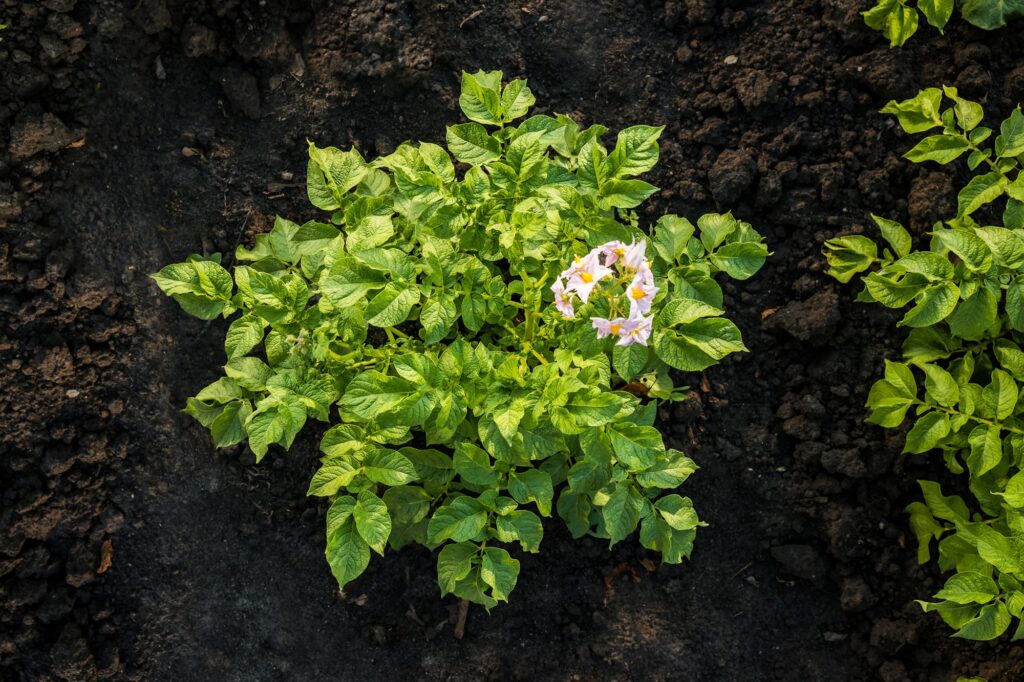
Potatoes are one of the most satisfying crops to grow because so much of the harvest remains hidden until digging day. A few pieces of seed potato planted in spring can develop into vigorous leafy plants with clusters of underground tubers waiting beneath the soil.
Unlike sweet potatoes, which are warm-season plants usually grown from slips, regular potatoes are cool-season members of the nightshade family. They grow best when planted into cool spring soil and allowed to develop before intense summer heat arrives.
Potatoes are usually grown from seed potatoes, which are small whole potatoes or pieces of potato containing at least one healthy eye. As the plant grows, gardeners gradually mound soil or another suitable growing medium around the stems. This process, called hilling, helps keep developing tubers covered and protected from sunlight.
With loose soil, steady moisture, full sun, and proper hilling, potatoes can be grown successfully in traditional garden rows, raised beds, large containers, and grow bags.
🥔 Potato Planting at a Glance
- Botanical name: Solanum tuberosum
- Plant type: Cool-season perennial usually grown as an annual crop
- Planting material: Certified seed potatoes
- Best planting time: Early spring
- Sun: Full sun
- Soil: Loose, fertile, well-drained soil
- Soil pH: Slightly acidic, generally around 5.0 to 6.5
- Planting depth: About 3 to 4 inches initially
- Plant spacing: About 10 to 12 inches apart
- Row spacing: About 30 to 36 inches
- Hilling: Begin once plants reach roughly 6 to 8 inches tall
- Water: Consistent moisture, particularly during tuber formation
- Harvest: New potatoes during flowering; mature potatoes after foliage declines
- Storage: Cool, dark, humid but well-ventilated conditions
🌱 What Are Seed Potatoes?
Despite the name, seed potatoes are not seeds.
They are potatoes grown specifically for planting.
Each potato has small growth points commonly called eyes. When planted, these eyes sprout stems that grow upward while roots and underground stems develop below.
Tubers eventually form on specialized underground stems called stolons.
Certified seed potatoes are generally preferable to grocery-store potatoes because they are produced to meet standards for disease control and are available in varieties selected for garden production.
🛒 Can You Plant Potatoes From the Grocery Store?
Sometimes, but it is not the best approach.
A grocery-store potato may sprout and grow successfully, but it can present several disadvantages.
It may:
- Carry potato diseases
- Be treated to reduce sprouting
- Be poorly suited to your climate
- Be an unknown variety
- Introduce pathogens into garden soil
Certified seed potatoes are usually a safer choice, particularly if you plan to grow potatoes regularly in the same garden.
☀️ How Much Sun Do Potatoes Need?
Potatoes perform best in full sun.
Aim for at least 6 to 8 hours of direct sunlight each day.
Strong sunlight supports vigorous foliage, and the foliage produces the energy needed for tuber development underground.
Plants grown in too much shade may produce:
- Weak stems
- Reduced yields
- Smaller potatoes
- Slower growth
Keep in mind that potato plants can become fairly bushy, so give them enough room that neighboring crops do not shade them heavily.
📅 When Should You Plant Potatoes?
Potatoes are generally planted in early spring, several weeks before warm-season crops such as tomatoes.
They prefer cool growing conditions.
A common guideline is to plant about 2 to 4 weeks before the average last spring frost, provided the soil is workable and not waterlogged.
The soil should generally be at least around 45°F before planting.
Potatoes tolerate cool soil better than tomatoes, but planting into cold, saturated ground can cause seed pieces to rot before they sprout.
❄️ Can Potatoes Tolerate Frost?
Potato tubers underground tolerate cool weather well, but emerging foliage can be damaged by frost.
A light frost may burn back young leaves without killing the plant because new shoots can sometimes emerge from below ground.
A severe freeze can cause greater damage.
If potato shoots emerge before a late frost, protect them by:
- Hilling additional soil around young shoots
- Using frost cloth
- Applying a light temporary covering
Remove heavy protection once freezing conditions pass.
🌡️ What Temperature Do Potatoes Prefer?
Potatoes grow best during mild weather.
Cool soil supports early growth, while moderate spring temperatures encourage healthy foliage.
Tuber formation is generally strongest when soil is cool to moderately warm.
Prolonged heat can reduce tuber development.
This is one reason potatoes are planted early enough to grow substantially before midsummer heat.
In climates with very hot summers, spring timing becomes particularly important.
🥔 Early, Midseason & Late Potatoes
Potato varieties differ in how quickly they mature.
They are often grouped broadly as:
- Early-season potatoes
- Midseason potatoes
- Late-season potatoes
Early varieties can be useful for quick harvests and shorter growing seasons.
Late varieties generally remain in the ground longer and may provide larger storage harvests.
Planting several varieties with different maturity times can spread the harvest over a longer period.
🌈 Choosing Potato Varieties
Potatoes come in far more varieties than the familiar russet found in supermarkets.
You can grow potatoes with:
- White skin
- Yellow skin
- Red skin
- Purple skin
- Blue-purple flesh
- Yellow flesh
- White flesh
- Red or pink markings
Popular types include:
- Russet potatoes
- Yukon Gold-type potatoes
- Red-skinned potatoes
- Fingerlings
- Purple potatoes
- Small waxy potatoes
Different varieties also differ in texture and cooking quality.
Some are excellent for baking, while others hold together better when boiled or roasted.
🌱 Best Soil for Potatoes
Potatoes grow best in loose, well-drained soil.
The developing tubers need enough space to expand without being constricted by hard clay or large stones.
Ideal soil is:
- Loose
- Crumbly
- Well drained
- Moderately fertile
- Rich in organic matter
Sandy loam is especially suitable.
Heavy compacted soil can produce misshapen potatoes and make harvesting difficult.
Raised beds are a good option where native soil is dense or poorly drained.
🧪 What Soil pH Do Potatoes Prefer?
Potatoes prefer somewhat acidic soil.
A pH around 5.0 to 6.5 is generally suitable.
Growing potatoes in soil that is too alkaline can increase the risk of common scab.
If you routinely lime the garden, test the soil before automatically adding more lime to a potato bed.
A soil test provides much better guidance than guessing.
🌿 Preparing the Potato Bed
Prepare the bed before planting.
Remove perennial weeds and loosen compacted soil.
Work in finished compost if needed.
Avoid adding large amounts of fresh manure immediately before planting because excessive nitrogen can stimulate heavy foliage at the expense of tuber development.
The planting area should drain freely after rain.
Do not plant potatoes in a low spot where water regularly collects.
🔪 Should You Cut Seed Potatoes Before Planting?
Large seed potatoes can be cut into smaller pieces.
Each piece should contain at least one or two healthy eyes.
A good seed piece is often roughly the size of an egg.
Small seed potatoes can be planted whole.
Avoid cutting extremely small pieces because they contain fewer stored reserves to support early growth.
🌬️ Should Cut Potatoes Dry Before Planting?
Yes.
After cutting large seed potatoes, allow the pieces to dry for a day or two in a cool, airy place.
The cut surfaces should become somewhat dry or callused.
This can reduce the chance of the seed piece rotting in cool, damp soil.
Do not leave cut potatoes in direct hot sun.
👁️ Which Side of a Potato Goes Up?
Plant the seed piece with the strongest eyes facing upward.
If several eyes point in different directions, perfect orientation is not critical.
The shoots will generally find their way toward the soil surface.
The most important thing is that each piece contains healthy eyes and enough potato tissue to sustain initial growth.
📏 How Deep Should You Plant Potatoes?
A common approach is to plant seed potatoes about 3 to 4 inches deep.
They will later receive additional soil as the plants are hilled.
You do not need to bury seed potatoes a foot deep at planting.
Instead, begin at a moderate depth and gradually add soil as the shoots grow.
This keeps tubers covered while allowing new stems to emerge easily.
📐 How Far Apart Should You Plant Potatoes?
For most full-size garden potatoes, space seed pieces approximately:
- 10 to 12 inches apart
- 30 to 36 inches between rows
Fingerling potatoes or small varieties may tolerate somewhat closer spacing.
Wider spacing generally allows each plant more room and can produce larger tubers.
Closer spacing often results in a greater number of smaller potatoes.
🌱 Step 1: Prepare the Seed Potatoes
A day or two before planting, inspect the seed potatoes.
Discard any that are:
- Soft
- Moldy
- Badly rotted
- Severely damaged
Cut large potatoes into pieces with at least one or two eyes per section.
Allow the cuts to dry before planting.
🕳️ Step 2: Dig a Trench or Individual Holes
There are two common planting approaches.
You can dig:
- A shallow trench
- Individual planting holes
For a row, a trench roughly 4 to 6 inches deep works well.
Place the seed potatoes along the bottom, then cover them with several inches of soil.
Leave enough loose soil nearby for future hilling.
🥔 Step 3: Place Seed Potatoes in the Soil
Position each seed piece with the eyes facing generally upward.
Space them about 10 to 12 inches apart.
Do not pack the soil tightly around them.
Cover gently.
Then water if the soil is dry.
💧 Step 4: Water After Planting
Potatoes need moisture to begin sprouting, but the soil should not remain saturated.
After planting, water enough to settle the soil around the seed pieces.
If spring rainfall is regular, additional irrigation may not be necessary immediately.
Check moisture rather than following a rigid calendar.
🌱 Step 5: Wait for Shoots to Emerge
Potato shoots may take roughly two to four weeks to appear, depending on soil temperature and variety.
Cool conditions slow emergence.
Do not assume the potatoes have failed simply because nothing appears after several days.
Keep the soil moderately moist and avoid disturbing the planted area.
⛰️ Step 6: Hill the Potatoes
Once plants reach approximately 6 to 8 inches tall, begin pulling soil around their stems.
Leave the top few inches of foliage exposed.
Repeat as the plants continue growing.
Eventually, you may create a ridge of soil several inches higher than the original ground level.
Hilling serves several important purposes.
🌿 Why Do Potatoes Need to Be Hilled?
Hilling helps:
- Keep developing tubers covered
- Prevent potatoes from turning green
- Protect shallow tubers from sunlight
- Suppress weeds
- Support stems
- Provide loose material for tuber development
Not every potato forms higher and higher layers of tubers simply because more soil is added, but keeping the developing crop covered remains important.
The main goal is protecting tubers from light and providing good growing conditions.
☀️ Why Do Potatoes Turn Green?
Potatoes turn green when exposed to light.
The green color comes from chlorophyll, but light exposure can also increase concentrations of glycoalkaloids such as solanine.
Green potatoes may taste bitter and should not be eaten if significantly green, bitter, or sprouting heavily.
Hilling prevents sunlight from reaching developing tubers.
Check the bed periodically and cover any potatoes that begin showing through the soil.
⚠️ Are Green Potatoes Poisonous?
They can contain elevated levels of naturally occurring glycoalkaloids.
Symptoms from consuming high amounts can include gastrointestinal and neurological effects.
Do not eat potatoes that are extensively green or strongly bitter.
Keep harvested potatoes stored in darkness to prevent greening.
This is another reason correct hilling and dark storage are important.
🌾 What Can You Use for Hilling Potatoes?
Traditional hilling uses garden soil.
You can also use combinations of:
- Loose soil
- Finished compost
- Clean straw in some growing systems
Soil provides the most stable support.
If using straw or other loose organic materials, keep in mind that they dry differently and may not protect tubers as reliably unless applied thickly enough.
💧 How Often Should You Water Potatoes?
Potatoes need consistent moisture.
A general target is about 1 to 2 inches of water per week, depending on rainfall, temperature, soil, and plant size.
The most important period is when plants begin flowering and tubers are actively enlarging.
Irregular watering can contribute to:
- Small potatoes
- Knobby growth
- Cracking
- Hollow heart
- Reduced yields
Avoid both drought and constantly waterlogged soil.
🌸 Why Is Flowering Important?
Many potato plants produce flowers around the time tuber development is becoming active.
Flowers do not create the potatoes themselves, but flowering can serve as a useful signal that new potatoes may be developing underground.
Not every potato variety flowers heavily.
Lack of flowers does not automatically mean the crop has failed.
💦 Water Consistently During Tuber Formation
Consistent moisture is particularly important from the time tubers begin forming until they approach maturity.
If plants suffer severe drought and are then flooded with water, tubers can develop irregular shapes or other defects.
Deep watering is preferable to frequent light sprinkling.
Aim to wet the root zone without keeping it continuously saturated.
🚫 Reduce Water Near Harvest
As the foliage begins yellowing and dying naturally, reduce irrigation.
Maturing potatoes no longer need the same amount of water.
Drier soil near harvest also makes digging easier and can help the skins toughen.
Do not keep mature potatoes sitting in wet soil unnecessarily.
🌾 Do Potatoes Need Fertilizer?
Potatoes need adequate fertility, but excessive nitrogen is a common mistake.
Too much nitrogen can produce:
- Huge leafy plants
- Delayed tuber formation
- Smaller harvests
A soil test is the best guide.
Potatoes need phosphorus, potassium, nitrogen, and other nutrients in appropriate balance.
If the soil is already fertile and enriched with compost, only moderate additional feeding may be necessary.
⚠️ Don’t Overfeed Potato Plants
A giant potato plant is not necessarily producing a giant crop underground.
Excessive nitrogen encourages stems and leaves.
Once plants are established, avoid repeatedly applying high-nitrogen fertilizer simply because vigorous growth looks impressive.
The goal is balanced growth above and below ground.
🍂 Should You Mulch Potatoes?
Yes.
Mulch can help:
- Keep soil cool
- Retain moisture
- Reduce weeds
- Protect shallow tubers from sunlight
Suitable materials include:
- Straw
- Shredded leaves
- Untreated grass clippings
Do not rely on an extremely thin mulch layer to protect exposed potatoes from light.
If tubers are visible, cover them properly with soil or enough suitable material to block sunlight.
🌱 Weed Control
Keep the bed relatively weed-free, particularly while potato plants are young.
Once the canopy closes over the row, it shades many weeds naturally.
Weed carefully.
Potatoes and their developing tubers can be fairly shallow.
Deep hoeing may damage:
- Roots
- Stolons
- Tubers
Hand pulling or shallow cultivation is safer near established plants.
🌿 Companion Plants for Potatoes
Potatoes can grow near many flowers and herbs provided they receive enough sun and space.
Potential neighboring plants include:
Flowers around vegetable beds can increase garden diversity and attract pollinating and beneficial insects.
Do not plant large companions so closely that they shade or crowd the potato plants.
🍅 Should You Plant Potatoes Near Tomatoes?
Potatoes and tomatoes are closely related members of the nightshade family.
They can share several diseases and pests, including late blight and certain beetles.
For that reason, planting them directly together is usually not ideal.
It is also wise to rotate potatoes away from beds recently used for tomatoes, peppers, or eggplants when possible.
🔄 Should You Rotate Potatoes?
Yes.
Crop rotation is particularly useful with potatoes.
Avoid planting them repeatedly in the same location.
Also avoid following other nightshade crops when practical.
Rotation helps reduce the buildup of:
- Soilborne diseases
- Certain nematodes
- Insect pest populations
A three- or four-year rotation is useful where garden space permits.
🌱 Can You Grow Potatoes in Raised Beds?
Yes.
Raised beds are excellent for potatoes because they provide:
- Loose soil
- Good drainage
- Easy hilling
- Easier harvesting
- Better soil control
Make sure the bed is deep enough to allow both root and tuber development.
You can begin with the soil level somewhat lower and add more soil as the plants grow.
🪴 Can You Grow Potatoes in Containers?
Yes.
Potatoes grow well in large containers.
Good options include:
- Fabric grow bags
- Large nursery pots
- Buckets with drainage holes
- Half barrels
Use containers at least several gallons in size.
A 10- to 15-gallon container is much more useful than a tiny pot.
Do not overcrowd it.
Two or three seed pieces may be enough for a large container, depending on its dimensions.
🪴 How to Grow Potatoes in a Grow Bag
Add several inches of potting mix to the bottom.
Place seed potatoes on the surface.
Cover them with about 3 to 4 inches of mix.
As shoots grow, gradually add more potting mix around the stems while leaving the upper foliage exposed.
Continue until the bag is substantially filled.
Water consistently.
At harvest, emptying the bag makes finding the potatoes easy and reduces digging damage.
🗼 Do Potato Towers Produce More Potatoes?
Potato towers are popular, but results can be inconsistent.
The idea is to keep adding soil around stems as they grow, theoretically creating many layers of potatoes.
However, many common potato varieties produce most of their tubers relatively close to the original seed piece.
Simply burying many feet of stem does not guarantee a tower packed from bottom to top with potatoes.
Grow bags and deep containers can work well, but realistic expectations are important.
🌱 Can You Grow Potatoes in Straw?
Yes, potatoes can be grown with a heavy straw mulch or in systems where straw replaces part of the traditional hilling soil.
Advantages include easier harvest and less digging.
However, straw can:
- Dry out quickly
- Harbor rodents
- Blow away
- Allow light to reach tubers if too thin
Monitor moisture carefully and keep developing potatoes completely covered.
🐛 Common Potato Pests
Potential pests include:
- Colorado potato beetles
- Flea beetles
- Aphids
- Wireworms
- Cutworms
- Potato leafhoppers
Inspect plants regularly.
Early detection is particularly useful for Colorado potato beetles because adults and larvae can remove large amounts of foliage quickly.
🪲 Colorado Potato Beetles
Colorado potato beetles are among the most recognizable potato pests.
Adults have striped wing covers, while larvae are reddish-orange with dark spots.
Both feed on potato leaves.
In a small garden, hand-picking adults, larvae, and egg clusters can be very effective.
Inspect the undersides of leaves for clusters of orange eggs.
Do not wait until plants are heavily defoliated.
🍄 Common Potato Diseases
Potatoes can develop several serious diseases.
Potential problems include:
- Early blight
- Late blight
- Common scab
- Blackleg
- Verticillium wilt
- Fusarium dry rot
Healthy seed potatoes, crop rotation, good airflow, and appropriate watering reduce risk.
Remove severely diseased plants rather than allowing pathogens to spread throughout the bed.
🌧️ What Is Late Blight?
Late blight is caused by Phytophthora infestans and can damage both potatoes and tomatoes.
Symptoms may include rapidly expanding dark lesions on leaves and stems, particularly during cool, wet weather.
The disease can spread quickly under favorable conditions.
If late blight is suspected, local Extension guidance is valuable because management recommendations depend on regional disease activity and weather.
Do not save tubers from diseased plants for future planting.
🥔 What Is Potato Scab?
Common scab causes rough corky patches on potato skins.
The potatoes are often still edible after peeling, but appearance and quality are reduced.
Scab tends to be worse in relatively alkaline soils.
Avoid liming immediately before potatoes unless a soil test specifically indicates that lime is necessary.
Choosing resistant varieties can also help.
❓ Why Are My Potato Leaves Turning Yellow?
Yellow leaves can result from:
- Natural maturity
- Too much water
- Drought
- Nutrient stress
- Disease
- Pest damage
Timing is important.
If the plants have flowered and are approaching harvest, gradual yellowing is normal.
If young vigorous plants suddenly yellow and wilt, investigate moisture, roots, and possible disease.
❓ Why Are My Potato Plants Wilting?
Wilting can result from:
- Dry soil
- Excessive heat
- Root damage
- Waterlogged soil
- Vascular wilt diseases
- Stem damage
Check moisture first.
Potato foliage may temporarily droop during extremely hot afternoons but recover later.
Persistent wilting deserves closer inspection.
❓ Why Are My Potatoes Tiny?
Small potatoes may result from:
- Harvesting too early
- Drought
- Excessive heat
- Heavy weed competition
- Overcrowding
- Poor fertility
- Disease
- Excessive nitrogen
- Short growing season
Variety also matters.
Some fingerling and gourmet potatoes are naturally small.
❓ Why Are My Potatoes Misshapen?
Irregular or knobby potatoes often develop after inconsistent growing conditions.
A drought followed by abundant water can trigger uneven secondary growth.
Other causes include:
- Compacted soil
- Rocks
- Excessive heat
- Nutrient imbalance
Loose soil and consistent moisture produce more uniform tubers.
❓ Why Are My Potatoes Hollow Inside?
A condition known as hollow heart can create an empty cavity inside large potatoes.
It is often associated with rapid, uneven growth.
Contributing factors may include:
- Irregular moisture
- Excessive fertility
- Widely spaced plants producing extremely large tubers
The cavity is not usually caused by insects.
Affected potatoes are generally safe to eat if no decay is present, although quality may be reduced.
🌸 When Can You Harvest New Potatoes?
New potatoes are young, immature tubers harvested before the crop reaches full maturity.
You can often begin checking for them around the time plants flower.
Gently reach into loose soil near the outer edge of a plant and feel for small tubers.
Remove only a few if you want the plant to continue growing.
New potatoes have thin skins and do not store as well as mature potatoes.
They are best eaten soon after harvest.
🥔 When Are Mature Potatoes Ready to Harvest?
For full-size storage potatoes, wait until the foliage:
- Yellows
- Begins drying
- Dies back naturally
Once most foliage has died, stop watering and allow the potatoes to remain in the soil for approximately one to two weeks if conditions are dry.
This helps the skins toughen.
Then harvest before prolonged rain or hard frost threatens the crop.
⛏️ How to Harvest Potatoes
Use a garden fork or shovel.
Begin digging well away from the center of the plant.
Potato tubers can extend beyond the visible stems.
Loosen the soil gradually, then lift it carefully.
Use your hands to search for remaining potatoes.
It is almost inevitable that a few will be accidentally speared, but starting farther away reduces damage.
⚠️ Don’t Store Damaged Potatoes
Potatoes cut or bruised during harvest do not store as well.
Set damaged tubers aside and use them first.
Only sound, uninjured potatoes should go into long-term storage.
Do not store potatoes showing:
- Rot
- Severe insect damage
- Deep cuts
- Extensive greening
- Disease lesions
🌬️ Should Potatoes Be Cured?
Yes, mature storage potatoes benefit from curing.
After harvest, keep them in a dark, well-ventilated place for roughly one to two weeks.
Moderately cool temperatures and high relative humidity help minor wounds heal and skins toughen.
Keep potatoes out of light throughout this process.
Do not cure heavily damaged or diseased potatoes for storage.
Use or discard those separately.
🚿 Should You Wash Potatoes After Harvest?
Not if you plan to store them.
Brush away loose dry soil gently.
Washing adds moisture and may shorten storage life.
Wash potatoes shortly before cooking instead.
New potatoes intended for immediate use can be washed normally.
🏠 How to Store Potatoes
Store mature potatoes somewhere:
- Dark
- Cool
- Humid enough to limit shriveling
- Well ventilated
Temperatures around 40°F to 50°F are often suitable for home storage, depending on how long you plan to keep them.
Do not allow potatoes to freeze.
Keep them completely out of light to prevent greening.
❄️ Should Potatoes Be Refrigerated?
Very cold refrigerator temperatures can convert some potato starches into sugars.
This can affect flavor, texture, and browning during high-temperature cooking.
A cool dark cellar, basement, pantry, or other suitable storage location is generally preferable when available.
If refrigeration is your only option, follow current food-safety guidance and avoid storing potatoes in light.
🍎 Should You Store Potatoes With Onions?
It is better to store them separately.
Both crops benefit from air circulation, but their ideal storage environments are not identical.
Keeping them together can also increase moisture and spoilage problems in poorly ventilated spaces.
After harvesting your onions, cure and store them in a separate well-ventilated area.
🌱 Can You Save Potatoes for Planting Next Year?
Technically yes, but certified seed potatoes are generally recommended.
Home-saved tubers can accumulate viral and other diseases over multiple generations.
If you do save potatoes for planting, select only healthy tubers from vigorous disease-free plants.
Do not use potatoes that showed signs of rot, blight, scab, or unusual growth.
🥔 Are Potatoes Easy to Grow?
Yes.
The essential steps are:
- Buy healthy certified seed potatoes.
- Choose a sunny location with loose soil.
- Plant in early spring.
- Cut large seed potatoes into pieces containing healthy eyes.
- Allow cut surfaces to callus.
- Plant about 3 to 4 inches deep.
- Space plants about 10 to 12 inches apart.
- Hill soil around stems as the plants grow.
- Keep tubers completely covered from sunlight.
- Water consistently during tuber formation.
- Avoid excessive nitrogen.
- Harvest new potatoes during flowering if desired.
- Harvest mature potatoes after foliage dies back.
- Cure storage potatoes before putting them away.
- Store in a cool, dark location.
The most common mistakes are planting into waterlogged soil, failing to hill adequately, allowing irregular moisture, and exposing developing potatoes to sunlight.
🥔 Final Thoughts
Potatoes are a remarkably productive crop for the amount of effort they require. Start with certified seed potatoes and plant them in early spring once the ground is workable but still cool.
Choose full sun and loose, well-drained soil. Plant seed pieces about 3 to 4 inches deep and roughly 10 to 12 inches apart, then begin hilling once the shoots reach several inches tall. Continue keeping developing tubers covered throughout the season so they never receive enough light to turn green.
Consistent moisture becomes particularly important as plants flower and the underground potatoes begin enlarging. Avoid both prolonged drought and waterlogged soil, and resist the temptation to feed plants with excessive nitrogen.
If you cannot resist an early taste, carefully dig a few tender new potatoes around flowering time. For a storage harvest, wait until the plants naturally yellow and die back, then allow the tubers a little time to develop tougher skins before digging.
Cure mature potatoes in darkness, brush away loose soil rather than washing them, and store only healthy tubers in a cool, dark, well-ventilated location.
From tiny fingerlings to large baking potatoes, digging up a homegrown crop feels a little like uncovering buried treasure — and it remains one of the most enjoyable harvests of the vegetable gardening season.
🔗 Related Articles
- How to Plant Sweet Potatoes
- How to Plant Tomatoes
- How to Plant Onions
- How to Plant Garlic
- How to Plant Corn
- Marigold Care
- Dill Care