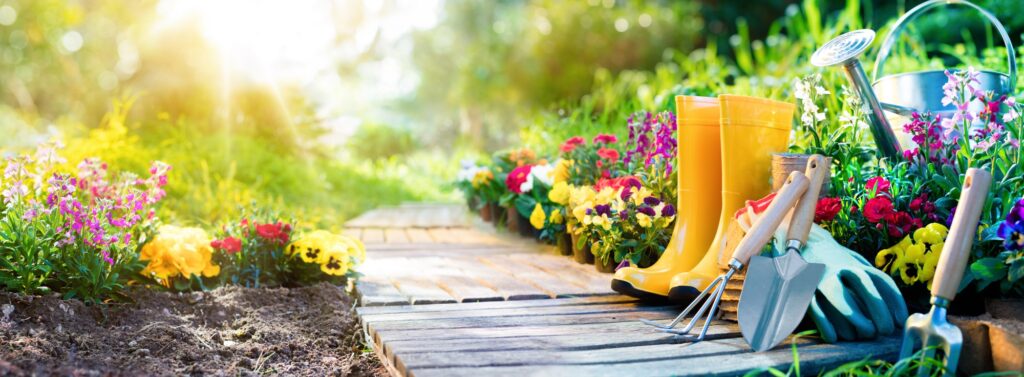
Gardening does not require a shed packed with expensive equipment. In fact, many gardens can be maintained successfully with a surprisingly small collection of dependable tools.
The right equipment should make gardening easier, safer, and more comfortable. A sharp pair of pruners can make cleaner cuts with less effort. A well-sized shovel makes planting easier. A dependable hose or watering wand puts water where plants actually need it. Comfortable footwear can make the difference between enjoying an afternoon in the garden and heading indoors because your feet are wet, muddy, or sore.
This Garden Tools & Products guide is designed to help you understand which gardening tools are genuinely useful, what features matter when you are comparing options, how to care for your equipment, and when a specialized product is worth adding to your collection.
The goal is not to buy more gardening gear. It is to choose tools that solve real problems and keep them working for as long as possible.
🧰 Start With the Essential Gardening Tools
Beginning gardeners can easily feel as though they need dozens of specialized tools before putting the first plant in the ground.
You do not.
For many home gardens, a basic collection can handle most routine jobs:
- Hand trowel
- Hand pruners
- Garden gloves
- Shovel or spade
- Garden fork
- Rake
- Watering can, hose, or watering wand
The exact list depends on what you grow.
Someone tending several containers on a balcony may need little more than a trowel, pruners, gloves, and watering can. A gardener maintaining vegetable beds, fruit trees, shrubs, and a large perennial border will eventually need a wider selection.
Our Essential Gardening Tools for Every Enthusiast provides a broader introduction to common tools and how they fit different gardening jobs.
Start with the essentials and add specialized equipment only when a recurring task gives you a reason to buy it.
🌱 Choose a Good Hand Trowel
Few gardening tools are used as often as a hand trowel.
It can help dig planting holes, transplant seedlings, fill containers, move potting mix, remove shallow weeds, and work compost into small areas.
A useful trowel should feel comfortable in your hand and be sturdy enough that the blade does not bend easily during ordinary use.
Pay attention to the handle as well as the blade. A tool can be beautifully made but unpleasant to use if the grip is too large, too narrow, slippery, or poorly shaped for your hand.
If you garden in dense or rocky soil, a stronger, narrower blade may be useful. Gardeners who work mostly with containers can often use a lighter tool.
The best trowel is not necessarily the most expensive one. It is the one that feels comfortable and survives repeated use in the kind of soil you actually have.
✂️ Invest in Good Hand Pruners
Hand pruners are another tool worth choosing carefully.
They are used for trimming perennials, harvesting some vegetables and flowers, removing smaller woody stems, shaping plants, and cutting damaged growth.
For most general pruning, bypass pruners are especially useful. Their two blades pass one another in a scissor-like action, creating a relatively clean cut.
Anvil pruners operate differently, with one cutting blade closing against a flat surface. They can be useful for certain dry or dead material but may crush softer living stems more readily.
Whatever style you use, match the pruners to the size of the branch. Hand pruners are not designed for cutting thick limbs.
If you find yourself forcing a tool through a branch, move to loppers or a pruning saw rather than putting excessive pressure on your hands and the pruners.
🌳 Know When You Need Loppers
Loppers are essentially long-handled pruning tools designed for branches larger than those suitable for ordinary hand pruners.
Their longer handles provide additional leverage and allow you to work on somewhat larger woody growth.
They can be particularly useful for maintaining shrubs, small trees, fruit plants, and overgrown woody perennials.
As with hand pruners, do not exceed the tool’s intended cutting capacity. Trying to force lightweight loppers through a large branch can damage the tool, produce a poor cut, and increase the chance of injury.
For branches beyond the comfortable capacity of loppers, a pruning saw is generally the better choice.
If you rarely prune woody plants, loppers may not belong in your starter toolkit at all. Buy them when your garden creates a need.
🪚 Use a Pruning Saw for Larger Branches
A pruning saw is designed to cut woody branches that are too large for pruners or loppers.
Unlike an ordinary carpentry saw, pruning saws are designed for garden and landscape work and are available in several sizes and blade styles.
A compact folding saw can handle many home-garden pruning jobs while storing safely when not in use.
Larger branches and trees require more caution. Branch weight, tension, falling limbs, ladders, nearby structures, and overhead utilities can turn an ordinary pruning job into a serious safety issue.
There is nothing wrong with deciding a job is beyond the appropriate scale for homeowner tools and calling a qualified tree professional instead.
Tools make gardening easier only when they are used for jobs they were actually designed to perform.
🥄 Shovel, Spade, or Garden Fork?
These tools may look similar in a garden shed, but they perform different jobs.
A shovel generally has a broader, curved blade that works well for moving loose soil, compost, gravel, mulch, and other materials.
A spade usually has a flatter blade and can be useful for edging, cutting into soil, dividing some plants, and digging precise planting areas.
A garden fork has strong tines rather than a solid blade. It can loosen compacted soil, lift certain perennials, move compost, and work through soil without cutting every root it encounters.
You may eventually want all three, but a gardener with limited space may not need them immediately.
Think about the jobs you perform most often. If you continually move mulch, prioritize the shovel. If you regularly divide established perennials, a sturdy garden fork may become one of your most useful tools.
🌾 Choose a Rake for the Job
The word “rake” describes several different tools.
A flexible leaf rake is useful for collecting leaves, light garden debris, and grass clippings.
A rigid garden rake, sometimes called a bow rake, can level soil, break up small clumps, spread compost, and prepare planting areas.
Using the wrong rake can make a simple job unnecessarily frustrating.
A leaf rake is poorly suited to leveling dense soil, while a heavy garden rake can be awkward when gathering leaves from around delicate plants.
Gardeners with trees may use a leaf rake constantly in autumn. Someone tending raised vegetable beds may get more use from a compact garden rake.
Match the tool to the garden rather than filling the shed from a generic checklist.
🌿 Do You Need a Garden Hoe?
A hoe can be an efficient tool for controlling young weeds and working the upper surface of soil.
There are several styles, including traditional draw hoes and thinner stirrup or scuffle hoes designed to move just below the soil surface.
A hoe is most effective when weeds are small.
Waiting until weeds have become mature, deeply rooted plants turns a quick surface job into much harder work.
Gardeners using thick mulch or densely planted ornamental beds may use a hoe relatively little. Vegetable gardeners with open rows may find one indispensable.
Again, the usefulness of the tool depends on the garden.
🧤 Choose Gardening Gloves for the Task
A single pair of gloves does not necessarily work for every gardening job.
Lightweight gloves can provide dexterity for planting, seedling work, and pulling small weeds. More durable gloves may be preferable when handling rough materials, thorny plants, wood, stones, or heavier landscape work.
Consider:
- Fit
- Grip
- Flexibility
- Breathability
- Water resistance
- Thorn protection
- Ease of cleaning
Gloves that are far too loose can make detailed work awkward. Gloves that are too tight become uncomfortable during long gardening sessions.
Some jobs also require more protection than an ordinary fabric gardening glove can provide.
Choose protection based on the actual task rather than relying on one lightweight pair for everything.
👢 Wear Appropriate Gardening Shoes
Gardening frequently involves wet soil, mud, slippery grass, uneven ground, thorns, tools, stones, and hours spent standing or walking.
Dedicated garden footwear can make these conditions much easier to manage.
Water-resistant clogs may be convenient for light everyday garden work, while waterproof boots can be more useful in mud, rain, tall vegetation, or wet spring conditions.
Traction is particularly important when walking over damp grass or uneven ground.
Comfort matters too. Gardening involves repeated standing, kneeling, walking, lifting, and bending, so poorly fitting footwear quickly becomes noticeable.
Our Best Gardening Shoes for Every Green Thumb guide looks more closely at the features to consider when choosing footwear for garden work.
💧 Choose a Watering System That Fits the Garden
Watering equipment ranges from a basic watering can to automated irrigation systems.
The simplest option may be all you need.
A watering can works beautifully for a small patio or indoor collection. A garden hose becomes more practical when beds are spread across a yard. Soaker hoses and drip systems can help deliver water close to the root zone in vegetable beds, foundation plantings, and other suitable areas.
Before buying irrigation equipment, think about:
- Garden size
- Distance from the water source
- Water pressure
- Container versus in-ground plants
- Whether beds are permanent
- How frequently irrigation is actually needed
- Whether the system can be adjusted seasonally
The most sophisticated watering system is not automatically the best one.
An inexpensive watering wand used thoughtfully can sometimes manage a small garden more efficiently than an elaborate system installed without understanding plant needs.
🚿 Look for a Comfortable Watering Wand
A watering wand attaches to a garden hose and extends the water outlet away from your hand.
This makes it easier to water containers, reach beneath foliage, and direct water toward the soil rather than spraying the entire plant.
Longer wands can be especially useful for hanging baskets and deep flower beds.
Look for a shutoff valve that is easy to operate and a handle that remains comfortable when wet.
A gentle shower setting is useful for many plants because it distributes water without blasting soil out of containers or flattening seedlings.
As with other garden products, durability matters. Plastic connections that fail after a season can make a seemingly inexpensive tool cost more over time.
💦 Consider Soaker Hoses and Drip Irrigation
Gardens with permanent rows or beds may benefit from systems that apply water slowly near the soil.
Soaker hoses allow water to seep through the hose along its length.
Drip irrigation uses tubing and emitters to deliver water at selected locations.
Both approaches can reduce the amount of water sprayed onto paths, pavement, and foliage when designed and operated correctly.
However, no irrigation method should simply be installed and forgotten.
Check for clogged emitters, damaged hoses, leaks, uneven coverage, and seasonal changes in plant water demand.
Watering schedules should respond to rainfall and weather instead of operating identically every week of the year.
For broader water-conservation ideas, visit Eco-Friendly Gardening.
🪣 A Good Watering Can Still Has a Place
Technology has not made the watering can obsolete.
For houseplants, seedlings, containers, and small gardens, a watering can provides excellent control without requiring hoses or irrigation equipment.
Look for a comfortable handle and a capacity you can carry when full.
A large watering can sounds convenient until you fill it with water and discover how heavy it becomes.
Removable rose attachments can be useful because they allow you to switch between a gentle shower for seedlings and a more direct stream for established plants.
Indoor gardeners may prefer a narrower spout that makes it easier to reach soil without wetting furniture or foliage.
🛞 Decide Whether You Need a Wheelbarrow or Garden Cart
Moving compost, mulch, soil, plants, stones, firewood, and garden debris can quickly become exhausting.
A wheelbarrow or garden cart can reduce the number of trips and the amount of material you need to carry by hand.
Traditional wheelbarrows are highly maneuverable but require the gardener to support and balance part of the load.
Two- or four-wheeled garden carts may provide additional stability, although they can be more awkward in narrow spaces.
Before buying, consider the terrain, gate widths, paths, storage space, and typical loads.
A huge cart is not useful if it cannot fit between your raised beds or through the garden gate.
🪑 Make Kneeling More Comfortable
Gardening brings you close to the ground.
Planting, weeding, edging, and harvesting can involve long periods of kneeling or crouching.
A simple kneeling pad can make those jobs more comfortable on hard, rocky, or damp ground.
Combination kneeler-and-seat products provide another option. They can offer a raised place to sit and handles that may assist some gardeners when moving between sitting, kneeling, and standing positions.
Choose products that feel stable and appropriate for your own mobility.
Gardening should adapt to the gardener rather than forcing every gardener to work in exactly the same way.
Raised beds and containers can also reduce the amount of low-level work required. See Raised Bed Gardening for Beginners for more ideas.
🪴 Useful Tools for Container Gardening
Container gardeners need fewer large tools but often benefit from smaller, more precise equipment.
Useful items can include:
- Hand trowel
- Small pruners or scissors
- Watering can
- Moisture-resistant gloves
- Small scoop
- Plant labels
- Saucers or trays where appropriate
- Sturdy plant supports
A small soil scoop can be more convenient than a full-size trowel when filling multiple pots.
Containers also require dependable drainage, so choosing the pot itself is an important gardening-product decision.
Decorative appearance matters, but drainage holes, durability, weight, and appropriate size matter more for plant health.
For indoor container care, visit the Indoor Plants hub.
🌱 Tools for Seed Starting
Starting seeds indoors requires remarkably little equipment at the simplest level.
Containers, suitable seed-starting medium, labels, water, and sufficient light form the basic system.
As you expand, useful equipment may include:
- Seed-starting trays
- Cell inserts
- Humidity covers
- Bottom-watering trays
- Grow lights
- Adjustable shelving
- Timers
- Heat mats for crops that benefit from warmer germination conditions
Do not assume every seed requires a heat mat. Germination-temperature preferences differ among species.
Lighting often matters much more once seedlings emerge.
Weak, stretched seedlings are frequently associated with inadequate light rather than a lack of fertilizer.
💡 Choosing Grow Lights
Grow lights can help gardeners start seedlings indoors, maintain herbs during winter, or grow houseplants where natural light is inadequate.
Our existing Comprehensive Guide to Gardening Lights introduces the major types of plant lighting and basic selection considerations.
For many modern home setups, LED grow lights are attractive because they can provide useful plant light while consuming relatively little electricity compared with older high-output technologies and producing less waste heat than some alternatives.
When comparing grow lights, look beyond marketing terms.
Consider:
- Area the light needs to cover
- Distance between the fixture and plants
- Adjustability
- Energy use
- Heat output
- Timer compatibility
- Fixture size
- Manufacturer guidance
- Whether replacement parts are available
A powerful light covering a tiny seed tray may be unnecessary, while a small decorative lamp may not provide enough light for a shelf filled with sun-loving seedlings.
🌡️ Do You Need a Soil Thermometer?
A soil thermometer is inexpensive and can be useful for gardeners who start seeds outdoors or want to time warm-season planting more carefully.
Air temperature and soil temperature are not the same thing.
A warm afternoon does not necessarily mean the soil has reached a suitable temperature for warm-season seeds.
Gardeners can use soil temperature alongside weather forecasts and crop-specific guidance when deciding when to plant.
This is an example of a specialized tool that is unnecessary for many casual gardeners but potentially useful for someone who grows large vegetable gardens or starts many plants from seed.
🧪 Soil Test Kits vs. Laboratory Testing
Home soil-testing kits can provide basic information, but gardeners should understand their limitations.
For important decisions about pH, nutrient levels, or soil amendments, a professional laboratory test—often available through state university or Cooperative Extension programs—can provide much more useful information.
A soil test can help prevent unnecessary fertilizer applications and identify actual soil problems rather than encouraging gardeners to treat plants based on guesswork.
Before buying a collection of fertilizers and amendments, consider spending money on information first.
The Gardening Basics hub discusses soil testing and soil health in greater detail.
📏 Small Measuring Tools Can Be Surprisingly Useful
Some of the most useful gardening equipment costs very little.
A tape measure helps with plant spacing and bed planning.
Plant labels preserve variety names you are certain you will remember but probably will not.
A rain gauge provides actual information about rainfall instead of relying on impressions.
A notebook or garden journal can be more valuable over time than another gadget because it records planting dates, harvests, successes, failures, and weather patterns.
Sometimes the best garden tools are simply tools that help you pay closer attention.
🏗️ Choosing Raised Beds
Raised beds have become extremely popular, and gardeners can now choose among wood, metal, composite materials, masonry, fabric beds, and numerous prefabricated systems.
Do not choose a raised bed entirely on appearance.
Consider:
- Height
- Width
- Length
- Material durability
- Accessibility
- Soil volume required
- Drainage
- Local climate
- Available space
- Cost of filling the bed
A very tall raised bed may require a surprisingly large amount of material to fill.
Beds should also be narrow enough that you can comfortably reach the center without routinely stepping into the growing area.
For planning and setup, visit Raised Bed Gardening for Beginners.
🌿 Plant Supports: Stakes, Cages, and Trellises
Supporting plants early is generally easier than trying to rescue them after they collapse.
Tomatoes, peas, pole beans, cucumbers, some flowers, and many vines benefit from structures that keep growth upright or direct it where you want it to go.
Support options include:
- Stakes
- Tomato cages
- Trellises
- Garden netting
- Arches
- Obelisks
- Twine systems
Choose structures based on the mature weight and growth habit of the plant.
A lightweight decorative trellis may look attractive with a young vine but buckle once the plant becomes large and heavy.
Install substantial supports before roots and stems fill the area whenever possible.
🌹 Support Tall Flowers Before They Fall
Plant supports are useful beyond the vegetable garden.
Peonies, dahlias, delphiniums, lilies, tall asters, and other flowering plants can bend or collapse after heavy rain or wind.
Rings, discreet stakes, grids, and other supports can help preserve a natural appearance without allowing stems to sprawl over neighboring plants.
The best support system often disappears visually once foliage grows through it.
Install supports early rather than trying to force mature stems through a structure after flowering begins.
For more guidance on flowering plants, visit Flower Gardening.
🏷️ Keep Plant Labels Simple
Plant labels are easy to underestimate until you forget which tomato variety you planted or where a dormant perennial is supposed to emerge.
Permanent labels are particularly useful for:
- Fruit trees
- Berry varieties
- Perennial flowers
- Bulbs
- Seedling trays
- Experimental varieties
Permanent marker on some plastic labels fades surprisingly quickly outdoors.
Pencil on suitable garden labels, paint markers, engraved metal labels, and other weather-resistant methods may last longer depending on the material.
A photograph of the nursery tag stored with your garden notes provides useful backup information.
🌧️ Use a Rain Gauge
A rain gauge is one of the simplest tools for improving watering decisions.
A garden may appear to have received a substantial storm while collecting relatively little measurable rain.
Conversely, gardeners sometimes irrigate shortly after enough rainfall has already soaked the root zone.
Place a rain gauge in an open location rather than beneath trees, rooflines, or irrigation equipment.
Combine rainfall information with checking soil moisture.
No single measurement tells you exactly when every plant needs water, but real rainfall data is much more useful than guessing.
🍂 Choose Mulch Based on the Job
Mulch is a garden material rather than a conventional tool, but choosing it carefully can influence maintenance throughout the year.
Wood chips work particularly well in many paths and around woody plants.
Shredded leaves can be useful in ornamental beds.
Straw may work in vegetable gardens.
Fine decorative mulches have different characteristics from coarse arborist wood chips.
Instead of asking which mulch is universally “best,” ask what you need the material to accomplish.
Consider weed suppression, moisture conservation, soil protection, appearance, availability, cost, and how quickly the material will break down.
The Eco-Friendly Gardening hub covers mulch, compost, leaves, water use, and other lower-input garden practices.
🪴 Choose Plant Pots for the Plant
Decorative containers can become part of the design of a garden or home, but plant health should come first.
Consider:
- Drainage
- Pot diameter
- Depth
- Weight
- Material
- Frost resistance
- Moisture retention
- Mature plant size
Terracotta tends to lose moisture through its porous walls, while plastic and glazed pots generally retain moisture longer.
Large containers hold more growing medium and usually dry more slowly than very small pots.
Outdoor pots also need to tolerate local weather if they will remain exposed year-round.
For houseplants, a decorative cachepot can hide an ordinary nursery pot while allowing the inner pot to retain proper drainage.
🌤️ Garden Shade Products
Temporary shade cloth can be useful in certain gardens during intense summer heat, particularly for newly established plants, some cool-season vegetables, propagation areas, and other sensitive crops.
Different shade cloths block different amounts of sunlight, so more shade is not automatically better.
Plants still need enough light to photosynthesize normally.
Shade structures should also permit adequate airflow and remain secure during wind.
Before buying a permanent structure, determine whether the problem is truly excessive sunlight or whether the plant has simply been placed in an unsuitable location.
A temporary product can help during an unusual heat wave, but appropriate plant placement remains the better long-term solution.
🐦 Garden Netting and Wildlife Barriers
Birds, deer, rabbits, and other wildlife can make certain crops difficult to harvest without protection.
Netting, row covers, fencing, cages, and tree guards can all have legitimate uses.
Choose barriers specifically for the animal and crop you are protecting.
Fine mesh that protects young vegetables from insects is different from deer fencing, while berry netting solves a different problem again.
Install wildlife netting carefully so animals cannot easily become entangled.
Check barriers regularly rather than assuming that once installed they will remain safe and effective indefinitely.
Physical exclusion can often protect crops without requiring repeated chemical treatments.
🐛 Pest-Control Products Should Come After Identification
Garden centers contain shelves filled with products for insects, plant diseases, weeds, and other problems.
Buying a treatment before identifying the problem is backwards.
A damaged leaf could result from an insect, fungal disease, physical injury, weather, nutrient stress, drought, excessive moisture, or simply natural aging.
No single product treats all of those causes.
Correct identification allows you to decide whether treatment is needed at all.
Our Eco-Friendly Gardening hub discusses integrated pest management and beginning with the least disruptive effective solution.
Products should support good gardening practices rather than replace observation.
🧴 Be Skeptical of Miracle Garden Products
Gardening attracts an enormous number of products promising dramatic growth, effortless pest control, stronger roots, enormous flowers, or record-breaking harvests.
Some garden products are genuinely useful.
Others solve problems that gardeners do not actually have.
Before buying, ask:
- What problem does this product solve?
- Do I actually have that problem?
- Is there evidence it works?
- Is there a simpler solution?
- Does the plant simply need better light, soil, drainage, or watering?
- Will I use this more than once?
Healthy soil, appropriate plants, adequate sunlight, thoughtful watering, and routine observation solve many garden problems without specialized products.
Buy solutions, not promises.
🧑🌾 Choose Tools That Fit Your Body
A garden tool should fit the gardener as well as the task.
Handle length, grip diameter, weight, balance, and the force required to operate a tool can all affect comfort.
A shovel that works perfectly for one person may feel awkward to someone shorter or taller. Heavy hedge shears may become exhausting during repetitive work, while spring-assisted pruners may reduce the effort required for repeated cuts for some users.
Whenever possible, hold a tool before buying it.
Imagine the motion you will perform repeatedly.
Can you maintain a comfortable wrist position? Is the tool unnecessarily heavy? Can you operate the mechanism easily? Does the grip feel secure?
Ergonomic design is not simply a marketing word. A tool is useful only if it helps you perform the task comfortably and effectively.
🧼 Clean Garden Tools Regularly
Good tools can last for many years if they receive basic care.
After gardening, remove heavy soil and plant material rather than putting tools away covered in mud.
Dry metal tools before storage.
Pruners and other cutting tools may need more frequent cleaning when working with diseased plant material.
Wooden handles should be inspected for roughness, cracks, or splinters, while loose screws and connections should be corrected before they become failures.
Routine maintenance does not need to become an elaborate ritual.
A few minutes at the end of a gardening session can prevent rust, deterioration, and unpleasant surprises when you need the tool again.
🔪 Keep Cutting Tools Sharp
A dull cutting tool requires more effort and often produces poorer cuts.
Hand pruners, loppers, hoes, shovels, and other edged garden tools can all benefit from appropriate sharpening.
How frequently a tool needs sharpening depends on how often it is used and the materials it encounters.
Inspect blades regularly for damage.
Some cutting blades are replaceable, which can extend the useful life of a quality tool substantially.
If you are uncomfortable sharpening a particular blade safely, professional sharpening may be preferable to damaging the tool or injuring yourself.
🏠 Store Tools Out of the Weather
Leaving garden tools outdoors shortens their useful life.
Rain, humidity, soil, sunlight, and repeated temperature changes can damage metal, plastic, and wooden components.
A shed, garage, covered storage box, or protected wall-mounted system can keep equipment organized and dry.
Hanging long-handled tools also reduces clutter and prevents people from stepping on rakes, shovels, or other equipment lying on the floor.
Store sharp tools so their cutting edges cannot be accidentally grabbed or brushed against.
Good storage makes equipment last longer and also makes gardening easier because you can actually find the tool when you need it.
🔋 Think Before Buying Power Equipment
Powered equipment can make large jobs much easier, but it also adds cost, maintenance, storage requirements, noise, and additional safety considerations.
Before buying a tiller, hedge trimmer, leaf blower, chainsaw, or other powered equipment, ask how often you will actually use it.
For occasional tasks, borrowing, renting, or hiring someone may make more sense.
Battery-powered equipment has become increasingly practical for many ordinary residential garden tasks and avoids some of the maintenance associated with small gasoline engines.
Whatever power source you choose, follow the manufacturer’s instructions and use appropriate protective equipment.
Do not allow convenience to encourage you to tackle work beyond your training or experience.
🌱 Buy for Your Garden, Not Someone Else’s
A vegetable gardener and a houseplant collector need very different equipment.
A gardener maintaining mature fruit trees may value pruning equipment and ladders, while someone growing herbs on an apartment balcony has no reason to own a wheelbarrow.
The same principle applies to product reviews.
A tool can be excellent and still be completely unnecessary for you.
Before purchasing anything, think about the recurring jobs in your particular garden.
What takes too long?
What is physically uncomfortable?
What equipment repeatedly fails?
What task are you currently doing with the wrong tool?
Those answers create a much better shopping list than a generic collection of “must-have garden gadgets.”
💰 Spend More Where Durability Matters
The cheapest tool is not always the least expensive choice over time.
Frequently used equipment such as pruners, shovels, hoses, and watering tools may justify spending more for good construction, replaceable parts, and a comfortable design.
Specialized equipment used once every several years may not.
Think in terms of cost per use.
A dependable pair of pruners used hundreds of times over many seasons can be better value than several inexpensive pairs that continually fail.
At the same time, high price does not automatically mean high quality.
Look for sturdy construction, repairability, useful warranties, replacement parts, and features that solve real problems rather than paying for branding alone.
♻️ Maintain Before You Replace
One of the simplest ways to make gardening products more sustainable is to keep useful equipment in service longer.
Sharpen blades.
Replace worn springs.
Install a new hose washer instead of replacing the entire hose.
Repair a wheelbarrow tire.
Clean pots and use them again.
Replace a wooden handle when the metal tool head still has decades of useful life remaining.
Quality tools often become better investments precisely because they can be maintained rather than discarded when one component wears out.
Our Eco-Friendly Gardening hub includes more ideas for reducing waste and reusing garden materials thoughtfully.
🛍️ How We Approach Garden Product Recommendations
Garden products should earn their place in the garden.
When considering tools and products, the most useful questions are not whether an item is fashionable or heavily advertised, but whether it performs the intended job well.
Important considerations can include:
- Function
- Durability
- Comfort
- Safety
- Ease of use
- Ease of cleaning
- Repairability
- Storage requirements
- Value for money
- Suitability for the intended gardener
Different gardeners may reasonably choose different products.
A lightweight tool may be more useful to one person than a heavier professional model. A large-capacity cart may be ideal on acreage but frustrating in a small enclosed garden.
The best recommendation depends on how the product will actually be used.
🔎 Check Product Information Before Buying
Garden products change.
Models are discontinued, designs are revised, prices fluctuate, and manufacturers update product specifications.
Before making a purchase, verify important details with the manufacturer or retailer, especially when those details affect compatibility or safety.
For products such as irrigation equipment, replacement blades, batteries, grow lights, and powered tools, check dimensions and technical requirements carefully.
Reviews can help identify patterns, but they should be considered alongside manufacturer information and your own needs.
Do not buy a garden product simply because it appears on a “best” list.
🌻 Good Tools Should Help You Garden More
The purpose of gardening equipment is not to fill a garage.
It is to remove unnecessary difficulty between you and the garden.
A comfortable trowel encourages planting.
Sharp pruners make seasonal maintenance easier.
A reliable watering system helps you care for plants consistently.
A sturdy cart saves repeated trips with heavy loads.
Comfortable shoes let you remain outside long enough to enjoy the work.
Build your tool collection slowly. Start with a few dependable basics, take care of them, and add new equipment when your garden gives you a genuine reason.
Eventually, your collection becomes personal. The tools you reach for first reveal the kind of gardener you have become.
🔗 Related Articles
- Gardening Basics
- Vegetable Gardening
- Flower Gardening
- Indoor Plants
- Eco-Friendly Gardening
- Seasonal Gardening
- Raised Bed Gardening for Beginners
- Essential Gardening Tools for Every Enthusiast
- The Best Gardening Shoes for Every Green Thumb
- A Comprehensive Guide to Gardening Lights