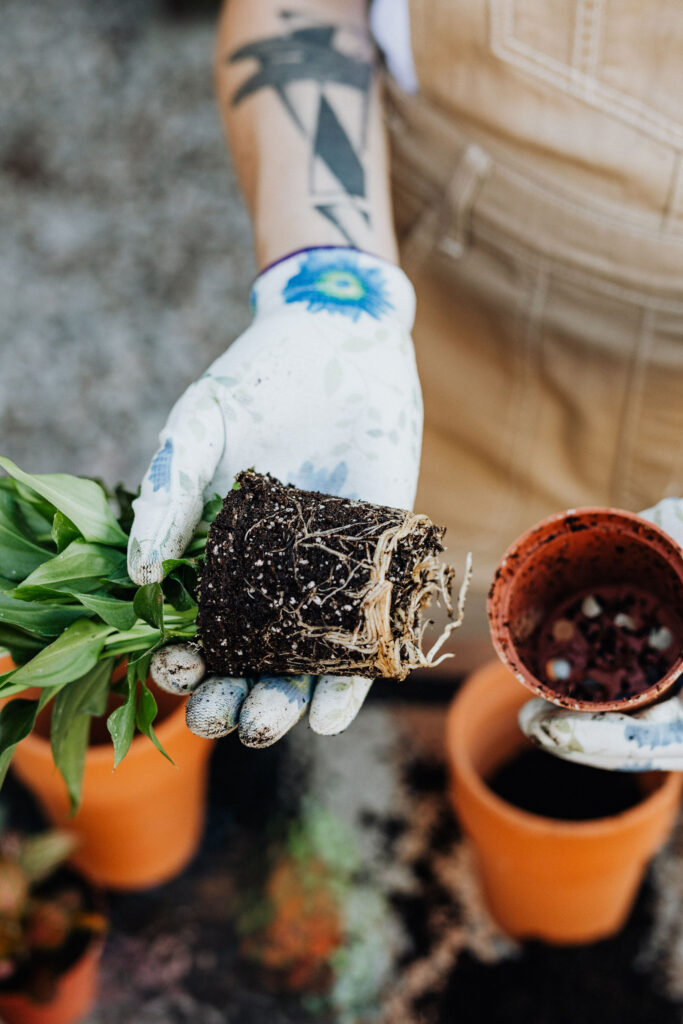
Spring is usually considered the best time to repot houseplants, but what happens when a plant needs attention in the middle of winter? Maybe its roots are growing through the drainage holes, the potting mix won’t dry, or the plant has started showing signs of root rot.
Waiting several months for warmer weather isn’t always practical, especially when the plant is already struggling.
Fortunately, repotting during winter isn’t automatically harmful. Many common houseplants can tolerate being moved into fresh potting mix at almost any time of year, provided their growing conditions are suitable and their roots are handled carefully.
The challenge is that winter often brings shorter days, slower growth, and reduced water use. A plant that would recover quickly from repotting in May may take considerably longer to adjust in January.
Yes, you can repot houseplants in winter, especially when there’s a genuine problem with the roots, container, or potting mix. However, healthy plants that simply need more growing space are usually better repotted in late winter or spring, when active growth begins.
Knowing when to intervene and when to leave a plant alone can make the difference between a successful repotting and unnecessary stress.
Here’s how to decide whether your houseplant needs repotting during winter, how to do it safely, and how to care for it afterward.
🪴 Is It Okay to Repot Houseplants During Winter?
Repotting houseplants in winter is possible, but the timing isn’t ideal for every plant.
Iowa State University Extension explains that indoor plants can be repotted at any time of year, although gardeners generally have the best results in late winter or early spring as growth becomes more vigorous.
The Royal Horticultural Society similarly recommends spring for routine repotting, noting that fresh potting mix may remain excessively wet when plants aren’t growing actively.
These recommendations aren’t contradictory. They distinguish between what is possible and what is usually preferable.
A healthy pothos that has become mildly rootbound can often remain in its current container until spring without serious problems.
However, a peace lily suffering from root rot may need immediate attention, regardless of the season.
The same applies to a plant growing in contaminated or badly deteriorated potting mix.
When deciding whether to repot, consider the plant’s condition rather than the calendar alone.
If the existing container and growing medium are supporting healthy roots, there’s usually no urgency.
If the root environment is actively damaging the plant, waiting for spring could make recovery more difficult.
❄️ Why Is Winter a More Difficult Time to Repot?
Winter repotting can be more challenging because many indoor plants aren’t growing as actively as they do during warmer months.
Although the temperature inside your home may remain relatively consistent, natural daylight changes considerably throughout the year.
Shorter days and reduced light intensity limit photosynthesis, which can slow the development of new roots and foliage.
Plants that aren’t growing vigorously may take longer to establish themselves in fresh potting mix after being disturbed.
Watering is another concern.
When growth slows, houseplants often use less moisture. If a recently repotted plant is placed in a larger container containing substantial amounts of fresh soil, that unused growing medium may stay wet for too long.
The result can be reduced oxygen around the roots and an increased risk of root problems.
Winter also introduces temperature challenges.
Cold windowsills, drafts, and heating vents can create stressful conditions for a plant already recovering from repotting.
None of these factors means winter repotting is impossible. They simply make careful handling, appropriate pot size, and suitable aftercare especially important.
🌱 When Should You Repot a Houseplant in Winter?
There are situations when winter repotting is more sensible than waiting for the traditional spring growing season.
The most important reason is an existing problem that threatens the plant’s health.
For example, roots that are actively rotting won’t necessarily recover simply because you stop watering. The plant may need damaged roots removed and fresh, appropriately draining potting mix.
An oversized container that remains saturated can create similar problems.
A broken pot may also need immediate replacement, particularly when it no longer supports the root ball or allows safe watering.
You may also need to repot if the growing medium has become badly compacted, contaminated, or unsuitable for the plant.
Severe root crowding is another possible reason, especially when the roots are pushing the plant out of the container or the root ball dries so quickly that normal watering becomes difficult.
The key is determining whether repotting will correct a genuine problem.
If the plant is healthy and the issue is only that you’d prefer a different decorative container, winter may not be the best time to disturb it.
🪴 Signs Your Houseplant Needs Repotting
Houseplants often provide clues when their containers or growing media are no longer suitable.
Common signs include roots emerging through drainage holes, dense roots circling the inside of the pot, a plant becoming top-heavy, or potting mix drying much faster than usual.
However, one visible root isn’t necessarily a reason to repot.
Some roots naturally explore drainage openings, and certain plants grow quite happily with a moderately snug root system.
The most reliable approach is to examine the overall condition of the plant and, when appropriate, the root ball.
Iowa State University Extension identifies several reasons to consider repotting, including deteriorated potting mix, slow growth associated with restricted roots, and containers that no longer support the plant adequately.
Winter adds an important complication: slow growth alone isn’t a reliable sign of root crowding.
A plant may stop producing new leaves simply because available light has decreased.
Before repotting, check whether the roots are genuinely crowded or whether environmental conditions explain the change.
🦠 Should You Repot a Houseplant With Root Rot in Winter?
Yes. If root rot is confirmed, winter is not a reason to postpone necessary care.
Root rot can develop when growing media remain excessively wet and poorly aerated, creating conditions in which roots become damaged and root-rotting organisms may thrive.
Affected plants often wilt even when their potting mix is wet.
Leaves may turn yellow or brown, stems may soften, and the roots may become mushy or begin falling apart.
The University of Maryland Extension recommends inspecting affected root systems, removing diseased portions when possible, and repotting surviving healthy material into clean growing media.
Begin by gently removing the plant from its container.
Examine the roots rather than relying only on leaf symptoms. Healthy roots vary in color depending on the species, but they should generally be firm.
Clearly rotting roots may feel soft, collapse when handled, or have an unpleasant odor.
Remove badly damaged root tissue with clean scissors or pruning shears. Avoid cutting away healthy roots unnecessarily.
Discard deteriorated potting mix and clean the container before reusing it.
Choose a pot appropriate for the remaining healthy root system. If significant root loss has occurred, the plant may need a smaller container rather than a larger one.
Repot in fresh, well-aerated growing medium suited to the species.
Severely affected plants may not recover, even with careful treatment. If some healthy stem tissue remains, propagation may offer another way to preserve the plant.
The important point is that confirmed root rot requires attention to the roots and growing conditions, not simply a change in watering frequency.
💧 Should You Repot if the Soil Stays Wet Too Long?
Persistently wet potting mix can be a reason to repot, but it doesn’t always mean repotting is necessary.
During winter, many houseplants use water more slowly because of reduced light and growth.
A container that dried within five days during summer may take considerably longer during the colder months.
If the plant remains healthy, the pot drains properly, and the roots are firm, adjusting the watering frequency may be enough.
However, if the potting mix stays saturated for an unusually long time, examine the container and growing medium.
The pot may be too large for the root system, or the mix may be excessively dense.
Old organic components can also break down and compact, reducing the air spaces available around roots.
The Royal Horticultural Society identifies deteriorated potting compost and oversized containers as factors that can contribute to poor drainage and root problems.
When these conditions are serious, repotting into an appropriately sized container with better-aerated potting mix may be beneficial.
Avoid assuming that wet soil means the plant needs a larger pot.
In some situations, downsizing is the better solution.
🌿 Can You Repot a Rootbound Plant in Winter?
A rootbound plant can be repotted during winter, but the urgency depends on how severely the roots are crowded.
Many houseplants tolerate being slightly rootbound.
Some even perform well when their roots occupy much of the available container space.
A plant with a few roots visible through drainage holes may be perfectly healthy and able to wait until spring.
Severe root crowding is different.
If the root ball consists almost entirely of tightly packed roots, water may run through the container without adequately moistening the growing medium.
The plant may also become unstable, develop poor growth, or require watering unusually frequently.
In these circumstances, moving to a slightly larger container may be justified.
However, avoid making a dramatic increase in pot size.
The goal is to provide enough room for healthy root growth without surrounding the plant with a large volume of unused, moisture-retentive potting mix.
If the roots are healthy and the plant is stable, waiting until late winter or spring often makes the process easier.
📏 What Size Pot Should You Use for Winter Repotting?
Choosing the right pot size is especially important when repotting during winter.
An oversized container can hold excessive moisture around a relatively small root system.
Because plants often use less water during winter, that extra moisture may remain in the potting mix for a long time.
For many common houseplants, moving into a container approximately one to two inches wider than the existing pot is a practical starting point.
However, the appropriate size depends on the root system rather than the old container alone.
| Current pot diameter | Typical next size |
|---|---|
| 4 inches | 5–6 inches |
| 6 inches | 7–8 inches |
| 8 inches | 9–10 inches |
| 10 inches | 11–12 inches |
These are illustrative ranges, not mandatory increases. A plant with damaged roots may need to remain in the same size pot or move into a smaller one.
The University of Maryland Extension emphasizes using containers with suitable drainage and selecting potting media appropriate for the plant.
A slightly snug, well-draining container is generally safer than a much larger pot filled with constantly damp soil.
You can also place a functional nursery pot inside a decorative outer container rather than planting directly into a pot without drainage holes.
🌱 What Potting Mix Should You Use in Winter?
The best potting mix depends on the type of houseplant you’re repotting.
A suitable growing medium should provide a balance between moisture retention and air around the roots.
Most tropical foliage plants grow well in an appropriate indoor potting mix containing ingredients such as peat or coir, perlite, and bark or other materials that help maintain structure.
Plants that naturally grow in coarse organic material, such as many epiphytic orchids, require a different medium.
Succulents and cacti generally benefit from faster-draining mixes that don’t remain saturated for long periods.
The University of Maryland Extension recommends selecting growing media based on the needs of the plant rather than using one mix for every species.
Avoid filling indoor containers with ordinary garden soil. It may compact, drain poorly, and introduce unwanted organisms.
Also avoid adding a layer of gravel to the bottom of the pot as a supposed drainage improvement.
Contrary to popular belief, a gravel layer doesn’t reliably improve drainage and can move the saturated zone higher into the growing medium.
It’s better to use an appropriate potting mix throughout the container and allow excess water to leave through drainage holes.
✂️ How to Repot a Houseplant Safely in Winter
If you’ve decided that repotting is necessary, work carefully and minimize unnecessary root disturbance.
Winter repotting doesn’t require an entirely different method from spring repotting, but a gentler approach is usually beneficial.
1. Prepare the New Container
Choose a clean container with drainage holes.
If you’re increasing the pot size, move up only enough to accommodate the existing root system with a modest amount of fresh growing medium.
If root rot has reduced the size of the root system, select a pot appropriate for the healthy roots that remain.
Prepare a fresh potting mix suited to the plant.
It’s easier to complete the process efficiently when everything is ready before you remove the plant from its old container.
2. Remove the Plant Carefully
Gently loosen the container and slide out the root ball.
Squeezing the sides of a flexible nursery pot can help release the plant without pulling on its stems.
If the plant is growing in a rigid container, carefully loosen the root ball around the edges.
Avoid tugging forcefully on the foliage.
Try to preserve as many healthy roots as possible, particularly if the plant is already stressed.
3. Examine the Roots
Look for crowded roots, deteriorated potting mix, and signs of damage.
Firm roots are generally a good sign, although their color varies by species.
If the plant is rootbound, gently loosen the outermost roots where practical.
Don’t aggressively tear apart a healthy root ball simply because you’re repotting.
If root rot is present, remove clearly dead or decaying sections with clean tools.
4. Add Fresh Potting Mix
Place a small amount of fresh mix in the bottom of the new container.
Set the plant so it remains at approximately the same planting depth as before.
Avoid burying the crown or lower stems more deeply than appropriate for the species.
Fill the space around the root ball with fresh mix, gently settling it into place without packing it tightly.
Leave a little space below the pot rim to make watering easier.
5. Water Appropriately
For most healthy tropical foliage plants, watering after repotting helps settle the growing medium around the roots.
Apply enough water to moisten the mix and allow excess water to drain.
However, plants with freshly damaged or cut succulent roots may require different handling.
Follow the requirements of the particular species, especially when repotting cacti or other drought-adapted plants.
6. Return the Plant to Suitable Conditions
Place the plant in appropriate light and stable indoor temperatures.
Avoid cold drafts, freezing window glass, and direct hot air from heating vents.
If the plant was previously growing in moderate light, don’t suddenly move it into intense sunlight.
The goal is to provide familiar, suitable conditions while the roots adjust.
7. Give the Plant Time to Recover
After repotting, resist the temptation to make additional major changes.
Don’t immediately prune healthy foliage, fertilize heavily, or repeatedly move the plant.
Allow it time to settle into the fresh growing medium.
For more detailed instructions, see our How to Repot a Plant: Step-by-Step Guide for Healthy Roots and New Growth.
🚿 How Often Should You Water After Repotting in Winter?
Watering requires particular attention after winter repotting.
A plant moved into fresh growing medium may dry at a different rate than it did before.
The new mix may hold more moisture, and the root system may not immediately absorb water as efficiently if it was disturbed during repotting.
Reduced winter light can slow water use even further.
For most common foliage houseplants, water appropriately after repotting, allow the excess to drain, and then check the potting mix before watering again.
Don’t assume the plant needs more water simply because several days have passed.
The upper layer may become dry while the deeper root zone remains moist.
A wooden skewer or careful check below the soil surface can help you assess moisture in larger containers.
Plants have different requirements, so adjust your approach for moisture-loving species, succulents, orchids, and other specialized houseplants.
Above all, avoid letting a newly repotted plant sit in standing water.
Healthy roots need oxygen as well as moisture.
☀️ Where Should You Put a Houseplant After Winter Repotting?
The best location is usually one that provides appropriate light, stable temperatures, and protection from drafts.
Many popular tropical foliage plants grow well in bright indirect light.
However, the specific requirements vary by species.
A plant that has just experienced substantial root disturbance may be more vulnerable to additional environmental stress.
Avoid placing it directly against a cold window or close to a frequently opened exterior door.
Also keep it away from heating vents and radiators that produce bursts of hot, dry air.
If the plant has been growing successfully in its existing location, returning it there may be the simplest option.
When the original location is too dark, consider improving the light gradually.
Supplemental grow lighting can be useful during winter, particularly when natural daylight is limited.
A grow light doesn’t automatically make repotting risk-free, but adequate light can help support active growth and recovery.
The important thing is to avoid exposing the plant to several major environmental changes at once.
🌸 Should You Fertilize a Houseplant After Winter Repotting?
Usually, there’s no need to fertilize immediately after repotting.
Many commercial potting mixes already contain added nutrients.
Some include slow-release fertilizer designed to supply nutrients for several months.
Adding another fertilizer application may be unnecessary and could increase soluble salt concentrations around the roots.
Freshly disturbed or damaged roots may also be less effective at absorbing nutrients.
Iowa State University Extension recommends waiting approximately two to four weeks before resuming regular fertilization after repotting, with the understanding that many mixes contain some fertilizer already.
During winter, the waiting period may be longer if the plant isn’t actively growing.
If a houseplant has entered a period of slow growth because of reduced light, it may not need fertilizer until spring.
The best approach is to monitor the plant.
When healthy new growth resumes, consider whether additional nutrients are needed based on the species, potting mix, and existing feeding history.
🐍 Can You Repot Snake Plants and ZZ Plants in Winter?
Snake plants and ZZ plants generally prefer well-draining conditions and are particularly vulnerable to prolonged saturation.
Both have structures that store water, allowing them to tolerate periods of dryness.
During winter, these plants often grow slowly under ordinary household conditions.
Routine repotting can usually wait until spring.
However, if the potting mix remains excessively wet, roots are rotting, or the container is damaged, winter repotting may be necessary.
Choose a container with drainage holes and an appropriately draining medium.
Avoid placing a small root system into a large volume of fresh soil.
If the roots or water-storing structures have been damaged, handle the plant carefully and avoid automatically saturating the new potting mix.
Watering after repotting should reflect the species and the condition of its roots.
For an otherwise healthy snake plant or ZZ plant, there’s little advantage to disturbing the roots simply because you want to refresh its appearance.
🌵 Can You Repot Cacti and Succulents in Winter?
Most desert cacti and many succulents are better repotted during spring.
The Royal Horticultural Society recommends spring repotting for indoor cacti and succulents, particularly when the plants have outgrown their containers.
Many of these species experience a slower-growing or resting period during winter, especially under cooler conditions.
Disturbing their roots during this time can introduce unnecessary stress.
Another concern is moisture.
Succulents adapted to dry conditions are particularly vulnerable when their roots remain in wet growing media.
If winter repotting is unavoidable, use a suitable fast-draining mix and a correctly sized container.
Take extra care to avoid damaging the roots.
When roots have been cut or injured, some species benefit from allowing the damaged areas to dry before watering.
The correct aftercare varies by species, so don’t apply one watering rule to every cactus or succulent.
If the plant is healthy and simply becoming slightly crowded, waiting until spring is usually the safer approach.
🌺 Can You Repot Orchids During Winter?
Orchids require more specialized care because different types have different growing cycles and root systems.
Many commonly grown orchids, including Phalaenopsis, are epiphytes in their natural habitats.
Their roots are adapted to growing in airy conditions rather than dense ordinary potting soil.
These orchids are often cultivated in bark-based or other coarse growing media.
Over time, bark can deteriorate and become compacted, reducing aeration around the roots.
If the medium has broken down badly or root rot is developing, repotting may become necessary even during winter.
However, routine repotting is often best timed around the orchid’s growth cycle, particularly when new roots are beginning to develop.
For many Phalaenopsis orchids, repotting after flowering and as new root growth begins is a convenient approach.
Avoid disturbing an otherwise healthy orchid in full bloom without a good reason, as repotting can disrupt the plant and its flowers.
When repotting is necessary, use a medium appropriate for the orchid species and handle living roots carefully.
Our Indoor Plants Guide offers additional information about choosing growing media for different houseplants.
🪴 Can You Repot Pothos, Philodendrons, and Monsteras in Winter?
Pothos, philodendrons, and monsteras can often tolerate repotting reasonably well when their roots are healthy and growing conditions are suitable.
However, that doesn’t mean routine winter repotting is always beneficial.
A pothos that has become mildly rootbound but continues growing normally can usually wait until spring.
Likewise, a monstera with one or two roots emerging from the drainage holes may not need immediate attention.
These plants often grow more slowly during winter when natural light is limited.
Moving them into oversized containers can create problems because the fresh potting mix may remain wet longer than expected.
If repotting is necessary, choose a slightly larger pot and preserve the healthy root system.
Use a well-aerated growing medium and provide adequate light during recovery.
A plant actively growing under supplemental lights may recover more quickly than one receiving very little winter daylight.
However, avoid treating any one species as completely immune to transplant stress.
Even adaptable plants can struggle if their roots are damaged or their new growing conditions are unsuitable.
🧊 Can You Repot a Houseplant in January or February?
Yes. There is no rule that prevents houseplants from being repotted in January or February.
The important considerations are the plant’s health, growing conditions, and whether repotting is necessary.
January may be a particularly slow-growing period for many houseplants in the Northern Hemisphere because natural daylight remains limited.
A healthy plant can often remain undisturbed until later in the season.
February may be more suitable in some circumstances, especially as daylight begins increasing and plants start showing signs of renewed growth.
However, the calendar isn’t the only factor.
A plant under strong grow lights may continue growing throughout winter, while a plant in a dark room may remain slow-growing even after spring officially begins.
Iowa State University Extension identifies late winter and early spring as particularly favorable times for many indoor plants to be repotted.
If you aren’t dealing with an urgent problem, watching for renewed growth is usually more useful than choosing an arbitrary date.
🍂 Why Is My Houseplant Drooping After Repotting in Winter?
Some temporary drooping can occur after repotting.
The roots may have been disturbed, and the plant may need time to adjust to the new growing medium.
Winter can make this adjustment slower because the plant may not be producing new roots as actively as it would during spring.
However, drooping isn’t always harmless transplant stress.
If the potting mix is dry, the plant may need water.
If the potting mix is wet and the plant continues wilting, the roots may be damaged or unable to absorb moisture effectively.
Temperature stress can also contribute, particularly when a newly repotted plant is placed beside a cold window.
Before making another change, check the growing medium and environmental conditions.
Avoid automatically adding more water to a drooping plant.
If the roots remain healthy and conditions are appropriate, mild transplant stress may gradually improve.
Widespread collapse, soft stems, or worsening symptoms deserve closer investigation.
🕰️ How Long Does It Take a Houseplant to Recover From Winter Repotting?
Recovery time varies considerably.
A healthy plant moved carefully into a slightly larger pot may show very little visible stress.
Another plant with significant root damage may take several weeks or longer to stabilize.
Winter growth conditions can extend the recovery period.
Limited light, cooler temperatures, and reduced growth may mean new foliage doesn’t appear immediately.
It’s also important to distinguish between recovery and visible growth.
A plant may be establishing roots or stabilizing its water balance without producing new leaves.
The most encouraging signs include firm stems, stable foliage, appropriate moisture use, and eventually healthy new growth.
If leaves continue yellowing rapidly, the plant remains wilted in wet soil, or stems begin softening, the problem may not be ordinary repotting stress.
Rather than relying on a fixed recovery timeline, monitor whether the plant’s condition is improving or deteriorating.
⚠️ Common Mistakes When Repotting Houseplants in Winter
One of the most common mistakes is moving a plant into a container that’s much too large.
Excess growing medium can remain wet for an extended period, particularly when the plant isn’t growing actively.
Another mistake is repotting a healthy plant unnecessarily.
A few visible roots or temporarily slower growth aren’t always reasons to disturb the root system.
Using the wrong potting mix can also cause problems.
Dense garden soil may restrict aeration, while an extremely fast-draining mix may be unsuitable for plants that prefer more consistent moisture.
Watering too frequently after repotting is another risk.
The new growing medium may behave differently from the old mix, so your previous watering schedule may no longer be appropriate.
Heavy fertilizer applications can create additional stress, especially when the roots have been disturbed.
Finally, avoid exposing freshly repotted houseplants to sudden temperature changes.
A plant recovering from repotting doesn’t benefit from being placed against freezing glass or directly beneath a heating vent.
Keeping the process simple and maintaining stable growing conditions generally produces better results.
✅ When to Repot Now and When to Wait Until Spring
If you’re unsure whether to repot your houseplant during winter, consider the reason you want to make the change.
| Situation | Best approach |
|---|---|
| Confirmed root rot | Address promptly, regardless of season |
| Broken or unsafe container | Repot when necessary |
| Severely deteriorated potting mix | Replace if root health is at risk |
| Plant is badly rootbound and struggling | Repot carefully if needed |
| A few roots showing through drainage holes | Usually safe to wait |
| Growth has slowed during winter | Check light and conditions before repotting |
| Plant is healthy but you want a prettier pot | Wait or use a decorative outer pot |
| Healthy cactus resting in winter | Usually wait until spring |
| Healthy plant actively growing under grow lights | Repotting may be reasonable if needed |
| Orchid growing in broken-down, soggy medium | Assess roots and repot if necessary |
For most plants, the safest rule is straightforward: repot during winter when the existing conditions are harming the plant, but save routine improvements for active growth.
This avoids unnecessary disturbance while allowing you to respond when a genuine problem develops.
🌷 How to Prepare Houseplants for Spring Repotting
If your houseplant can safely wait until spring, winter is still a useful time to evaluate its needs.
Begin by checking which plants are becoming rootbound.
Look for roots emerging heavily from drainage holes, containers that are becoming unstable, or potting mix that dries unusually quickly.
Also examine the quality of the growing medium.
A plant that has been growing in the same compacted mix for several years may benefit from fresh material even if it doesn’t need a dramatically larger pot.
Make a note of the plants that require attention.
You can also gather appropriate containers and potting mixes so you’re ready when active growth resumes.
As the days become longer, watch for new leaves, shoots, and roots.
These are useful signs that plants may be entering a more active growing phase.
Remember that not every houseplant needs repotting annually.
Many can remain in the same container for several years when the roots have sufficient room and the growing medium remains suitable.
The goal isn’t to repot everything each spring. It’s to provide fresh growing conditions only where they’re needed.
💚 Final Thoughts
You can repot houseplants in winter, but deciding whether you should is more important than following a strict seasonal rule.
For most healthy indoor plants, late winter or spring is the best time to repot because increasing daylight and renewed growth help plants establish themselves in fresh growing media.
However, serious problems shouldn’t be ignored simply because it’s winter.
Root rot, deteriorated potting mix, broken containers, and severe root crowding may justify immediate repotting.
When winter repotting is necessary, choose a properly sized container with drainage holes, use fresh growing medium suited to the species, and handle the roots carefully.
Pay particular attention to watering afterward. Reduced winter growth can make fresh potting mix stay moist much longer than expected.
Avoid unnecessary fertilizer, cold drafts, and major changes to the plant’s environment while it recovers.
Most importantly, don’t assume that every slow-growing or mildly rootbound plant needs a new pot.
Sometimes the best winter houseplant care is simply providing appropriate light, careful watering, and stable temperatures until spring arrives.
With the right timing and a gentle approach, you can protect plants that genuinely need help while allowing healthy houseplants to continue growing undisturbed.
🔗 Related Articles
- How to Repot a Plant: Step-by-Step Guide for Healthy Roots and New Growth
- Indoor Plants: A Complete Guide to Houseplant Care
- What Temperature Is Too Cold for Plants?
- Indoor Herb Garden: How to Grow Fresh Herbs Indoors Year-Round
- Seasonal Gardening: Year-Round Garden Care
- How to Protect Plants From Frost
📚 Sources & Further Reading
- Iowa State University Extension — How to Care for Houseplants
- Iowa State University Extension — Spring Garden Tasks
- University of Minnesota Extension — Winter Houseplant Tips
- University of Maryland Extension — Potting and Repotting Indoor Plants
- University of Maryland Extension — Root Rots of Indoor Plants
- Royal Horticultural Society — How to Repot a Plant
- Royal Horticultural Society — How to Grow Houseplants
- Royal Horticultural Society — How to Grow Cacti and Succulents