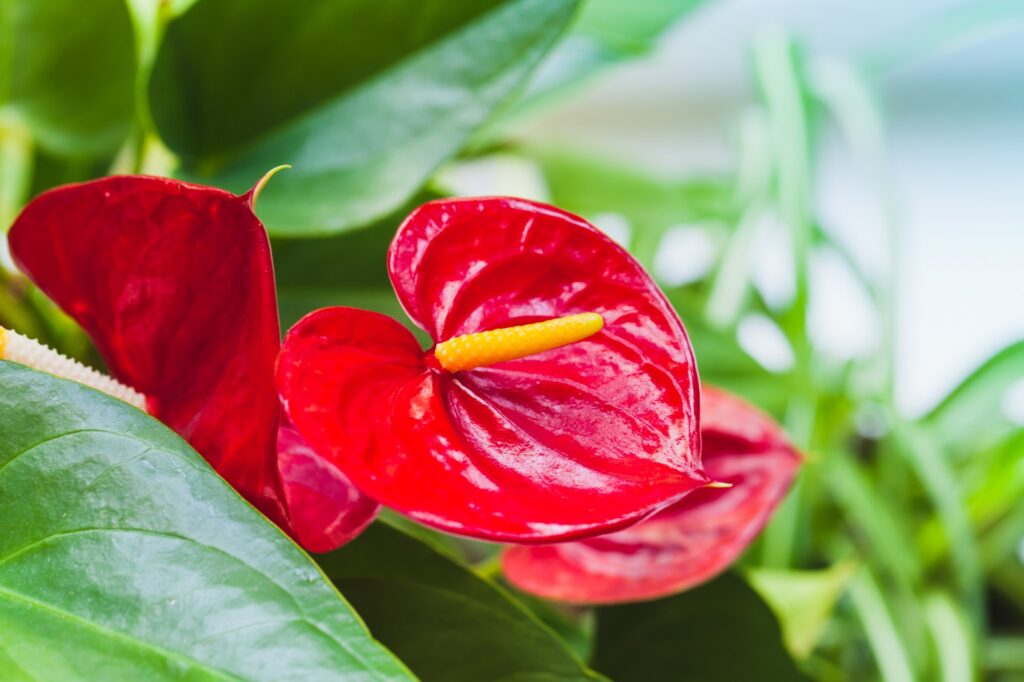
With their glossy green leaves and striking red, pink, white, orange, or purple blooms, anthuriums can bring a distinctly tropical look to an indoor plant collection. Often called flamingo flowers, flamingo lilies, or laceleaf plants, anthuriums are especially popular because their colorful blooms can remain attractive for weeks at a time.
Although anthuriums sometimes have a reputation for being demanding houseplants, their care becomes much easier once you understand what they need. Bright indirect light, an airy potting mix, careful watering, warmth, and moderate to high humidity provide the foundation for a healthy plant.
Whether you have just brought home your first anthurium or are trying to encourage an established plant to bloom again, this guide covers everything you need to know about growing and caring for anthuriums indoors.
🌿 Anthurium Quick Care Guide
| Care Requirement | Anthurium Preference |
|---|---|
| Botanical name | Anthurium spp. |
| Common names | Anthurium, flamingo flower, flamingo lily, laceleaf, tailflower |
| Plant type | Tropical evergreen perennial |
| Light | Bright, indirect light |
| Water | Water when the upper inch of potting mix begins to dry |
| Soil | Loose, airy, well-draining mix |
| Humidity | Moderate to high; preferably above about 50% |
| Temperature | Approximately 65–85°F |
| Fertilizer | Light feeding during active growth |
| Propagation | Division or stem cuttings |
| Pet safety | Toxic if chewed by cats and dogs |
🌺 What Is an Anthurium?
Anthurium is a large genus in the Araceae, or aroid, family. More than a thousand species are found naturally in tropical parts of the Americas, where different anthuriums may grow on the forest floor, on rocks, or as epiphytes attached to trees.
Two of the best-known flowering houseplant types are Anthurium andraeanum and Anthurium scherzerianum. Many commercially sold plants are hybrids selected for their colorful, long-lasting displays.
What looks like a large anthurium flower is actually made up of two distinct structures. The colorful, often heart-shaped portion is called the spathe. The narrow structure rising from it is the spadix, which carries many tiny individual flowers.
While red may be the classic anthurium color, modern varieties can produce spathes in pink, white, coral, orange, burgundy, green, and combinations of several colors.
☀️ How Much Light Do Anthuriums Need?
Light is one of the most important factors in successful anthurium care. These plants generally grow best in bright, indirect light.
A location near an east-facing window can work especially well because the plant receives plenty of light without prolonged exposure to intense afternoon sun. South- and west-facing windows can also be suitable when the plant is positioned slightly away from the glass or protected by a sheer curtain.
Too much intense direct sunlight may bleach or scorch the foliage, creating pale, yellow, or brown patches. On the other hand, keeping an anthurium in a dim corner often results in slow growth and very few flowers.
If your anthurium has healthy foliage but refuses to bloom, insufficient light is one of the first things to investigate.
During darker winter months, moving the plant closer to a bright window or supplementing natural light with a grow light may help.
💧 How Often Should You Water Anthuriums?
Anthuriums appreciate moisture, but they do not like sitting in soggy potting mix.
Rather than watering according to a rigid schedule, check the potting mix first. Allow approximately the upper inch of the mix to begin drying before watering thoroughly. Add enough water to moisten the entire root ball and allow excess water to drain freely from the bottom of the container.
Empty water that collects in the saucer or decorative outer pot. Leaving the roots sitting in standing water greatly increases the risk of root rot.
How frequently an anthurium needs water depends on several factors, including light, temperature, humidity, pot size, potting mixture, and season. A plant growing rapidly during warm summer weather will generally need water more frequently than the same plant during winter.
The goal is not to keep the potting mix constantly wet. Aim for an environment that remains lightly moist but also allows air to reach the roots.
🪴 The Best Soil for Anthuriums
Good drainage is especially important for anthuriums. Many species naturally grow as epiphytes or semi-epiphytes, meaning their roots are accustomed to an environment with plenty of air circulation.
A dense garden soil or heavy potting mix can remain wet for too long and suffocate the roots.
An anthurium potting mixture should therefore be coarse and airy. A combination may include materials such as:
- High-quality indoor potting mix
- Orchid bark
- Perlite or pumice
- Coco coir or peat-based material
Orchid bark helps create large air spaces around the roots, while perlite or pumice improves drainage.
You do not need to follow one exact formula. The important characteristics are good drainage, moisture retention without waterlogging, and enough open space for air to circulate around the roots.
🪴 Choosing the Right Pot
Always grow anthuriums in containers with drainage holes.
Decorative cachepots without drainage can still be used, but the anthurium should remain inside a nursery pot with drainage holes. Remove the inner pot when watering, allow it to drain thoroughly, and then return it to the decorative container.
Avoid moving an anthurium into a dramatically larger pot when repotting. Excess potting mix surrounding a relatively small root system can remain damp for long periods and increase the likelihood of root problems.
Moving up only one pot size at a time is usually sufficient.
If you’re unsure when or how to transplant an indoor plant, our guide to how to repot a plant covers the process in more detail.
🌡️ Temperature Requirements
Anthuriums are tropical plants that prefer warm and relatively stable temperatures.
Indoor temperatures of roughly 65°F to 85°F generally suit them well. Normal household temperatures are therefore usually comfortable for anthuriums as long as they are protected from extremes.
Keep the plant away from cold drafts, exterior doors that open frequently during winter, and air-conditioning vents. Sudden temperature changes can stress the plant.
Anthuriums are also sensitive to prolonged cold conditions. If you move your plants outside during summer, bring them indoors well before cold autumn nights arrive.
💦 Humidity for Anthuriums
Humidity is one of the areas where anthuriums may need a little extra help indoors.
Their tropical origins mean they generally perform best in moderately humid to humid conditions. Humidity above approximately 50 percent is helpful, although anthuriums can adapt to somewhat drier homes when their other growing conditions are good.
Brown leaf tips and crispy edges can sometimes appear when the surrounding air is particularly dry.
A room humidifier is one of the most effective ways to increase humidity around a group of houseplants. Grouping plants together can also create a slightly more humid microclimate.
Bathrooms with good natural light can be excellent places for anthuriums because they often provide both warmth and additional humidity.
At the same time, humidity should be accompanied by reasonable air circulation. Persistently damp foliage combined with stagnant air can encourage disease problems.
🌱 How to Fertilize an Anthurium
Anthuriums do not require heavy fertilization.
During periods of active growth, usually spring through summer, a diluted balanced houseplant fertilizer can be applied approximately once a month or according to the product’s directions.
Using fertilizer at a reduced strength is often preferable to repeatedly applying strong concentrations. Excess fertilizer salts may accumulate in container soil and contribute to brown leaf tips or damaged roots.
During winter, when growth naturally slows because of shorter days and lower light levels, fertilizer can usually be reduced or temporarily stopped.
If an anthurium is not flowering, avoid assuming that additional fertilizer will automatically solve the problem. Inadequate light is often a much more important reason for poor flowering.
🌺 How to Get an Anthurium to Bloom
A healthy flowering anthurium can produce blooms repeatedly under good indoor conditions.
If your plant has stopped flowering, first evaluate its light. An anthurium kept in low light may survive and continue producing green leaves but have insufficient energy to bloom regularly.
Move the plant gradually into brighter indirect light.
Proper watering also matters. Repeatedly allowing the plant to become severely dry can stress it, while constant saturation can damage the root system.
Light fertilization during active growth can support new leaves and flowers, but avoid overfertilizing.
When individual blooms become old and faded, cut the flower stalk near its base with clean pruning shears. Removing spent flowers keeps the plant tidy and allows it to concentrate its resources on new growth.
Patience is also important. A recently repotted, divided, or relocated plant may devote energy to root and leaf growth before producing another flush of flowers.
✂️ How to Prune Anthuriums
Anthuriums require very little pruning.
Remove yellow, brown, badly damaged, or dying leaves by cutting the leaf stem near the base of the plant with clean scissors or pruning shears.
Spent flower stalks can be removed in the same way.
Avoid removing large numbers of healthy green leaves simply to change the shape of the plant. Those leaves are producing energy the plant needs for continued growth and flowering.
Occasionally wiping broad anthurium leaves with a soft damp cloth can remove accumulated dust and help keep the foliage looking glossy.
🪴 When to Repot an Anthurium
Anthuriums do not need annual repotting simply because another growing season has passed.
Consider repotting when roots become crowded, begin circling heavily inside the pot, emerge from the drainage holes, or when the potting medium has deteriorated and no longer drains effectively.
Spring and early summer are convenient times to repot because the plant is normally entering a period of stronger growth.
Choose a container just slightly larger than the current one and replace old compacted potting material with a fresh, loose mixture.
You may also notice aerial roots growing above the soil. These are normal for anthuriums and do not necessarily mean something is wrong with the plant.
🌱 How to Propagate Anthuriums
One of the easiest ways to propagate an established anthurium is through division.
When repotting a mature plant, examine the base for separate stems or sections that already have their own roots. Gently tease the sections apart, using a clean knife if necessary, and place each division in a small container filled with an airy potting mixture.
Keep newly divided plants in bright indirect light and maintain slightly consistent moisture while their root systems become established.
Some anthuriums can also be propagated from sections of stem, especially older plants that have developed elongated stems and aerial roots. A stem section containing at least one healthy growth point can be rooted in a loose growing medium.
Anthuriums can technically be propagated from seed as well, but seed propagation is much slower and is generally less practical for the average indoor gardener.
🐛 Common Anthurium Pests
Healthy anthuriums are relatively resilient, but indoor plants can occasionally attract common houseplant pests.
Possible pests include:
- Spider mites
- Mealybugs
- Scale insects
- Aphids
- Thrips
- Whiteflies
Inspect both the upper and lower surfaces of leaves regularly, particularly when introducing a new plant to your home.
Mealybugs may appear as small cottony clusters, while scale often resembles stationary brown or tan bumps attached to leaves and stems. Spider mites can cause fine speckling on leaves and may produce delicate webbing when populations become large.
Isolating newly purchased plants for a short period before placing them among an established collection can reduce the chance of pests spreading from one plant to another.
🟡 Why Are My Anthurium Leaves Turning Yellow?
Yellow anthurium leaves can have several causes.
Overwatering is one of the most common possibilities. Constantly saturated soil deprives roots of oxygen and can eventually cause root rot.
If numerous leaves are yellowing, check the potting mix and roots. Healthy roots should generally feel firm. Soft, dark, mushy roots can indicate rot.
Insufficient light can also contribute to yellow leaves, particularly when the plant is kept far from a window.
An occasional older leaf turning yellow at the bottom of an otherwise healthy plant is usually less concerning. Plants naturally shed older foliage as they produce new growth.
🤎 Why Does My Anthurium Have Brown Leaf Tips?
Brown tips are frequently associated with environmental stress rather than a serious disease.
Low humidity is one possible cause, particularly during winter when indoor heating dries the air. Inconsistent watering can produce similar symptoms.
Mineral or fertilizer salts accumulating in the potting mix may also contribute to browning along leaf tips and margins. Avoid overfertilizing, and occasionally allow plenty of water to run through the pot to help flush accumulated salts from the growing medium.
If your tap water is particularly hard or mineral-rich and tip burn remains a persistent problem, filtered or rainwater may be worth trying.
☀️ Why Are My Anthurium Leaves Bleached or Scorched?
Large tan, pale, or brown patches can develop when an anthurium receives too much intense direct sunlight.
Move the plant away from the strongest sun or place a sheer curtain between the window and plant.
Damaged tissue will not become green again, but correcting the lighting conditions should prevent similar damage from appearing on new leaves.
🌺 Why Isn’t My Anthurium Flowering?
A lack of flowers does not necessarily mean your anthurium is unhealthy.
The most common issue to investigate is light. Move a plant growing in dim conditions to a location with much brighter indirect light.
Other factors that can reduce flowering include root problems caused by overwatering, severe underwatering, very low humidity, temperature stress, nutrient deficiencies, or a plant that has recently been divided or repotted.
Focus first on creating healthy growing conditions rather than trying to force flowers with large amounts of fertilizer. A vigorous plant with strong roots and adequate light is far more likely to begin blooming naturally.
🌿 Can Anthuriums Grow Outdoors?
Anthuriums can grow outdoors year-round in warm tropical climates where temperatures remain suitable.
In colder regions, they are primarily grown as houseplants. However, anthuriums can enjoy spending warm summer months outdoors.
Place the plant in a shaded or brightly filtered location rather than immediately exposing it to direct outdoor sunshine. Light outdoors is dramatically stronger than light through a window, and a plant moved abruptly into full sun can develop severe leaf scorch.
Before nighttime temperatures become cold, return the plant indoors. Check carefully for insects before bringing it back into your houseplant collection.
🐾 Are Anthuriums Toxic to Cats and Dogs?
Yes. Anthuriums should be kept away from pets that are likely to chew plants.
Anthurium tissues contain insoluble calcium oxalate crystals. Chewing the plant can irritate the mouth and throat and may cause symptoms such as drooling, oral discomfort, vomiting, or difficulty swallowing.
The safest approach in homes with curious cats or dogs is to place anthuriums somewhere completely inaccessible to them.
Anthuriums can also irritate people if plant material is chewed, so they should be kept away from young children as well.
🌱 Common Anthurium Care Mistakes
Many anthurium problems can be traced to a handful of common mistakes:
- Keeping the potting mix constantly soggy
- Growing the plant in dense soil without enough drainage
- Leaving water standing underneath the container
- Placing the plant in a very dark room
- Suddenly exposing an indoor plant to strong direct sun
- Using an oversized pot that remains wet for too long
- Applying too much fertilizer
- Exposing the plant to cold drafts
- Allowing the air to become extremely dry for extended periods
Anthuriums generally respond better to consistent conditions than constant adjustments. Once you find a location where your plant receives suitable light, warmth, and humidity, avoid moving it unnecessarily.
🌺 Popular Types of Anthuriums
The classic flowering anthurium is only one part of a surprisingly diverse genus.
Anthurium andraeanum is one of the most familiar types, producing glossy foliage and the classic heart-shaped colored spathes commonly seen in garden centers and floral arrangements.
Anthurium scherzerianum produces similarly colorful spathes but can often be distinguished by its unusual curved or spiraling spadix.
Foliage anthuriums have also become popular with collectors. Species such as Anthurium crystallinum, Anthurium clarinervium, and Anthurium magnificum are primarily grown for their dramatic leaves rather than colorful flowers.
Care requirements vary somewhat among individual species, particularly the more specialized collector plants, so identifying your particular anthurium can help you fine-tune its growing conditions.
❓ Anthurium Care FAQ
Are anthuriums difficult to grow?
Anthuriums can be moderately demanding compared with extremely forgiving houseplants, but they are not exceptionally difficult once their basic needs are met. Bright indirect light, good drainage, careful watering, warmth, and adequate humidity solve many of the problems growers encounter.
How often should I water an anthurium?
Check the plant rather than following a calendar. Water when approximately the top inch of potting mix begins to feel dry, then water thoroughly and allow excess moisture to drain.
Do anthuriums like direct sunlight?
Strong direct sunlight can scorch their leaves. Bright indirect or filtered light is generally a better choice indoors.
Should I mist my anthurium?
Anthuriums enjoy humidity, but occasional misting creates only a temporary increase. If your home is consistently dry, a humidifier or naturally humid room provides a more dependable solution.
Do anthuriums like small pots?
They generally do well when slightly snug in their containers. When repotting, move up only one pot size rather than placing the plant in a dramatically larger container.
How long do anthurium flowers last?
The colorful spathes are known for being long-lasting and can remain attractive for several weeks under good conditions.
Can I cut off brown anthurium leaves?
Yes. Completely brown, yellow, or badly damaged leaves can be removed near the base with clean pruning shears. If only the tip is brown, the remaining green portion of the leaf can continue photosynthesizing.
🌿 Growing Healthy Anthuriums
Anthuriums reward consistent care with glossy tropical foliage and some of the most distinctive flowers found among common houseplants. They do not need constant attention, but they do appreciate an environment that resembles their warm, humid, well-drained tropical habitat.
Give your anthurium plenty of bright indirect light, allow the surface of its potting mix to dry slightly between waterings, provide an airy root environment, and protect it from temperature extremes. With those fundamentals in place, an established plant can remain attractive for years and produce colorful blooms again and again.
🔗 Related Articles
- How to Repot a Plant
- The Ultimate Guide to Caring for Orchids: Tips and Tricks for a Blooming Success
- How to Successfully Propagate Spider Plants
- Indoor Plants
📚 Sources & Further Reading
- NC State Extension — Anthurium
- University of Florida IFAS Extension — Anthuriums
- University of Florida IFAS Extension — Anthurium spp.: Tailflower, Flamingo Flower, Anthurium
- University of Maryland Extension — Potting and Repotting Indoor Plants
- Oklahoma State University Extension — Houseplant Care
- ASPCA — Tail Flower