Peas are one of the classic cool-season vegetables, prized for their sweet flavor, quick growth, and ability to produce before summer heat takes over the garden. They are especially rewarding because freshly picked peas can taste dramatically sweeter and more tender than peas that have been stored for even a short time.
Garden peas are also more varied than they first appear. Some are grown for the round peas inside the pod, while others are harvested pod and all. Gardeners can choose shelling peas, snow peas, or snap peas, along with dwarf varieties for containers and tall climbing types that need sturdy support.
Timing is one of the most important parts of pea care. Peas prefer cool soil and mild air temperatures, so they are usually planted very early in spring or in late summer for a fall crop. Once hot weather arrives, plants often stop flowering well, pods become tougher, and vines decline.
The good news is that peas are relatively easy to grow when planted at the right time. Give them full sun, well-drained soil, consistent moisture, and a trellis if the variety climbs, and they can produce an abundant harvest in a surprisingly short season.
🌱 Peas at a Glance
- Botanical name: Pisum sativum
- Plant family: Fabaceae
- Plant type: Cool-season annual vegetable
- Sun: Full sun
- Soil: Fertile, well-drained soil
- Soil pH: About 6.0 to 7.5
- Planting method: Direct sow
- Seed depth: About 1 to 2 inches
- Spacing: Roughly 1 to 2 inches apart in rows
- Support: Needed for most climbing varieties
- Water: Consistent moisture
- Best seasons: Spring and fall
- Harvest: About 55 to 75 days for many varieties
- Main types: Shelling, snow, and snap peas
- Cold tolerance: Good
- Main challenges: Heat, powdery mildew, root rot, aphids, pea weevils, birds, and poor support
🌿 What Are Peas?
Peas are members of the legume family.
Their relatives include:
- Beans
- Lentils
- Chickpeas
- Clover
- Alfalfa
Peas are annual vines that climb using slender tendrils.
Depending on the variety, plants may remain relatively compact or grow several feet tall.
The flowers are typically white, although some ornamental or heirloom varieties produce colored blooms.
Once pollinated, the flowers develop into pods.
🟢 Shelling Peas
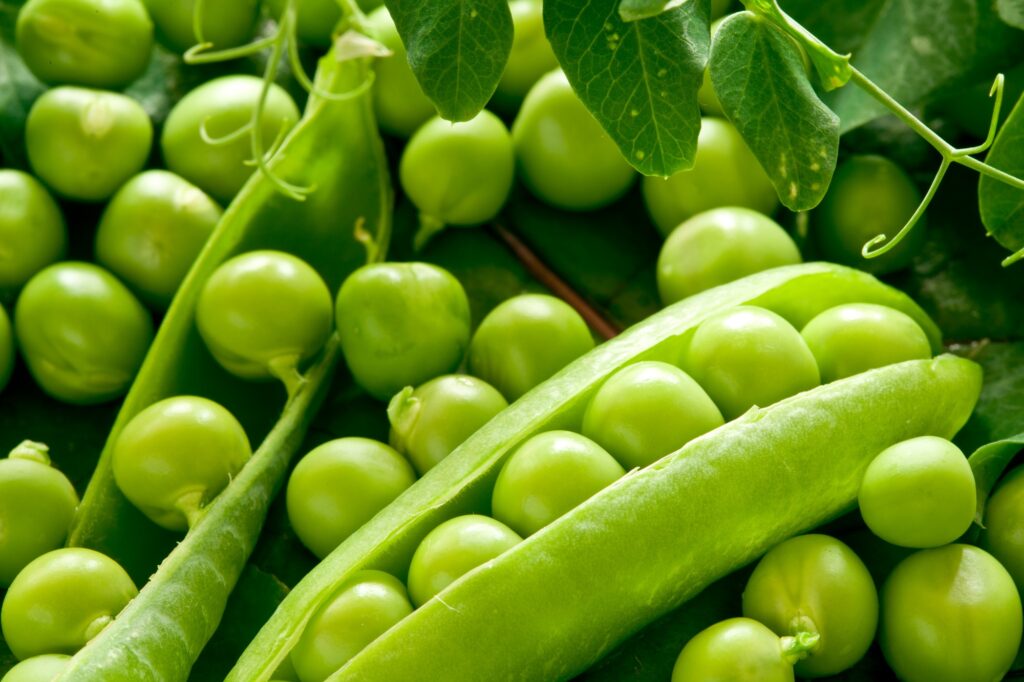
Shelling peas, sometimes called garden peas or English peas, are grown for the round peas inside the pod.
The pod itself is generally too fibrous to eat.
Harvest shelling peas when the pods are:
- Plump
- Bright green
- Filled out
- Not yet tough
Open the pods and remove the peas before eating or cooking.
Fresh shelling peas are particularly sweet when harvested at the right stage.
❄️ Snow Peas
Snow peas are harvested while the pods are still flat and tender.
The entire pod is eaten.
Inside, the peas remain relatively small.
Snow peas are excellent for:
- Stir-fries
- Salads
- Snacking
- Light steaming
Harvest frequently because pods can become tough if left on the vine too long.
🌱 Snap Peas
Snap peas combine characteristics of shelling and snow peas.
They develop:
- Thick
- Crisp
- Edible pods
with larger peas inside.
They are typically eaten whole.
Harvest when the pods are plump but still tender and crisp.
Snap peas are especially popular for fresh eating.
🌿 Bush vs. Climbing Peas
Pea varieties differ significantly in height.
Dwarf or Bush Peas
These remain relatively short.
Some can grow with minimal support, though even compact peas benefit from a small trellis or twiggy support.
They are useful for:
- Containers
- Small gardens
- Raised beds
Climbing Peas
Tall varieties can grow several feet.
They require sturdy support.
A well-supported climbing pea produces cleaner pods and is much easier to harvest.
❄️ Peas Prefer Cool Weather
Peas thrive in cool conditions.
They tolerate light frost and should be planted well before heat-loving vegetables.
Cool weather supports:
- Strong vine growth
- Flower production
- Tender pods
- Sweet flavor
High heat often reduces flowering and pod quality.
Once summer becomes consistently hot, pea season is usually ending.
📅 When Should You Plant Peas?
In many climates, peas can be planted in late winter or early spring as soon as the soil can be worked.
You do not need to wait for the last frost.
Seeds tolerate cool soil better than many vegetable crops.
For fall peas, sow in late summer early enough for the crop to mature before severe freezes.
Fall pea timing can be tricky because seeds must germinate in warm soil but mature in cooler weather.
🌱 Should You Start Peas Indoors?
Usually, peas are easier to direct sow.
Their roots can be disturbed during transplanting, and the crop grows quickly enough that indoor starting offers limited advantage.
However, gardeners in very short seasons can start peas in:
- Soil blocks
- Biodegradable pots
- Deep cells
Transplant while young and avoid damaging roots.
For most gardeners, direct sowing is simplest.
☀️ How Much Sun Do Peas Need?
Peas perform best in full sun.
Aim for at least 6 hours of direct sunlight.
Plants can tolerate some partial shade, especially late in spring as temperatures rise.
However, excessive shade can reduce:
- Flowering
- Pod production
- Vine strength
For maximum yield, choose a bright location.
🌱 Best Soil for Peas
Peas prefer fertile, well-drained soil.
Ideal soil should:
- Drain after rain
- Retain moderate moisture
- Be relatively loose
- Contain organic matter
Peas do not require extremely rich soil.
Excess nitrogen can encourage lush vines at the expense of flowers and pods.
🧪 What Soil pH Do Peas Prefer?
Peas generally perform well in soil around pH 6.0 to 7.5.
Slightly acidic to neutral soil is ideal.
If your vegetable garden consistently performs poorly, a soil test can reveal whether pH or fertility needs correction.
Avoid automatically adding lime or fertilizer without testing.
🌿 Preparing the Pea Bed
Before planting:
- Remove weeds.
- Loosen compacted soil.
- Add finished compost if needed.
- Correct drainage problems.
- Install trellises before or shortly after planting.
Installing support early avoids damaging established roots later.
🌾 Do Peas Need Fertilizer?
Usually, peas need only moderate fertility.
Like other legumes, peas can form a relationship with nitrogen-fixing bacteria in root nodules.
This does not mean peas require no nutrients at all.
They still need:
- Phosphorus
- Potassium
- Micronutrients
- Adequate soil fertility
But large applications of nitrogen are usually unnecessary.
Too much nitrogen may produce large vines with fewer pods.
🌱 Do Peas Need Inoculant?
Pea and legume inoculants contain beneficial Rhizobium bacteria that help form nitrogen-fixing root nodules.
Inoculation can be useful when:
- Peas have never been grown in the garden
- Soil has been heavily disturbed
- The appropriate bacteria may be absent
If peas or related legumes have grown successfully in the same soil before, inoculation may offer little additional benefit.
It is optional rather than mandatory.
🌱 How to Plant Pea Seeds
Peas are relatively large and easy to sow.
Plant seeds approximately:
- 1 to 2 inches deep
Space them roughly:
- 1 to 2 inches apart
Rows can be planted on one or both sides of a trellis.
Cover the seeds, firm the soil gently, and water.
📏 How Far Apart Should Peas Be?
Peas tolerate fairly close spacing.
A typical arrangement is:
- Seeds 1 to 2 inches apart
- Rows about 18 to 24 inches apart if grown without a central trellis system
When planting along a trellis, two close rows on opposite sides can work well.
Check the seed packet because dwarf and tall cultivars vary.
💧 Should You Soak Pea Seeds Before Planting?
Soaking is not necessary.
Pea seeds absorb water quickly once planted.
Excessive soaking can sometimes damage seeds or encourage rot.
If soil is dry, it is usually better to water the planting bed before or after sowing rather than soaking seeds for a long period.
🌱 How Long Do Peas Take to Germinate?
Peas commonly germinate within about 7 to 14 days under favorable conditions.
Cold soil can slow emergence.
Wet, poorly drained soil can cause seeds to rot before they sprout.
Be patient during cool spring weather.
🌧️ Avoid Planting in Soggy Soil
Peas tolerate cold better than they tolerate saturated ground.
Seeds and young roots can rot in waterlogged soil.
Wait if the garden is:
- Muddy
- Waterlogged
- Too wet to work without compaction
Cool soil is fine.
Cold swampy soil is not.
🪵 Do Peas Need a Trellis?
Most peas benefit from support.
Tall varieties absolutely require it.
Support keeps vines:
- Upright
- Cleaner
- Better ventilated
- Easier to harvest
Even short varieties often perform better with a low support system.
🌿 Types of Pea Supports
Useful options include:
- Pea netting
- Wire mesh
- Garden fencing
- Bamboo structures
- Twiggy branches
- String trellises
Pea tendrils grasp narrow materials more easily than thick smooth posts.
A trellis with plenty of small surfaces gives them something to hold.
📏 How Tall Should a Pea Trellis Be?
The correct height depends on the variety.
Dwarf Peas
A support around 2 to 3 feet may be enough.
Medium Peas
A 3- to 5-foot trellis often works.
Tall Peas
Some heirloom and climbing types can reach 6 feet or more.
Read the seed packet before building support.
🌿 Train Young Pea Vines
Young vines may need a little help finding the trellis.
Gently guide tendrils toward the support.
Do not tie stems tightly.
Once peas begin climbing, they usually support themselves.
💧 How Often Should You Water Peas?
Peas need consistent moisture, particularly during:
- Flowering
- Pod formation
- Pod filling
A broad guideline of about 1 inch of water per week is useful, adjusted for:
- Rainfall
- Soil
- Temperature
- Plant size
Keep soil moderately moist but not saturated.
🌸 Water Matters Most During Flowering
Dry soil during flowering can reduce pod production.
Drought during pod development can produce:
- Smaller pods
- Poorly filled peas
- Tougher texture
Consistent moisture helps maintain quality.
🚿 Water Near the Soil
Whenever practical, water near the base of the plants.
This keeps foliage drier and may help reduce some leaf diseases.
Soaker hoses and drip irrigation work well.
If using overhead irrigation, water early enough that foliage can dry before night.
🍂 Should You Mulch Peas?
Yes.
A light organic mulch helps:
- Preserve moisture
- Suppress weeds
- Keep roots cool
- Reduce soil splash
Useful materials include:
- Straw
- Shredded leaves
- Fine grass clippings from untreated lawns
- Finished compost
Mulch is especially helpful as spring weather begins warming.
🌿 Weed Peas Carefully
Peas have relatively shallow roots.
Hoe shallowly.
Avoid deep cultivation around established plants.
Mulch can reduce the need for frequent weeding.
Once vines fill the trellis, access becomes more difficult, so remove weeds early.
🌸 When Do Peas Flower?
Peas usually begin flowering after several weeks of vegetative growth.
Timing depends on:
- Variety
- Temperature
- Day length
- Planting date
Pods begin forming shortly after successful pollination.
Once flowering starts, inspect plants regularly because harvest can follow quickly.
🐝 Do Peas Need Bees for Pollination?
Most garden peas are self-pollinating.
Flowers often pollinate themselves before they fully open.
This means a single pea variety can produce a crop without another pollinating cultivar nearby.
Bees may still visit pea flowers, but peas are much less dependent on insect pollination than crops such as squash.
🌿 Why Are My Peas Growing Leaves but No Flowers?
Possible causes include:
- Excess nitrogen
- Plants are still young
- Too much shade
- Heat stress
- Variety characteristics
If plants are lush and dark green but flower poorly, excessive nitrogen may be contributing.
If weather has become hot, poor flowering may simply indicate the end of the pea season.
🌡️ Heat Is the Main Enemy of Peas
As temperatures climb, peas often decline rapidly.
Symptoms include:
- Fewer flowers
- Tougher pods
- Slower growth
- Yellowing vines
- Powdery mildew
Rather than trying to force peas through intense summer heat, harvest what remains and replace them with warm-season crops.
🌱 Can You Grow Peas in Fall?
Yes, where the growing season allows.
Fall peas can produce beautifully in cool autumn weather.
The difficulty is timing them correctly.
Seeds may need protection from:
- Hot late-summer soil
- Drought
while mature plants must finish before severe cold.
Choose a fast-maturing variety for fall planting.
🌱 Succession Planting Peas
Peas can be planted in multiple small sowings rather than one large planting.
For spring crops, another sowing can be made after the first planting if enough cool weather remains.
Do not continue sowing too late.
Young peas planted shortly before summer heat often produce poorly.
🌿 Can Peas Grow With Other Vegetables?
Yes.
Good neighbors can include:
Peas can also provide temporary light shade to cool-season greens as spring temperatures rise.
🌱 Peas and Onions
Peas and onions can physically share a garden, despite common companion-planting claims that they should never be grown together.
The more important questions are:
- Do both receive enough light?
- Are they overcrowded?
- Is watering appropriate?
- Is the pea trellis shading the onions?
There is little reason to treat garden companion charts as strict rules.
🌼 Flowers Near Peas
Flowering plants can increase garden diversity and support beneficial insects.
Nearby options include:
No companion flower guarantees pest-free peas, but a diverse garden can support beneficial insect populations.
🪴 Can Peas Grow in Containers?
Yes.
Dwarf and compact varieties are particularly well suited to pots.
Use a container that is:
- At least about 12 inches deep
- Wide enough for several plants
- Equipped with drainage holes
Larger containers are easier to keep evenly moist.
🪴 Growing Climbing Peas in Containers
Tall peas can also grow in pots if you provide:
- A large stable container
- A sturdy trellis
- Regular watering
Tall pea vines become surprisingly heavy when covered with pods.
Make sure the trellis cannot tip the container over in wind.
💧 Container Peas Need More Water
Containers dry faster than garden soil.
Check moisture frequently.
This is particularly important during:
- Flowering
- Pod development
- Warm spring weather
Water thoroughly until excess drains from the pot.
🌱 Peas in Raised Beds
Raised beds work extremely well for peas.
They provide:
- Good drainage
- Loose soil
- Easy trellis installation
- Convenient harvesting
Plant peas along the north side of a bed in the Northern Hemisphere when practical so tall vines are less likely to shade shorter crops.
🌿 Can Peas Improve Soil?
Peas form nitrogen-fixing nodules in association with beneficial bacteria.
However, the idea that a pea crop automatically leaves large amounts of freely available nitrogen for the next crop is oversimplified.
Much of the fixed nitrogen remains in:
- Plant tissue
- Roots
- Seeds
If vines and roots are removed, much of that nitrogen leaves the bed as well.
Peas are useful in crop rotations, but they should not be treated as a replacement for soil testing or balanced fertility management.
✂️ Should You Prune Pea Plants?
Peas do not usually need pruning.
Remove:
- Diseased foliage
- Dead vines
- Severely damaged stems
Do not routinely cut healthy vines back.
Their leaves are needed to produce energy for developing pods.
🌱 Can You Eat Pea Shoots?
Yes.
Young pea shoots and tendrils are edible.
They can be harvested from varieties intended for edible pea production.
Use them in:
- Salads
- Stir-fries
- Sandwiches
Do not remove too much growth from plants you expect to produce a full pod crop.
For frequent shoot harvests, sow a separate dense planting.
🌱 Growing Peas for Shoots
Pea shoots can be grown much more densely than pod-producing peas.
Sow seeds close together.
Harvest when shoots are several inches tall.
They can sometimes regrow after cutting.
This is an excellent way to grow peas indoors or in shallow trays during cool weather.
🐦 Birds and Pea Seeds
Birds may dig up freshly planted seeds or eat young seedlings.
Common culprits include:
- Pigeons
- Crows
- Other seed-eating birds
Fine netting or row cover can protect the row during germination.
Remove or raise protection once plants need trellis access.
🐭 Rodents and Pea Seeds
Mice and other rodents may also dig up seeds.
If seed repeatedly disappears before germination, animals may be responsible.
Physical barriers are generally more reliable than repellents.
🐜 Aphids on Peas
Aphids are one of the most common pea pests.
They gather on:
- Tender growing tips
- Flower stems
- Pods
- Leaf undersides
Heavy infestations can:
- Distort growth
- Reduce vigor
- Produce sticky honeydew
They may also transmit viruses.
🌊 Managing Aphids
For small infestations:
- Spray plants with a firm stream of water.
- Encourage predators.
- Remove heavily infested tips if necessary.
Beneficial insects include:
- Lady beetles
- Lacewing larvae
- Hoverfly larvae
Avoid unnecessary broad-spectrum insecticides.
🪲 Pea Weevils
Several weevils may damage peas.
Adult insects can notch leaf margins, while other species may affect seeds.
Young plants are most vulnerable to heavy feeding.
Mature peas often tolerate limited leaf damage.
If weevil problems are severe in your area, follow local Extension recommendations.
🐛 Cutworms
Cutworms may sever young pea seedlings near soil level.
Damage often appears suddenly.
A healthy seedling one day may be lying on the soil the next morning.
Inspect the soil around damaged plants for curled caterpillars.
🐌 Slugs and Snails
Slugs and snails may damage young pea plants.
They feed most actively during:
- Damp weather
- Cool nights
Young seedlings can disappear quickly under heavy pressure.
Monitor the bed after rain.
🦌 Do Deer Eat Peas?
Yes.
Deer may browse:
- Tender vines
- Flowers
- Pods
Peas are particularly vulnerable because their growing tips are soft and accessible.
Fencing is the most reliable protection where deer pressure is severe.
🐇 Do Rabbits Eat Peas?
Yes.
Rabbits may feed on young vines and seedlings.
Low fencing or mesh can protect small pea plantings.
Once climbing vines grow upward, some foliage may become less accessible.
🍄 Powdery Mildew on Peas
Powdery mildew is one of the most recognizable pea diseases.
It appears as:
- White powdery patches
- Grayish coating on leaves
- Gradual leaf yellowing
It often becomes noticeable late in the season when:
- Plants are aging
- Conditions are warm
- Air circulation is poor
By the time severe powdery mildew develops, pea season may already be ending.
🌬️ Reducing Powdery Mildew
Helpful practices include:
- Choosing resistant cultivars
- Providing adequate spacing
- Using trellises
- Maintaining airflow
- Avoiding drought stress
- Rotating crops
Remove heavily infected plant debris after harvest.
🍄 Downy Mildew
Downy mildew can affect peas during cool, humid weather.
Symptoms may include:
- Pale or yellow patches
- Grayish or purplish growth under leaves
Improve airflow and avoid leaving foliage wet unnecessarily.
Resistant cultivars are helpful where the disease is common.
🌱 Pea Root Rot
Several soilborne pathogens can cause root and stem rots.
Symptoms may include:
- Yellowing
- Stunted vines
- Wilting
- Dark roots
- Poor pod production
Poor drainage increases the risk.
Crop rotation and well-drained soil are important preventive measures.
🦠 Pea Viruses
Viral diseases can cause:
- Mottling
- Distorted leaves
- Stunting
- Poor pod set
Aphids can transmit some pea viruses.
There is no cure for an infected plant.
Remove badly affected vines and manage weeds that may harbor disease.
🔄 Rotate Pea Crops
Avoid planting peas in the exact same location every year when disease pressure develops.
Rotate with unrelated crops.
Peas and beans share some pathogens, so alternating peas with beans is not always a meaningful disease rotation.
A multi-year rotation is better when space allows.
❓ Why Are My Peas Not Germinating?
Possible causes include:
- Soil is waterlogged
- Seeds rotted
- Birds or rodents ate them
- Seeds were planted too deeply
- Old seed
- Soil is extremely cold
Dig up one or two seeds carefully.
A swollen mushy seed suggests rot.
A completely missing seed suggests animals.
❓ Why Are My Pea Plants Yellow?
Possible causes include:
- Overwatering
- Root rot
- Nutrient problems
- Natural aging
- Heat stress
- Viral disease
If plants begin yellowing as summer heat arrives after producing a crop, the decline may simply be seasonal.
Young yellow plants require closer investigation.
❓ Why Are My Peas Not Flowering?
Common causes include:
- Too much nitrogen
- Insufficient light
- Immature plants
- Heat
If vines are enormous but flower poorly, review fertilizer use.
❓ Why Are Flowers Falling Off Without Pods?
Possible causes include:
- Heat
- Drought
- Sudden temperature changes
- General plant stress
Peas self-pollinate efficiently, so poor insect activity is usually not the main problem.
Hot weather is a frequent cause late in the season.
❓ Why Are My Pea Pods Empty?
Pods may contain few peas if:
- Plants are heat stressed
- Pods were harvested too early
- Development was interrupted by drought
- Plants are diseased
For shelling peas, give the pods enough time to fill before harvesting.
❓ Why Are My Peas Tough?
They were probably harvested too late.
Sugar content declines and starch increases as peas mature.
For the best flavor, harvest frequently.
A pod that seemed perfect yesterday can become noticeably tougher within only a few days during warm weather.
❓ Why Are Snow Peas Stringy?
Overmaturity is usually the reason.
Harvest snow peas while pods are:
- Flat
- Tender
- Crisp
If the peas inside have become large, the pod may already be losing quality.
❓ Why Are Snap Peas Tough?
Snap peas are best when plump but still tender.
Old pods can develop:
- Fibrous strings
- Tough walls
- Less sweetness
Harvest every day or two during peak production.
❓ Why Are My Peas Bitter?
Possible causes include:
- Heat
- Overmaturity
- Drought stress
Peas generally taste sweetest during cool weather when harvested promptly.
🌱 Should You Pinch Pea Tips?
Routine pinching is not necessary for pod production.
Removing healthy growing tips reduces the plant’s photosynthetic area and may reduce yield.
Pinch tips only if you intend to eat them as pea shoots or if a vine is damaged.
🌿 What Happens When Pea Vines Finish Producing?
Pea plants naturally decline after completing their crop, especially as temperatures rise.
Once harvest is finished:
- Remove diseased vines.
- Compost healthy material.
- Leave roots in the soil if convenient.
- Plant a warm-season crop in the space.
Cutting vines at soil level instead of pulling can leave root material and soil structure undisturbed.
🌱 Can You Plant Something After Peas?
Absolutely.
Because spring peas finish early, the same bed can often support another crop.
Good follow-up options may include:
Choose according to your climate and remaining growing season.
🟢 When Are Shelling Peas Ready to Harvest?
Harvest shelling peas when pods are:
- Full
- Rounded
- Bright green
You should be able to feel the peas inside.
Do not wait until the pods become:
- Dull
- Tough
- Yellowing
Overmature peas become increasingly starchy.
❄️ When Are Snow Peas Ready?
Harvest snow peas while the pods are:
- Flat
- Crisp
- Tender
The peas inside should still be relatively small.
Pick frequently.
Once seeds enlarge substantially, pod quality declines.
🌱 When Are Snap Peas Ready?
Snap peas are ready when the pods become:
- Plump
- Rounded
- Crisp
The peas should be developed but the pod walls should still be tender.
Taste-testing is one of the best ways to learn the ideal stage for your cultivar.
✋ How to Harvest Peas
Use two hands.
Hold the vine with one hand and gently pull the pod with the other.
This prevents you from:
- Tearing vines
- Breaking growing tips
- Pulling plants from the trellis
Scissors can also be used.
🧺 Harvest Peas Frequently
During peak production, check vines every day or two.
Frequent harvesting is important because:
- Pods mature rapidly.
- Old pods reduce quality.
- Continued picking can encourage the plant to keep producing.
Leaving mature pods on the vine signals the plant that seed production is succeeding.
🌅 Best Time to Pick Peas
Morning is an excellent time to harvest.
Pods tend to be:
- Cool
- Crisp
- Well hydrated
Place harvested peas somewhere cool immediately.
Do not leave them sitting in hot sun.
🍬 Peas Lose Sweetness After Harvest
Fresh peas have one major disadvantage: their sugars begin converting to starch relatively quickly after harvest.
This is why peas eaten directly from the garden can taste so sweet.
For the best flavor:
- Harvest shortly before eating.
- Refrigerate immediately.
- Use them quickly.
🧺 How to Store Fresh Peas
Store unwashed peas in the refrigerator.
Keep them in:
- A perforated bag
- A produce container
Use them within a few days for the best flavor.
Shelling peas deteriorate particularly quickly once removed from their pods.
🚿 Should You Wash Peas Before Storage?
Usually, it is better to keep them dry until shortly before use.
Surface moisture can encourage decay.
Wash pods just before cooking or eating.
❄️ Can You Freeze Peas?
Yes.
Freezing is one of the best ways to preserve a large crop.
For shelling peas:
- Remove peas from pods.
- Blanch briefly.
- Cool rapidly in ice water.
- Drain thoroughly.
- Freeze.
Snow and snap peas can also be blanched and frozen.
🫙 Can You Can Peas?
Yes, but plain peas are a low-acid food.
Safe shelf-stable preservation requires pressure canning according to a tested recipe.
Do not use a boiling-water bath for plain peas.
Follow current authoritative home-preservation instructions.
🍽️ Ways to Use Garden Peas
Peas are excellent:
- Raw
- Steamed
- Sautéed
- In soups
- In stews
- In pasta
- In risotto
- In salads
- In stir-fries
Fresh snap and snow peas are especially good for snacking directly from the garden.
🌱 Pea Care in Spring
Spring is the main pea season in most climates.
Focus on:
- Early sowing
- Trellis installation
- Protecting seeds from birds
- Regular watering
- Weed control
Once flowering begins, keep the root zone consistently moist.
Harvest frequently.
☀️ Pea Care in Late Spring
As temperatures rise:
- Mulch the soil.
- Maintain steady water.
- Harvest every day or two.
- Watch for powdery mildew and aphids.
Do not be surprised if vines begin declining as summer approaches.
That is normal.
🌞 Pea Care in Summer
In hot regions, spring peas are generally finished.
Remove old vines and use the space for warm-season crops.
In cool-summer climates, later pea crops may remain productive longer.
Provide consistent moisture and monitor mildew.
🍂 Pea Care in Fall
Fall peas can be excellent where the growing season is long enough.
Choose:
- Fast-maturing cultivars
- A sunny location
Provide water during warm germination weather.
As autumn progresses, cool conditions improve pod quality.
❄️ Pea Care During Frost
Peas tolerate some frost, especially while young.
Flowers and developing pods can be more vulnerable than foliage.
Row cover can offer temporary protection during cold nights.
A hard freeze may end a mature fall crop.
🌱 Can You Save Pea Seeds?
Yes.
Peas are among the easier vegetables for seed saving because most varieties are primarily self-pollinating.
Choose healthy pods and leave them on the vine until:
- Pods turn dry
- Seeds become hard
Shell the dry peas and allow them to finish drying before storage.
Store in a cool, dry location.
🌱 Will Saved Peas Grow True to Type?
Open-pollinated varieties usually come relatively true to type because peas predominantly self-pollinate.
Hybrid varieties may not produce offspring identical to the parent.
If seed saving is important, choose an open-pollinated or heirloom cultivar.
🟤 Don’t Eat Mature Seed Peas Raw in Large Quantities
Peas grown for seed are allowed to become fully mature and dry.
At that stage, they are no longer the same as tender fresh garden peas.
Use saved seed for planting unless the cultivar is specifically suitable as a dry edible pea and you know how to prepare it properly.
🌱 Are Peas Easy to Grow?
Yes.
The basic process is:
- Plant very early in spring.
- Choose a sunny location.
- Use fertile, well-drained soil.
- Avoid excessive nitrogen fertilizer.
- Sow seeds about 1 to 2 inches deep.
- Space them roughly 1 to 2 inches apart.
- Install a trellis for climbing varieties.
- Keep soil moderately moist.
- Mulch as the weather warms.
- Guide young vines onto their support.
- Watch for aphids and powdery mildew.
- Maintain moisture during flowering and pod filling.
- Harvest snow peas while flat.
- Harvest snap peas while plump and tender.
- Harvest shelling peas while pods are full but still bright green.
- Pick every day or two during peak season.
- Refrigerate immediately after harvest.
- Remove declining vines when hot weather ends the crop.
The biggest mistakes are planting too late, overfertilizing with nitrogen, failing to provide support, letting plants dry during flowering, and leaving ripe pods on the vine too long.
🌿 Final Thoughts
Peas are one of the best examples of why planting according to the season matters more than trying to force a crop to grow year-round.
They want cool soil, mild days, and enough moisture to grow rapidly. Give them those conditions early in spring or again in fall, and vines can climb quickly, flower abundantly, and produce pods that are exceptionally sweet when eaten fresh from the garden.
Support is another key to success. Even compact pea varieties benefit from something to climb, while tall varieties can become an unmanageable tangle without a trellis. Install the support early and allow the tendrils to do most of the work.
Once pods begin forming, harvest frequently. Snow peas are best while flat, snap peas while plump and crisp, and shelling peas while the pods are filled but still bright green and tender. Waiting too long sacrifices sweetness and texture remarkably quickly.
Peas may have a relatively short growing season, but that can be an advantage. A spring crop can often be cleared in time for tomatoes, corn, sweet potatoes, flowers, or another summer planting.
For a vegetable that requires relatively little space and produces some of the sweetest rewards in the garden, peas deserve a place on the early-season planting list every year.
🔗 Related Articles
- Spinach Care: How to Plant, Grow & Harvest Spinach
- Kale Care: How to Plant, Grow & Harvest Kale
- Carrot Care: How to Plant, Grow & Harvest Carrots
- Beet Care: How to Plant, Grow & Harvest Beets
- Radish Care: How to Plant, Grow & Harvest Radishes
- How to Plant Onions
- How to Plant Garlic
- Dill Care