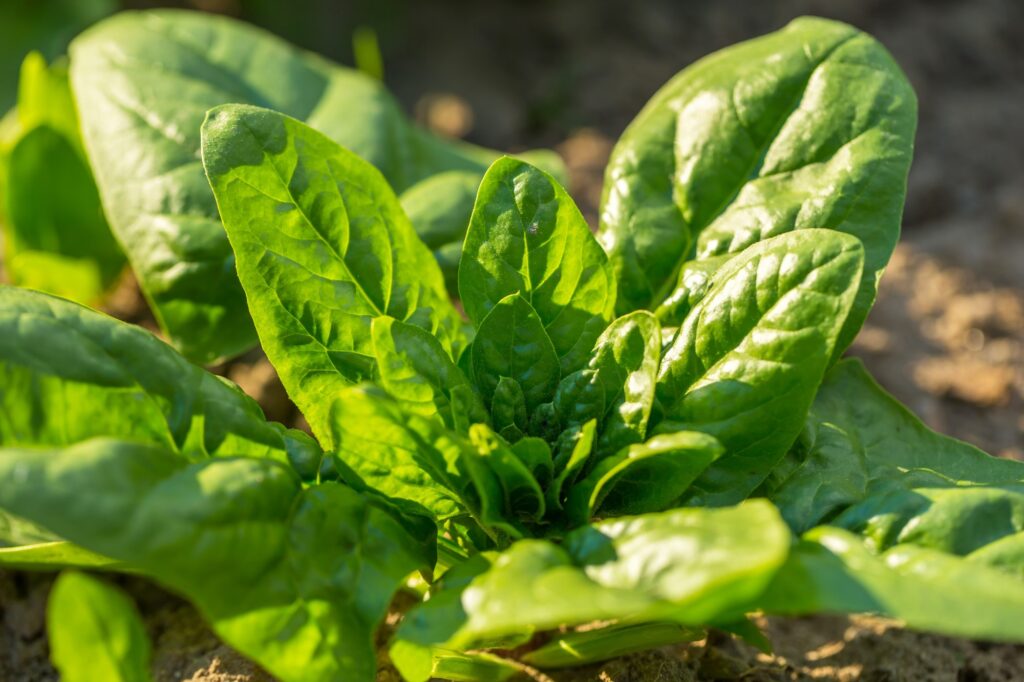
Spinach is one of the most useful cool-season vegetables for the home garden. It grows quickly, needs relatively little space, works beautifully in raised beds and containers, and can provide repeated harvests of tender leaves for salads, soups, sautés, smoothies, pasta dishes, and countless other recipes.
The main challenge with spinach is timing. Unlike warm-season crops that improve as temperatures rise, spinach prefers cool conditions. Warm weather and lengthening days encourage plants to bolt, sending up flower stalks instead of producing the broad, tender leaves gardeners want.
That makes spinach particularly valuable in early spring and fall. In many climates, gardeners can plant it weeks before tomatoes or peppers go outside, then sow another crop toward the end of summer for an autumn harvest. Cold-hardy plants can sometimes even overwinter beneath mulch or season-extending covers and resume growing the following spring.
Spinach also comes in several forms. Savoy varieties have deeply crinkled leaves, flat-leaf spinach has smooth foliage, and semi-savoy cultivars fall between the two. Choosing a cultivar adapted to your season can make growing spinach considerably easier.
Give spinach fertile soil, cool temperatures, consistent moisture, and regular harvesting, and it can produce an impressive amount of food from a very small part of the garden.
🥬 Spinach at a Glance
- Botanical name: Spinacia oleracea
- Plant family: Amaranthaceae
- Plant type: Cool-season annual vegetable
- Sun: Full sun to partial shade
- Soil: Fertile, well-drained soil rich in organic matter
- Soil pH: Generally about 6.0 to 7.5
- Seed depth: About ½ inch
- Full-size spacing: Roughly 3 to 6 inches apart depending on desired leaf size
- Baby spinach spacing: Much closer
- Row spacing: Around 12 inches is common
- Germination: Often about 7 to 14 days in favorable conditions
- Best germination temperatures: Cool soil
- Water: Consistent moisture
- Harvest: Baby leaves or mature outer leaves
- Best seasons: Spring and fall
- Cold tolerance: Good
- Main challenges: Bolting, heat, leaf miners, aphids, downy mildew, damping-off, and inconsistent moisture
🌿 What Is Spinach?
Spinach is a leafy vegetable grown primarily for its tender green leaves.
Unlike kale, spinach is not a form of Brassica oleracea. It belongs to a different botanical family and is more closely related to crops such as:
- Beets
- Swiss chard
Spinach grows as a low rosette of leaves around a central crown.
During cool weather, the plant concentrates on leafy growth. As conditions become warmer and days lengthen, it eventually shifts into reproduction and produces a flowering stalk.
That transition is known as bolting.
🌱 Savoy Spinach
Savoy spinach has deeply crinkled or puckered leaves.
It often resembles the classic bunch spinach sold at markets.
Savoy varieties can have:
- Thick leaves
- Rich green coloring
- A substantial texture
The crinkled leaves can hold soil more readily than smooth varieties, so they require careful washing.
Savoy spinach is excellent for cooking.
🌿 Flat-Leaf Spinach
Flat-leaf spinach produces smoother foliage.
The leaves are easier to:
- Wash
- Chop
- Package
- Use in salads
Many varieties grown for baby spinach have smooth or relatively flat leaves.
Flat-leaf spinach is equally useful raw or cooked.
🌱 Semi-Savoy Spinach
Semi-savoy varieties combine characteristics of the other two groups.
Their leaves are somewhat crinkled without being as deeply puckered as traditional savoy spinach.
Semi-savoy cultivars can be an excellent choice for home gardeners because they combine attractive texture with relatively easy washing.
🌡️ Spinach Is a Cool-Season Crop
Temperature is one of the most important parts of spinach care.
Spinach grows best when temperatures remain relatively cool.
During cool weather, plants generally produce:
- Broad leaves
- Tender growth
- Good flavor
- Compact rosettes
As weather becomes hot, plants become increasingly likely to bolt.
Spinach is therefore usually grown as a spring and fall crop rather than a midsummer vegetable.
📅 When Should You Plant Spinach?
Spinach can be planted early.
Seeds can generally be sown several weeks before the average last spring frost once the soil can be worked.
Spinach seed can germinate in soil temperatures around 40°F, although germination is usually faster and more reliable when the soil is somewhat warmer.
This makes spinach one of the vegetables you can plant well before heat-loving crops.
🌱 Spring Spinach
For a spring crop, sow as soon as workable soil and local conditions permit.
Continue planting small amounts every week or two while temperatures remain cool.
This spreads the harvest rather than producing a large quantity of spinach all at once.
As consistently warm weather approaches, stop sowing and switch garden space to warm-season vegetables.
🍂 Fall Spinach
Fall spinach can be even better than spring spinach.
Seeds are planted during late summer or early fall so plants mature as temperatures cool.
The challenge is getting seeds to germinate while the soil may still be warm.
Helpful strategies include:
- Keeping the seedbed consistently moist
- Providing temporary light shade
- Planting slightly later once extreme heat subsides
- Choosing fast-growing cultivars
Once established, spinach generally thrives as autumn temperatures fall.
❄️ Can Spinach Be Planted for Winter?
In many climates, yes.
Young spinach plants can survive surprisingly cold conditions when properly established.
Where winters are moderate, spinach may continue growing slowly throughout much of the season.
In colder regions, plants can sometimes overwinter beneath:
- Mulch
- Row cover
- Low tunnels
- Cold frames
Growth slows dramatically during short, cold days, but surviving plants may resume quickly as spring arrives.
🌱 How Big Should Spinach Be Before Winter?
Plants that have developed several true leaves before severe winter weather generally have a better chance of surviving than newly germinated seedlings.
The goal is to establish a healthy root system without allowing the plants to become excessively large before winter.
Local timing matters considerably.
Gardeners in very cold climates should use locally recommended planting dates rather than relying on a nationwide calendar.
☀️ How Much Sun Does Spinach Need?
Spinach grows best in full sun during cool weather.
Aim for around 6 hours or more of direct sunlight.
However, spinach tolerates partial shade quite well.
In warmer conditions, afternoon shade may actually extend the harvest by keeping plants cooler.
A location that receives morning sun and some afternoon protection can be particularly useful for late-spring spinach.
🌳 Can Spinach Grow in Partial Shade?
Yes.
Spinach is one of the more shade-tolerant vegetables.
Plants growing in partial shade may:
- Grow somewhat more slowly
- Produce slightly smaller leaves
but they can remain productive.
Partial shade becomes particularly useful when sunshine is intense and temperatures are climbing.
🌱 Best Soil for Spinach
Spinach grows best in fertile, well-drained soil with plenty of organic matter.
Ideal soil should:
- Hold moisture without remaining waterlogged
- Drain after heavy rain
- Be relatively loose
- Contain sufficient nutrients for rapid leaf growth
Spinach grows quickly, so steady access to moisture and nutrients is important.
🧪 What Soil pH Does Spinach Prefer?
Spinach generally prefers soil that is slightly acidic to neutral, although it tolerates somewhat alkaline conditions.
A range around pH 6.0 to 7.5 works well in many gardens.
Spinach may struggle in strongly acidic soil.
If vegetable crops regularly grow poorly, a soil test can reveal whether pH adjustment is necessary.
🌿 Preparing the Spinach Bed
Before planting:
- Remove weeds.
- Loosen compacted soil.
- Add finished compost if additional organic matter is needed.
- Correct major drainage problems.
- Test the soil if fertility is uncertain.
- Rake the surface smooth.
Spinach roots are relatively shallow, so you do not need the exceptionally deep preparation required for Carrots.
🌾 Does Spinach Need Fertile Soil?
Yes.
Because spinach is harvested for its leaves, adequate nitrogen supports vigorous leafy growth.
However, excessive fertilizer is unnecessary.
The best approach is to begin with reasonably fertile soil and use a soil test when possible.
Finished compost can improve both fertility and soil structure.
If established plants become pale and growth slows despite good moisture and healthy roots, a modest nitrogen application may help.
🌱 How to Plant Spinach Seeds
Spinach is easy to direct sow.
Make shallow furrows approximately ½ inch deep.
Plant the seeds, cover lightly, and firm the soil gently.
Then water.
Keep the seedbed consistently moist while the seeds germinate.
Under favorable conditions, seedlings may emerge within about a week, although cool soil can make germination slower.
📏 How Far Apart Should Spinach Be Planted?
Spacing depends on how you plan to harvest.
Baby Spinach
Plants can be grown relatively close together because they will be harvested young.
Full-Size Spinach
Thin plants to approximately 3 to 6 inches apart.
Wider spacing encourages larger rosettes.
Rows around 12 inches apart work well in traditional garden layouts.
Raised beds can use tighter arrangements because gardeners do not need walking space between every row.
✂️ Thin Spinach Seedlings
Overcrowded spinach competes for:
- Light
- Water
- Nutrients
- Airflow
Thin seedlings when they are young.
Fortunately, there is little waste.
Tender spinach thinnings are edible and can be added directly to salads.
🥗 Growing Baby Spinach
Baby spinach is simply spinach harvested while the leaves are young.
Sow seeds more densely than you would for mature plants.
Harvest once leaves reach the desired size.
Baby spinach is excellent for:
- Salads
- Sandwiches
- Wraps
- Smoothies
Because the leaves are harvested quickly, a small bed can produce several successive crops throughout the cool season.
📆 Succession Planting Spinach
Spinach has a relatively short prime harvest period.
Instead of sowing a huge bed at once, plant a small amount every one to two weeks during suitable weather.
Succession planting creates a steady flow of tender leaves.
When the oldest planting begins to bolt, younger rows may still be productive.
This works particularly well in spring.
💧 How Often Should You Water Spinach?
Spinach prefers relatively consistent moisture.
A general guideline is around 1 to 2 inches of water per week, but actual requirements depend on:
- Temperature
- Rainfall
- Soil type
- Mulch
- Plant size
Check the soil rather than watering automatically.
The root zone should be moist but not continuously saturated.
🌿 Consistent Moisture Improves Spinach Quality
Water stress can cause spinach leaves to become:
- Tough
- Slow-growing
- Stronger tasting
Drought may also encourage plants already under heat stress to deteriorate more quickly.
Regular moisture keeps growth tender and vigorous.
⚠️ Avoid Waterlogged Spinach
Spinach likes moisture but not stagnant water.
Poor drainage increases the risk of:
- Root rot
- Damping-off
- Weak plants
- Yellowing
If water remains around plants long after rainfall, improve drainage before planting another crop.
🍂 Should You Mulch Spinach?
A light mulch can be very useful.
It helps:
- Conserve soil moisture
- Suppress weeds
- Keep the root zone cooler
- Reduce moisture fluctuations
Suitable materials include:
- Straw
- Shredded leaves
- Grass clippings from untreated lawns
- Fine compost
Do not bury tiny seedlings beneath heavy mulch.
🌾 Does Spinach Need Fertilizer During Growth?
Spinach may benefit from additional nitrogen if growth is slow and the soil is deficient.
However, fertilization should be based on actual need.
If plants are already:
- Dark green
- Vigorous
- Producing plenty of leaves
additional fertilizer may accomplish little.
Too much fertilizer can also contribute to overly soft growth.
🌿 Keep Weeds Under Control
Spinach does not compete particularly well with weeds while young.
Keep the planting clean during establishment.
Use shallow cultivation because spinach roots grow near the surface.
Once plants develop into full rosettes, their leaves shade the soil and reduce some weed growth.
Mulch can also help.
🌱 Can Spinach Grow Beside Other Vegetables?
Yes.
Spinach is an excellent temporary crop because it matures relatively quickly.
Possible neighbors include:
Do not crowd the spinach so tightly between permanent crops that it receives little light or airflow.
🌱 Use Spinach as an Early Gap Crop
Spinach can occupy space before warm-season vegetables need it.
A spring spinach bed may be harvested in time to make room for:
This makes spinach particularly valuable in small gardens where every square foot matters.
🪴 Can Spinach Grow in Containers?
Absolutely.
Spinach is one of the easiest vegetables to grow in pots.
Because the roots do not need extreme depth, a container approximately 6 to 8 inches deep or greater can work for many varieties.
A broader container is usually more useful than an extremely deep one because it provides room for more plants.
Drainage holes are essential.
🌱 Best Container Mix for Spinach
Use high-quality potting mix.
Do not fill containers with dense garden soil.
Good potting mix provides:
- Drainage
- Moisture retention
- Air around roots
- Lower compaction
Compost can be incorporated if appropriate, but the mixture should remain light enough to drain freely.
💧 Watering Container Spinach
Container spinach dries faster than garden-grown spinach.
Check moisture frequently.
This is especially important during:
- Sunny weather
- Wind
- Warm spring afternoons
Water thoroughly until excess drains from the bottom.
Do not keep pots standing continuously in water.
🌱 Growing Spinach in Raised Beds
Raised beds are excellent for spinach.
They offer:
- Good drainage
- Easy soil improvement
- Convenient succession planting
- Simple harvesting
Because spinach roots are relatively shallow, it fits easily into beds also used for deeper-rooted vegetables.
🌡️ Can Spinach Grow in Summer?
Ordinary spinach usually struggles during hot summer weather.
Two things work against it:
- High temperatures
- Long days
Together, these encourage bolting.
In cool-summer regions, spinach may continue producing.
In hot climates, it is usually more productive to stop planting spinach and grow a heat-tolerant leafy vegetable until autumn.
🌿 What Is New Zealand Spinach?
Despite its name, New Zealand spinach is not true spinach.
Its botanical name is Tetragonia tetragonioides.
Unlike ordinary spinach, it is a warm-season plant that tolerates heat much better.
It can provide spinach-like leaves during summer when true spinach has bolted.
Its growth habit and planting requirements are quite different, so do not follow ordinary spinach planting dates for New Zealand spinach.
🌿 What Is Malabar Spinach?
Malabar spinach is another plant commonly used as a summer substitute for spinach.
It is not true spinach either.
Malabar spinach is a heat-loving vine grown for edible leaves.
In hot climates, combining cool-season true spinach with a summer leafy vegetable such as Malabar spinach can provide greens over a much longer season.
🌸 What Does It Mean When Spinach Bolts?
Bolting occurs when spinach shifts from leaf production to reproduction.
The plant begins producing:
- An elongated central stem
- Smaller leaves
- Flowers
- Seeds
Once bolting begins, leaf quality declines.
The foliage often becomes:
- Tougher
- More bitter
- Smaller
You cannot reverse a fully bolting plant.
☀️ Why Does Spinach Bolt?
The two major triggers are:
- Increasing day length
- Warm temperatures
Plant stress can make the transition more problematic, but spinach naturally flowers as seasons change.
That means excellent watering alone cannot keep spring spinach producing throughout a hot summer.
Timing is the best defense.
🌱 How to Delay Spinach Bolting
You cannot prevent bolting forever, but you can extend the harvest.
Helpful strategies include:
- Planting early
- Choosing slow-bolting cultivars
- Providing afternoon shade
- Keeping soil consistently moist
- Mulching to cool the root zone
- Making succession sowings
As summer approaches, accept that the crop has reached the end of its natural season and replace it.
🌸 Can You Eat Spinach After It Bolts?
The plant is still technically edible, but quality usually declines.
Leaves may become:
- Smaller
- Tougher
- More bitter
Taste a leaf before harvesting a large quantity.
If you dislike the flavor, compost the plant or allow it to flower for seed production.
🌱 Can You Save Spinach Seeds?
Yes.
Allow healthy plants to bolt and flower.
Spinach produces male and female flowers, and wind is an important means of pollination.
After flowering, seeds develop along the stems of female plants.
Allow seeds to mature before collecting them.
Keep in mind that different spinach cultivars flowering nearby can cross.
🌿 Is Spinach Annual or Perennial?
Spinach is generally grown as an annual vegetable.
Its natural life cycle is completed after:
- Germination
- Leaf growth
- Flowering
- Seed production
Unlike perennial herbs, ordinary garden spinach does not become a permanent leafy plant.
Repeated sowing is the key to continuous harvests.
🥬 When Is Spinach Ready to Harvest?
Spinach can be harvested at almost any useful leaf size.
Baby spinach may be ready only a few weeks after germination.
Full-sized spinach generally takes longer.
Do not wait until plants look like enormous supermarket bunches.
Once the leaves reach the size you prefer, begin harvesting.
Regular picking can encourage continued useful growth while conditions remain cool.
✂️ How to Harvest Spinach Without Killing the Plant
For repeated harvesting, pick the mature outer leaves first.
Use scissors or pinch the leaf stem near its base.
Leave:
- Smaller central leaves
- The central growing point
The plant will continue producing foliage from the center.
This method provides a series of smaller harvests rather than one large harvest.
🥬 Harvesting an Entire Spinach Plant
You can also harvest the whole rosette.
Cut it just above soil level.
Depending on the plant and growing conditions, some regrowth may occur if the crown remains intact.
For a more reliable continuous supply, combine harvesting with succession planting rather than depending entirely on regrowth.
✂️ Cut-and-Come-Again Spinach
Another method is to cut much of the foliage at once while leaving the crown and lowest growing point intact.
Leave roughly an inch or two of growth above the soil rather than cutting into the crown.
The plant may produce another flush of leaves.
Regrowth is most successful while temperatures remain favorable.
If warm weather is already triggering bolting, the next flush may be poor.
🌅 Best Time to Harvest Spinach
Morning is an excellent time to harvest.
Leaves are usually:
- Cool
- Crisp
- Well hydrated
Place harvested spinach somewhere cool immediately.
Do not leave freshly cut leaves lying in direct sunlight.
🥬 Harvest Outer Leaves Regularly
Older outer leaves eventually:
- Yellow
- Become damaged
- Decline in quality
Regular picking directs your attention to the plant and helps you notice pests and diseases early.
Remove unhealthy leaves rather than leaving them packed around the crown.
🪰 Spinach Leaf Miners
Leaf miners are one of the most characteristic spinach pests.
The larvae feed between the surfaces of the leaf, creating pale or translucent mines.
Damage may begin as:
- Narrow tunnels
and eventually expand into:
- Larger irregular blotches
Because spinach leaves are the crop itself, even damage that does not seriously injure the plant can make leaves unusable.
🥚 Controlling Leaf Miners
Inspect spinach regularly.
Look for:
- Pale mines
- Eggs on leaf undersides
- Small larvae inside damaged tissue
Remove affected leaves early.
Fine insect netting can protect a clean planting by preventing adult flies from reaching leaves.
However, row cover is less useful if leaf-miner pupae are already overwintering beneath the protected bed.
Crop rotation and garden cleanup can help reduce recurring infestations.
🐜 Aphids on Spinach
Aphids may gather on tender spinach leaves.
Look particularly around:
- New growth
- Leaf undersides
- The center of the rosette
Small infestations can often be washed away with water.
Beneficial insects such as lady beetles and lacewing larvae also help suppress aphid populations.
Avoid unnecessary broad-spectrum insecticides that kill natural predators.
🪲 Flea Beetles
Flea beetles create numerous small holes in leaves.
Young spinach plants can be particularly vulnerable.
Healthy mature plants may tolerate modest feeding, but heavily damaged leaves are unattractive for harvest.
Fine insect netting can protect seedlings when flea beetles are a recurring problem.
🐌 Slugs and Snails
Slugs and snails may chew irregular holes in spinach.
They are particularly active during:
- Damp weather
- Cool nights
- Dense plantings
Inspect beds after rain.
Reduce unnecessary hiding places and avoid keeping thick wet mulch packed around the crowns.
🐛 Caterpillars
Several caterpillars may occasionally feed on spinach foliage.
Inspect plants regularly.
Hand-picking is usually sufficient in a small garden.
Because spinach leaves are harvested frequently, always follow label instructions carefully before using any pesticide on the crop.
🍄 Downy Mildew on Spinach
Downy mildew is one of the most important spinach diseases.
Symptoms can include:
- Yellow or pale spots on the upper leaf surface
- Grayish or purplish fuzzy growth underneath
- Browning or dying leaf tissue
The disease is favored by cool, wet, humid conditions.
Those are unfortunately similar to the conditions spinach itself prefers.
🌬️ Reducing Downy Mildew Problems
You cannot control the weather, but you can make the planting less favorable to disease.
Helpful practices include:
- Providing reasonable spacing
- Improving airflow
- Avoiding unnecessary prolonged leaf wetness
- Watering near the soil when practical
- Removing infected debris
- Rotating spinach
- Choosing resistant cultivars when available
Disease resistance is particularly useful because spinach downy mildew occurs in multiple races.
🍃 White Rust
White rust can produce raised white pustules or blisters on spinach leaves.
Affected areas may become yellow or brown as the disease progresses.
Good sanitation and crop rotation help reduce recurring disease pressure.
Remove badly affected leaves.
🌱 Damping-Off
Damping-off primarily affects seedlings.
Young spinach may:
- Fail to emerge
- Rot near the soil line
- Collapse suddenly
The problem is favored by overly wet growing media and poor airflow.
Use:
- Clean seed-starting mix
- Clean containers
- Good drainage
Avoid keeping seedlings continuously saturated.
💧 Spinach Root Rot
Several pathogens can contribute to root rot.
Affected plants may develop:
- Yellow leaves
- Wilting
- Weak growth
- Darkened roots
Persistently saturated soil increases the risk.
If spinach repeatedly develops root problems in one area, investigate drainage and rotate the crop.
🦠 Spinach Viruses
Viral diseases can cause:
- Mottled leaves
- Yellowing
- Distorted growth
- Stunting
Aphids can spread some plant viruses.
There is generally no treatment that cures an infected plant.
Remove severely affected plants and control weeds that may serve as alternate hosts.
🔄 Rotate Spinach Crops
Crop rotation can help reduce recurring soilborne disease and pest problems.
Spinach is related to beets and Swiss chard, so these are not ideal rotation choices when dealing with diseases or pests that affect multiple members of the same family.
A varied rotation involving unrelated vegetable families is more useful.
❓ Why Is My Spinach Bolting?
The most likely explanation is that weather has become warmer and days have become longer.
Bolting is part of the plant’s normal life cycle.
Other stress can accelerate poor-quality growth, but it is unrealistic to expect ordinary spinach to remain leafy indefinitely during summer.
Plant another crop in fall.
❓ Why Does My Spinach Taste Bitter?
Common causes include:
- Heat
- Bolting
- Drought stress
- Overmature leaves
Young spinach grown quickly during cool weather generally has the mildest flavor.
If spring plants become increasingly bitter, their season is probably ending.
❓ Why Are My Spinach Leaves Turning Yellow?
Possible causes include:
- Overwatering
- Root disease
- Nutrient deficiency
- Natural aging
- Downy mildew
A few old yellow outer leaves are normal.
Widespread yellowing throughout young foliage deserves closer investigation.
❓ Why Is My Spinach Wilting?
Possible reasons include:
- Dry soil
- Root rot
- Transplant shock
- Heat
- Disease
Check soil moisture first.
A wilted plant in dry soil needs water.
A wilted plant sitting in saturated soil may have damaged roots.
❓ Why Does My Spinach Have White or Pale Tunnels?
This is a classic sign of leaf-miner feeding.
Larvae are tunneling between layers of leaf tissue.
Remove damaged leaves and inspect nearby foliage for additional mines or eggs.
❓ Why Does My Spinach Have Yellow Spots and Gray Fuzz?
Downy mildew is a strong possibility.
The disease commonly creates yellow areas above and fuzzy growth beneath the affected leaf.
Remove infected material and improve airflow.
If the problem occurs repeatedly, look for resistant cultivars.
❓ Why Didn’t My Spinach Seeds Germinate?
Possible causes include:
- Soil dried during germination
- Seeds were planted too deeply
- Soil was excessively hot
- Old seed
- Soil crusting
Spinach germination becomes especially difficult in hot soil.
For fall planting during warm weather, shade and regular watering can help cool the seedbed.
❓ Why Is My Spinach Growing Slowly?
Possible causes include:
- Very cold weather
- Insufficient fertility
- Drought
- Poor drainage
- Heavy shade
- Root disease
Spinach grows more slowly during very cold periods and accelerates once temperatures become more favorable.
❓ Why Are My Spinach Leaves Small?
Small leaves may result from:
- Crowding
- Low fertility
- Drought
- Heat
- Bolting
If a central stem is beginning to elongate, the plant is probably transitioning toward flowering.
❓ Why Is My Spinach Turning Red or Purple?
Some pigment development can occur naturally due to:
- Cold weather
- Variety
- Stress
If the entire plant is discolored and stunted, investigate root health and fertility.
A little reddish coloration during cold weather is not necessarily a problem.
🌱 Can You Transplant Spinach?
Yes.
Although spinach is commonly direct sown, transplants can be used.
They are especially useful for:
- Early spring crops
- Filling gaps
- Getting a head start on fall planting
Handle roots carefully.
Do not let transplants become badly root-bound before planting.
🌱 Starting Spinach Indoors
Sow seeds in cells filled with seed-starting mix.
Provide strong light after germination.
Keep seedlings cool.
Spinach started in overly warm indoor conditions may become weak or stressed.
Transplant while plants are still relatively young.
🌱 Hardening Off Spinach
Indoor-grown spinach should be hardened off before planting outside.
Gradually expose seedlings to:
- Outdoor temperatures
- Sun
- Wind
over several days.
Although spinach is cold tolerant, seedlings grown indoors are not instantly adapted to harsh outdoor conditions.
🌱 Can Spinach Grow as Microgreens?
Yes.
Spinach can be harvested young, although germination may be slower than many popular microgreen crops.
For ordinary garden baby spinach, it is easier to direct sow densely and harvest the young true leaves.
🌿 Can Spinach Regrow After Harvest?
Yes, if the crown and central growing point remain intact.
Harvesting outer leaves is the most reliable method for repeated production.
A plant cut too deeply may not recover.
Even properly harvested plants eventually bolt when environmental conditions tell them to reproduce.
🥗 Can You Eat Spinach Raw?
Yes.
Tender spinach leaves are commonly eaten raw in:
- Salads
- Sandwiches
- Wraps
- Smoothies
Wash garden spinach thoroughly before eating.
The crinkled surface of savoy spinach can trap more soil than smooth-leaved varieties.
🍳 Cooking Spinach
Spinach cooks extremely quickly.
It can be:
- Sautéed
- Steamed
- Wilted into soups
- Added to pasta
- Folded into eggs
- Added to casseroles
- Used in curries
A surprisingly large bowl of fresh spinach cooks down to a relatively small volume.
🚿 How to Wash Garden Spinach
Spinach grows close to the soil, so careful washing is important.
Separate the leaves.
Rinse them in clean cold water and agitate gently to release:
- Soil
- Sand
- Insects
Savoy spinach may require several rinses.
Dry leaves before refrigerating for the best storage quality.
🧺 How to Store Fresh Spinach
Spinach is highly perishable.
For the best quality:
- Cool leaves promptly.
- Keep them refrigerated.
- Maintain humidity without leaving the leaves soaking wet.
Fresh homegrown spinach generally keeps for about a week, sometimes somewhat longer under excellent cold, humid storage conditions.
Use damaged leaves first.
🚿 Should You Wash Spinach Before Storage?
Either approach can work.
If you wash spinach before refrigerating:
- Dry it thoroughly.
Excess moisture trapped between leaves accelerates decay.
For maximum storage life, you can also store clean, dry unwashed leaves and wash them immediately before use.
❄️ Can You Freeze Spinach?
Yes.
Freezing is an excellent option when the garden produces more spinach than you can eat fresh.
For best quality, spinach is normally blanched before freezing.
A common process is:
- Wash the leaves.
- Blanch briefly.
- Cool quickly in ice water.
- Drain thoroughly.
- Remove excess water.
- Package and freeze.
Frozen spinach is excellent in cooked recipes.
🍂 Spinach Care in Fall
Fall spinach benefits from steadily cooling temperatures.
Focus on:
- Consistent water during establishment
- Leaf-miner monitoring
- Regular harvest
- Frost protection when necessary
If plants are intended for overwintering, allow them to establish several healthy leaves before severe cold arrives.
❄️ Spinach Care in Winter
In mild climates, harvest can continue through winter.
In colder climates, protect plants with:
- Mulch
- Row cover
- Low tunnels
- Cold frames
Growth may virtually stop during the darkest part of winter.
That is normal.
The goal is sometimes survival rather than active production.
🌱 Spinach Care in Early Spring
Overwintered spinach may begin growing quickly when daylight and temperatures increase.
Harvest frequently because those same changes will eventually trigger bolting.
Fresh spring sowings can be made nearby to extend the season.
☀️ Spinach Care in Late Spring
As the weather warms:
- Harvest aggressively.
- Keep soil moist.
- Use mulch.
- Provide afternoon shade if possible.
- Watch for the first signs of a flower stalk.
Once plants begin bolting heavily, remove them and use the space for summer crops.
🥬 How Long Does Spinach Produce?
The productive period depends far more on weather than on the age of the plant.
A planting may produce leaves for several weeks during ideal conditions.
Once increasing temperatures and day length trigger flowering, production declines rapidly.
This is why succession planting is so useful.
Instead of trying to keep one row alive indefinitely, continually replace aging plants with younger ones during the cool season.
🥬 Is Spinach Easy to Grow?
Yes, provided you grow it during the right season.
The basic process is:
- Plant during cool weather.
- Choose full sun or partial shade.
- Use fertile, well-drained soil.
- Sow seeds about ½ inch deep.
- Keep the seedbed moist during germination.
- Thin plants according to your desired harvest size.
- Maintain consistent moisture.
- Fertilize moderately if needed.
- Mulch to keep roots cool.
- Make succession sowings.
- Harvest the mature outer leaves first.
- Leave the central growing point intact.
- Watch for leaf miners and aphids.
- Monitor for downy mildew during cool, wet weather.
- Expect spring spinach to bolt as summer approaches.
- Sow another crop in late summer or fall.
The biggest mistakes are planting too late in spring, trying to grow ordinary spinach through extreme summer heat, allowing plants to become drought-stressed, and expecting a bolting plant to return to high-quality leaf production.
🥬 Final Thoughts
Spinach is not difficult to grow, but it has a very definite opinion about the weather.
Plant it when conditions are cool, keep it growing steadily, and harvest regularly. Under those conditions, spinach can produce tender leaves remarkably quickly and continue replacing them as you pick.
Spring offers the first opportunity, but fall may be even better. Spinach planted as summer begins to fade can mature in increasingly cool weather, tolerate light frosts, and sometimes survive winter beneath protection for an exceptionally early spring harvest.
The most important lesson is not to fight the plant’s natural cycle. When warm temperatures and long days arrive, spinach eventually bolts. No amount of fertilizer or pruning can turn midsummer into ideal spinach weather.
Instead, use succession planting to make the most of spring, replace spinach with warm-season vegetables when summer arrives, and sow it again for fall.
Harvest the larger outside leaves while leaving the center intact, and one small planting can provide many meals before its season ends. Add baby spinach, overwintered plants, container crops, and repeated sowings, and this simple leafy vegetable can occupy a surprisingly useful place in the garden for much of the year.
🔗 Related Articles
- Kale Care: How to Plant, Grow & Harvest Kale
- Carrot Care: How to Plant, Grow & Harvest Carrots
- Beet Care: How to Plant, Grow & Harvest Beets
- Radish Care: How to Plant, Grow & Harvest Radishes
- How to Plant Onions
- How to Plant Garlic
- How to Plant Tomatoes
- Dill Care
📚 Sources & Further Reading
- Utah State University Extension — How to Grow Spinach in Your Garden
- University of Minnesota Extension — Leafminers in Home Gardens
- University of Minnesota Extension — Harvesting and Storing Home Garden Vegetables
- UC Statewide Integrated Pest Management Program — Spinach
- UC Statewide Integrated Pest Management Program — Downy Mildew on Spinach
- Oregon State University Extension — Growing Your Own