Category: Flower Gardening

Orange Cosmos Flowers: Best Varieties, Colors & Growing Guide

Orange cosmos flowers bring some of the brightest color in the Cosmos genus, ranging from clear tangerine and pumpkin orange to golden orange, scarlet-orange, and fiery red-orange. Unlike the familiar pink and white garden cosmos, most genuinely orange cosmos belong to Cosmos sulphureus, a warm-season annual especially well suited to sunny beds, containers, pollinator gardens, …

Continue reading

Pink Cosmos Flowers: Best Varieties, Colors & Growing Guide

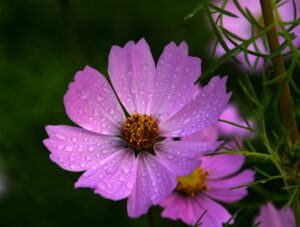
Pink cosmos flowers are among the most recognizable flowers in summer and autumn gardens, but “pink cosmos” can describe far more than one simple shade or variety. Flowers range from almost-white blush and shell pink to clear rose, purplish pink, hot magenta, and deep pink marked with crimson. Modern cultivars also offer ruffled centers, picotee …

Continue reading

Are Cosmos Perennials? Annual vs. Perennial Species Explained

Cosmos can be annuals or perennials depending on the species. The familiar pink, white, and crimson garden cosmos, Cosmos bipinnatus, is an annual. Yellow and orange Cosmos sulphureus is also an annual. Chocolate cosmos, Cosmos atrosanguineus, is different: it is a tuberous perennial capable of living for multiple years when its underground growth survives the …

Continue reading

Purple Cosmos Flowers: Best Varieties, Shades & Growing Guide

Purple cosmos flowers bring cool, dramatic color to summer gardens, but there is an important distinction to make before choosing a variety: not every cosmos described as purple produces a true violet-purple flower. Many so-called purple cosmos actually fall somewhere between magenta, purplish pink, wine red, burgundy, crimson-purple, and bluish red. True cool violet is …

Continue reading

Cosmos Leaves: Identification, Leaf Shape & Common Problems

Cosmos is best known for its colorful daisy-like flowers, but the foliage is nearly as distinctive as the blooms. Healthy cosmos leaves can be delicate and thread-like, broader and deeply divided, or somewhere in between depending on the species. Learning what normal cosmos foliage looks like makes it much easier to identify young plants before …

Continue reading

Do Blue Cosmos Flowers Exist? Colors, Varieties & Best Alternatives

Blue cosmos flowers appear regularly in online photographs, social media posts, seed listings, and garden inspiration boards. The flowers may look cobalt blue, sky blue, turquoise, or even electric blue, often with the familiar yellow center and feathery foliage of garden cosmos. But are those flowers real? True blue cosmos is not an established garden …

Continue reading

White Cosmos Flowers: Best Varieties, Meaning & Growing Guide

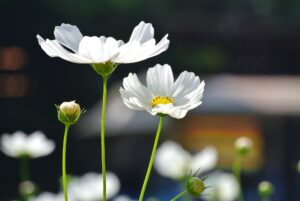
White cosmos flowers combine the airy growth of classic garden cosmos with one of the easiest colors to use in a landscape. Their bright petals and yellow centers work equally well in cottage gardens, cutting beds, pollinator plantings, moon gardens, wedding gardens, and large meadow-style displays. Most white garden cosmos belongs to Cosmos bipinnatus, the …

Continue reading

Yellow Cosmos Flowers: Best Varieties, Colors & Growing Guide

Yellow cosmos flowers can range from soft lemon and creamy yellow to brilliant gold and warm yellow-orange. Although gardeners often group all of these flowers together as “yellow cosmos,” they actually come from two different parts of the cosmos family. The classic bright-yellow cosmos is usually Cosmos sulphureus, an annual species whose natural color range …

Continue reading

Ranunculus Flowers: How to Grow, Plant & Care for Ranunculus

Ranunculus flowers have the kind of blooms that almost look too perfect to be real. Their densely layered petals form rounded, rose-like flowers in shades ranging from creamy white and soft blush pink to yellow, orange, coral, red, and deep burgundy. Add their slender stems and delicate green foliage, and it is easy to understand …

Continue reading

Watermelon Peperomia: How to Grow & Care for Peperomia argyreia

Watermelon peperomia is one of those houseplants that manages to look unusual without being particularly intimidating to grow. Its rounded leaves are marked with alternating bands of silver and deep green, creating a pattern remarkably similar to the rind of a watermelon. Reddish leaf stems provide even more contrast, giving this compact tropical plant plenty …

Continue reading