

Few perennial flowers can match a delphinium in full bloom. Tall spikes packed with blue, violet, lavender, pink, or white blossoms can rise several feet above a border, creating the kind of vertical color usually associated with cottage gardens and formal perennial displays.
The genus Delphinium includes hundreds of species, but many of the dramatic plants grown in gardens are hybrids derived from species such as Delphinium elatum. Gardeners may encounter Elatum hybrids, Belladonna hybrids, Pacific hybrids, compact Magic Fountains types, and shorter species such as Delphinium grandiflorum.
Although delphiniums look extravagant, their basic requirements are understandable. They perform best in full sun, fertile soil, dependable moisture, excellent drainage, and relatively cool summer conditions. Tall varieties also need protection from strong wind and usually benefit from staking.
Delphiniums are not equally easy everywhere. They thrive in climates with cool summers but may struggle in regions with prolonged heat and humidity. Choosing a shorter or more heat-tolerant type can make a considerable difference in challenging climates.
The other important consideration is safety: all parts of delphiniums should be considered poisonous if eaten. They contain toxic alkaloids and can cause serious poisoning in people, pets, and livestock.
Give delphiniums the right climate and growing conditions, however, and their towering flower spikes can become one of the most spectacular features of the early-summer garden.
⚡ Delphinium Quick Care Guide
Botanical name: Delphinium spp. and hybrids
Common names: Delphinium, perennial larkspur
Plant type: Primarily herbaceous perennial for the garden types covered here
Family: Ranunculaceae
Height: Approximately 1 to 7 feet depending on species and cultivar
Spread: Usually about 1 to 3 feet
Light: Full sun is best; light afternoon shade can help in hot climates
Soil: Fertile, humus-rich, moist but well-drained soil
Water: Moderate and consistent during active growth
Hardiness: Many perennial garden delphiniums grow approximately in USDA Zones 3–7, although cultivar hardiness varies
Bloom season: Late spring through midsummer, often with a second smaller flush later if cut back promptly
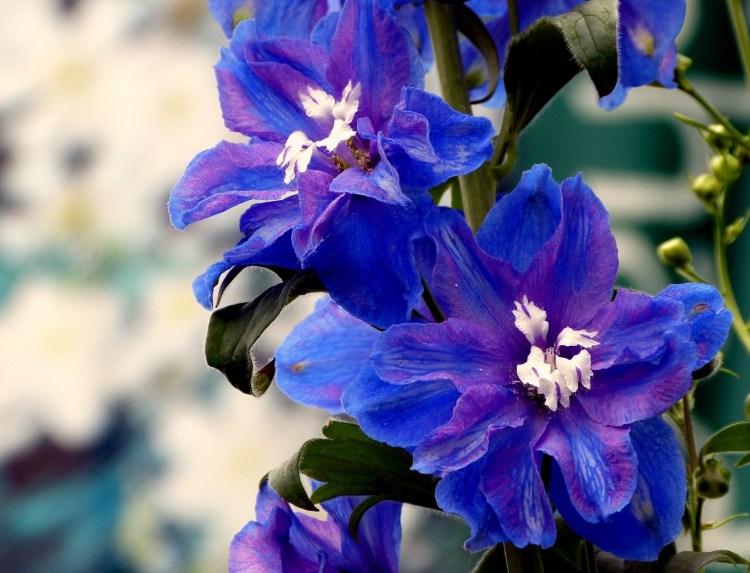
Flower colors: Blue, violet, purple, lavender, white, pink, and some reddish shades
Support: Medium and tall cultivars usually need staking
Deadheading: Recommended to encourage a second bloom
Division: Mature clumps can be divided in spring, often every few years as needed
Propagation: Division, basal cuttings, or seed depending on type
Pollinators: Particularly attractive to bumblebees; flowers may also attract butterflies and hummingbirds
Main problems: Slugs, snails, powdery mildew, leaf spots, botrytis, and crown rot
Important: All plant parts are poisonous if ingested.
💙 What Is Delphinium?
Delphiniums are members of the buttercup family.
Garden forms generally produce a mound of deeply divided green foliage during spring, followed by tall vertical flowering stems.
Individual flowers are packed along these stems in long racemes.
Many modern cultivars have single, semi-double, or double flowers with a contrasting central structure commonly called the bee or eye.
The result can be extraordinarily dramatic.
A mature tall delphinium may produce a flower spike 5 or 6 feet above the ground, making it one of the strongest vertical accents in a perennial border.
After flowering, the spikes can be cut back.
Under favorable conditions, fresh growth may produce a smaller second display later in the season.
🐬 Why Is It Called Delphinium?
The name Delphinium comes from the Greek word delphis, meaning dolphin.
The flower buds of some species were thought to resemble the shape of a dolphin.
That resemblance is easier to see in some species plants than in heavily doubled modern hybrids, but the botanical name remains.
🌸 Delphinium vs. Larkspur
The names delphinium and larkspur are sometimes used interchangeably, which can be confusing.
Traditional garden usage generally treats the tall perennial plants as delphiniums.
Many annual plants formerly classified in the genus Consolida are commonly called annual larkspur.
Modern botanical classification may place those annual larkspurs within Delphinium as well.
For practical gardening purposes, check the individual plant rather than relying solely on the common name.
A perennial Elatum delphinium may return for years.
An annual larkspur completes its life cycle in one growing season.
This guide focuses primarily on perennial garden delphiniums.
🌿 Main Types of Garden Delphiniums
Several major groups appear frequently in gardens and nurseries.
💙 Elatum Delphiniums
The Elatum Group includes many of the tallest and most dramatic garden delphiniums.
Plants may reach approximately 5 to 7 feet tall, depending on cultivar and conditions.
Their flower spikes are densely packed and may be:
- Blue
- Purple
- Lavender
- Pink
- White
Tall Elatum hybrids usually require staking.
They work best toward the back of a border where their height becomes an asset rather than an obstruction.
💙 Belladonna Delphiniums
Belladonna hybrids generally have a more open, branching form than the dense columnar Elatum types.
Plants often reach approximately 3 to 4 feet tall.
The individual flower stems can be especially attractive in cut-flower arrangements.
Their lighter, airier growth makes them useful when you want delphinium color without one enormous solid flower spike.
🌈 Pacific Hybrids
Pacific hybrids produce impressive tall flower spikes, often reaching around 5 to 6 feet.
They are frequently grown from seed and are available in mixtures containing several colors.
These delphiniums can be relatively short-lived as perennials.
In some gardens, they are treated almost like biennials or short-lived perennials and replaced regularly.
💙 Delphinium grandiflorum
Delphinium grandiflorum, sometimes called Siberian larkspur or Chinese delphinium, is considerably shorter than the giant Elatum types.
Some cultivars remain around 1 to 2 feet tall.
The growth tends to be looser and more branching.
Colorado State University notes that D. grandiflorum tolerates heat better than many traditional tall delphiniums.
This makes it worth considering if you love delphiniums but garden where summers are warmer.
🌿 Magic Fountains Delphiniums
The Magic Fountains series offers a more manageable alternative to towering delphiniums.
Plants generally remain around 3 feet tall.
Their shorter stems:
- Need less staking
- Tolerate wind better
- Fit smaller borders
- Work more easily in containers
For many home gardens, a compact delphinium is far easier to manage than a 6-foot Elatum hybrid.
☀️ How Much Sun Does Delphinium Need?
Delphiniums perform best in full sun.
Aim for at least six hours of direct sunlight.
Good sunlight encourages:
- Stronger stems
- Heavier flowering
- Better resistance to flopping
- Denser growth
Delphiniums do not generally flower well in deep shade.
However, climate matters.
In hot-summer regions, protection from intense late-afternoon sun may help reduce heat stress.
Morning sun followed by some afternoon shade can be a useful compromise.
For help evaluating garden light, visit Gardening Basics.
🌤️ Can Delphinium Grow in Partial Shade?
Light partial shade may be tolerated, particularly in hot climates.
Too much shade creates problems.
The stems may:
- Stretch toward light
- Become weak
- Produce fewer flowers
- Require additional staking
If you live in a cool climate, full sun is usually preferable.
If you live near the warm edge of delphinium’s comfort zone, some afternoon protection may be beneficial.
🌡️ Delphiniums Prefer Cool Summers
This is one of the most important things to understand about delphinium care.
Traditional perennial delphiniums perform best in climates with cool to moderate summers.
Long periods of heat and humidity can stress them severely.
In warm regions, plants may:
- Decline after flowering
- Develop disease more easily
- Become short-lived
- Fail to return consistently
- Perform more like annuals or biennials
Missouri Botanical Garden notes that traditional hybrid delphiniums can struggle even in hot, humid St. Louis summers.
This does not mean gardeners in warmer areas can never grow delphiniums.
Instead, consider:
- Shorter cultivars
- Delphinium grandiflorum
- Morning sun with afternoon shade
- Excellent airflow
- Consistent moisture
- Realistic expectations about longevity
🌎 Best Soil for Delphinium
Delphiniums prefer fertile, humus-rich soil that remains moist but drains well.
Good garden loam is ideal.
The plants need enough fertility to support large foliage clumps and enormous flower spikes.
At the same time, their crowns are vulnerable to rot in stagnant wet soil.
That balance is essential.
The soil should hold useful moisture during active growth but allow excess water to drain freely.
Our Garden Soil Guide: Soil Types, Testing, pH & How to Improve It covers soil texture, organic matter, drainage, and soil testing in greater detail.
💧 Good Drainage Is Essential
Delphiniums appreciate moisture.
They do not appreciate waterlogged crowns.
Poor drainage can contribute to crown rot, one of the most serious delphinium problems.
Avoid planting in:
- Low areas where water collects
- Compacted soil
- Permanently wet beds
- Containers without drainage holes
Winter drainage is especially important.
A dormant crown sitting in cold saturated soil may rot before spring.
🧱 Can Delphiniums Grow in Clay?
They can grow in clay-based soils if the soil has good structure and drainage.
Dense, compacted clay that remains saturated is much more difficult.
Improve the broader bed with appropriate organic matter rather than creating a small planting hole filled with completely different soil.
Do not add small quantities of sand to heavy clay in an attempt to improve drainage.
If the site remains waterlogged despite improvement, choose a raised bed or another location.
🍂 Adding Organic Matter
Well-decomposed compost can help provide the fertility and moisture retention delphiniums appreciate.
Apply organic matter to the broader planting bed rather than creating an isolated pocket around each plant.
A spring mulch of organic material can also:
- Reduce water loss
- Suppress weeds
- Improve soil structure
- Provide gradual nutrient release
Keep mulch from piling directly over the crown.
💦 How Often Should Delphinium Be Watered?
Newly planted delphiniums need regular moisture while their root systems establish.
Established plants also appreciate consistent moisture during spring and summer.
Avoid allowing the soil to become severely dry while tall flower spikes are developing.
Water deeply when needed.
The exact frequency depends on:
- Temperature
- Rainfall
- Soil type
- Mulch
- Wind
- Plant size
Delphiniums in containers need more frequent attention because the root zone dries quickly.
🌵 Is Delphinium Drought Tolerant?
Some species may tolerate relatively dry conditions, but the classic tall garden hybrids are not best treated as drought-tolerant perennials.
They usually perform better with moderate, reliable moisture.
Drought stress can:
- Reduce flower size
- Cause lower leaves to deteriorate
- Shorten bloom
- Increase susceptibility to powdery mildew
If your garden is very dry and water conservation is the main goal, plants such as Autumn Joy Sedum or Caryopteris are better choices.
📅 When Should You Plant Delphinium?
Spring and early summer are excellent planting times.
Plants installed during spring have plenty of time to establish before winter.
Fall planting can also work where the climate provides enough time for root establishment.
Avoid planting into:
- Frozen soil
- Waterlogged ground
- Extreme heat
If planting during summer, pay particularly close attention to moisture.
🌱 How to Plant Delphinium
Choose a sunny location protected from strong wind.
Dig a hole approximately as deep as the root ball and somewhat wider.
Remove the plant carefully from its container.
Loosen badly circling roots if necessary.
Place the crown at approximately the same depth it grew in the nursery container.
Do not bury it deeply.
Backfill with the surrounding soil.
Water thoroughly.
Apply mulch around the root zone without covering the crown.
📏 How Far Apart Should Delphiniums Be Planted?
Spacing depends heavily on cultivar.
A typical range is approximately 18 inches to 3 feet apart.
Large Elatum cultivars may eventually become several feet wide.
Compact forms need less room.
Delphiniums dislike being excessively crowded because poor airflow can contribute to disease.
Give each mature plant enough space for air to move through the foliage.
🌱 Does Delphinium Need Fertilizer?
This depends on soil fertility.
RHS guidance notes that delphiniums planted in good garden soil generally do not require routine feeding.
Container-grown plants have greater fertilizer needs because repeated watering removes nutrients from the potting mix.
In poor soil, a measured application of appropriate fertilizer may help.
Avoid excessive nitrogen.
Very lush growth can produce weaker stems and make an already tall plant even more difficult to support.
🍂 Mulching Delphinium
A spring mulch is particularly useful.
Spread organic mulch around the outside of the clump.
Benefits include:
- Moisture conservation
- Weed suppression
- Soil protection
- Gradual organic-matter improvement
Do not heap mulch directly over the crown.
A wet buried crown is much more vulnerable to rot.
🪵 Does Delphinium Need Staking?
Tall delphiniums usually do.
Those enormous flower spikes are beautiful but vulnerable.
A strong thunderstorm can turn a 6-foot flowering stem into a broken stem within minutes.
Medium and tall plants should be supported before they flop.
Do not wait until the flower spike is already lying on the ground.
🪵 How to Stake Delphiniums
Install support while spring growth is still fairly short.
Options include:
- Individual bamboo stakes
- Metal plant supports
- Grow-through grids
- Twiggy branches arranged around the clump
Tie tall flower stems with soft plant ties.
Avoid thin wire or tight string that can cut into the stems.
For very tall cultivars, each major flowering stem may need individual support.
🌬️ Protect Delphinium From Wind
Location can reduce the amount of staking required.
Plant tall delphiniums:
- Near a fence
- In a sheltered border
- Among sturdy neighboring plants
- Away from wind tunnels between buildings
Do not place a 6-foot cultivar in the most exposed corner of the property and expect the stems to stand unsupported through summer storms.
Short cultivars are a better solution for consistently windy gardens.
🌱 Thin Established Delphinium Shoots
A mature delphinium crown may produce many spring shoots.
If you want especially strong, tall flower spikes, thin the weakest growth.
RHS recommends leaving approximately five to seven of the strongest shoots on mature clumps when particularly impressive flower stems are desired.
Thinning reduces competition and allows the remaining stems to develop more strongly.
This is optional.
A less formal planting can simply be allowed to produce more numerous, somewhat smaller stems.
🌸 When Does Delphinium Bloom?
Perennial delphiniums generally produce their main flower display from late spring through midsummer.
June and July are peak months for many cultivars.
Flowering time varies according to:
- Climate
- Species
- Cultivar
- Spring temperatures
Some Belladonna types naturally produce a second flush later.
Many other perennial delphiniums can be encouraged to flower again if the first stems are cut down promptly after bloom.
✂️ Cut Delphinium Back After Flowering
This is one of the most useful delphinium maintenance techniques.
After the primary flower spike fades, cut the flowering stem back to the basal foliage.
Do not leave the spent spike standing for months unless you specifically want seed.
Prompt removal encourages the plant to direct energy into fresh growth.
Under good conditions, a second set of flowers may develop in late summer or early fall.
The second display is generally smaller than the first, but it can still be very attractive.
🌸 Should You Deadhead Delphinium?
Yes.
For the best repeat flowering, remove spent spikes promptly.
You do not need to pick individual flowers from an enormous raceme.
Wait until the spike has largely finished, then remove the entire flowering stem.
If collecting seed is your goal, leave selected spikes to mature while cutting the rest.
💐 Delphiniums as Cut Flowers
Delphiniums make spectacular cut flowers.
Their tall spikes add vertical structure to arrangements.
Cut when the lower flowers on a spike have opened but many upper buds are still developing.
Place stems into water promptly.
Colors combine particularly well with:
- Roses
- Peonies
- Lilies
- White daisies
- Other cottage-garden flowers
Belladonna types are particularly valued for cutting because of their branched flower stems.
🐝 Delphiniums and Pollinators
Delphinium flowers attract pollinating insects.
Bumblebees are particularly effective visitors because they can navigate the complex flowers.
Single-flowered cultivars generally provide easier access to pollen and nectar than heavily doubled flowers.
Some delphiniums also attract:
- Butterflies
- Hummingbirds
If pollinator value is a priority, include some simpler flower forms rather than planting only highly doubled cultivars.
For broader pollinator-garden ideas, visit Eco-Friendly Gardening.
🐦 Do Hummingbirds Like Delphinium?
Yes, hummingbirds may visit delphinium flowers.
Colorado State University and NC State Extension both recognize hummingbirds among the wildlife attracted to some delphiniums.
The tall flower spikes make them especially visible within mixed borders.
Combine delphinium with other hummingbird flowers that bloom earlier and later to provide a longer feeding season.
🌱 Dividing Delphiniums
Perennial delphiniums can be divided.
Spring is generally the best time.
RHS suggests digging and dividing older plants roughly every 2 to 5 years as needed.
Lift the clump as new growth is beginning.
Separate it into healthy divisions.
Discard old, weak, or woody central material.
Replant the vigorous outer sections at the correct depth.
Water thoroughly.
Healthy divisions may flower during the same growing season.
📅 Does Delphinium Need Regular Division?
Not every plant needs to be dug according to a strict calendar.
Consider division when:
- The center becomes weak
- Flowering decreases
- The clump becomes overcrowded
- You want more plants
- The plant needs repositioning
Some delphinium hybrids are naturally short-lived and may decline after only a few seasons regardless of division.
Replacing those plants periodically is normal.
✂️ Propagating Delphinium From Basal Cuttings
Delphiniums can also be propagated from basal cuttings.
During spring, take short young shoots from near the base while the stems are still solid rather than hollow.
Root them in an appropriate propagation medium.
This is particularly useful for reproducing named cultivars because the resulting plant is genetically identical to the parent.
Seed-grown offspring may not preserve the same characteristics.
🌱 Growing Delphinium From Seed
Many delphiniums can be grown from seed.
Pacific hybrids and compact seed strains are widely available.
Use fresh seed because older delphinium seed can germinate erratically.
Seedlings from hybrid plants may differ from their parents.
Differences can include:
- Flower color
- Height
- Flower form
- Plant vigor
If you want an exact duplicate of a prized named cultivar, use division or vegetative cuttings instead.
❄️ Delphinium Winter Care
Perennial delphiniums are generally very cold hardy when grown in suitable soil.
The above-ground foliage dies after frost.
The crown remains dormant underground.
Once the leaves have died naturally, old growth can be removed.
Good winter drainage is critical.
A hardy delphinium may tolerate severe cold much better than a mild winter spent in saturated soil.
🍂 Should Delphinium Be Cut Down in Fall?
Once frost has killed the foliage, stems can be cut near ground level.
You may also leave some dead growth temporarily as a marker or winter habitat.
If disease has been severe, fall cleanup is preferable.
Remove infected foliage rather than allowing disease material to remain around the crown.
Avoid piling thick wet mulch directly over the dormant plant.
🌱 Spring Delphinium Care
Spring is the busiest part of the delphinium year.
As shoots emerge:
- Remove old dead growth
- Divide old clumps if necessary
- Thin excessive shoots
- Apply mulch
- Watch immediately for slugs
- Install supports before stems become tall
- Maintain moisture
Stakes are much easier to conceal when installed early.
Do not wait until a flowering stalk is already 5 feet tall.
☀️ Summer Delphinium Care
During the main flowering season:
- Maintain consistent soil moisture
- Tie stems to supports as they grow
- Monitor for mildew and leaf disease
- Cut flowers if desired
- Remove spent spikes promptly
After the main flowering display, cut exhausted flowering stems back.
Continue watering fresh basal growth if you want a second bloom.
🍂 Fall Delphinium Care
A second set of flowers may appear in late summer or early fall.
Allow the plant to continue growing until frost naturally ends the season.
Avoid encouraging excessive soft growth with heavy late fertilizer.
Once foliage dies, remove it if desired.
In disease-prone gardens, cleaning away old stems and leaves can reduce overwintering disease material.
🐌 Slugs and Snails
Slugs and snails are among the most important delphinium pests.
Tender young shoots emerging in spring are especially vulnerable.
A newly emerging plant can be damaged severely before the stems have a chance to develop.
Inspect the planting frequently during cool, wet spring weather.
Possible approaches include:
- Hand-picking
- Reducing unnecessary hiding places
- Using targeted slug-control methods
- Protecting particularly valuable young shoots
Do not allow slugs to remove the entire spring crown before you realize the plant has emerged.
🌫️ Powdery Mildew
Powdery mildew can affect delphinium foliage.
Symptoms appear as white or gray powdery patches.
Problems become more likely when plants are:
- Crowded
- Stressed by drought
- Grown in too much shade
- Surrounded by poor airflow
Provide full sun, adequate spacing, and proper moisture.
Water near the soil rather than repeatedly soaking the leaves.
Mildew may be primarily cosmetic late in the season, but severe early infections can weaken the plant.
🦠 Delphinium Black Blotch
Delphiniums can develop a disease commonly called black blotch.
Affected leaves develop brown or black patches.
Disease can spread rapidly during wet conditions.
Remove badly affected material.
Avoid spreading contaminated plant debris around the garden.
When serious disease repeatedly occurs, regional Extension guidance can help determine appropriate control.
🌧️ Botrytis Blight
Botrytis can affect flowers and foliage during cool, damp weather.
Crowding and prolonged leaf wetness create more favorable conditions.
Improve airflow.
Remove dead flowers and decaying plant material.
Avoid watering over foliage late in the day when possible.
🖤 Crown Rot
Crown rot is one of the most serious cultural problems.
Symptoms may include:
- Sudden stem collapse
- Darkened crown tissue
- Yellowing
- Failure to return after winter
- Rotting at the plant base
Poor drainage and planting too deeply are major contributors.
Prevention is much easier than trying to rescue a severely rotted crown.
Plant delphiniums at the correct depth and keep winter soil from becoming waterlogged.
🐛 Other Delphinium Pests
Additional potential pests include:
- Aphids
- Leaf miners
- Caterpillars
- Mites
- Stem borers
Most gardens will never experience every possible pest.
Do not spray delphiniums simply because you see an insect on a leaf.
Identify the problem first.
This is especially important when the flowers are being visited by bees and other pollinators.
🦌 Do Deer Eat Delphinium?
Delphiniums are generally considered resistant to deer and rabbits.
Their toxic chemistry makes them less attractive than many other garden plants.
That does not make them completely immune to browsing.
Local wildlife behavior varies, particularly when other food is scarce.
Nevertheless, animal browsing is usually less troublesome than slugs, wind damage, or fungal diseases.
⚠️ Is Delphinium Poisonous?
Yes. All parts of delphinium should be considered poisonous if ingested.
NC State Extension classifies Delphinium as having high-severity poison characteristics.
Toxic alkaloids include compounds such as delphinine and related chemicals.
Poisoning can potentially cause serious symptoms involving the digestive, muscular, nervous, cardiac, and respiratory systems.
Large exposures can be life-threatening.
🐕 Are Delphiniums Toxic to Dogs and Cats?
Yes.
Delphiniums are considered problematic for dogs and cats if ingested.
Do not allow pets to chew the plants.
This is particularly important with puppies and other animals prone to sampling garden vegetation.
If a pet consumes delphinium, contact a veterinarian or animal poison-control resource promptly rather than waiting for symptoms.
🐎 Delphiniums and Horses
Delphiniums and related larkspurs can also poison horses and livestock.
Wild larkspurs are an important livestock-poisoning concern in portions of western North America.
Toxicity varies among species, plant parts, and stages of growth.
Gardeners with horses or grazing livestock should treat Delphinium as a poisonous ornamental and prevent access.
🧤 Wear Gloves When Handling Delphinium
Delphinium foliage can irritate the skin of some people.
Wearing gloves is sensible when:
- Dividing plants
- Cutting back large clumps
- Handling seeds
- Removing diseased foliage
- Preparing large quantities of cut flowers
Wash your hands after working with the plants.
Never use delphinium flowers as edible decorations.
🌎 Are Delphiniums Native to North America?
The genus Delphinium has species native to several parts of the Northern Hemisphere, including North America.
North American native species include plants such as:
- Delphinium tricorne
- Delphinium exaltatum
- Numerous western larkspurs
The spectacular hybrid delphiniums sold in many garden centers are not equivalent to locally native wild delphiniums.
If you are designing a strictly native garden, select a Delphinium species native to your specific region.
💙 New Millennium Delphiniums
The New Millennium series has become popular for vigorous growth, strong flower spikes, and a broad range of colors.
Individual cultivars include shades of:
- Deep blue
- Purple
- Lavender
- Pink
- White
Some have been recognized by the Royal Horticultural Society for garden performance.
They still benefit from the same fundamentals as traditional tall delphiniums: sunshine, fertile soil, reliable moisture, drainage, and support.
💙 ‘Black Knight’
‘Black Knight’ is a classic Pacific-type delphinium associated with deep violet-blue flowers and dark central eyes.
It creates the dramatic dark-blue effect many gardeners imagine when they think of delphiniums.
Like other tall Pacific hybrids, it needs:
- Full sun
- Support
- Shelter from wind
- Consistent moisture
Pacific types may be relatively short-lived, so do not be surprised if they require replacement after several seasons.
🤍 White Delphiniums
White cultivars are particularly striking in cottage gardens.
They work well beside:
- Blue delphiniums
- Pink roses
- Purple flowers
- Dark foliage
- Silver plants
White spikes are also particularly visible in evening light.
Choose the cultivar based on mature height rather than color alone.
A white delphinium can range from a compact border plant to a towering 6-foot specimen.
💜 Compact Delphiniums
Compact cultivars are often the better choice for ordinary home landscapes.
Their advantages include:
- Less staking
- Better wind resistance
- Easier placement
- Greater container suitability
- Less domination of neighboring plants
For a small garden, choosing a naturally 2- or 3-foot delphinium is usually better than trying to restrain a 6-foot cultivar.
🪴 Can Delphinium Grow in Containers?
Compact delphiniums can grow successfully in large containers.
Choose a pot with:
- Generous drainage holes
- Quality potting mix
- Enough weight to resist tipping
- Space for mature roots
Place the container in full sun.
Maintain consistent moisture without saturation.
Container plants may require regular fertilizer because nutrients are gradually washed from the growing medium.
Tall delphiniums are generally awkward in pots because their flower spikes make containers top-heavy.
❄️ Delphinium Winter Care in Containers
Roots in containers experience much colder temperatures than roots insulated by garden soil.
Move pots to a sheltered location in cold climates.
Protect them from excessive winter rain.
Cold and saturated potting mix creates ideal conditions for root and crown loss.
Compact container-grown plants may benefit from additional insulation around the pot.
🌹 Delphinium With Roses
Delphiniums and roses are one of the classic cottage-garden combinations.
The upright delphinium spikes provide vertical contrast beside rounded rose flowers.
Blue delphiniums work particularly well with:
- Pink roses
- Peach roses
- Yellow roses
- White roses
Both appreciate fertile soil and full sun.
Plant delphiniums with enough space that air can circulate around both plants.
For more rose-growing information, visit How to Grow a New Rose Garden.
💜 Delphinium With Coneflowers
Coneflowers provide a lower, broader flower shape below tall delphinium spikes.
Their bloom seasons can overlap during early or midsummer.
Coneflowers tolerate drier and leaner soil than delphiniums, so the pairing works best in ordinary fertile, well-drained garden soil without excessive irrigation.
💛 Delphinium With Black-Eyed Susans
Black-Eyed Susans create strong yellow-and-blue contrast.
The Rudbeckias also remain lower than most delphiniums, helping hide the base of tall stems.
Depending on cultivar, their primary flowering periods may not perfectly coincide, but together they help extend color across the summer.
💙 Delphinium With Balloon Flower
Balloon Flower makes an interesting blue-on-blue companion.
Balloon flower remains much shorter.
Its broad star-shaped blossoms contrast with the tall narrow delphinium spikes.
Both appreciate sun and well-drained soil with moderate moisture.
Balloon flowers dislike root disturbance, so place them carefully before adding large delphinium clumps nearby.
🍂 Delphinium With Helenium
Helenium can take over the color display after delphinium’s main early-summer bloom.
Delphiniums provide blue, violet, pink, or white.
Helenium later contributes:
- Gold
- Yellow
- Orange
- Red
- Copper
Both appreciate good soil and consistent moisture.
This pairing helps turn one border from cool early-summer colors into warm autumn shades.
🌸 Delphinium in a Cottage Garden
Few plants are more strongly associated with cottage-garden style.
Use tall varieties among:
- Roses
- Peonies
- Foxgloves
- Coneflowers
- Hardy geraniums
- Other traditional perennials
The garden should feel abundant without becoming overcrowded.
Remember that delphiniums need airflow and support.
A cottage garden can be lush without forcing every stem into competition with its neighbors.
🎨 Designing With Delphinium
Delphinium is primarily a vertical accent.
Use those tall flower spikes intentionally.
Blue Delphiniums
Combine with peach, yellow, pink, white, or silver.
Purple Delphiniums
Pair with pale pink, white, lime foliage, or gold.
White Delphiniums
Use among deep blue, purple, burgundy, or green foliage.
Pink Delphiniums
Combine with silver foliage, blue flowers, or dark green shrubs.
Repeating several delphiniums through a border often creates more impact than placing one isolated plant.
🌱 A Simple Delphinium Garden
For a sunny perennial border, consider:
Back layer: Tall delphiniums and roses
Middle layer: Coneflowers and Helenium
Front layer: Black-Eyed Susans and lower flowering perennials
The delphiniums provide the main vertical display in early summer.
Coneflowers follow.
Helenium carries the planting toward fall.
With good plant selection, the border changes throughout the season rather than peaking for only a few weeks.
⚠️ Common Delphinium Care Mistakes
Planting in Too Much Shade
Flowering declines and stems become weaker.
Choosing an Exposed Windy Site
Tall flower spikes break easily.
Waiting Until the Stems Fall Over Before Staking
Install support while growth is still short.
Allowing the Soil to Become Severely Dry
Delphiniums perform best with consistent moisture.
Planting in Waterlogged Soil
Crown rot can destroy the plant.
Burying the Crown Too Deeply
Keep the plant at approximately its original growing depth.
Ignoring Slugs in Spring
Young shoots can disappear quickly.
Leaving Spent Flower Spikes
Cutting them back can encourage another bloom.
Expecting Traditional Delphiniums to Love Hot, Humid Summers
They strongly prefer cooler summer conditions.
Assuming Every Delphinium Is a Long-Lived Perennial
Pacific hybrids and other types may be comparatively short-lived.
Planting a 6-Foot Cultivar Where a 3-Foot Plant Is Needed
Choose mature height before flower color.
Treating Delphinium as an Edible Flower
All parts should be treated as poisonous.
💙 Is Delphinium Easy to Grow?
Delphinium is not the lowest-maintenance perennial in the garden.
It requires more attention than plants such as sedum or coneflower.
Tall varieties need support.
Spring shoots need protection from slugs.
Plants require adequate moisture but cannot tolerate poor drainage.
Flowering stems should be cut back if you want repeat bloom.
And traditional hybrids can struggle in hot, humid climates.
But none of those requirements is especially complicated.
The basic formula is:
Give delphiniums full sun.
Choose a cool, sheltered location.
Provide fertile, well-drained soil.
Maintain consistent moisture.
Stake tall stems early.
Cut spent spikes down after flowering.
Divide aging clumps when necessary.
And keep every part of the plant away from people or animals who might eat it.
For gardeners who can provide those conditions, the reward is difficult to match.
💙 Few Flowers Create the Same Drama
A delphinium begins spring as a relatively modest mound of green.
Then stems rise.
They keep rising.
Buds begin covering the upper portions.
And almost suddenly, the garden has a tower of blue.
Individual blossoms open from the lower portion of the spike upward until the whole stem becomes a column of color.
Bumblebees move between the flowers.
Roses bloom below.
A plant that occupied only a few feet of soil now dominates the entire view.
That scale is what makes delphiniums special.
They are not effortless plants, and pretending otherwise does gardeners no favors.
They prefer cool summers.
They need good soil.
They need water without waterlogging.
Tall varieties need support.
Yet when those requirements are met, delphiniums deliver something very few other perennials can reproduce: enormous vertical flower spikes in some of the richest blues found anywhere in the garden.
Give them the right place, support them before they need it, and let them become the towers of the summer border.
🔗 Related Articles
- Flower Gardening
- Gardening Basics
- Garden Soil Guide: Soil Types, Testing, pH & How to Improve It
- Eco-Friendly Gardening
- Seasonal Gardening
- Balloon Flower Care
- Coneflower Care: How to Grow Echinacea
- Black-Eyed Susan Care
- Helenium Care
- How to Grow a New Rose Garden
📚 Sources & Further Reading
- Royal Horticultural Society — How to Grow Perennial Delphiniums
- Royal Horticultural Society — Delphinium
- NC State Extension — Delphinium
- Missouri Botanical Garden — Delphinium ‘Fanfare’
- Missouri Botanical Garden — Belladonna Delphinium ‘Casablanca’
- Colorado State University Extension — Flowers for Mountain Communities
- Colorado State University Extension — Herbaceous Perennials


