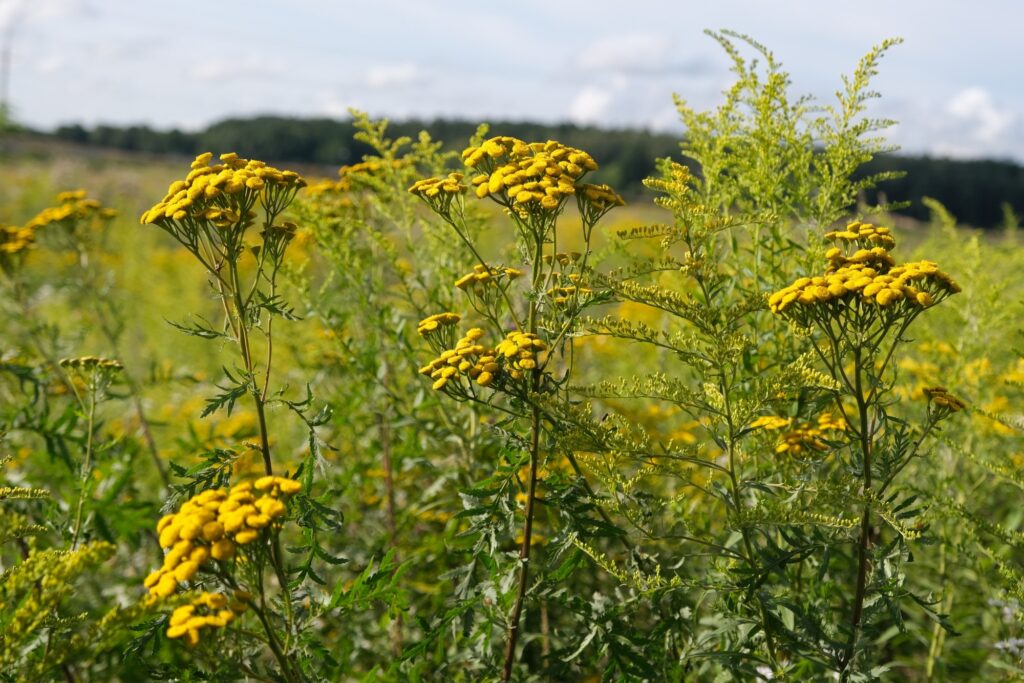
Goldenrod is a tough, colorful perennial best known for its masses of yellow flowers that brighten gardens from late summer into fall. Native goldenrods are especially valuable in pollinator gardens because their late-season blooms provide nectar and pollen at a time when many summer flowers have already faded.
Most goldenrods belong to the genus Solidago, a large group containing many species native to North America. Depending on the species, plants may grow anywhere from about 1 foot tall to more than 6 feet, and their habits range from compact clumps to vigorous colonies that spread through underground rhizomes.
Goldenrod has sometimes been unfairly blamed for causing fall allergies. In reality, its pollen is relatively heavy and usually carried by insects rather than wind. Ragweed, which blooms at roughly the same time and releases large quantities of airborne pollen, is much more commonly responsible for seasonal allergy symptoms.
For gardeners, goldenrod offers a combination of easy care, drought tolerance, late-season color, and exceptional wildlife value. The key is choosing a species or cultivar suited to the amount of space available.
🌼 Goldenrod at a Glance
- Botanical name: Solidago spp.
- Common name: Goldenrod
- Plant family: Asteraceae
- Plant type: Herbaceous perennial
- Mature height: About 1 to 6 feet or more, depending on species
- Spread: Varies considerably
- Sun exposure: Full sun to partial shade
- Soil: Adaptable; usually prefers well-drained soil
- Bloom time: Late summer through fall
- Flower color: Primarily yellow and golden yellow
- Water needs: Low to moderate once established
- Hardiness: Varies by species
- Wildlife value: Excellent for bees, butterflies, beneficial insects, and other wildlife
☀️ How Much Sun Does Goldenrod Need?
Most goldenrods grow and flower best in full sun, with at least six hours of direct sunlight per day.
Plants grown in strong sunlight generally produce denser flower displays and sturdier growth. Tall varieties planted in excessive shade can become lanky and lean toward available light.
Some goldenrod species naturally grow along woodland edges and tolerate partial shade quite well. Blue-stemmed goldenrod and zigzag goldenrod, for example, are better adapted to shadier conditions than many prairie species.
If you are growing one of the commonly available sunny-border goldenrods and are unsure of its exact requirements, full sun is generally the best choice.
🌱 Best Soil for Goldenrod
Goldenrod is remarkably adaptable to different soils.
Many species perform well in ordinary garden loam and do not require heavily amended or unusually fertile conditions.
Depending on the species, goldenrod may tolerate:
- Sandy soil
- Loamy soil
- Clay
- Gravelly soil
- Dry soil
- Moderately moist soil
Drainage is important, although some species naturally tolerate wetter ground better than others.
Most garden goldenrods perform well in soil that retains some moisture but does not stay waterlogged for prolonged periods.
Avoid heavily enriching the planting area with fertilizer unless the soil is extremely poor. Rich conditions can encourage tall, soft growth that is more likely to flop.
💧 How Often Should You Water Goldenrod?
Newly planted goldenrod should be watered regularly while its roots become established.
Water deeply whenever the upper portion of the soil begins drying.
After establishment, many goldenrod species become quite drought tolerant and require little supplemental irrigation during normal weather.
Plants growing in especially dry sites may benefit from occasional deep watering during prolonged summer drought.
Species that naturally inhabit wetter meadows and low areas need more consistent moisture.
Rather than following a rigid watering schedule, check the soil and learn the preferences of the particular goldenrod species you are growing.
⚠️ Can You Overwater Goldenrod?
Goldenrod is generally forgiving, but continuously saturated soil can cause problems for species adapted to drier conditions.
Possible signs of excessive moisture include:
- Yellowing foliage
- Weak stems
- Wilting despite wet soil
- Crown or root deterioration
- Poor flowering
If the soil stays soggy after rainfall, improve drainage or choose a goldenrod species naturally adapted to wetter conditions.
Once established, many goldenrods tolerate slightly dry soil better than constantly wet ground.
🌡️ Temperature and Climate
Goldenrods are well adapted to seasonal temperature changes across much of North America.
Many species are extremely cold hardy and return reliably after harsh winters.
Plants die back to the ground after frost, remaining dormant through winter before sending up fresh shoots in spring.
Summer heat is rarely a major problem once plants are established.
Native prairie goldenrods in particular are adapted to sunny, exposed environments and tolerate both high temperatures and temporary drought.
Hardiness varies by species, so gardeners in very cold or warm climates should choose a goldenrod native or well adapted to their region.
🌿 How to Plant Goldenrod
Goldenrod can be planted in spring or fall.
Spring planting gives the plant an entire growing season to establish before winter, while early fall planting works well where roots have several weeks to become established before the ground freezes.
Choose a location suited to the mature size of the variety.
Dig a hole approximately as deep as the root ball and somewhat wider.
Place the plant at the same depth it was growing in its nursery container, backfill with soil, gently firm the area, and water thoroughly.
Avoid burying the crown deeply.
📏 How Far Apart Should You Plant Goldenrod?
Spacing depends heavily on the species or cultivar.
Compact garden cultivars may need only about 12 to 18 inches between plants, while large native species may require 2 to 3 feet or more.
Spacing plants properly improves air circulation and allows each clump to develop naturally.
It is particularly important when planting vigorous spreading goldenrods.
If a species is known to spread by rhizomes, give it more room or plant it where forming a colony is desirable.
🌸 When Does Goldenrod Bloom?
Most goldenrods bloom from late summer into fall.
Flowering time varies by species, climate, and location.
Plants produce clusters or plumes containing numerous tiny yellow flowers.
Some species create arching sprays of blooms, while others form upright or flat-topped flower clusters.
Because goldenrod blooms relatively late, it fills an important seasonal gap in both ornamental gardens and natural ecosystems.
The yellow flowers also combine beautifully with purple asters, creating one of the classic color combinations of the autumn landscape.
🦋 Goldenrod for Butterflies and Pollinators
Goldenrod is one of the most valuable late-season plants for pollinators.
Its flowers attract a remarkably diverse range of insects.
Visitors may include:
- Monarch butterflies
- Other butterflies
- Native bees
- Bumblebees
- Honeybees
- Wasps
- Beetles
- Hoverflies
- Numerous other beneficial insects
Late-season nectar is particularly important for migrating monarch butterflies and pollinators preparing for winter.
Goldenrod also supports insects beyond its flowers. Numerous caterpillars and other insects use goldenrod species for food or habitat.
For a wildlife garden, goldenrod is one of the strongest plants you can add.
🤧 Does Goldenrod Cause Allergies?
Goldenrod is often blamed for fall hay fever, but the accusation is largely misplaced.
Goldenrod produces relatively heavy pollen designed primarily to be transported by insects.
That pollen does not become airborne as easily as the lightweight pollen produced by wind-pollinated plants.
Ragweed blooms during roughly the same period and often grows in similar areas.
Unlike goldenrod, ragweed produces enormous quantities of lightweight airborne pollen.
Because goldenrod’s bright yellow flowers are much more visible, people historically associated it with symptoms that were more likely caused by neighboring ragweed.
Gardeners with seasonal allergies therefore do not necessarily need to avoid goldenrod.
🌿 Does Goldenrod Spread?
Some goldenrods spread considerably, while others remain relatively compact.
This is one reason identifying the species or cultivar before planting is important.
Aggressive types may spread through underground rhizomes and eventually form large colonies.
That behavior is useful in:
- Meadows
- Prairie gardens
- Naturalized areas
- Large wildlife gardens
- Erosion-control plantings
It may be less desirable in a small formal perennial border.
More compact cultivars are available for gardeners who want goldenrod’s flowers without extensive spreading.
✂️ How to Control Spreading Goldenrod
If your goldenrod begins expanding farther than you want, several simple techniques can keep it manageable.
Dig out unwanted shoots in spring while they are still small.
Dividing established clumps every few years also helps reduce their size.
For especially vigorous species, planting them in a large naturalized section of the landscape is often easier than trying to confine them to a small bed.
Deadheading prevents seed production but will not stop underground rhizomes from spreading.
Choosing a clump-forming species or compact cultivar from the beginning is usually the easiest solution for smaller gardens.
✂️ Should You Pinch Goldenrod?
Tall goldenrods can be pinched or cut back in late spring or early summer.
Removing the upper portion of the stems encourages branching and creates shorter, fuller plants.
This technique can reduce flopping later in the season.
A light cutback can be especially useful for species that naturally reach 4 to 6 feet tall.
Stop pruning by midsummer so plants have enough time to form flower buds.
Cutting plants back too late can delay flowering or remove the season’s developing blooms.
🌾 Does Goldenrod Need Staking?
Compact goldenrods rarely need staking.
Very tall species can occasionally lean or fall after heavy rain, particularly when grown in rich soil or partial shade.
Growing plants in full sun helps produce sturdier stems.
Avoid excessive fertilizer as well.
Pinching tall growth earlier in summer can often eliminate the need for staking.
If support is necessary, install it while plants are still young rather than waiting until flowering stems begin falling over.
✂️ Should You Deadhead Goldenrod?
Deadheading is optional.
Removing faded flowers prevents some seed production and can help control unwanted seedlings.
It also keeps the garden looking tidier.
However, leaving seed heads in place has significant wildlife benefits.
Birds may feed on the seeds, while the stems provide winter habitat for insects.
A good compromise is to deadhead plants growing near formal garden areas while leaving goldenrod standing in wildlife gardens and meadow plantings.
🍂 Should You Cut Goldenrod Back in Fall?
Goldenrod does not need to be cut down immediately after frost.
Leaving stems standing through winter provides structure in the landscape and habitat for wildlife.
Some insects overwinter in or around standing stems, and birds may forage among the dried seed heads.
For a wildlife-friendly garden, leave the plants standing until late winter or early spring.
Then cut the previous year’s stems near the ground before new growth becomes vigorous.
If a plant experienced severe disease during the season, removing affected foliage earlier may be worthwhile.
🌾 Does Goldenrod Need Fertilizer?
Goldenrod usually needs little or no fertilizer.
Native species are adapted to growing without intensive feeding.
In average garden soil, adding fertilizer can actually make plants taller and more likely to flop.
A small amount of compost around established plants in spring is usually sufficient.
Avoid high-nitrogen fertilizers unless a soil test reveals a specific deficiency.
For many goldenrods, relatively lean soil produces the strongest and most natural growth.
🍂 Should You Mulch Goldenrod?
A modest layer of mulch can help new plants become established by conserving moisture and suppressing weeds.
Apply organic mulch around the planting area but keep it away from the crown.
Established goldenrod in prairie or meadow plantings usually needs little mulch.
As neighboring plants fill the area, they naturally shade the soil and reduce weed growth.
In dry climates, a light organic mulch can continue helping the soil retain moisture during summer.
🌼 Popular Types of Goldenrod
There are many goldenrod species, and several are particularly useful in gardens.
🌟 Showy Goldenrod
Showy goldenrod, Solidago speciosa, produces attractive upright plumes of golden-yellow flowers.
It is well suited to sunny native plant gardens and prairie-style landscapes.
Its strong flower display makes it one of the more ornamental North American goldenrods.
🌿 Stiff Goldenrod
Stiff goldenrod, Solidago rigida or Oligoneuron rigidum depending on botanical treatment, produces broad, relatively flat clusters of yellow flowers.
It works particularly well in prairie gardens with asters, blazing star, coneflowers, and native grasses.
🌊 Seaside Goldenrod
Seaside goldenrod, Solidago sempervirens, is naturally associated with coastal areas.
It tolerates sandy soil, salt exposure, and challenging seaside conditions better than many traditional garden perennials.
Its bright flowers are also valuable to late-season pollinators.
🌳 Zigzag Goldenrod
Zigzag goldenrod, Solidago flexicaulis, is particularly useful in woodland or partially shaded gardens.
Unlike sun-loving prairie goldenrods, it can perform well beneath open tree canopies.
The flowers develop along distinctive zigzagging stems.
🌼 Canada Goldenrod
Canada goldenrod, Solidago canadensis, is an impressive native plant but can spread vigorously.
It works well in large naturalized landscapes where its colony-forming habit is an advantage.
In small garden beds, gardeners may prefer a less aggressive species or compact cultivar.
🌱 Goldenrod Cultivars for Smaller Gardens
Gardeners who love goldenrod but have limited space can choose compact cultivars bred for ornamental landscapes.
These selections tend to remain shorter and behave more predictably than some large wild species.
Compact goldenrods work particularly well in:
- Perennial borders
- Small pollinator gardens
- Cottage gardens
- Containers
- Foundation plantings
Always check the expected mature height and spread before purchasing.
🔄 Dividing Goldenrod
Goldenrod can be divided when clumps become crowded or spread beyond their desired area.
Spring is usually an excellent time.
Dig up the clump as new growth begins and separate it into smaller sections.
Each division should contain healthy roots and several growing shoots.
Replant the divisions promptly and water them thoroughly.
Division can be performed every few years as necessary.
It is also an easy way to obtain additional plants for a larger pollinator or meadow garden.
🌱 Propagating Goldenrod
Goldenrod can be propagated by division or seed.
Division is the fastest method when you already have an established plant.
Growing native goldenrod from seed is useful when establishing larger naturalized areas.
Depending on the species, seeds may benefit from exposure to a period of cold, moist conditions before germination.
This process mimics natural winter conditions.
Because named cultivars may not come true from seed, division is the better option when you want an exact copy of a particular garden variety.
🪴 Can Goldenrod Grow in Containers?
Compact goldenrod cultivars can grow successfully in containers.
Choose a relatively large pot with good drainage holes.
Use a quality potting mixture and place the container in full sun.
Container-grown plants require more frequent watering than goldenrod planted directly in the ground.
Check the soil regularly during hot weather.
Larger wild species are generally less suitable for containers because their height and spreading root systems require substantial space.
For patio gardens, choose cultivars specifically described as compact.
🌿 Best Companion Plants for Goldenrod
Goldenrod is especially attractive when combined with purple, blue, or burgundy fall flowers.
Good companions include:
- Aster Care
- Sedum Care
- Blazing Star Care
- Butterfly Weed Care
- Coneflower Care
- Yarrow Care
- Coreopsis Care
- Gaillardia Care
- Bee Balm Care
- Salvia Care
- Black-eyed Susan
- Joe Pye weed
- Little bluestem
- Switchgrass
- Prairie dropseed
Goldenrod and asters are an especially valuable combination.
Their yellow and purple flowers create strong visual contrast, while their overlapping bloom periods provide abundant food for late-season pollinators.
🐛 Common Goldenrod Pests
One of the signs of a healthy goldenrod planting is that insects use it.
Numerous native insects feed on goldenrod without seriously damaging established plants.
You may notice:
- Aphids
- Leaf beetles
- Caterpillars
- Plant bugs
- Gall-forming insects
- Leaf miners
Small round swellings occasionally found on goldenrod stems are often insect galls.
These structures may contain developing insect larvae but generally do not threaten the plant’s health.
In a wildlife garden, they are part of the ecological value of goldenrod rather than a problem that requires treatment.
🍄 Common Goldenrod Diseases
Goldenrod is generally hardy, although several fungal problems can occasionally occur.
Possible issues include:
- Powdery mildew
- Rust
- Leaf spots
- Root rot in poorly drained conditions
Good air circulation reduces many foliar problems.
Avoid overcrowding plants, especially in humid climates.
Watering near the soil rather than repeatedly wetting the foliage can also help.
Powdery mildew may appear later in the season but often causes more cosmetic damage than serious harm.
❓ Why Isn’t My Goldenrod Flowering?
Insufficient sunlight is a common reason for poor flowering in sun-loving goldenrod species.
Make sure the plant receives at least six hours of direct sun.
Excessive nitrogen fertilizer can also produce abundant foliage without strong flowering.
Plants that were heavily cut back late in summer may have lost their developing flower buds.
Recently transplanted goldenrod may simply need another growing season to establish before producing its best display.
❓ Why Is My Goldenrod Flopping Over?
Tall goldenrod often flops because it receives too much fertilizer, too little sunlight, or excessive moisture.
Rich garden soil can produce taller growth than the plant would develop in its natural habitat.
Avoid feeding established goldenrod unless necessary.
Pinching tall species in late spring can create shorter, stronger plants.
Planting among sturdy native grasses also provides natural support.
❓ Why Are My Goldenrod Leaves Turning Brown?
Browning lower foliage can occur during drought or as plants naturally age toward the end of the growing season.
If soil is extremely dry, provide a deep watering.
Brown or spotted foliage may also indicate fungal disease.
Improve airflow and remove severely damaged leaves where practical.
Once frost arrives, the entire plant will naturally turn brown and enter dormancy.
That seasonal dieback is normal.
❓ Why Is My Goldenrod Taking Over the Garden?
You probably planted one of the more vigorous rhizomatous species.
Goldenrod’s ability to form colonies is ecologically useful but can surprise gardeners accustomed to clump-forming perennials.
Dig unwanted shoots in spring and divide the main clump if necessary.
Removing flower heads before seeds mature can reduce seedlings, although it will not stop rhizome growth.
If maintaining the plant becomes difficult, replace it with a less aggressive species or compact cultivar.
🐦 Should You Leave Goldenrod Standing in Winter?
Yes, particularly in a wildlife garden.
Dried goldenrod provides winter habitat and food sources long after the flowers disappear.
Birds may feed on seeds or search the stems for insects.
Standing vegetation also provides overwintering sites for numerous small creatures.
Leave the stems through winter and cut them back in late winter or spring.
Waiting until spring cleanup also adds texture to an otherwise dormant garden.
🦌 Is Goldenrod Deer Resistant?
Goldenrod is generally considered relatively resistant to deer compared with many garden plants.
However, deer preferences vary significantly between regions and seasons.
Young growth may occasionally be browsed.
Established plants often recover well even after minor feeding.
No plant is completely deer-proof, particularly when natural food supplies are limited.
In areas with heavy deer pressure, protect newly planted goldenrod until its roots become established.
🏡 Where to Plant Goldenrod
Goldenrod can fill a wide variety of landscape roles.
Consider using it in:
- Pollinator gardens
- Butterfly gardens
- Native plant gardens
- Prairie gardens
- Meadow plantings
- Cottage gardens
- Wildlife gardens
- Sunny perennial borders
- Naturalized areas
- Rain gardens, depending on species
- Woodland gardens with shade-tolerant species
Large spreading species are best in naturalized areas where they have room to form colonies.
Compact cultivars fit much more easily into traditional perennial beds.
💐 Is Goldenrod a Good Cut Flower?
Goldenrod makes an excellent informal cut flower.
Its arching or upright sprays of tiny yellow blooms add color and texture to bouquets.
Cut flowering stems when many blossoms have opened but some buds remain.
Place them immediately in clean water.
Goldenrod pairs especially well with asters, sedum, ornamental grasses, coneflowers, and other late-season flowers.
It can also be used as a filler flower in larger arrangements.
🌱 Is Goldenrod Easy to Grow?
Goldenrod is one of the easiest native perennials to grow when matched with an appropriate site.
Its basic care requirements are simple:
- Give sun-loving species full sun.
- Provide reasonably well-drained soil.
- Water regularly while new plants establish.
- Reduce watering once drought-tolerant types mature.
- Avoid excessive fertilizer.
- Pinch tall species if you want shorter plants.
- Divide vigorous clumps when necessary.
- Leave some stems standing through winter for wildlife.
- Choose compact cultivars for smaller gardens.
The greatest challenge is usually not keeping goldenrod alive but keeping vigorous varieties within the space allotted to them.
Selecting the right species from the beginning solves most of that problem.
🌼 Final Thoughts
Goldenrod deserves a prominent place in pollinator-friendly and native gardens. Its brilliant yellow flowers arrive when summer begins fading, bringing a final wave of color to perennial beds while providing essential late-season food for bees, butterflies, and numerous other insects.
The plant is also much easier to manage than its reputation sometimes suggests. Choosing a compact or clump-forming variety allows gardeners with smaller spaces to enjoy goldenrod without dealing with a rapidly expanding colony. Larger native species are excellent choices for meadows, prairie gardens, and naturalized areas where spreading is welcome.
Give goldenrod appropriate sunlight, reasonably well-drained soil, and enough water to establish its roots. Once mature, many species need remarkably little care.
Paired with asters, sedum, ornamental grasses, and other fall flowers, goldenrod can turn the end of the growing season into one of the most colorful and wildlife-rich periods in the garden.
🔗 Related Articles
- Aster Care
- Sedum Care
- Blazing Star Care
- Butterfly Weed Care
- Coneflower Care
- Yarrow Care
- Coreopsis Care
- Gaillardia Care
- Bee Balm Care
- Salvia Care