Garden phlox is one of the most beautiful summer-blooming perennials, producing large clusters of colorful flowers that attract butterflies, hummingbirds, and other pollinators. With its upright stems and generous blooms, it makes a wonderful addition to perennial borders and cottage gardens.
As garden phlox matures, however, its clumps can become crowded. Older plants may develop weaker growth, produce fewer flowers, or become more susceptible to powdery mildew because their stems are packed too closely together.
Dividing garden phlox is an easy way to rejuvenate these established plants while creating additional flowers for other areas of your garden.
The best time to divide garden phlox is early spring, just as new growth begins emerging. Late summer to early fall is another good option, provided the plants have enough time to establish before winter.
This guide explains when to divide garden phlox, how to separate the root clumps, and what to do afterward to help your new plants grow successfully.
🌱 Why Should You Divide Garden Phlox?
Garden phlox (Phlox paniculata) is a clump-forming perennial that gradually expands as new shoots develop around the crown.
Over several growing seasons, a small plant can become a substantial clump containing numerous flowering stems.
While this vigorous growth is usually desirable, overcrowding can eventually create problems.
When too many stems grow close together, air circulation through the plant decreases. This can contribute to conditions that favor powdery mildew, one of the most common diseases affecting garden phlox.
Crowded plants may also produce weaker stems or fewer flowers.
Dividing the clump separates its root system into smaller sections, giving each division more room to develop.
This can help restore vigorous growth and improve the plant’s overall appearance.
Division is also an excellent method of propagation.
Instead of purchasing additional plants, you can turn one established garden phlox into several smaller plants.
Because division produces plants from the original root system, the resulting plants generally retain the same characteristics as the parent variety, including flower color and growth habit.
However, not every garden phlox needs regular division. A healthy plant that flowers abundantly and has sufficient growing space can often remain undisturbed.
🌸 When Is the Best Time to Divide Garden Phlox?
Garden phlox can be divided successfully in spring or late summer to early fall.
Both seasons provide opportunities for the roots to become established without the intense heat of midsummer.
However, early spring is generally the easiest and most reliable choice.
Dividing Garden Phlox in Spring
Early spring is an excellent time to divide garden phlox because the plants are just beginning their active growth cycle.
As new shoots emerge from the soil, the crown becomes easier to identify.
The stems are still relatively short, making the clump easier to handle than a fully grown plant covered with foliage and flowers.
Spring division also gives the new plants several months to develop roots before winter.
In warmer regions, suitable conditions may arrive in March.
In colder climates, the ideal time may be April or May.
Rather than relying on a specific date, watch for fresh shoots emerging near the base of the plant.
Divide the clump when these shoots are visible but before substantial growth has developed.
Dividing Garden Phlox in Late Summer or Early Fall
Late summer to early fall is another suitable period, particularly after flowering has finished.
In many temperate climates, mid-August through September provides favorable conditions.
The plants have completed much of their flowering cycle, and cooler temperatures can reduce moisture stress.
However, newly divided garden phlox needs time to develop roots before winter.
Try to complete fall division approximately four to six weeks before the ground normally freezes.
In colder regions, division may need to happen earlier.
If freezing weather is approaching, postponing the job until spring is often preferable.
For additional seasonal guidance, see our Fall Gardening Checklist.
🔍 How to Tell When Garden Phlox Needs Dividing
Garden phlox does not always need to be divided simply because it has been growing in the same location for several years.
However, certain changes can indicate that division would be beneficial.
The Clump Has Become Overcrowded
One of the most common signs is a dense collection of stems growing close together.
As garden phlox expands, the individual shoots may become tightly packed, limiting airflow through the foliage.
Dividing the plant creates smaller, more manageable clumps that can be replanted with appropriate spacing.
The Plant Produces Fewer Flowers
A mature garden phlox may gradually produce fewer flowers as the clump becomes crowded.
However, reduced flowering can also result from insufficient sunlight, drought, poor soil conditions, or other growing problems.
Before dividing, make sure the plant is receiving appropriate care.
If growing conditions are suitable and the clump is unusually dense, division may help restore vigor.
The Center Is Becoming Weak
Some older perennial clumps gradually develop weaker growth near the center.
The outer sections may remain vigorous while the middle becomes less productive.
Dividing the clump allows you to remove damaged or unhealthy portions and replant strong sections.
Powdery Mildew Is Becoming a Problem
Garden phlox is particularly susceptible to powdery mildew, a fungal disease that produces a grayish-white coating on leaves and stems.
Crowded growth and poor air circulation can contribute to more severe problems.
Dividing an overcrowded clump may improve airflow and reduce disease pressure.
However, division alone does not guarantee that powdery mildew will disappear. Sunlight, cultivar resistance, and other environmental conditions also matter.
⏰ How Often Should You Divide Garden Phlox?
Garden phlox commonly benefits from division approximately every three to four years.
However, this is a general guideline rather than a strict requirement.
Some vigorous varieties may become crowded sooner.
Others can remain healthy and attractive for considerably longer.
Growing conditions also influence how quickly plants expand.
Garden phlox growing in fertile soil with adequate sunlight and moisture may develop larger clumps than plants growing under less favorable conditions.
Rather than dividing automatically, observe your plants each spring.
If the clump remains healthy, produces abundant flowers, and has enough room to grow, there may be no reason to disturb it.
🧰 What Tools Do You Need to Divide Garden Phlox?
Dividing garden phlox is relatively straightforward and does not require specialized equipment.
Most established clumps can be separated using ordinary gardening tools.
You will need:
- A sturdy garden spade or digging fork
- A sharp, clean garden knife
- Gardening gloves
- Pruning shears
- A watering can or garden hose
- A tarp or clean working surface
- Organic mulch
Smaller clumps may separate easily by hand.
Larger plants with tangled roots may require a sharp knife or spade.
Clean your cutting tools before beginning, especially if they have previously been used on plants affected by disease.
If possible, choose a cool, cloudy day for division.
If the soil is dry, water the garden phlox thoroughly the day before digging. Slightly moist soil is generally easier to work with and can help reduce root damage.
🪴 How to Divide Garden Phlox Step by Step
The process involves lifting the root clump, separating it into smaller sections, and replanting the divisions.
The most important consideration is making sure that each section contains healthy shoots and enough roots to establish independently.
Step 1: Prepare the New Planting Area
Before digging up your garden phlox, decide where you want the new divisions to grow.
Garden phlox performs best in full sun to light partial shade.
A location receiving at least six hours of direct sunlight is generally ideal for strong flowering, although some afternoon shade can be helpful in particularly hot climates.
Choose fertile, well-drained soil that retains some moisture.
Garden phlox does not appreciate prolonged drought, but it also struggles in soil that remains waterlogged.
Loosen the soil in the planting area and remove weeds.
If the soil is poor, incorporate finished compost to improve its structure.
Prepare the planting holes before lifting the original plant so the new divisions can be replanted promptly.
Step 2: Dig Around the Garden Phlox
Use a garden spade or digging fork to loosen the soil around the outside of the clump.
Begin digging several inches beyond the visible stems to preserve as much of the root system as possible.
Work gradually around the entire plant.
Once the surrounding soil is loose, carefully lift the root clump from the ground.
Avoid pulling the plant upward by its stems because this may damage the crown or separate shoots from their roots.
Large garden phlox clumps can have extensive root systems, so take your time.
Preserving a generous amount of healthy root material will help the new divisions establish more quickly.
Step 3: Remove Excess Soil and Examine the Roots
Place the lifted clump on a tarp or another clean working surface.
Gently shake away loose soil.
If the roots are densely tangled, you can rinse them lightly with water to make the crown and natural divisions easier to see.
Look for groups of healthy shoots connected to sections of the root system.
Inspect the plant for damaged, dead, or decaying material.
Remove obviously unhealthy sections rather than incorporating them into your new plants.
If you discover extensive root rot or serious disease symptoms, investigate the problem before replanting or sharing the divisions.
Step 4: Separate the Clump Into Smaller Sections
Once you can see the root structure, begin separating the clump.
For garden phlox, each division should ideally contain at least two or three healthy shoots and a portion of the root system.
This provides enough growing points and roots for the new plant to establish.
Small clumps may pull apart gently by hand.
Larger clumps may need to be cut with a clean, sharp knife.
Try to follow natural separations in the crown whenever possible.
Avoid creating extremely small divisions with few roots simply to produce more plants.
Larger, well-rooted sections generally establish more quickly and may return to flowering sooner.
If the original plant contains weak or dead central growth, concentrate on retaining healthy sections from the surrounding clump.
Step 5: Trim the Foliage if Necessary
If you are dividing garden phlox in early spring, extensive trimming is generally unnecessary.
The shoots are still relatively small and can usually remain intact.
However, plants divided in late summer or early fall may have tall stems and substantial foliage.
Reducing some of this growth can make the divisions easier to handle and help limit moisture loss while the roots recover.
Trim stems to approximately six inches when appropriate, removing spent flowers and damaged foliage.
Avoid unnecessarily stripping all healthy growth from a plant that still has time to photosynthesize before dormancy.
If the foliage has been heavily affected by powdery mildew, remove and dispose of diseased material rather than leaving it around the new planting area.
Step 6: Replant the Garden Phlox Divisions
Replant the sections as soon as possible.
Dig a hole wide enough to accommodate the roots without forcing them into a tight bundle.
Position each division at approximately the same depth it occupied before being lifted.
The crown should sit near the original soil level rather than being buried deeply.
Spread the roots gently where practical and refill the hole with soil.
Firm the soil lightly to remove large air pockets.
Garden phlox needs enough room for air to circulate around its stems as it grows.
Many taller varieties benefit from approximately 18–24 inches or more between plants, depending on their mature width.
Some cultivars eventually spread considerably wider, so check their expected size before choosing the final spacing.
Step 7: Water Thoroughly
After planting, water each division thoroughly.
This helps settle the soil around the roots and provides moisture for recovery.
Newly divided garden phlox has a disturbed root system, so it may need more consistent watering than an established plant.
Keep the soil evenly moist while the divisions establish, but avoid allowing it to remain saturated.
During hot or dry weather, check soil moisture regularly.
Watering at the base of the plants is preferable to repeatedly wetting the foliage.
A soaker hose or watering wand can help deliver moisture directly to the root zone.
Step 8: Add Mulch and Allow the Plants to Recover
Apply a modest layer of organic mulch around the new divisions.
Shredded leaves, fine bark, or other appropriate organic materials can help conserve moisture and suppress weeds.
Keep mulch from piling directly against the stems and crowns.
Over the following weeks, watch for healthy new growth.
Some divisions may temporarily grow more slowly while their roots recover.
Avoid repeatedly digging them up to check their progress.
With suitable conditions, healthy garden phlox divisions should gradually establish and develop into vigorous new clumps.
🌿 Can You Divide Garden Phlox Without Digging It Up?
Yes, it is sometimes possible to divide a large garden phlox clump while leaving part of the original plant in the ground.
This can be useful when you want to reduce the size of a healthy clump without disturbing the entire root system.
Choose a section near the outer edge that contains several healthy shoots.
Use a sharp spade to cut through the crown and separate the selected portion from the main plant.
Dig around that section and carefully lift it with as many roots as possible.
The remaining garden phlox can stay in place.
Refill any gaps around the original plant with soil and water thoroughly.
However, if the clump has developed an unhealthy center or needs extensive rejuvenation, lifting the whole plant is generally preferable.
This allows you to inspect the entire root system and remove unproductive material.
🌸 How Many Garden Phlox Plants Can You Get From One Clump?
The number of divisions depends on the size and condition of the original plant.
A relatively small clump may produce two healthy divisions.
A larger, mature garden phlox may provide four or more sections, depending on the number of shoots and how the roots are arranged.
For example, a healthy clump containing 12 shoots might produce four divisions with three shoots each.
However, the root structure may make a different arrangement more practical.
The goal is not necessarily to create the greatest number of plants.
Each division needs sufficient roots and growing points to establish successfully.
Larger divisions often recover more quickly and may provide a fuller appearance sooner than small ones.
🤍 Will Dividing Garden Phlox Help Prevent Powdery Mildew?
Dividing overcrowded garden phlox can help reduce powdery mildew problems, although it is not a guaranteed cure.
Powdery mildew is a fungal disease that commonly affects the foliage of Phlox paniculata.
It appears as a white or grayish powdery coating, often beginning on the lower leaves before spreading upward.
Crowded stems and poor air circulation can create conditions that favor disease development.
Dividing the plant allows you to create smaller clumps with more space between them.
This improves airflow and reduces excessive crowding.
However, powdery mildew can still develop when weather conditions favor the disease.
Some varieties are naturally much more susceptible than others.
For long-term prevention, combine division with appropriate spacing, adequate sunlight, and good garden maintenance.
If powdery mildew has been a recurring problem, consider selecting varieties with demonstrated resistance.
Cultivars such as ‘David,’ ‘Jeana,’ and ‘Robert Poore’ have shown good resistance in some regional evaluations.
Resistance varies by climate and location, so consult regional gardening recommendations when possible.
For more information about growing conditions and disease prevention, see our How to Grow Garden Phlox: Planting, Care & Tips for More Blooms.
💧 How to Care for Garden Phlox After Division
Newly divided garden phlox needs consistent care while its roots become established.
Watering is especially important during the first several weeks.
Check the soil regularly and water when necessary to maintain suitable moisture.
Garden phlox prefers soil that stays reasonably moist without becoming waterlogged.
Avoid frequent shallow watering that only wets the surface.
Instead, water deeply enough to encourage root development.
Good air circulation is also important.
As the plants begin growing, make sure their foliage is not crowded by neighboring perennials.
Keep weeds under control so they do not compete with the new divisions.
There is usually no need to apply large amounts of fertilizer immediately after dividing.
If the soil contains adequate nutrients, additional fertilizer may be unnecessary.
Excessive nitrogen can encourage soft, leafy growth rather than balanced flowering.
A soil test can help determine whether additional nutrients are needed.
Allow the divisions time to recover naturally.
🍂 How to Protect Fall-Divided Garden Phlox From Winter
Garden phlox is a hardy perennial, but newly divided plants may be more vulnerable to winter conditions because their roots have not fully established.
One concern in colder climates is frost heaving.
This occurs when repeated freezing and thawing causes the soil to expand and contract, sometimes pushing newly planted crowns upward.
Exposed roots can then be damaged by cold temperatures and drying conditions.
To reduce this risk, complete fall division early enough for roots to establish before the ground freezes.
Continue watering during dry autumn weather while the soil remains unfrozen.
After the ground begins freezing, apply an additional protective layer of loose mulch if needed.
Iowa State University Extension recommends approximately four to six inches of straw, pine needles, or similar material for protecting fall-divided garden phlox against repeated freezing and thawing.
This temporary winter protection is different from the thinner layer of mulch normally used during the growing season.
Remove excess winter mulch in early spring so emerging shoots are not buried beneath it.
If the ideal fall planting window has already passed, leaving the original plant undisturbed until spring may be the better choice.
☀️ Can You Divide Garden Phlox in Summer?
Summer is generally not the preferred season for dividing garden phlox.
During this period, the plants may be producing tall stems, large flower clusters, and substantial foliage.
Disturbing their root systems while they are actively growing can increase moisture stress.
High temperatures and dry soil make establishment more difficult.
However, dividing after the main flowering period in late summer can work well when temperatures are moderating and adequate time remains before winter.
If you must divide garden phlox during warmer weather, choose a cool, cloudy day.
Prepare the planting area ahead of time and keep the roots from drying out.
Water the divisions carefully while they recover.
Whenever possible, avoid dividing during extreme heat or prolonged drought.
🌷 Will Garden Phlox Bloom After Being Divided?
Garden phlox may flower during the same growing season in which it is divided, but blooming can be reduced temporarily.
The outcome depends on the timing, size of the divisions, and growing conditions.
Plants divided in early spring have several months to establish before their normal summer flowering season.
Larger divisions with substantial root systems may produce flowers that same year.
Smaller divisions may devote more energy to root development and produce fewer blooms.
Plants divided in late summer have generally completed much of their flowering period already.
They may resume normal flowering the following year.
However, some divisions require an additional growing season to reach their full size and flowering potential.
Do not assume that a new division has failed simply because it produces fewer flowers than the original mature plant.
Healthy foliage and steady growth are encouraging signs.
🌺 Garden Phlox vs. Creeping Phlox: Is Division the Same?
Garden phlox and creeping phlox are related plants, but their growth habits are quite different.
Tall garden phlox (Phlox paniculata) forms upright clumps with flowering stems that commonly reach several feet tall.
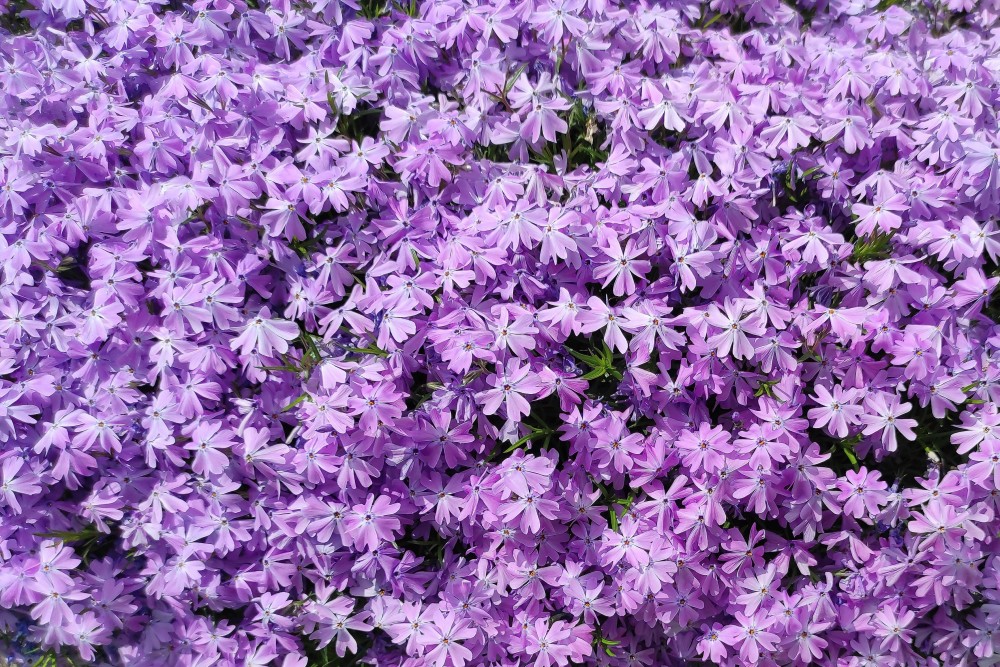
Creeping phlox, including moss phlox (Phlox subulata), grows close to the ground and spreads into dense mats.
It is often used in rock gardens, along pathways, and on slopes.
Because their growth habits differ, their division methods and timing are not identical.
Garden phlox is commonly divided in early spring or late summer to early fall.
Moss phlox is generally divided in spring, often immediately after flowering.
Smaller sections of creeping phlox can be separated from rooted portions of the spreading mat and replanted.
When working with tall garden phlox, each division should contain several healthy shoots and an appropriate portion of the root system.
Before dividing, identify which species you are growing.
This helps ensure you use the most suitable method and timing.
⚠️ Common Mistakes to Avoid When Dividing Garden Phlox
Garden phlox usually responds well to division, but certain mistakes can slow recovery.
Dividing During Extreme Heat
Hot weather increases moisture stress and makes it more difficult for disturbed roots to support the plant’s foliage.
Choose early spring or a cooler period after flowering whenever possible.
Creating Divisions With Too Few Roots
Each new plant needs sufficient roots and viable shoots.
Sections containing two or three healthy shoots generally provide a practical starting point.
Replanting Diseased Material
Do not automatically replant roots or crowns that are clearly rotten or severely damaged.
If the plant has been affected by powdery mildew, remove diseased foliage and dispose of it appropriately.
Planting Too Deeply
Garden phlox should generally be replanted at approximately its original depth.
Avoid burying the crown beneath excessive soil.
Crowding the New Divisions
One of the reasons to divide garden phlox is to improve growing space and air circulation.
Planting all the divisions too close together can recreate the same overcrowded conditions.
Allow enough room for the mature size of each variety.
Allowing the Roots to Dry Out
Exposed roots can lose moisture quickly, particularly during warm or windy weather.
Keep divisions shaded and replant them promptly.
Overfertilizing After Division
New divisions primarily need appropriate moisture and time to establish.
Applying excessive fertilizer does not guarantee faster recovery and may encourage weak, overly lush growth.
🏡 Where to Plant Your New Garden Phlox Divisions
One of the best parts of dividing garden phlox is having additional plants to use throughout the garden.
Tall garden phlox works particularly well in the middle or back of perennial borders.
Its colorful flowers provide interest during midsummer and often continue blooming toward early fall.
Because the plants grow upright, they combine beautifully with lower-growing perennials.
Catmint, yarrow, and other sun-loving flowers can create attractive contrasts in foliage shape and flower form.
Garden phlox also works well in cottage gardens and pollinator-friendly plantings.
Its flower clusters attract butterflies and other visitors during a time when some spring-flowering plants have already finished blooming.
When choosing locations, remember that garden phlox needs room for its stems to develop.
Avoid placing divisions so close to shrubs, fences, or neighboring perennials that air circulation becomes restricted.
A little extra space can help keep the plants healthier as they mature.
❓ Frequently Asked Questions
What Month Is Best to Divide Garden Phlox?
March, April, or May may be suitable for spring division, depending on your climate. The ideal time is when new shoots are just emerging. Mid-August through September is another commonly recommended period where fall growing conditions are favorable.
Can You Divide Garden Phlox in October?
October division may be possible in mild climates, but it is often too late in colder regions. Garden phlox needs time to establish roots before the ground freezes. If winter is approaching, waiting until early spring is usually preferable.
Should You Cut Back Phlox Before Dividing It?
If dividing in early spring, extensive cutting back is usually unnecessary because the shoots are still short. For late-summer or fall division, trimming tall stems to approximately six inches can make the plant easier to handle and reduce moisture loss.
How Many Shoots Should Each Garden Phlox Division Have?
Each section should ideally contain at least two or three healthy shoots and a portion of the root system. Larger divisions are also suitable and often establish more quickly.
Can You Divide Garden Phlox While It Is Blooming?
It is possible, but generally not recommended. Dividing during active flowering can interrupt blooming and increase transplant stress. Early spring or the period after flowering is preferable.
How Deep Should You Plant Divided Garden Phlox?
Replant garden phlox at approximately the same depth at which it originally grew. The crown should remain near its original soil level rather than being buried deeply.
Can You Divide Garden Phlox Every Year?
Garden phlox can tolerate division, but annual division is usually unnecessary. Many plants benefit from division approximately every three to four years, although healthy clumps may remain undisturbed longer.
Why Is My Garden Phlox Wilting After Division?
Temporary wilting may occur because the roots have been disturbed and cannot immediately absorb enough water to support the foliage. Check soil moisture and protect the plant from excessive heat. Persistent wilting can indicate severe root damage, poor drainage, or other growing problems.
Will Dividing Phlox Help It Bloom More?
Division may improve flowering when overcrowding is contributing to declining plant vigor. However, it will not correct problems such as insufficient sunlight, severe drought, or unsuitable soil. Some newly divided plants also produce fewer flowers temporarily while establishing.
🌸 Final Thoughts
Dividing garden phlox is one of the easiest ways to rejuvenate older plants while creating additional flowers for your garden.
The best time is early spring, just as new growth begins emerging from the crown.
Late summer to early fall is another suitable option when there is enough time for the divisions to establish before winter.
The process is simple: carefully lift the clump, separate it into sections containing healthy shoots and roots, and replant each division at its original depth.
Water thoroughly afterward and provide consistent moisture while the new plants become established.
Because garden phlox is particularly susceptible to powdery mildew, division also provides an excellent opportunity to improve spacing and air circulation.
Remember that a healthy, productive garden phlox does not need to be divided simply because several years have passed.
However, when the clump becomes crowded, flowering declines, or you want more plants, division is a practical and inexpensive solution.
With the right timing and proper care, one established garden phlox can become several beautiful plants that return with colorful summer flowers year after year.
🔗 Related Articles
- How to Grow Garden Phlox: Planting, Care & Tips for More Blooms
- Fall Gardening Checklist
- April Gardening Checklist: What to Plant, Prune & Do This Month
- When Should You Cut Back Perennials? Fall vs. Spring Pruning Guide
- How to Prepare a Garden for Winter
📚 Sources & Further Reading
- Iowa State University Extension — When Can I Divide Garden Phlox?
- Iowa State University Extension — Growing Phlox in Iowa
- Iowa State University Extension — How to Divide and Transplant Perennials
- Iowa State University Extension — How Can I Control Powdery Mildew on My Garden Phlox?
- Clemson Cooperative Extension — Dividing Perennials