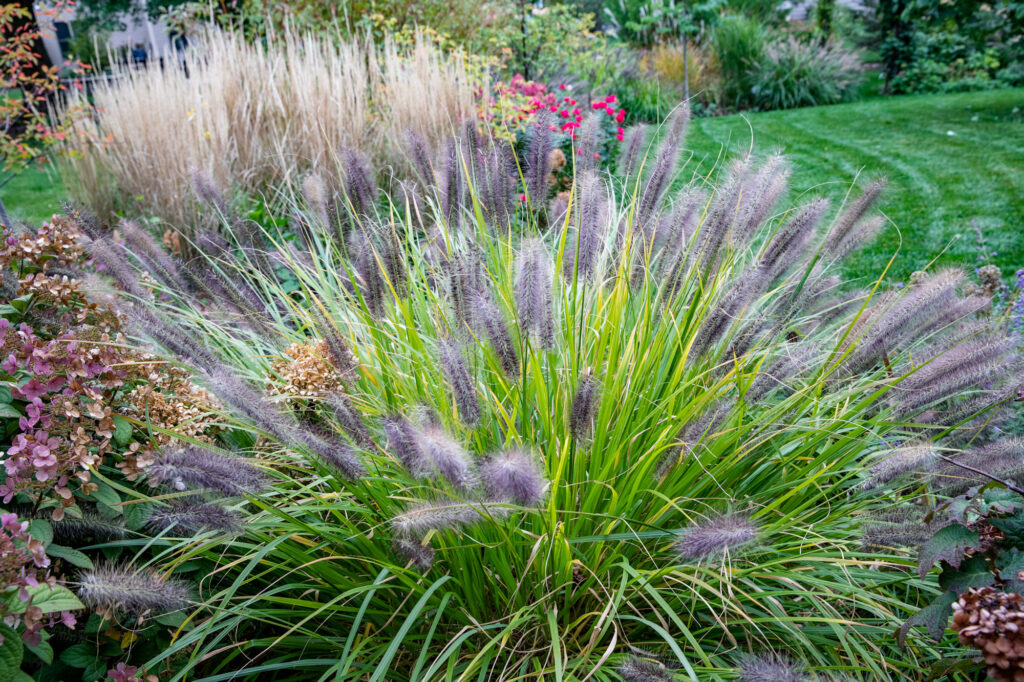
Ornamental grasses bring movement, texture, and year-round interest to the garden. Their graceful foliage, feathery seed heads, and attractive shapes make them beautiful additions to flower beds, borders, and naturalistic landscapes.
Many varieties are also wonderfully low-maintenance, returning year after year with very little attention.
However, as ornamental grasses mature, some develop large, crowded clumps that become difficult to manage. Others begin dying in the center, leaving an unattractive ring of growth around the outside.
When this happens, dividing the grass can help restore its appearance and provide additional plants for other areas of your garden.
The best time to divide most ornamental grasses is spring, as new growth begins. However, the exact timing depends on whether you are growing warm-season or cool-season grasses.
Fortunately, dividing ornamental grasses is relatively straightforward once you understand their growth habits and how to handle their sometimes surprisingly dense root systems.
This guide explains when to divide ornamental grasses, how to separate large clumps, and what to do afterward to help your new plants establish successfully.
🌱 Why Should You Divide Ornamental Grasses?
Ornamental grasses are perennial plants that often grow in gradually expanding clumps.
As the plants mature, their crowns and root systems become larger and more crowded.
Some varieties can remain healthy for many years without division, while others eventually develop areas of weak or dead growth.
One of the most recognizable signs is a bare center surrounded by a ring of healthy grass.
This happens because the older central portion of the plant gradually loses vigor while new growth continues developing around the outside.
Dividing the clump allows you to remove the unproductive center and replant healthy sections.
Division also helps control the size of ornamental grasses that have outgrown their original planting locations.
A grass that looked appropriately sized when first planted may eventually become several feet wide, crowding nearby flowers or extending into pathways.
Separating the clump creates more space for the remaining plants.
Another benefit is propagation. Instead of buying new grasses, you can create additional plants from healthy divisions.
Because division produces plants from the original clump, new plants generally retain the characteristics of the parent variety.
However, ornamental grasses do not need to be divided simply because they have become large. A healthy, attractive clump can often remain undisturbed.
🌸 When Is the Best Time to Divide Ornamental Grasses?
Spring is generally the best season for dividing ornamental grasses.
As temperatures begin warming, the plants prepare to produce new shoots and develop additional roots.
Dividing them near the beginning of their active growth period gives the new sections plenty of time to become established before winter.
However, ornamental grasses fall into two broad categories: cool-season grasses and warm-season grasses.
These groups begin growing at different temperatures, so their ideal division times are not necessarily the same.
Cool-Season Ornamental Grasses
Cool-season grasses begin growing during the cooler temperatures of early spring.
Many produce much of their foliage before summer arrives.
Examples include blue fescue, feather reed grass, tufted hairgrass, and some other grasses adapted to cooler growing conditions.
These plants are generally best divided in late winter or early spring, just as active growth begins.
In warmer climates, this may happen as early as February or March.
In colder regions, suitable conditions may not arrive until April.
Look for fresh green growth emerging near the base of the plant.
Warm-Season Ornamental Grasses
Warm-season grasses remain dormant longer and begin growing when soil temperatures increase later in spring.
Examples include switchgrass, little bluestem, maiden grass, and many fountain grasses.
These varieties are generally best divided in mid- to late spring as new shoots begin emerging.
In colder climates, this may mean waiting until May or even early June for slow-emerging species.
Dividing warm-season grasses too early, while the soil is still cold, can slow their recovery.
The goal is to divide them when growing conditions are favorable enough for new roots and shoots to develop.
📅 Best Time to Divide Common Ornamental Grasses
Different ornamental grasses respond best to division at slightly different points in the growing season.
| Ornamental Grass | Best Division Time |
|---|---|
| Feather reed grass | Early spring |
| Blue fescue | Early spring |
| Tufted hairgrass | Early spring |
| Blue oat grass | Early spring |
| Japanese forest grass | Early spring |
| Switchgrass | Mid- to late spring |
| Little bluestem | Mid- to late spring |
| Big bluestem | Mid- to late spring |
| Maiden grass | Late spring |
| Hardy fountain grass | Late spring |
| Prairie dropseed | Spring, only when necessary |
| Purple muhly grass | Spring as growth begins |
These are general recommendations for established plants growing in climates where the species is perennial.
Some ornamental grasses sold at garden centers, including purple fountain grass (Cenchrus setaceus ‘Rubrum’), are not reliably winter-hardy in colder climates and are often treated as annuals.
It is also important to check the identity of your grass. Some ornamental species are invasive or restricted in particular regions and should not be propagated or distributed.
🔍 How to Tell When Ornamental Grasses Need Dividing
Unlike certain flowering perennials, ornamental grasses do not necessarily require division every few years.
Some remain vigorous and attractive for a long time without being disturbed.
However, several changes can indicate that division would be beneficial.
The Center of the Grass Is Dying
A dead or thinning center is one of the clearest signs that an ornamental grass may need division.
The plant may develop a ring-shaped appearance, with healthy foliage growing around an increasingly empty middle.
This is particularly common in some older clump-forming grasses.
When this happens, the healthiest material is usually found around the outside of the clump.
Dividing the grass allows you to discard the dead center and replant vigorous outer sections.
The Clump Has Become Too Large
Some ornamental grasses eventually become considerably larger than expected.
A mature clump may extend into pathways, crowd nearby perennials, or overwhelm a small garden bed.
Dividing the plant lets you reduce its size while preserving its attractive growth habit.
Growth Has Become Weak or Uneven
An older ornamental grass may produce fewer vigorous shoots or develop an uneven shape.
Although overcrowding can contribute to this problem, poor soil drainage, insufficient sunlight, drought, or winter damage may also affect growth.
Before dividing, make sure the plant is not struggling because of an environmental problem.
You Want More Plants
You do not have to wait for an ornamental grass to become overcrowded before dividing it.
A healthy, mature clump can provide additional plants for new borders, foundation plantings, or naturalistic garden designs.
Division is a particularly useful way to multiply ornamental grasses with desirable foliage colors or distinctive growth habits.
⏰ How Often Should You Divide Ornamental Grasses?
The frequency of division depends on the species and how quickly it grows.
Some cool-season ornamental grasses benefit from division approximately every three years, particularly when their clumps become congested.
Others can remain healthy for much longer.
Large warm-season grasses, such as maiden grass and switchgrass, may need division only occasionally.
Certain slow-growing species, including prairie dropseed, are best left undisturbed unless there is a specific reason to move or propagate them.
Growing conditions also affect the rate of expansion.
Grasses planted in suitable soil with adequate sunlight and moisture may become larger more quickly than those growing in less favorable conditions.
Rather than following a rigid schedule, observe the plants each spring.
If the center remains healthy, new growth is vigorous, and the clump fits comfortably in its location, division may not be necessary.
🧰 What Tools Do You Need to Divide Ornamental Grasses?
The tools required depend largely on the size and density of the root clump.
Small ornamental grasses may separate easily by hand.
Large, mature grasses can have incredibly tough root systems that require sturdy tools and considerable effort.
Useful equipment includes:
- A sharp garden spade
- A sturdy digging fork
- A clean garden knife or pruning saw
- Pruning shears or hedge shears
- Heavy-duty gardening gloves
- Long sleeves and protective eyewear
- A garden hose or watering can
- A tarp for holding divisions
- Organic mulch
Two garden forks can also be useful for separating dense clumps.
Some ornamental grass leaves have sharp or rough edges that can cause cuts, so protective clothing is particularly important when handling large plants.
For very tough root masses, a suitable pruning saw may be more effective than trying to force them apart by hand.
Make sure cutting tools are sharp and used on stable surfaces.
If a clump is exceptionally large or heavy, consider dividing it into manageable sections while it remains in the ground.
🪴 How to Divide Ornamental Grasses Step by Step
The basic process involves cutting back old growth when appropriate, lifting the clump, separating healthy sections, and replanting them.
Although small grasses can be divided quickly, large established clumps may require more effort.
Step 1: Choose the Right Time
Begin by identifying whether your ornamental grass grows during the cool or warm season.
Divide cool-season grasses as active growth begins in early spring.
Wait until warmer soil temperatures encourage new shoots on warm-season grasses.
Choose a cool, cloudy day if possible.
Avoid dividing plants when the soil is frozen, excessively wet, or extremely dry.
If the soil is dry, water the area thoroughly the day before division to make digging easier.
Step 2: Prepare the New Planting Area
Before digging up the grass, decide where the divisions will grow.
Most ornamental grasses prefer full sun, although some varieties tolerate or even prefer partial shade.
Japanese forest grass, for example, generally performs best with protection from strong afternoon sun.
Choose a location with soil conditions appropriate for the species.
Many ornamental grasses prefer good drainage, while others tolerate heavier or more consistently moist soil.
Loosen the planting area and remove weeds.
Make sure there is enough room for the divisions to reach their mature size.
Preparing the planting location first allows you to replant the grass promptly rather than leaving its roots exposed.
Step 3: Cut Back Old Growth
For deciduous ornamental grasses that have retained their brown foliage through winter, cut back the old stems before dividing.
For many varieties, trimming the foliage to approximately four to six inches above the ground makes the clump easier to handle.
However, cutting height varies by species, and you should avoid damaging fresh shoots emerging from the crown.
If the grass has already produced substantial new growth, take care not to remove healthy foliage unnecessarily.
Evergreen ornamental grasses require different treatment.
These plants may need only selective removal of dead or damaged leaves rather than being cut completely to the ground.
For large grasses, gathering the old foliage into a bundle before cutting can make cleanup easier.
Wear gloves and protective clothing because some ornamental grass leaves are surprisingly sharp.
Step 4: Dig Around the Root Clump
Use a sturdy garden spade or digging fork to loosen the soil around the outside of the grass.
Begin digging beyond the visible crown to preserve as many roots as possible.
Work gradually around the entire plant.
Large ornamental grasses often develop dense, extensive root systems.
You may need to dig deeply and work from several angles before the clump begins to loosen.
Avoid pulling the plant upward by its leaves or stems.
Instead, use the spade to carefully lift the root mass.
If the clump is very large, you may find it easier to cut it into sections while it is still in the ground.
Step 5: Lift and Examine the Clump
Once the roots are sufficiently loosened, lift the ornamental grass from the ground.
Place it on a tarp or another suitable working surface.
Gently remove loose soil so you can examine the crown and root system.
Look for healthy sections containing living shoots or visible growing points.
If the grass has developed a dead center, identify the unproductive material so it can be removed.
Healthy roots and crowns vary in appearance between species, but avoid replanting sections that are clearly rotten, severely damaged, or completely dead.
The most vigorous portions of an older clump are often found around the outside.
Step 6: Separate the Grass Into Smaller Sections
Small ornamental grass clumps may come apart with gentle pressure from your hands.
Larger plants often require more force.
One method is to insert two garden forks back-to-back into the center of the clump and carefully push their handles apart.
This can separate the root system without requiring as much direct cutting.
For especially dense clumps, use a sharp spade or sturdy pruning saw.
Each division should contain healthy roots and several viable shoots or growing points.
Larger divisions generally establish more quickly than very small pieces.
Rather than trying to create as many plants as possible, aim for several substantial, healthy sections.
If the original clump has a dead center, discard that material and use vigorous sections from the outer edges.
Step 7: Replant the Divisions
Replant the newly separated grasses as soon as possible.
Dig a hole wide enough to accommodate the roots without forcing them into a compact mass.
Plant each division at approximately the same depth at which it originally grew.
Avoid burying the crown beneath several inches of additional soil.
Likewise, do not leave substantial portions of the root system exposed.
Spread the roots gently where practical and refill the planting hole with soil.
Firm the soil lightly around the roots to remove large air pockets.
If you are planting several divisions together, allow adequate space for their mature spread.
Some ornamental grasses remain compact, while others eventually develop clumps several feet wide.
Step 8: Water Thoroughly
After planting, water each division thoroughly.
This helps settle the soil around the roots and provides moisture for establishment.
Newly divided grasses have disturbed root systems and may require more consistent watering than mature plants.
Keep the soil appropriately moist while the divisions recover.
However, avoid keeping it constantly saturated unless the species naturally prefers wet conditions.
Many ornamental grasses become drought tolerant once established, but newly divided plants have not yet developed the root systems needed to withstand prolonged dry weather.
Step 9: Mulch and Monitor New Growth
Apply a suitable layer of organic mulch around the newly planted divisions.
Mulch helps conserve moisture, suppress weeds, and moderate soil temperatures.
Keep mulch away from the crowns to prevent excessive moisture accumulation around the growing points.
Over the following weeks, watch for fresh growth.
Some divisions may establish more slowly than others, particularly if they were separated from very dense root systems.
Avoid repeatedly digging them up to check their progress.
With appropriate growing conditions, healthy divisions should gradually develop new roots and foliage.
🌾 How to Divide Large Ornamental Grasses
Large ornamental grasses can be considerably more difficult to divide than hostas or daylilies.
Mature maiden grass, switchgrass, and other substantial clump-forming varieties may develop extremely dense crowns and root masses.
Some are too heavy to lift comfortably as a single plant.
If you are dealing with a very large clump, consider dividing it while it is still in the ground.
First, cut back the old foliage if appropriate for the species.
Then use a sharp spade to cut vertically through the crown.
Choose a manageable section from the outer edge of the clump.
Dig around that section and lift it with a substantial portion of its roots attached.
Continue removing sections as necessary.
If the center of the grass is dead, you can discard that portion once the surrounding healthy material has been removed.
This method avoids the need to lift an enormous root ball all at once.
However, it still requires care, particularly when using sharp tools.
Never place your hands beneath a blade or unstable root mass while applying force.
If the plant is exceptionally large, professional assistance may be safer than attempting to divide it alone.
🌿 Can You Divide Ornamental Grasses Without Digging Them Up?
Yes. Some established ornamental grasses can be divided without removing the entire plant.
This method works particularly well for large clumps that have expanded beyond their intended space.
Use a sharp garden spade to separate one or more sections from the outside of the plant.
Make sure each section contains healthy growing points and an adequate root system.
Carefully dig out the separated portions while leaving the remainder of the original clump in place.
Fill exposed gaps with soil and water the remaining plant thoroughly.
This approach is useful when you want to reduce the size of an otherwise healthy grass.
However, if the center of the clump has died, lifting or systematically dividing the entire plant may be preferable.
That allows you to remove the dead material more thoroughly.
🍂 Can You Divide Ornamental Grasses in Fall?
Spring is generally preferable to fall for dividing ornamental grasses.
This is particularly important for warm-season varieties that need sufficiently warm soil to develop new roots.
Dividing these grasses in late fall may leave them with little opportunity to establish before winter.
In colder climates, newly divided plants may be especially vulnerable to frost heaving and winter injury.
Some established cool-season grasses can tolerate division during suitable periods of early fall, depending on the species and local climate.
However, fall division is not equally reliable for every ornamental grass.
If you are uncertain about the species or its hardiness, spring is usually the safer choice.
In mild climates, fall planting may be possible for some ornamental grasses, but planting an intact nursery-grown specimen is not necessarily the same as dividing an established clump.
For most gardeners, waiting until the following spring is a sensible approach.
❄️ Should You Cut Back Ornamental Grasses Before Winter?
Many deciduous ornamental grasses are best left standing throughout fall and winter.
Their dried foliage and seed heads can provide attractive structure during the colder months.
Tall grasses such as switchgrass, little bluestem, and feather reed grass often remain beautiful long after their summer growth has faded.
Their seed heads can also provide food for birds, while the standing stems and surrounding vegetation may offer shelter for wildlife.
Leaving healthy foliage in place can help protect the crown from severe winter conditions.
Cutting back is generally best done in late winter or early spring, before vigorous new growth begins.
However, damaged plants, grasses that spread aggressively through seed, or plants posing practical safety concerns may require different management.
Evergreen grasses should not automatically be cut back like dormant deciduous varieties.
For a more detailed explanation, see When Should You Cut Back Perennials? Fall vs. Spring Pruning Guide.
💧 How to Care for Ornamental Grasses After Division
Proper aftercare helps newly divided ornamental grasses recover from root disturbance.
Watering is the most important consideration during establishment.
Even grasses that become highly drought tolerant as mature plants need adequate moisture while developing new roots.
Monitor the soil regularly during dry weather.
Water deeply enough to moisten the root zone, then allow the soil to drain appropriately for the species.
Avoid frequent shallow watering that only wets the surface.
New divisions may benefit from mulch, especially during periods of fluctuating spring temperatures.
Weed control is also important.
Young ornamental grasses can struggle when aggressive weeds compete for moisture and growing space.
Avoid excessive fertilizer.
Most ornamental grasses require relatively little supplemental feeding, and too much nitrogen can encourage weak, floppy growth.
If the soil is reasonably fertile, additional fertilizer may not be necessary.
Allow the divisions time to establish before expecting them to produce the same amount of foliage and flowering growth as mature plants.
🌸 Will Ornamental Grasses Bloom After Being Divided?
Newly divided ornamental grasses may produce flowers during their first growing season, but flowering can be reduced temporarily.
The outcome depends on the species, timing, and size of the divisions.
Larger sections containing well-developed roots and several healthy growing points generally establish more quickly.
Small divisions may devote most of their energy to producing roots and foliage before developing flower stalks.
Warm-season grasses divided in spring may still produce seed heads later in summer or fall if growing conditions are favorable.
Cool-season grasses may have a shorter recovery period before their normal flowering season, so blooming can be reduced.
A lack of flowers during the first year does not necessarily indicate a problem.
Healthy foliage and steady growth are encouraging signs.
Some divisions may need another growing season before reaching their full ornamental potential.
⚠️ Common Mistakes to Avoid When Dividing Ornamental Grasses
Although ornamental grasses are generally resilient, several mistakes can interfere with successful division.
Dividing at the Wrong Time
Warm-season grasses divided while the soil is still very cold may recover slowly.
Likewise, dividing them late in fall can leave insufficient time for root establishment.
Follow the growth cycle of the particular grass rather than relying on a fixed calendar date.
Making Divisions Too Small
Extremely small sections may have difficulty establishing, particularly if they contain few roots or growing points.
Larger divisions are generally more reliable.
Leaving the Dead Center Attached
If the original grass has developed a dead center, do not simply cut the entire plant into equal sections.
Remove the unproductive central material and concentrate on replanting healthy growth from the outside of the clump.
Planting Too Deeply
The crown should generally remain at approximately its original soil depth.
Burying it beneath excessive soil can contribute to poor growth or moisture-related problems.
Allowing the Roots to Dry Out
Exposed roots can lose moisture while you work.
Keep divisions shaded and replant them as promptly as possible.
Overwatering After Division
New divisions need moisture, but waterlogged soil can damage the roots of grasses adapted to well-drained conditions.
Water according to the plant’s needs and the actual soil moisture.
Propagating Invasive Varieties
Some ornamental grasses spread aggressively or are considered invasive in certain regions.
For example, Japanese silver grass (Miscanthus sinensis) can become invasive in parts of North America.
Before dividing and distributing an unfamiliar ornamental grass, confirm its identity and check local recommendations or restrictions.
If a plant is invasive in your area, choose a suitable noninvasive replacement rather than propagating it.
🌱 Can You Divide Evergreen Ornamental Grasses?
Evergreen ornamental grasses and grasslike plants sometimes require different treatment from deciduous varieties.
Unlike grasses that turn completely brown and dormant during winter, evergreen species retain living foliage for much or all of the year.
Some evergreen grasses can be divided successfully during spring.
However, they should not automatically be cut down to a few inches above the ground.
Instead, remove dead or damaged leaves selectively.
Certain grasslike ornamental plants, including many sedges (Carex), are not true grasses botanically, although gardeners often group them with ornamental grasses.
Their division and pruning requirements depend on the particular species.
Blue fescue, for example, is a true cool-season grass that may benefit from division when its clump becomes congested.
Other evergreen ornamental plants may respond better to less frequent division.
Always identify the plant before applying the same cutting and dividing technique used for large deciduous grasses.
🏡 How to Use Divided Ornamental Grasses in the Garden
One of the greatest benefits of dividing ornamental grasses is the opportunity to use the new plants throughout your landscape.
Instead of replanting every division in the original location, consider creating groups of grasses elsewhere.
Ornamental grasses work beautifully when repeated along garden borders.
Their foliage provides contrast against broad-leaved perennials such as hostas, coneflowers, and black-eyed Susans.
Tall varieties can create attractive backgrounds for smaller flowers.
Medium-height grasses can help soften pathways or create movement within mixed borders.
Low-growing varieties work well along edges, in rock gardens, or among other compact perennials.
Planting several divisions of the same grass can create a cohesive appearance, particularly in naturalistic and prairie-inspired gardens.
When choosing locations, consider each variety’s mature height, width, sunlight requirements, and potential for spreading.
A small division may look modest initially, but many ornamental grasses eventually become substantial plants.
Giving them enough room from the beginning reduces the need for further division later.
❓ Frequently Asked Questions
What Month Is Best to Divide Ornamental Grasses?
The best month depends on the species and climate. Cool-season ornamental grasses are often divided in March or April, while warm-season grasses may be better divided in April, May, or later in cold climates. Watch for the beginning of active growth rather than relying entirely on the calendar.
Can You Divide Ornamental Grasses in October?
October is generally not the preferred time, particularly in climates with cold winters. Newly divided warm-season grasses may not have enough time to establish before freezing weather. Spring division is usually safer.
Can You Cut an Ornamental Grass in Half With a Shovel?
Yes. A sharp garden spade can be used to separate dense ornamental grass clumps. Large plants may require a pruning saw or two garden forks to divide the root mass. Each section should retain healthy roots and growing points.
How Many Pieces Can You Divide an Ornamental Grass Into?
The number depends on the size and condition of the original clump. A small plant might produce two divisions, while a large mature grass may provide several sections. Larger divisions generally recover more quickly than very small ones.
Why Is the Center of My Ornamental Grass Dead?
Some clump-forming ornamental grasses naturally develop dead centers as they age. The older central crown gradually loses vigor while healthy growth continues around the outside. Division allows you to remove the dead center and replant vigorous outer sections. However, poor drainage or disease can also cause dieback.
Should You Cut Back Ornamental Grasses Before Dividing?
For many deciduous ornamental grasses, cutting back old foliage in spring makes division easier. Trimming to approximately four to six inches is common, but the exact height depends on the species. Evergreen grasses may require only selective pruning.
Can You Divide Ornamental Grasses Every Year?
Some grasses tolerate frequent division, but annual division is rarely necessary. Many established clumps remain healthy for several years or longer. Divide them when growth becomes crowded, the center declines, or you want additional plants.
How Long Does It Take Divided Ornamental Grasses to Grow Back?
Healthy divisions often begin producing new growth during the same growing season. However, it may take one or two seasons for some plants to regain their original size and flowering performance. Larger divisions generally establish more quickly.
Do Ornamental Grasses Need Fertilizer After Division?
Usually not much. Most ornamental grasses perform well in reasonably fertile soil without heavy feeding. Too much fertilizer can encourage weak, floppy foliage. Focus on appropriate soil conditions, moisture, and root establishment rather than aggressive fertilization.
🌾 Final Thoughts
Dividing ornamental grasses is an excellent way to rejuvenate aging plants, control oversized clumps, and create additional plants for your garden.
For most varieties, spring is the best time to divide.
Cool-season grasses are generally divided as growth begins in early spring, while warm-season grasses benefit from waiting until the soil has warmed and new shoots are emerging.
Although large ornamental grasses can have challenging root systems, the process is straightforward: cut back old growth when appropriate, lift or separate the clump, remove dead material, and replant healthy sections.
Afterward, provide consistent moisture and allow the divisions time to establish.
Remember that ornamental grasses do not necessarily need frequent division.
Many remain beautiful for years without being disturbed.
However, when a clump develops a dead center, becomes overcrowded, or grows too large for its location, dividing it can give the plant a fresh start.
With a little effort in spring, one established ornamental grass can provide several new plants that bring movement, texture, and seasonal beauty to your garden for years to come.
🔗 Related Articles
- April Gardening Checklist: What to Plant, Prune & Do This Month
- When Should You Cut Back Perennials? Fall vs. Spring Pruning Guide
- What Plants Should You Not Cut Back in Fall?
- Fall Gardening Checklist
- How to Prepare a Garden for Winter
📚 Sources
- Royal Horticultural Society — Ornamental Grasses: Dividing
- Iowa State University Extension — Ornamental Grasses for the Home Landscape
- Iowa State University Extension — How to Divide and Transplant Perennials
- University of Illinois Extension — Ornamental Grasses in the Landscape
- Penn State Extension — Warm-Season Native Ornamental Grasses
- Penn State Extension — Cool-Season Native Ornamental Grasses