Christmas rose is a beautiful evergreen or semi-evergreen perennial known for producing elegant white flowers during winter or very early spring, often while the surrounding garden is still dormant. Despite its common name, it is not a rose at all. Christmas rose is Helleborus niger, a member of the buttercup family and a close relative of other garden hellebores.
The flowers are typically white when they first open and may gradually develop blush pink, rose, or green tones as they age. Their ability to bloom during the coldest part of the year makes Christmas rose especially valuable in woodland gardens, shaded borders, winter gardens, and beds beneath deciduous trees.
Christmas rose prefers cool conditions, partial shade, fertile soil, and excellent drainage. Once established, it can remain in the same location for many years and generally requires little maintenance. The biggest challenges are wet winter soil, excessive summer heat, and unnecessary disturbance of the root system.
🌸 Christmas Rose at a Glance
- Botanical name: Helleborus niger
- Common name: Christmas rose
- Plant family: Ranunculaceae
- Plant type: Evergreen or semi-evergreen herbaceous perennial
- Mature height: About 9 to 18 inches
- Spread: About 12 to 18 inches
- Sun exposure: Partial shade
- Soil: Fertile, humus-rich, well-drained soil
- Bloom time: Winter through early spring
- Flower color: White, often aging to pink or green
- Water needs: Moderate
- Hardiness: Generally USDA Zones 3–8, depending on cultivar and conditions
- Growth habit: Slow-growing clump
- Important caution: All parts should be treated as toxic if eaten
🌿 What Is a Christmas Rose?
Christmas rose is one of the earliest-flowering members of the hellebore group.
Its botanical name, Helleborus niger, refers to the plant’s dark roots rather than the color of the flowers. The blossoms themselves are generally bright white.
Plants form low clumps of leathery, dark green leaves divided into several leaflets. Flowers emerge on short stems from winter into early spring.
In mild climates, blooming may begin around December, which inspired the common name Christmas rose.
In colder climates, the flowers may not appear until January, February, March, or even early spring.
🌹 Is Christmas Rose Really a Rose?
No.
Christmas rose belongs to the genus Helleborus, not Rosa.
The name probably comes from the shape and beauty of the flowers as well as the plant’s traditional association with the Christmas season.
Botanically, Christmas rose is more closely related to:
- Buttercups
- Clematis
- Columbines
- Delphiniums
- Monkshood
than to true roses.
Although the common name can be confusing, Helleborus niger has very different care requirements from traditional garden roses.
🌸 Christmas Rose vs. Lenten Rose
Christmas rose and Lenten rose are closely related but different plants.
Christmas Rose
Christmas rose is Helleborus niger.
It generally produces white flowers and tends to bloom earlier, often during winter.
Lenten Rose
Lenten rose usually refers to Helleborus × hybridus and related hellebore hybrids.
These typically flower from late winter into spring and are available in a much broader range of colors, including:
- Pink
- Purple
- Red
- Green
- White
- Yellow
- Spotted and picotee forms
Lenten roses are generally more commonly available in garden centers and are often easier to grow in a wider range of conditions.
You can learn more about the broader group in our Hellebore Care guide.
☀️ How Much Sun Does Christmas Rose Need?
Christmas rose grows best in partial shade.
A location beneath deciduous trees or shrubs is often ideal.
During winter and early spring, when those trees are bare, the plant receives considerable light. As the canopy fills in during late spring and summer, the hellebore receives protection from intense heat and direct sunlight.
Morning sun followed by afternoon shade can also work very well.
Avoid intense afternoon sun, particularly in hot climates.
Too much sunlight can scorch the leaves and cause the soil to dry more quickly than the plant prefers.
At the opposite extreme, very deep shade may reduce flowering.
🌱 Best Soil for Christmas Rose
Christmas rose prefers fertile, humus-rich soil with excellent drainage.
The ideal soil holds moderate moisture but does not remain wet for long periods.
Good growing conditions include:
- Woodland-style loam
- Soil amended with compost
- Soil rich in leaf mold
- Well-drained clay
- Moist but aerated garden soil
Christmas rose generally prefers neutral to slightly alkaline soil, although it can tolerate a broader range if other growing conditions are good.
The most important factor is winter drainage.
Cold soil that remains saturated can cause root and crown problems.
💧 How Often Should You Water Christmas Rose?
Newly planted Christmas rose should be watered consistently while its roots become established.
Check the soil regularly and water when the upper portion begins to dry.
Established plants are moderately drought tolerant once their root systems become well developed, but they still perform best when soil does not remain dry for extended periods.
During prolonged summer drought, provide a deep watering occasionally.
Avoid frequent shallow watering.
Deep irrigation encourages stronger roots and helps the plant withstand temporary dry periods.
⚠️ Can You Overwater Christmas Rose?
Yes.
Overwatering and poor drainage are among the most common problems affecting Christmas rose.
Although the plant appreciates consistent moisture, the roots should not sit in saturated soil.
Symptoms of excessive moisture may include:
- Yellow leaves
- Soft or collapsing stems
- Crown rot
- Root rot
- Sudden plant decline
- Failure to return after winter
Before watering, check the soil several inches below the surface.
If it remains wet, wait.
Winter moisture is particularly important to monitor because evaporation is slower during cold weather.
🌡️ Temperature and Climate
Christmas rose is a cold-hardy perennial adapted to temperate climates.
Many cultivars tolerate significant winter cold once established.
In fact, cool conditions are part of the plant’s natural flowering cycle.
Summer heat can be more challenging.
In areas with very hot summers, afternoon shade becomes especially important.
A layer of organic mulch also helps keep the root zone cooler.
Christmas rose performs best in climates where winters are cool and summers are not excessively hot or dry.
❄️ Can Christmas Rose Bloom in Snow?
Yes.
One of the plant’s most appealing qualities is its ability to flower during winter conditions.
Blooms may emerge through light snow or appear during periods of freezing weather.
The flowers can temporarily droop during severe cold and then recover as temperatures rise.
Heavy snow may flatten the stems temporarily, but established plants usually recover.
A sheltered garden location can help protect flowers from damaging winter wind.
🌿 How to Plant Christmas Rose
Spring and fall are both good planting seasons.
Fall planting can be particularly useful because the plant has time to establish roots during cool, moist weather.
Choose a partially shaded location with fertile, well-drained soil.
Dig a hole roughly the same depth as the root ball and somewhat wider.
Place the plant so the crown remains level with the surrounding soil.
Do not bury it deeply.
Backfill around the roots, gently firm the soil, and water thoroughly.
Apply a light organic mulch around the plant, keeping it away from the crown.
📏 How Far Apart Should You Plant Christmas Rose?
Christmas roses can generally be spaced about 12 to 18 inches apart.
Allow slightly more room if you want clearly defined individual clumps.
Over time, plants gradually become wider and more substantial.
Unlike aggressive ground covers, Christmas rose generally expands slowly.
A group of three or five plants can create a particularly attractive winter display beneath shrubs or along a shaded path.
🌸 When Does Christmas Rose Bloom?
Flowering time depends on climate and cultivar.
Christmas rose may bloom from December through March, with some plants flowering even later in very cold regions.
In mild climates, blossoms can appear around Christmas.
In colder areas, the same plant may not flower until late winter or early spring.
The blooms can persist for many weeks because the colorful structures surrounding the center of the flower are actually sepals rather than true petals.
As flowers age, they may gradually turn:
- Pale pink
- Rose
- Cream
- Green
before finally fading.
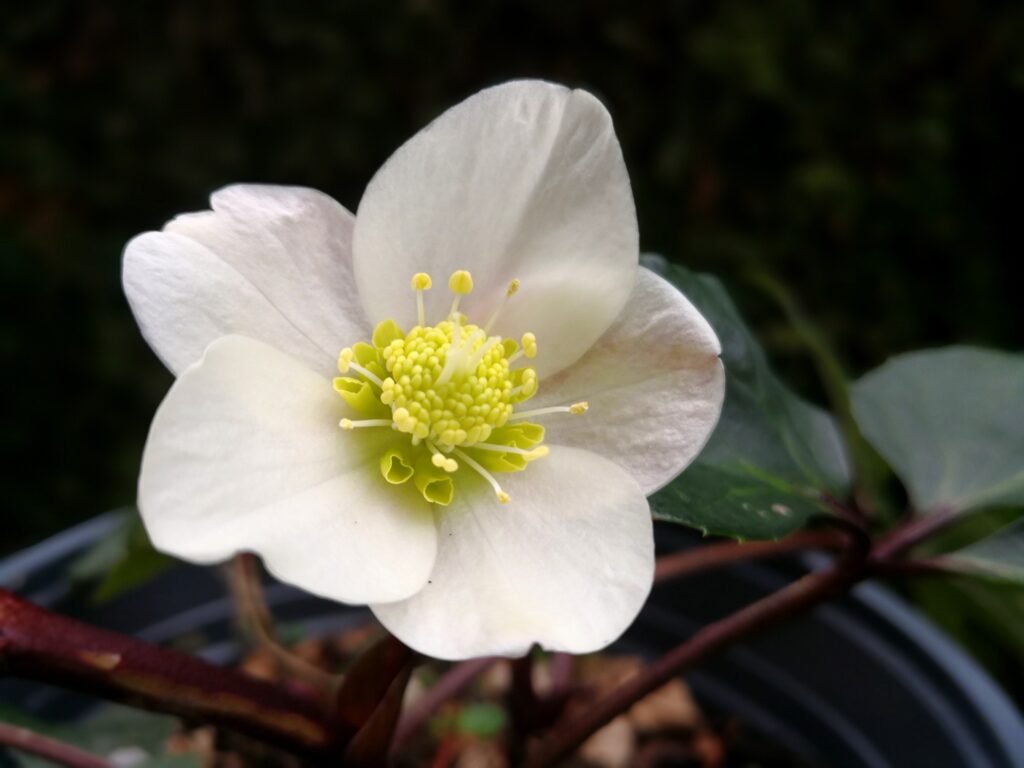
🌼 What Do Christmas Rose Flowers Look Like?
Christmas rose produces large, bowl-shaped flowers held close to the foliage.
Most are white when they first open.
The flowers contain a prominent cluster of yellow stamens in the center.
Unlike many garden flowers, the showy white parts are sepals rather than petals.
These sepals remain attractive long after the true petals have completed their role.
Flowers may become tinged with pink or green as they mature, extending their ornamental value well beyond the initial bloom period.
🌿 Christmas Rose Foliage
Christmas rose has leathery, dark green leaves divided into multiple leaflets.
In many climates, the foliage remains evergreen through winter.
Severe cold can damage older leaves, but fresh foliage develops as the growing season progresses.
The leaves create a useful ground-level structure beneath trees and shrubs even when the plant is not flowering.
Because older foliage can become spotted or tattered during winter, gardeners sometimes remove damaged leaves before the flowers open.
This makes the new blossoms easier to see.
✂️ Should You Cut Back Christmas Rose Leaves?
Yes, but only when needed.
Remove:
- Dead leaves
- Damaged leaves
- Disease-spotted foliage
- Badly weathered old leaves
Late winter or early spring is a convenient time to clean up the plant.
Cut individual leaves near their base using clean pruning shears.
Avoid removing healthy foliage unnecessarily.
Healthy leaves help produce energy for the plant.
Cleaning away damaged foliage can improve appearance and reduce the amount of disease material around the crown.
✂️ Should You Deadhead Christmas Rose?
Deadheading is optional.
The fading flowers remain attractive for a long time because the sepals gradually change color instead of dropping immediately.
If you want seedlings, allow the flowers to mature naturally.
If you prefer a tidy appearance or want the plant to direct less energy into seed production, remove spent flower stems near their base.
Wear gloves while handling hellebores because the sap can irritate sensitive skin.
🌾 Does Christmas Rose Need Fertilizer?
Christmas rose generally needs only modest feeding.
In fertile garden soil, a layer of compost or leaf mold in spring is often enough.
Another light application after flowering can help replenish nutrients.
Avoid excessive fertilizer.
Heavy nitrogen feeding encourages foliage at the expense of balanced growth and flowering.
A slow-release balanced fertilizer can be used if the soil is poor, but follow the product instructions carefully.
Improving the soil with organic matter is generally more useful than frequent feeding.
🍂 Should You Mulch Christmas Rose?
Yes.
A layer of organic mulch helps:
- Conserve soil moisture
- Moderate soil temperatures
- Suppress weeds
- Improve soil as it decomposes
- Protect shallow roots
Good materials include:
- Leaf mold
- Compost
- Shredded leaves
- Fine bark mulch
Apply about 2 inches around the root zone.
Keep mulch away from the crown to reduce the risk of rot.
Leaf mold is particularly suitable because Christmas rose naturally thrives in woodland-style conditions.
🌳 Christmas Rose Beneath Trees
Beneath deciduous trees can be one of the best locations for Christmas rose.
The plant receives relatively bright conditions in winter while trees are bare.
By summer, the tree canopy creates protective shade.
This seasonal pattern closely matches the conditions hellebores naturally prefer.
However, large tree roots can compete strongly for moisture.
Newly planted Christmas roses beneath mature trees may need more regular watering during their first several years.
Adding organic mulch can reduce competition and help retain moisture.
🌱 Does Christmas Rose Spread?
Christmas rose generally forms a slow-growing clump rather than spreading aggressively.
Over time, established plants gradually become larger.
Seedlings may also appear near the parent plant if flowers are allowed to mature.
These seedlings can take several years to reach flowering size and may differ somewhat from the parent plant.
Because Christmas rose is relatively slow growing, it usually remains easy to manage in perennial borders.
🔄 Can You Divide Christmas Rose?
Christmas rose can be divided, but it generally prefers not to be disturbed.
Older plants can remain in the same location for many years.
If division becomes necessary, early fall or spring can work.
Dig carefully around the plant and lift as much of the root system as possible.
Separate the clump into large healthy sections rather than many tiny pieces.
Replant immediately and water thoroughly.
Divided plants may take time to settle before flowering strongly again.
For this reason, division should generally be performed only when necessary.
🌰 Growing Christmas Rose From Seed
Christmas rose can be grown from seed, but patience is essential.
Fresh seed usually germinates more successfully than seed that has been stored for a long period.
The seeds undergo complex seasonal temperature cycles before sprouting.
Germination can therefore take many months.
Seedlings also require several years before reaching flowering size.
Named cultivars may not come true from seed.
Gardeners who want a particular flower form or growth habit should purchase nursery-propagated plants.
🪴 Can Christmas Rose Grow in Containers?
Yes.
Christmas rose can grow successfully in containers, especially where gardeners want winter flowers near an entrance or patio.
Choose a substantial pot with drainage holes.
Use a high-quality potting mixture that retains some moisture while draining freely.
Place the container in partial shade or bright filtered light.
Check moisture regularly because container soil dries more quickly than garden soil.
Avoid leaving the pot sitting in standing water.
In cold climates, roots in containers need additional winter protection because they are more exposed to freezing temperatures.
❄️ Overwintering Christmas Rose in Containers
Container-grown Christmas rose can survive winter where the pot and roots receive adequate protection.
Large containers are more resistant to freezing than small pots.
Move containers to a sheltered location protected from severe wind.
You can also insulate the pot with leaves, straw, or another protective material.
Do not move hardy Christmas roses into a heated house for the winter.
They are outdoor perennials and require cool conditions.
The goal is to protect the roots from extreme temperature fluctuations while allowing the plant to remain dormant naturally.
🌿 Best Companion Plants for Christmas Rose
Christmas rose pairs beautifully with other shade-loving and early-season plants.
Good companions include:
- Hellebore Care
- Cyclamen Care
- Witch Hazel Care
- Hardy Begonia Care
- Trillium Care
- Virginia Bluebell Care
- Bloodroot Care
- Dutchman’s Breeches Care
- Jack-in-the-Pulpit Care
- Snowdrops
- Crocuses
- Ferns
- Woodland sedges
Christmas rose and hardy cyclamen are particularly effective together because both offer flowers and patterned foliage during the colder months.
Witch hazel can provide a taller flowering layer above them.
🌲 Christmas Rose in a Winter Garden
Christmas rose is one of the best perennials for winter-focused planting schemes.
Place it where flowers can easily be seen from:
- A walkway
- A front porch
- A patio
- A kitchen window
- A winter seating area
- A garden entrance
Because the plant remains low to the ground, avoid positioning it behind large evergreen shrubs where flowers will be hidden.
Dark evergreen foliage makes a particularly attractive backdrop for the white flowers.
Combining Christmas rose with snowdrops, cyclamen, witch hazel, and winter jasmine can produce color across several levels of the winter garden.
🐝 Does Christmas Rose Attract Pollinators?
Christmas rose can provide nectar and pollen for insects active during mild winter and early-spring weather.
Bumblebees and other early-emerging pollinators may visit the flowers.
The plant’s unusually early flowering period makes it particularly valuable because relatively few other flowers may be available.
For a stronger pollinator garden, combine Christmas rose with native spring, summer, and fall flowers so food remains available across much of the year.
Avoid using insecticides on or around flowering hellebores.
🐛 Common Christmas Rose Pests
Christmas rose generally experiences relatively few severe pest problems.
Potential pests include:
- Aphids
- Slugs
- Snails
- Vine weevils
- Hellebore aphids
Slugs and snails may damage young foliage, particularly in moist shaded gardens.
Aphids can gather on flower stems and new growth.
Regular inspection makes infestations easier to manage before they become severe.
Avoid unnecessary pesticide use when pollinating insects are visiting the flowers.
🍄 Common Christmas Rose Diseases
Several diseases can affect hellebores.
Potential problems include:
- Hellebore leaf spot
- Crown rot
- Root rot
- Downy mildew
- Botrytis
- Hellebore black death
Hellebore black death is a serious viral disease characterized by dark streaks or markings on leaves, stems, or flowers.
Plants strongly suspected of having black death should generally be removed and discarded rather than composted.
Good spacing, proper drainage, and regular removal of heavily damaged foliage help reduce common disease problems.
🍃 What Is Hellebore Leaf Spot?
Hellebore leaf spot is a fungal disease that can create dark brown or black spots on leaves and stems.
Older foliage is often most affected.
Remove infected leaves and dispose of them away from the planting area.
Avoid repeatedly splashing water onto the foliage.
Good airflow also helps leaves dry more quickly.
Minor spotting may be largely cosmetic, but severe infections can weaken the plant over time.
❓ Why Isn’t My Christmas Rose Flowering?
Several conditions can reduce flowering.
The Plant Is Too Young
Recently planted or seed-grown Christmas roses may need time to establish.
Too Much Shade
Although the plant likes shade, very dark conditions can reduce flowering.
Too Much Nitrogen
Excess fertilizer can encourage foliage rather than blooms.
Poor Drainage
Root stress caused by wet soil can reduce vigor and flowering.
Recent Division
Plants disturbed or divided recently may need time to recover.
Once established in the right conditions, Christmas rose generally becomes a dependable seasonal bloomer.
❓ Why Are My Christmas Rose Leaves Turning Yellow?
A few yellow leaves can be normal as older foliage ages.
Widespread yellowing may indicate:
- Excess water
- Poor drainage
- Severe drought
- Root stress
- Nutrient imbalance
Check the soil before adding more water or fertilizer.
If it remains saturated, drainage is likely the first issue to address.
Yellow foliage that appears naturally at the end of the season can simply be removed.
❓ Why Are My Christmas Rose Leaves Turning Black?
Dark spots can indicate hellebore leaf spot or another fungal disease.
Remove badly affected leaves and keep the area around the crown clean.
Black streaks that follow the veins or appear on stems and flowers can be more concerning because they may indicate hellebore black death.
If unusual black streaking spreads through the plant, seek local horticultural guidance or remove the affected specimen to protect nearby hellebores.
❓ Why Is My Christmas Rose Drooping?
Flowers and stems can droop during periods of severe cold.
This does not necessarily mean the plant is dying.
Hellebores frequently recover as temperatures rise.
Drooping during warm weather may instead indicate:
- Dry soil
- Root damage
- Excessive heat
- Waterlogged soil
Check moisture before watering.
A plant wilting in wet soil may be suffering from root problems rather than drought.
❓ Why Didn’t My Christmas Rose Come Back?
Christmas rose is hardy, but plants can still fail when growing conditions are poor.
Common causes include:
- Waterlogged winter soil
- Crown rot
- Root disease
- Severe summer drought
- Planting too deeply
- Extreme heat
Do not give up too early in spring.
New growth may appear later than expected after a cold winter.
If the plant has genuinely died, improve drainage before replacing it.
🦌 Is Christmas Rose Deer Resistant?
Christmas rose is generally considered highly resistant to deer browsing.
The plant contains toxic compounds that make it unappealing to many herbivores.
Rabbits also tend to avoid it.
However, no plant is completely deer-proof.
Animals experiencing severe food shortages may investigate plants they normally ignore.
One advantage of Christmas rose is that it often performs well in woodland-edge gardens where deer pressure can make growing other ornamental perennials difficult.
☠️ Is Christmas Rose Poisonous?
Yes.
Christmas rose contains toxic compounds and should not be eaten.
All parts of the plant should be treated as poisonous.
The sap can also irritate the skin of sensitive individuals.
When pruning, dividing, or handling the plant extensively:
- Wear gloves.
- Avoid touching your eyes or mouth.
- Wash your hands afterward.
- Keep cut material away from children and pets.
- Do not use any part of the plant in food or homemade remedies.
Christmas rose should be treated strictly as an ornamental plant.
🐾 Is Christmas Rose Toxic to Dogs and Cats?
Yes. Hellebores are toxic to dogs, cats, and other animals if eaten.
Possible symptoms can include:
- Drooling
- Vomiting
- Diarrhea
- Abdominal discomfort
- Lethargy
More serious effects are possible depending on the amount consumed.
Pets that routinely chew garden plants should not have unrestricted access to Christmas rose.
If you suspect a pet has eaten hellebore material and develops symptoms, contact a veterinarian or animal poison-control service.
👶 Is Christmas Rose Safe Around Children?
Children should be taught not to handle or eat Christmas rose.
The flowers can be tempting because they appear during winter when few other plants are blooming.
Avoid planting hellebores immediately beside children’s play areas if young children are likely to pick flowers or leaves.
Older children can safely enjoy the plant visually when they understand that it should not be eaten and that sap contact should be avoided.
🏡 Where to Plant Christmas Rose
Christmas rose works particularly well in cool, partially shaded areas.
Good locations include:
- Woodland gardens
- Winter gardens
- Shade gardens
- Beneath deciduous trees
- Under large shrubs
- Shaded perennial borders
- Cottage gardens
- North-facing beds
- East-facing beds
- Along winter walkways
- Large outdoor containers
Avoid hot, exposed locations receiving intense afternoon sun.
Also avoid low areas where water remains standing during winter.
🌱 Is Christmas Rose Easy to Grow?
Christmas rose can be an exceptionally long-lived perennial when planted in suitable conditions.
Its essential care requirements are straightforward:
- Provide partial shade.
- Use fertile, humus-rich soil.
- Make sure drainage is excellent.
- Water regularly during establishment.
- Provide supplemental water during prolonged drought.
- Mulch with compost or leaf mold.
- Avoid unnecessary transplanting or division.
- Remove damaged foliage when necessary.
- Wear gloves when handling the plant.
- Keep it away from children and pets that may eat vegetation.
The biggest secret is simply leaving an established plant alone.
Christmas rose dislikes repeated disturbance but can thrive for many years when allowed to settle permanently into a suitable woodland-style bed.
🌸 Final Thoughts
Christmas rose is one of the most rewarding perennials for gardeners who want genuine flowers during winter. Its pristine white blooms can emerge while much of the landscape is dormant, sometimes pushing through snow and enduring freezing conditions before recovering when temperatures rise.
Successful Christmas rose care depends on recreating the cool, woodland conditions it prefers. Give Helleborus niger partial shade, fertile soil rich in organic matter, consistent moisture during dry periods, and excellent drainage throughout winter.
Once established, resist the temptation to move or divide it unnecessarily. Allow the clump to mature gradually, remove weathered leaves when needed, and provide a layer of compost or leaf mold each year.
Combined with Cyclamen, Witch Hazel, snowdrops, and other winter-blooming plants, Christmas rose can transform a quiet shaded bed into one of the most interesting parts of the garden during the coldest months of the year.
🔗 Related Articles
- Hellebore Care
- Cyclamen Care
- Witch Hazel Care
- Hardy Begonia Care
- Winter Jasmine Care
- Trillium Care
- Virginia Bluebell Care
- Bloodroot Care
- Dutchman’s Breeches Care
- Jack-in-the-Pulpit Care