Cornelian cherry dogwood is a large deciduous shrub or small tree valued for its very early yellow flowers, attractive exfoliating bark, dense foliage, and bright red fruits that ripen in late summer. Botanically known as Cornus mas, it is one of the earliest woody plants to flower, often blooming before forsythia and long before most flowering dogwoods begin their spring display.
Despite the name, Cornelian cherry is not a true cherry. It belongs to the dogwood genus, Cornus. Its small yellow flowers appear in clusters along bare branches during late winter or very early spring, bringing color to the garden when few other trees and shrubs are blooming.
Once established, Cornelian cherry dogwood is durable and adaptable. It tolerates full sun or partial shade, several soil types, and periods of drought better than many flowering dogwoods. It can be grown as a multi-stemmed shrub, an informal hedge, or trained into a small tree, making it useful in wildlife gardens, mixed borders, edible landscapes, and early-season ornamental plantings.
🌼 Cornelian Cherry Dogwood at a Glance
- Botanical name: Cornus mas
- Common names: Cornelian cherry dogwood, Cornelian cherry
- Plant family: Cornaceae
- Plant type: Deciduous shrub or small tree
- Mature height: About 15 to 25 feet
- Mature spread: About 12 to 20 feet
- Sun exposure: Full sun to partial shade
- Soil: Adaptable, preferably moist and well drained
- Bloom time: Late winter to early spring
- Flower color: Yellow
- Fruit: Bright red, cherry-like drupes
- Fruit season: Late summer
- Foliage: Green in summer, sometimes developing reddish-purple fall color
- Water needs: Moderate during establishment; relatively drought tolerant later
- Growth rate: Slow to moderate
- Wildlife value: Early flowers support insects, while fruits may attract birds
🌿 What Is Cornelian Cherry Dogwood?
Cornelian cherry dogwood is a Eurasian member of the dogwood genus.
Unlike the familiar flowering dogwood, Cornus florida, which is known for large showy bracts, Cornus mas produces clusters of many tiny yellow flowers.
These appear directly along the bare branches before the leaves emerge.
The plant naturally develops as a large multi-stemmed shrub, but gardeners can train it into a small tree by selecting one or several strong trunks.
Older plants may develop attractive gray-brown bark that exfoliates in patches, adding winter interest after the leaves have fallen.
🍒 Is Cornelian Cherry Really a Cherry?
No.
Cornelian cherry is a dogwood, not a member of the cherry genus Prunus.
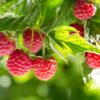
The common name comes from its bright red, oval fruits, which resemble elongated cherries.
Botanically, the fruits are drupes containing a single hard stone.
This distinction matters because the care, growth habit, and flowering pattern of Cornelian cherry dogwood are very different from those of true cherry trees.
🌼 When Does Cornelian Cherry Dogwood Bloom?
Cornelian cherry dogwood typically blooms in late winter or very early spring.
In mild climates, flowers may begin appearing in February.
Farther north, the main display may occur in March or early April.
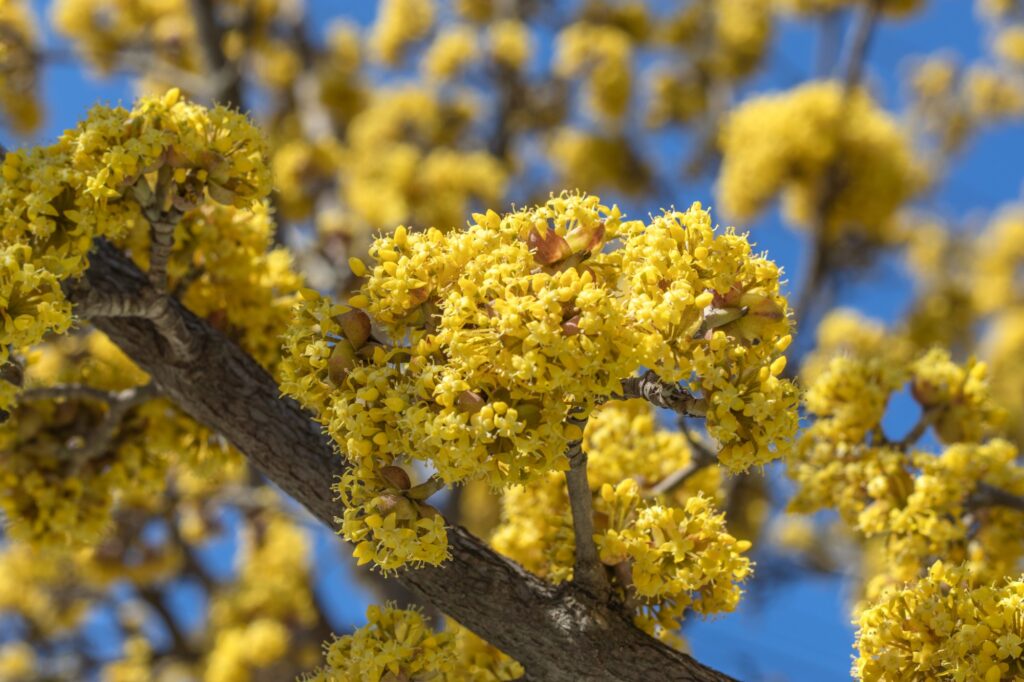
The small yellow flowers form rounded clusters along bare branches before the leaves unfold.
Because of this extremely early flowering period, Cornus mas can provide color several weeks before many conventional flowering shrubs begin blooming.
It often overlaps with witch hazel, hellebores, winter heath, and early spring bulbs.
🌸 What Do Cornelian Cherry Flowers Look Like?
Individual flowers are quite small.
They have four narrow yellow petals and are grouped together in dense clusters.
From a distance, the numerous flower clusters create a yellow haze along the branches.
Although the flowers are less dramatic individually than those of traditional flowering dogwood, their sheer abundance and early appearance make mature plants highly ornamental.
The flowers can also provide an early food source for insects active during warm late-winter and early-spring weather.
☀️ How Much Sun Does Cornelian Cherry Dogwood Need?
Cornelian cherry dogwood grows in full sun to partial shade.
For the heaviest flowering and fruiting, full sun is generally best.
Aim for at least six hours of direct sunlight per day if fruit production is important.
Partial shade is also tolerated, particularly in hot climates.
Plants growing in some shade may develop a slightly more open form and produce fewer flowers and fruits.
A site with morning sun and light afternoon shade can work particularly well where summers are hot.
🌱 Best Soil for Cornelian Cherry Dogwood
Cornelian cherry dogwood is adaptable to several soil types.
It performs well in:
- Loamy soil
- Clay
- Sandy loam
- Moderately fertile garden soil
- Slightly acidic soil
- Neutral soil
- Mildly alkaline soil
The ideal site has moist, well-drained soil, but established plants tolerate temporary dry conditions surprisingly well.
Avoid areas where water remains standing for long periods.
Adding compost to poor soil can improve structure and moisture retention, but this is not a shrub that requires exceptionally rich ground.
💧 How Often Should You Water Cornelian Cherry Dogwood?
Newly planted Cornelian cherry dogwood should be watered regularly while its roots become established.
During the first growing season, provide a deep watering when rainfall is insufficient and the upper few inches of soil begin to dry.
Once established, the plant becomes fairly drought tolerant.
Mature specimens may require supplemental irrigation only during extended periods of hot, dry weather.
Deep watering is more useful than frequent shallow sprinkling because it encourages the root system to develop farther into the soil.
⚠️ Can You Overwater Cornelian Cherry Dogwood?
Yes.
Although Cornelian cherry dogwood tolerates moist soil, constantly saturated roots can still lead to problems.
Possible symptoms include:
- Yellowing leaves
- Weak new growth
- Wilting despite wet soil
- Branch dieback
- Root decline
Before watering an established plant, check the soil beneath the surface.
If it remains wet, additional irrigation is unnecessary.
Good drainage is particularly important in heavy clay or low areas where water collects after storms.
🌡️ Temperature and Climate
Cornelian cherry dogwood is very cold hardy.
It is commonly grown across approximately USDA Zones 4 through 8, with some selections tolerating slightly colder or warmer conditions.
Its early flowers are also surprisingly tolerant of cold weather.
Summer heat is generally manageable once the tree is established, especially if the roots have access to consistent moisture.
In hotter regions, light afternoon shade and mulch can help reduce stress.
🌿 How to Plant Cornelian Cherry Dogwood
Spring or fall are good planting seasons.
Choose a location with enough room for the plant to mature into a large shrub or small tree.
Dig a hole approximately as deep as the root ball and two to three times wider.
Set the plant so the root flare remains level with or slightly above the surrounding soil.
Avoid planting deeply.
Backfill with the original soil, water thoroughly, and apply a broad layer of mulch over the root zone.
Keep mulch away from the trunk.
Continue watering regularly during the first growing season.
📏 How Far Apart Should You Plant Cornelian Cherry Dogwood?
Full-sized Cornelian cherry dogwoods can eventually spread 12 to 20 feet.
For individual specimens, allow enough room for the natural canopy to develop.
If planting several as an informal screen or hedge, spacing them about 8 to 12 feet apart can work, depending on the cultivar and desired density.
Dwarf or compact selections can be planted more closely.
Do not judge spacing by the size of the young nursery plant.
Cornelian cherry dogwood grows slowly, but mature specimens become substantial.
🌳 How Large Does Cornelian Cherry Dogwood Grow?
Most Cornelian cherry dogwoods eventually reach approximately 15 to 25 feet tall.
Their width can reach 12 to 20 feet.
They naturally develop as broad multi-stemmed shrubs, although specimens trained to a single trunk can resemble small ornamental trees.
Growth is relatively slow when young.
That slow pace can make the plant appear compact for several years before the canopy begins expanding more noticeably.
🌱 How Fast Does Cornelian Cherry Dogwood Grow?
Cornelian cherry dogwood has a slow to moderate growth rate.
Young plants may add less than a foot of growth in some seasons.
Do not attempt to force faster development with large amounts of fertilizer.
Steady growth produces a stronger and more attractive specimen.
Providing adequate water during establishment, maintaining a mulch ring, and avoiding root competition from turfgrass are more useful than heavy feeding.
🌳 Shrub or Tree?
Cornelian cherry dogwood can be grown either way.
Left alone, it typically develops several main trunks and forms a broad shrub.
To create a tree form, begin training while the plant is young.
Select one strong central trunk or several well-spaced main stems.
Gradually remove competing basal shoots and lower branches.
Do not remove too much foliage at once.
Training over several years produces a more natural and structurally balanced small tree.
✂️ Does Cornelian Cherry Dogwood Need Pruning?
Very little routine pruning is required.
Remove:
- Dead branches
- Damaged stems
- Diseased wood
- Crossing branches
- Unwanted suckers
- Crowded interior growth
If the plant is being trained as a small tree, pruning is more important during its early years.
Once the desired framework is established, maintenance becomes relatively simple.
Avoid shearing Cornelian cherry dogwood into a rigid shape unless it is intentionally being used as a formal hedge.
✂️ When Should You Prune Cornelian Cherry Dogwood?
If pruning is necessary, do it after flowering.
Pruning during winter can remove flower buds and reduce the early-spring display.
Structural pruning can be performed once flowering has finished but before the plant produces large amounts of new growth.
Dead or broken branches can be removed whenever necessary.
For fruiting plants, remember that heavy pruning can also reduce the amount of fruit produced later in the season.
🌿 Does Cornelian Cherry Dogwood Produce Suckers?
Yes, particularly when grown in its natural multi-stemmed form.
Shoots may develop near the base of the plant.
If you want a broad shrub, some of these can be retained.
If you are training the plant as a single-trunk tree, remove unwanted basal shoots regularly.
Cut suckers as close to their point of origin as possible.
Young suckers are much easier to remove than large woody stems.
🌾 Does Cornelian Cherry Dogwood Need Fertilizer?
Usually very little.
Plants growing in ordinary garden soil generally perform well without regular fertilizer.
An annual layer of compost can provide modest nutrients while improving the soil.
If growth is unusually weak and soil testing suggests a nutrient deficiency, a balanced slow-release fertilizer can be applied in spring.
Avoid excessive nitrogen.
Heavy feeding may produce vigorous leafy growth without improving flowering or fruit production.
🍂 Should You Mulch Cornelian Cherry Dogwood?
Yes.
A mulch ring is especially beneficial for young plants.
Apply approximately 2 to 3 inches of:
- Wood chips
- Shredded bark
- Compost
- Shredded leaves
over the root zone.
Keep mulch several inches away from the trunk.
Mulch conserves soil moisture, moderates root temperatures, and reduces competition from grass.
Expanding the mulch ring as the tree grows can continue benefiting the root system for many years.
🍒 When Does Cornelian Cherry Dogwood Produce Fruit?
Fruit generally ripens from mid- to late summer.
The exact timing depends on cultivar and climate.
The fruits begin green and gradually turn yellowish or orange before reaching their mature red color.
Ripe fruits are usually oblong rather than perfectly round.
They can remain on the plant briefly after reaching full color, although birds and other wildlife may discover them quickly.
🍒 Are Cornelian Cherries Edible?
Yes.
The ripe fruits of Cornus mas are edible.
Their flavor varies by cultivar and degree of ripeness.
Fully ripe fruits can have a tart, sweet-tart flavor sometimes compared with sour cherries or cranberries.
They have traditionally been used in:
- Preserves
- Jams
- Jellies
- Syrups
- Sauces
- Baked goods
The fruit contains a hard stone that must be removed or worked around when processing.
Only consume fruit from a plant that has been positively identified as Cornus mas and has not been treated with pesticides unsuitable for edible crops.
🍒 When Are Cornelian Cherries Ripe?
Fruit is generally ready when it becomes fully red and begins to soften.
Some gardeners wait until the fruits fall naturally or detach very easily from the stem.
Fruit harvested while still firm may be extremely tart.
A simple harvesting method is to spread a clean sheet beneath the tree and gently shake the branches.
Fully ripe fruits may fall onto the sheet.
Because ripening can occur gradually, harvesting may take place over several days or weeks.
🌸 Does Cornelian Cherry Dogwood Need Two Trees to Produce Fruit?
Cornelian cherry dogwood can sometimes produce some fruit when grown alone, but cross-pollination between genetically different plants generally improves fruit set.
For gardeners who want a substantial edible harvest, planting two different cultivars is a good strategy.
Make sure the cultivars bloom at approximately the same time.
One plant may still be perfectly adequate if your main goal is ornamental spring flowers rather than fruit production.
🐝 Cornelian Cherry Dogwood for Pollinators
The extremely early flowers can be valuable to bees and other insects that become active during mild late-winter and early-spring weather.
At this time of year, nectar and pollen sources can still be scarce.
A mature Cornelian cherry dogwood can produce thousands of tiny flowers.
Combine it with other early bloomers such as Witch Hazel, Christmas Rose, and Winter Heath to extend the early flowering season.
🐦 Cornelian Cherry Dogwood for Birds
Birds may eat the ripe red fruits.
This makes Cornelian cherry dogwood useful in mixed wildlife plantings, although gardeners hoping to harvest the fruit may find themselves competing with birds.
The shrub’s dense branching can also provide shelter.
If fruit is intended primarily for wildlife, leave it on the plant and allow birds to harvest naturally.
If you want fruit for the kitchen, monitor ripening closely and harvest before wildlife removes most of the crop.
🍂 Fall Color
Cornelian cherry dogwood is not always grown primarily for spectacular autumn foliage, but the leaves can develop attractive seasonal color.
Depending on weather and cultivar, fall foliage may become:
- Yellow
- Orange
- Red-purple
- Burgundy
The effect varies from year to year.
Even after the foliage drops, mature plants can provide winter interest through their branching structure and exfoliating bark.
🌳 Cornelian Cherry Dogwood Bark
Older specimens can develop attractive bark that peels or flakes in small patches.
Colors may include gray, brown, tan, and reddish-brown.
This is most noticeable on mature trunks and larger branches.
Training the shrub into a small tree can make the bark easier to appreciate because lower trunk sections remain visible.
The bark provides understated winter interest after both leaves and fruits have disappeared.
🌺 Popular Cornelian Cherry Dogwood Cultivars
Several cultivars have been selected for fruit size, ornamental quality, compact growth, or foliage.
🍒 ‘Elegant’
‘Elegant’ is valued primarily as a fruiting selection.
It produces relatively large red fruits and can be useful in edible landscapes.
🍒 ‘Pioneer’
‘Pioneer’ is another cultivar selected for fruit production.
Its relatively large fruits make it appealing to gardeners interested in harvesting Cornelian cherries.
🌿 ‘Variegata’
‘Variegata’ produces green leaves edged or marked with creamy white.
It offers greater foliage interest throughout the growing season than the plain-green species.
Variegated foliage can be particularly effective in partial shade.
🌼 ‘Golden Glory’
‘Golden Glory’ is known for especially abundant yellow spring flowers and a more upright growth habit.
It is an excellent ornamental selection where early-season color is the main priority.
🌳 Cornelian Cherry Dogwood as a Hedge
Cornelian cherry dogwood can be used as a large informal hedge or screen.
Its dense branching provides effective seasonal privacy.
Plants can be allowed to grow naturally or pruned selectively after flowering.
Avoid frequent severe shearing if flowers and fruit are important.
The plant works best in hedges where there is enough space for some natural arching and branching.
Its early yellow flowers can make a long hedge particularly impressive in late winter or early spring.
🪴 Can Cornelian Cherry Dogwood Grow in Containers?
Young or compact Cornelian cherry dogwoods can be grown temporarily in large containers, but full-sized plants are better suited to the ground.
A mature specimen develops too much root and canopy growth for most ordinary pots.
If container growing is necessary, choose:
- A very large pot
- Excellent drainage
- A sturdy potting mixture
- Regular watering
- A compact cultivar
Container roots are also more vulnerable to extreme winter temperatures.
For permanent container displays, a smaller shrub is usually easier to manage.
🌱 Propagating Cornelian Cherry Dogwood From Seed
Cornelian cherry dogwood can be grown from seed, but germination is slow.
The hard stones contain seeds that typically require extended periods of warm and cold stratification before they sprout.
The process can take well over a year.
Seed-grown plants may also differ from the parent cultivar.
For gardeners primarily interested in fruit quality or a particular ornamental trait, purchasing a named grafted or clonally propagated plant provides more predictable results.
✂️ Propagating Cornelian Cherry Dogwood From Cuttings
Cornelian cherry dogwood can also be propagated from cuttings, although rooting can be less straightforward than with many soft-stemmed shrubs.
Softwood cuttings can be attempted during the growing season.
Choose healthy young shoots, remove the lower leaves, and place them into a free-draining propagation medium.
Maintain humidity while roots develop.
Named cultivars need to be propagated vegetatively if you want new plants with the same characteristics as the parent.
🌿 Best Companion Plants for Cornelian Cherry Dogwood
Cornelian cherry dogwood combines particularly well with other shrubs and perennials offering winter and early-spring interest.
Good companions include:
- Witch Hazel Care
- Forsythia Care
- Christmas Rose Care
- Hellebore Care
- Cyclamen Care
- Winter Heath Care
- Beautyberry Care
- Skimmia Care
- Snowdrops
- Crocuses
- Daffodils
Planting hellebores, cyclamen, or early bulbs beneath Cornelian cherry dogwood creates color at ground level while the yellow flowers provide a taller canopy above them.
🌲 Cornelian Cherry Dogwood in a Winter Garden
Cornelian cherry dogwood deserves a place in winter and early-spring gardens because it begins flowering long before most conventional trees and shrubs.
Position it where the bare branches can be seen from a window, walkway, or patio.
The yellow blossoms combine beautifully with the deeper colors of witch hazel and the ground-level flowers of hellebores and cyclamen.
A dark evergreen background can make the yellow flowers stand out even more dramatically.
🏡 Cornelian Cherry Dogwood as a Specimen Tree
A trained tree-form specimen makes an excellent small ornamental tree.
Its strongest features include:
- Extremely early flowers
- Red edible fruit
- Attractive branching
- Exfoliating bark
- Manageable mature size
Plant it where it has enough space for the crown to develop naturally.
Because the flowers are relatively small, a location where the tree can be seen from moderately close range is preferable to placing it at the far edge of a large property.
🐛 Common Cornelian Cherry Dogwood Pests
Cornelian cherry dogwood generally experiences relatively few serious pest problems.
Occasional issues can include:
- Scale insects
- Borers
- Leaf-feeding insects
- Mites
Healthy established plants usually tolerate minor feeding.
Avoid unnecessary pesticide treatments, especially during flowering, because early pollinators may be visiting the blooms.
Maintaining overall tree vigor through proper watering and mulching is one of the best defenses against pest-related decline.
🍄 Common Cornelian Cherry Dogwood Diseases
Cornelian cherry dogwood is generally considered a durable dogwood and often has fewer disease problems than some ornamental Cornus species.
Potential problems can still include:
- Leaf spots
- Cankers
- Root rot in poorly drained soil
Good air circulation and proper drainage reduce many problems.
Remove dead or diseased branches as needed.
Avoid repeatedly damaging the bark with lawn equipment because wounds can create entry points for disease.
❓ Why Isn’t My Cornelian Cherry Dogwood Flowering?
Several factors can reduce flowering.
The Plant Is Young
Young Cornelian cherry dogwoods may need several years to mature before flowering heavily.
Too Much Shade
Partial shade is tolerated, but full sun usually produces more flowers.
Excessive Pruning
Winter pruning can remove flower buds.
Excess Fertilizer
High nitrogen levels can promote leafy growth rather than flowers.
Environmental Stress
Severe drought, transplant stress, or root problems may reduce bloom production.
Established plants growing in adequate sunlight generally become dependable early-season bloomers.
❓ Why Isn’t My Cornelian Cherry Dogwood Producing Fruit?
Poor fruit production can result from several causes.
Lack of Cross-Pollination
A second genetically different plant may greatly improve fruit set.
Poor Flowering
No flowers means no fruit.
Unfavorable Weather
Cold, wet, or stormy weather during flowering can reduce pollinator activity.
Young Plant
Newly planted trees may need additional time before producing substantial crops.
If fruit is a major goal, plant two compatible cultivars near one another.
❓ Why Are My Cornelian Cherry Dogwood Leaves Turning Yellow?
Yellowing may result from:
- Excess water
- Poor drainage
- Severe drought
- Root stress
- Natural fall color
A few yellow leaves during summer are not necessarily serious.
Widespread yellowing during active growth should prompt an inspection of soil moisture and drainage.
Do not automatically apply fertilizer without first determining whether the roots are stressed.
❓ Why Are My Cornelian Cherry Dogwood Leaves Turning Brown?
Brown leaf edges often indicate drought or heat stress.
Check the soil several inches below the surface.
If dry, provide a thorough soaking.
Brown spots scattered across otherwise healthy leaves may indicate fungal leaf spot.
Minor late-season spotting often causes little long-term harm.
Widespread branch dieback deserves closer investigation for root problems, cankers, or physical damage.
❓ Why Is My Cornelian Cherry Dogwood Growing Slowly?
Slow growth is normal, especially when plants are young.
Cornelian cherry dogwood is not generally a fast-growing ornamental tree.
Growth can become even slower when the plant experiences:
- Severe drought
- Deep shade
- Root competition
- Poor soil
- Waterlogging
Maintain a mulch ring and provide deep watering during dry weather.
Do not compensate for natural slow growth with excessive fertilizer.
🦌 Is Cornelian Cherry Dogwood Deer Resistant?
Cornelian cherry dogwood is often considered to have moderate resistance to deer browsing.
However, no woody plant is completely deer-proof.
Young shoots may still be eaten where deer populations are high.
Protect newly planted specimens if browsing pressure is severe.
Once established and larger, plants are better able to tolerate occasional damage.
🐾 Is Cornelian Cherry Dogwood Safe Around Pets?
Ripe Cornus mas fruits are used as human food, but pets should still be discouraged from consuming large quantities of fallen fruit or chewing plant material.
The hard stones can also present a problem if swallowed.
If a dog or other pet consumes a large quantity of unfamiliar fruit and develops vomiting, diarrhea, abdominal discomfort, or other symptoms, contact a veterinarian.
Avoid confusing Cornelian cherry dogwood with unrelated ornamental plants that may have similarly colored berries.
🏡 Where to Plant Cornelian Cherry Dogwood
Cornelian cherry dogwood is versatile enough for several landscape roles.
Good locations include:
- Specimen plantings
- Wildlife gardens
- Edible landscapes
- Cottage gardens
- Large shrub borders
- Informal hedges
- Winter gardens
- Early-spring gardens
- Mixed tree and shrub borders
- Pollinator gardens
Avoid narrow spaces where a 15- to 25-foot plant will eventually become crowded.
For the best fruit production, choose a sunny location with enough space for two cultivars if cross-pollination is desired.
🌱 Is Cornelian Cherry Dogwood Easy to Grow?
Cornelian cherry dogwood is an adaptable and relatively easy woody plant.
Its basic care requirements are straightforward:
- Plant in full sun to partial shade.
- Provide reasonably well-drained soil.
- Water regularly while the roots establish.
- Give mature plants supplemental water during severe drought.
- Mulch around the root zone.
- Fertilize only when necessary.
- Prune after flowering.
- Train young plants early if a tree form is desired.
- Plant more than one cultivar for improved fruit production.
- Give the mature canopy enough room to develop.
Once established, the plant usually needs far less attention than many other flowering trees and shrubs.
🌼 Final Thoughts
Cornelian cherry dogwood is an excellent choice for gardeners who want interest across several seasons. Its tiny yellow flowers appear in late winter or early spring, brightening bare branches before many familiar flowering shrubs have even begun to wake up.
Later in the year, the shrub develops glossy foliage followed by bright red fruits that can be used in preserves or left for wildlife. Mature plants may also develop attractive exfoliating bark, extending their ornamental value into winter.
Successful care is relatively simple. Give Cornus mas sun or partial shade, provide well-drained soil, water consistently while the plant becomes established, and avoid unnecessary fertilizer or heavy pruning. If fruit production is important, grow two different cultivars nearby for better cross-pollination.
Combined with Witch Hazel, Christmas Rose, Cyclamen, and Winter Heath, Cornelian cherry dogwood can help create a landscape that begins flowering long before the conventional spring garden gets underway.
🔗 Related Articles
- Witch Hazel Care
- Forsythia Care
- Christmas Rose Care
- Hellebore Care
- Cyclamen Care
- Winter Heath Care
- Beautyberry Care
- Skimmia Care
- Winter Jasmine Care
- Sweet Box Care