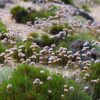
Few spring flowers are as instantly recognizable as forget-me-nots. Their tiny blue blossoms, each centered with a bright yellow or creamy-white eye, can create a soft cloud of color beneath shrubs, along woodland paths, between spring bulbs, or around the edges of a cottage garden.
The plant most commonly grown as the traditional garden forget-me-not is Myosotis sylvatica, also known as woodland forget-me-not. It belongs to the borage family, Boraginaceae, and is native to parts of Europe and Asia. It has since naturalized widely outside its original range, including parts of North America.
Garden forget-me-not is somewhat unusual because it can behave as an annual, biennial, or short-lived perennial depending on climate and growing conditions. In practice, however, many gardeners barely notice the life span of individual plants because Myosotis sylvatica reseeds so freely. One generation flowers, drops seed, disappears, and is replaced by dozens of young plants.
That self-seeding habit can be charming in a cottage garden, but it is also the most important thing to understand before planting forget-me-nots. In suitable moist conditions they can spread enthusiastically, and woodland forget-me-not is considered weedy or regulated in some regions.
There is also more than one plant called forget-me-not. Myosotis scorpioides, commonly called water forget-me-not or aquatic forget-me-not, is a creeping moisture-loving species that can invade wetlands and waterways and is regulated in some states. It should not be casually introduced to ponds, streams, rain gardens, or natural wetlands.
For an ordinary garden bed, this guide focuses primarily on Myosotis sylvatica.
Give it moist but well-drained soil, spring sunshine or partial shade, and enough room to reseed, and forget-me-not can create one of the prettiest informal displays of spring.
⚡ Forget-Me-Not Quick Care Guide
Botanical name: Myosotis sylvatica
Common names: Forget-me-not, garden forget-me-not, woodland forget-me-not, wood forget-me-not
Plant type: Short-lived perennial commonly grown as a biennial or annual
Family: Boraginaceae
Native range: Temperate Eurasia and Madeira
Height: Usually about 6 to 12 inches
Spread: Individual plants commonly about 6 to 10 inches wide, but colonies can spread substantially through seed
Light: Full sun to partial shade
Best light in hot climates: Morning sun with afternoon shade
Soil: Organically rich, moist but well-drained soil
Water: Consistent moisture during active growth
Hardiness: Approximately USDA Zones 3–8 for Myosotis sylvatica
Bloom season: Primarily spring into early summer, with occasional later flowers
Flower colors: Blue is classic; pink and white cultivars are also available
Propagation: Seed
Life span: Usually short-lived, but colonies persist through abundant self-seeding
Deadheading: Optional; deadhead to limit spreading or leave flowers to seed for naturalization
Main problems: Powdery mildew, downy mildew, slugs, and snails
Best uses: Cottage gardens, woodland borders, spring bedding, edging, under shrubs, naturalized areas, containers, and mixed spring displays
Important: Check regional invasive-plant regulations before planting. Myosotis sylvatica and especially aquatic forget-me-not (M. scorpioides) can be problematic or regulated in parts of North America.
💙 What Is a Forget-Me-Not?
Forget-me-nots are small flowering plants belonging to the genus Myosotis.
The genus contains annuals, biennials, and perennials, and different species grow in habitats ranging from woodlands to wetlands and mountain environments.
The familiar garden forget-me-not, Myosotis sylvatica, develops a low mound of softly hairy green leaves.
Slender flowering stems rise above the foliage during spring, carrying clusters of tiny five-lobed flowers.
Most are bright blue with yellow or white centers.
Although each flower is only a fraction of an inch across, a large colony can create an impressive blue haze across the ground.
Forget-me-nots generally look best when allowed to grow in informal groups rather than treated as isolated specimen plants.
🌸 What Do Forget-Me-Not Flowers Look Like?
The classic forget-me-not flower is:
- Small
- Flat-faced
- Five-lobed
- Sky blue
- Marked with a yellow or creamy center
Individual flowers are often only about 3/8 inch across.
They are grouped together in loose branching clusters called cymes.
Because the flowers open successively, one plant can remain colorful for weeks rather than producing all its flowers at once.
The effect is delicate when viewed close up but surprisingly noticeable when dozens of plants flower together.
💙 Why Are Forget-Me-Nots Blue?
Blue is the color most strongly associated with Myosotis sylvatica, but the species and its cultivars are not limited to one shade.
Flowers may be:
- Bright blue
- Pale blue
- Pink
- Rose
- White
Several cultivated strains include mixtures of blue, pink, and white plants.
The yellow eye at the center remains one of the most recognizable features.
🌿 What Does Forget-Me-Not Foliage Look Like?
The leaves are green, simple, and softly hairy.
Their texture is typical of many members of the borage family.
Leaves may be:
- Oblong
- Lance-shaped
- Narrowly oval
They generally reach about 1 to 3 inches long.
The foliage itself is not usually the main ornamental feature. Forget-me-nots are grown primarily for their flowers and the soft naturalized effect created by a colony.
🐭 What Does Myosotis Mean?
The botanical name Myosotis comes from Greek words referring to a mouse’s ear.
The small, softly hairy leaves were thought to resemble mouse ears.
The species name sylvatica refers to woodland or forest-growing habitats.
That name fits the plant well because woodland edges and lightly shaded, moist sites provide some of its best garden conditions.
🌱 Is Forget-Me-Not an Annual, Biennial, or Perennial?
Potentially all three descriptions can apply.
Myosotis sylvatica is botanically a short-lived herbaceous perennial, but gardeners frequently grow it as a biennial.
A typical biennial cycle looks like this:
First year: Seeds germinate and form low leafy plants.
Second spring: Plants flower heavily.
After flowering: Plants produce seed and may decline or die.
In other conditions, the same species can behave more like a short-lived perennial.
Nurseries may also sell forget-me-nots as annual spring bedding plants.
The most practical way to think about them is:
Individual plants may be temporary, but a self-seeding colony can persist for years.
🌱 Forget-Me-Nots Are Excellent Self-Seeders
This is the characteristic that allows forget-me-nots to return so reliably.
Flowers produce numerous seeds.
When allowed to mature, those seeds fall into nearby soil and produce another generation.
Seedlings can appear:
- Around shrubs
- Along paths
- Between larger perennials
- In lightly mulched soil
- At woodland edges
- Between spring bulbs
The effect can be delightful.
It can also become excessive.
Decide before the flowers finish whether you want more forget-me-nots.
✂️ Deadhead If You Don’t Want Hundreds of Seedlings
If you want to keep the colony controlled, remove flower stems promptly as flowering finishes.
NC State Extension specifically recommends deadheading to reduce excessive seeding.
You can even remove entire plants after flowering if you are growing forget-me-nots primarily as spring bedding.
If you want naturalization, do the opposite.
Leave at least some flowering plants in place until the seeds ripen.
A useful compromise is to remove most spent plants while allowing a few carefully chosen groups to reseed.
🌱 Don’t Let Forget-Me-Nots Seed Everywhere Unless You Want Them Everywhere
A romantic blue carpet can become a surprisingly dense population.
Self-seeding is especially successful where soil remains moist and relatively open.
Mulched beds, disturbed soil, and gaps between perennials can quickly fill with seedlings.
Fortunately, unwanted young forget-me-nots are easy to identify and remove.
Pull extras while they are small rather than waiting until every plant is flowering and setting another generation of seed.
⚠️ Can Forget-Me-Nots Become Weedy?
Yes.
Myosotis sylvatica can spread enthusiastically through seed and, in favorable situations, can form colonies.
It has naturalized in portions of North America and is considered weedy or regulated in some regions.
For example, Wisconsin treats woodland forget-me-not as a regulated invasive plant.
That does not mean it behaves identically in every state or garden.
It does mean gardeners should check regional recommendations before deliberately naturalizing it near woodlands or other natural habitats.
Where its spread is considered problematic, choose an appropriate native spring flower instead.
💧 Water Forget-Me-Not Is a Different Plant
One of the most important distinctions involves Myosotis scorpioides.
This species is commonly called:
- Water forget-me-not
- Aquatic forget-me-not
- True forget-me-not
- Marsh forget-me-not
It prefers wet habitats and can spread through both seed and creeping stems.
Water forget-me-not can form large colonies along:
- Streams
- Ponds
- Lakeshores
- Marshes
- Wetlands
- Boggy areas
That ability has made it invasive in some parts of North America.
Wisconsin, for example, regulates Myosotis scorpioides because it can crowd out native wetland vegetation.
Do not assume that a plant labeled simply “forget-me-not” is appropriate for a backyard pond.
Identify the species first.
🌎 Is Garden Forget-Me-Not Native to North America?
No.
Myosotis sylvatica is native to parts of Eurasia and Madeira.
It has been introduced and naturalized in portions of North America.
North America also has native Myosotis species, but they are not necessarily the same plants sold as traditional garden forget-me-nots.
If your goal is a strictly native garden, select a native species appropriate to your region rather than planting M. sylvatica simply because it looks naturalistic.
☀️ How Much Sun Does Forget-Me-Not Need?
Garden forget-me-not grows in full sun to partial shade.
The ideal exposure depends heavily on climate.
In cool spring weather, full sun can produce excellent flowering.
Where spring rapidly transitions into hot summer conditions, partial shade becomes more useful.
A particularly good exposure is:
Morning sun + afternoon shade
This provides enough light for flowering while reducing heat and moisture stress later in the day.
For help understanding different garden exposures, visit Gardening Basics.
🌤️ Forget-Me-Nots in Partial Shade
Partial shade is often ideal.
Woodland forget-me-not naturally suits the conditions around:
- Deciduous shrubs
- Woodland edges
- Open trees
- North- or east-facing borders
- Cottage gardens
Bright shade can also extend flowering and keep plants from drying too quickly.
This is especially valuable where summers arrive early and become hot.
🌞 Can Forget-Me-Nots Grow in Full Sun?
Yes, particularly in cool climates and during spring.
The important companion requirement is moisture.
Full-sun plants dry much faster.
In hot conditions they may decline soon after flowering.
If you want the plants to remain attractive longer, afternoon shade is often preferable.
🌑 Can Forget-Me-Nots Grow in Shade?
They tolerate partial shade very well.
Extremely deep shade can result in:
- Fewer flowers
- Weaker stems
- Looser growth
A woodland border receiving filtered light is better than a completely dark corner beneath dense evergreen growth.
Remember that soil beneath trees may also be much drier than it appears.
🌳 Forget-Me-Nots Beneath Deciduous Shrubs
This is one of their best garden uses.
Forget-me-nots can flower beneath shrubs before the overhead foliage becomes dense.
Their small blue flowers create a low spring layer while shrubs provide height and structure above.
Later, when forget-me-nots decline, expanding shrub foliage hides the empty spaces.
They are particularly effective beneath spring-flowering deciduous shrubs where their blue flowers provide contrast.
🌎 Best Soil for Forget-Me-Nots
Myosotis sylvatica performs best in organically rich, consistently moist, well-drained soil.
Good garden soil can include:
- Loam
- Clay-loam
- Organic-rich woodland soil
The plant is reasonably adaptable as long as moisture remains available.
A bed that dries completely every few days during spring will not produce the same lush growth as one with more even moisture.
Our Garden Soil Guide: Soil Types, Testing, pH & How to Improve It covers drainage, texture, organic matter, and soil testing in greater detail.
💦 How Often Should You Water Forget-Me-Nots?
Forget-me-nots appreciate consistent moisture.
New plants and seedlings are especially vulnerable to drying.
During dry spring weather, inspect the soil regularly.
Water deeply enough to moisten the root zone rather than sprinkling only the surface.
Plants growing in partial shade usually require less frequent watering than plants in full sun.
The soil should remain moist but should not need to remain permanently saturated.
🌧️ Can Forget-Me-Nots Grow in Wet Soil?
Woodland forget-me-not tolerates moist and occasionally wet conditions remarkably well.
NC State Extension even notes some tolerance for shallow standing water.
However, there is no reason to deliberately create waterlogged conditions in a conventional garden border.
Ordinary moist, well-drained soil is ideal.
And remember: if you are selecting a forget-me-not specifically for a pond or stream edge, first identify the species and check local invasive-plant regulations.
🍂 Adding Organic Matter
Finished compost and leaf mold can help improve moisture retention in poor soil.
These materials are particularly useful in woodland-style beds.
Mixing modest amounts of organic matter through the broader bed is preferable to creating tiny isolated planting holes filled entirely with compost.
An organic mulch can also help conserve spring soil moisture.
🍂 Mulching Forget-Me-Nots
Apply a light layer of organic mulch around established plants.
Good materials include:
- Shredded leaves
- Leaf mold
- Fine wood chips
Keep the layer moderate.
If you want forget-me-nots to self-seed freely, an extremely deep mulch can work against you by creating an unfavorable surface for tiny seedlings.
Open soil and fine organic material provide better germination opportunities.
🧪 Soil pH for Forget-Me-Nots
Forget-me-nots are relatively adaptable regarding pH.
RHS guidance for Myosotis sylvatica indicates that plants can grow across acidic, neutral, and alkaline soils when other conditions are suitable.
There is therefore little reason to adjust soil pH specifically for forget-me-nots unless a soil test reveals an extreme condition affecting the entire garden.
Moisture, light, and drainage are more important concerns.
📅 When Should You Plant Forget-Me-Nots?
Spring and fall can both work, depending on how you are growing them.
Spring Plants
Nursery-grown forget-me-nots can be planted in spring for an immediate flower display.
Summer Seed
Seed can be sown during summer to develop plants that flower the following spring.
Fall Seed
Outdoor fall sowing can also mimic natural reseeding.
Because plants are cold hardy, young rosettes can overwinter and resume growth when spring arrives.
🌱 How to Grow Forget-Me-Nots From Seed
Forget-me-nots are very easy to propagate from seed.
For a naturalized planting:
- Prepare moist, relatively fine soil.
- Scatter the seed thinly.
- Press it into the surface.
- Keep the soil consistently moist during germination.
- Thin overly dense seedlings if necessary.
The plants themselves will repeat the process once established.
In many gardens, the challenge quickly changes from “How do I propagate forget-me-nots?” to “How many seedlings should I keep?”
🌱 Starting Forget-Me-Nots Indoors
Forget-me-nots can also be started indoors.
NC State Extension recommends beginning seeds approximately 8 to 10 weeks before the last spring frost when growing them as annuals for flowers during the same year.
Use a seed-starting medium and provide good light once seedlings emerge.
Harden plants gradually before placing them outdoors.
For most cottage or woodland gardens, direct outdoor sowing is simpler.
📏 How Far Apart Should Forget-Me-Nots Be Planted?
Small transplants can generally be spaced roughly 6 to 10 inches apart.
They look best when allowed to create a loose mass.
You do not need to plant hundreds of individual nursery specimens.
A few plants allowed to reseed can eventually create a substantial colony.
When planting near larger perennials, leave enough room that forget-me-not seedlings can occupy temporary spring gaps without smothering emerging crowns.
🌱 Forget-Me-Nots as Spring Bedding
Forget-me-nots make excellent spring bedding plants.
They can be planted among:
- Tulips
- Daffodils
- Other spring bulbs
- Early perennials
- Shrubs
The blue flowers form a low carpet beneath taller spring blooms.
Once flowering is finished, the forget-me-nots can be removed and replaced by summer plants if desired.
This approach prevents uncontrolled self-seeding while still providing the classic spring display.
🌷 Forget-Me-Nots With Spring Bulbs
One of the best uses for forget-me-nots is beneath taller bulbs.
Their soft blue flowers create a living carpet around upright bulb stems.
They also help disguise some of the bare ground between widely spaced bulbs.
Excellent combinations include:
- Yellow daffodils
- White daffodils
- Pink tulips
- White tulips
- Purple tulips
Blue forget-me-nots pair especially well with warm yellow flowers because the colors strongly contrast.
🌼 Forget-Me-Nots With Daffodils
Daffodils are classic companions.
The daffodils rise above the low forget-me-not carpet.
Yellow cultivars create a vivid blue-and-yellow combination.
White daffodils produce a softer woodland palette.
After the display ends, allow daffodil foliage to mature naturally.
Forget-me-nots can be removed or allowed to seed according to your garden plan.
💙 Forget-Me-Nots With Glory of the Snow
Glory of the Snow provides another layer of spring blue.
It begins flowering earlier than many forget-me-nots.
As the bulbs finish, forget-me-nots continue the blue theme.
The combination works particularly well beneath deciduous trees where both plants receive abundant early-season light.
🤍 Forget-Me-Nots With Snowdrops
Snowdrops begin the season much earlier.
By the time forget-me-nots reach full bloom, snowdrop flowers have generally finished and their leaves are replenishing the bulbs.
The growing forget-me-nots can help distract from fading bulb foliage without requiring the snowdrop leaves to be cut prematurely.
💛 Forget-Me-Nots With Winter Aconite
Winter Aconite provides a bright yellow display in late winter and early spring.
Forget-me-nots follow with cool blue.
If the bloom periods overlap, yellow and blue make a particularly strong combination.
Both plants can naturalize, so monitor their spread if the planting needs to remain formal.
🌸 Forget-Me-Nots With Springbeauty
Springbeauty provides delicate white-to-pink flowers in a native woodland-style setting.
The important distinction is ecological.
Springbeauty is native across much of eastern and central North America, while garden forget-me-not is introduced.
In a strictly native woodland garden, springbeauty is generally the better fit within its native range.
In an ornamental cottage garden, the two can provide a soft mixture of blue, white, and pink where regional regulations allow forget-me-nots.
💙 Forget-Me-Nots With Lungwort
Lungwort makes a particularly attractive companion because both plants produce blue spring flowers.
Lungwort forms a longer-lived perennial clump.
Forget-me-nots weave through the gaps around it.
After forget-me-nots finish flowering and decline, lungwort remains as a silver-spotted foliage plant for the rest of the season.
🌿 Forget-Me-Nots With Heuchera
Heuchera supplies colorful foliage beneath and behind forget-me-not flowers.
Good combinations include:
Blue forget-me-nots + caramel Heuchera
Blue forget-me-nots + dark burgundy Heuchera
Pink forget-me-nots + silver or lime Heuchera
Heuchera remains after the short-lived forget-me-nots have completed their cycle, preventing the bed from looking empty.
🌸 Forget-Me-Nots With Lenten Rose
Lenten Rose provides larger flowers above the forget-me-not layer.
Hellebores begin flowering much earlier.
Forget-me-nots then fill the surrounding soil as spring progresses.
Both work well in organically rich, partially shaded gardens.
The hellebores provide the permanent framework while forget-me-nots move around from year to year.
🌸 Forget-Me-Nots With Columbine
Columbine is an ideal cottage-garden companion.
Both plants are informal self-seeders.
Forget-me-nots remain low.
Columbine flower stems rise above them.
Possible combinations include:
- Blue forget-me-nots with red-and-yellow eastern columbine
- Blue forget-me-nots with pink columbine
- White forget-me-nots with blue columbine
Because both can reseed, the exact arrangement changes over time.
That looseness suits cottage and woodland-style gardens particularly well.
🌺 Forget-Me-Nots With Toad Lily
Toad Lily flowers at almost the opposite end of the growing season.
Forget-me-nots provide spring color.
Toad lilies grow throughout summer and bloom during late summer and fall.
The combination allows a partially shaded bed to have flowers near both ends of the season.
🌳 Forget-Me-Nots Under Shrubs
Forget-me-nots work beautifully beneath open deciduous shrubs.
Their roots occupy the upper soil while larger woody plants provide structure.
They are especially good beneath shrubs that leaf out relatively late because spring sunlight can reach the forget-me-nots during peak bloom.
Avoid planting where dense root competition makes the soil chronically dry.
🌹 Forget-Me-Nots Under Roses
RHS lists forget-me-nots as useful for underplanting roses and shrubs.
The combination works because the low blue flowers appear during spring while roses are developing their new growth.
By the time roses become the main attraction, forget-me-nots may already be finishing.
Choose positions where sunlight and moisture remain sufficient for both.
For more on establishing roses, visit How to Grow a New Rose Garden.
🌸 Forget-Me-Nots in a Cottage Garden
This may be their perfect ornamental setting.
A cottage garden allows plants to move.
Seedlings appear between established perennials.
Blue flowers drift into unexpected gaps.
Instead of fighting every volunteer plant, gardeners can edit the display.
Pull seedlings from places where they are unwanted.
Leave them where they improve the design.
This creates a garden that changes naturally each spring without becoming completely uncontrolled.
🌿 Forget-Me-Nots as Groundcover
Forget-me-nots can create a temporary seasonal groundcover.
They are especially effective during spring when many taller perennials are still emerging.
Do not expect them to provide dense, permanent year-round coverage.
After flowering and seed production, plants may become ragged or disappear.
Think of them as a spring groundcover layer, with later plants taking over afterward.
🪴 Can Forget-Me-Nots Grow in Containers?
Yes.
Forget-me-nots are excellent in spring containers.
Use them as low fillers around:
- Spring bulbs
- Pansies
- Violas
- Other cool-season flowers
Choose a pot with drainage holes.
Use quality potting mix.
Keep the container consistently moist.
In warm weather, some afternoon shade can extend flowering.
Once the plants finish, compost them or move selected plants to the garden if regional regulations permit.
💐 Are Forget-Me-Nots Good Cut Flowers?
The individual stems are small, so forget-me-nots are not usually grown as major cutting flowers.
They can, however, add a delicate blue accent to small spring arrangements.
Use them with:
- Daffodils
- Tulips
- Columbines
- Other small seasonal flowers
Cut stems early in the day and place them in water promptly.
Their greatest ornamental value remains in the garden, where large numbers create the classic blue haze.
🐝 Forget-Me-Nots and Pollinators
Forget-me-not flowers can provide nectar and pollen to small spring pollinators.
NC State Extension notes visits by small butterflies and dance flies, while RHS identifies Myosotis sylvatica as useful to bumblebees and butterflies.
The small flowers are most useful when plants grow in substantial groups.
In a wildlife garden, combine them with other spring flowers as well as native plants blooming later in the year.
For broader pollinator-friendly practices, visit Eco-Friendly Gardening.
🦋 Do Butterflies Like Forget-Me-Nots?
Small butterflies may visit the flowers for nectar.
Forget-me-nots should not be treated as the entire butterfly garden, but they can contribute to an early-season sequence of flowering plants.
Use them alongside larger and longer-flowering pollinator perennials.
If native habitat is your priority, favor native host and nectar plants appropriate to your region.
🦌 Are Forget-Me-Nots Deer Resistant?
NC State Extension lists Myosotis sylvatica as resistant to both deer and rabbits.
That does not mean wildlife will never sample the plants.
Browsing behavior varies by region and food availability.
Their ability to reseed also means occasional damage rarely destroys an established colony.
🐌 Slugs and Snails
Slugs and snails may damage forget-me-not foliage, especially in moist shaded gardens.
Look for:
- Irregular holes
- Ragged leaf edges
- Damage to young seedlings
Minor feeding usually does not justify treatment.
For severe infestations, use targeted slug-management strategies rather than broad pesticides that could affect beneficial insects visiting the flowers.
🌫️ Powdery Mildew
Forget-me-nots can develop powdery mildew.
Leaves may develop a white or gray powder-like coating.
Problems can increase when plants are:
- Crowded
- Stressed
- Surrounded by stagnant air
- Beginning to decline after flowering
Because forget-me-nots are inexpensive and short-lived, treatment is rarely worth much effort.
Remove badly affected plants, particularly after they have finished blooming.
🌧️ Downy Mildew
RHS also notes susceptibility to downy mildew in some cultivars and plantings.
Symptoms can include discolored foliage and abnormal growth.
Good spacing and reasonable airflow help reduce disease pressure.
Avoid keeping huge masses of plants crowded together after their main ornamental season has passed.
Removing old plants after flowering can interrupt disease cycles while also preventing unwanted seed.
🍂 Rust
Rust may occasionally occur on Myosotis sylvatica.
Affected foliage develops characteristic rusty or orange-brown spots or pustules.
Again, because these plants are usually short-lived, severely affected specimens can simply be removed.
Avoid propagating obviously unhealthy plants.
🌿 Why Are My Forget-Me-Nots Flopping?
Plants may become loose or floppy when:
- Growing in too much shade
- Crowded together
- Receiving excessive fertilizer
- Approaching the end of their flowering period
This is usually more of an appearance issue than a health problem.
Do not stake individual forget-me-nots.
They are too small and temporary for that to be worthwhile.
Thin the planting or remove tired plants instead.
🍃 Why Are My Forget-Me-Nots Turning Yellow?
Possible causes include:
- Natural post-flowering decline
- Excessive water
- Dry soil
- Crowding
- Root stress
- Disease
Timing matters.
A plant turning yellow after producing flowers and seeds may simply be completing its short life cycle.
Not every declining forget-me-not needs to be rescued.
🌿 Why Are My Forget-Me-Nots Disappearing?
They may simply have finished their life cycle.
Garden forget-me-nots are frequently grown as biennials or short-lived perennials.
After flowering and producing seed, individual plants can decline substantially.
Look nearby for seedlings.
The colony may already be preparing its next generation.
🌱 Why Aren’t My Forget-Me-Nots Coming Back?
Several possibilities exist.
Plants Were Deadheaded Before Seed Set
If the old plants died and no seed was allowed to mature, there may be no next generation.
Seedlings Were Mulched Over
Tiny seedlings can be buried beneath thick mulch.
Soil Became Too Dry
Young plants require moisture.
Seedlings Were Mistaken for Weeds
Forget-me-not seedlings are easy to pull accidentally during garden cleanup.
Regional Climate Is Too Hot
The species prefers cooler spring conditions and may perform poorly where heat arrives very early.
🌱 Why Are Forget-Me-Nots Appearing Everywhere?
Because that is what healthy forget-me-nots often do.
One plant can produce enough seed to create numerous seedlings.
Control them before flowering if you want to reduce the population quickly.
Once another generation sets seed, the cycle continues.
Fortunately, young plants are relatively easy to pull.
✂️ Should You Cut Forget-Me-Nots Back?
There is little reason for formal pruning.
After flowering you can:
Leave the plants: if you want reseeding.
Deadhead them: if you want to reduce reseeding.
Pull the entire plants: if they were being used as temporary spring bedding.
This simplicity is one of the plant’s advantages.
Forget-me-nots do not need shaping, staking, or scheduled pruning.
🍂 Forget-Me-Not Summer Care
By summer, many plants are past their best.
If the foliage becomes:
- Yellow
- Mildewed
- Floppy
- Ragged
remove the old plants.
Seedlings may already be developing elsewhere.
Later-emerging perennials can occupy the space for the rest of the growing season.
Do not feel obligated to keep exhausted forget-me-nots alive until autumn.
🍂 Forget-Me-Not Fall Care
Fall is a useful time to evaluate seedlings.
Young plants that germinated from spring seed can form leafy rosettes before winter.
Thin excessively crowded groups.
Move or remove plants that have appeared in inconvenient places.
Leave selected rosettes to overwinter.
They will provide much of the following spring’s flower display.
❄️ Forget-Me-Not Winter Care
Garden forget-me-nots are very cold hardy.
Established young plants generally need little special protection.
A light snow cover can provide additional insulation.
Avoid smothering small rosettes beneath very thick winter mulch.
In spring, remove heavy debris carefully so you do not accidentally rake out the young plants.
🌱 Forget-Me-Not Spring Care
Spring is when the plants become most active.
As growth resumes:
- Remove heavy debris
- Thin crowded seedlings
- Maintain moisture during dry weather
- Remove obvious weeds
- Add only light mulch
- Enjoy the flowers
Once flowering ends, decide how much reseeding you want.
That decision determines whether your garden has ten forget-me-nots the following spring or hundreds.
🌈 Forget-Me-Not Cultivars
Garden forget-me-nots are available in more than traditional blue.
Cultivars and seed strains may include:
- ‘Victoria Blue’
- ‘Victoria Rose’
- ‘Ultramarine’
- ‘Snowball’
- ‘Blue Basket’
- ‘Pompadour’
The Sylva Series includes selections with blue, pink, and white flowers.
When growing several colors together, expect self-seeded offspring to vary.
If maintaining an exact cultivar matters, replace plants with fresh seed or nursery stock rather than relying entirely on volunteer seedlings.
💙 Blue Forget-Me-Nots
Blue remains the classic choice.
The combination of clear blue petals and yellow centers works particularly well with:
- Yellow daffodils
- Pink tulips
- White flowers
- Burgundy foliage
- Silver leaves
Large drifts generally create more visual impact than isolated plants.
🌸 Pink Forget-Me-Nots
Pink cultivars create a softer cottage-garden effect.
They combine well with:
- Blue columbines
- White daffodils
- Silver lungwort
- Dark Heucheras
A mixed planting of blue, pink, and white cultivars can create an informal pastel display.
🤍 White Forget-Me-Nots
White cultivars work particularly well in partial shade.
Their flowers remain visible in lower light and combine easily with almost any spring color.
Use them around:
- Blue flowers
- Pink tulips
- Dark foliage
- Woodland shrubs
The effect is quieter than classic blue but equally attractive.
🎨 Designing With Forget-Me-Nots
Forget-me-nots are not architectural plants.
Their strength lies in creating a soft seasonal layer beneath more permanent garden structure.
Instead of centering the garden on one forget-me-not plant, use them to weave between:
- Bulbs
- Shrubs
- Perennials
- Paths
- Woodland plants
Then allow later-growing companions to take over after the forget-me-nots decline.
This seasonal layering makes the most of their temporary nature.
🌱 A Simple Forget-Me-Not Spring Garden
For an informal spring border, consider:
Shrub layer: Roses or suitable deciduous flowering shrubs
Tall spring layer: Daffodils and Columbines
Low flower layer: Forget-Me-Nots, Lungwort, and Springbeauty where appropriate
Long-season foliage layer: Heucheras
Late-season layer: Toad Lilies
The forget-me-nots fill the empty spaces during spring.
Heucheras remain as permanent foliage.
Toad lilies later provide fall flowers.
Instead of asking forget-me-nots to look good all year, the garden gives each plant its own season.
⚠️ Common Forget-Me-Not Care Mistakes
Assuming Every Forget-Me-Not Is the Same Species
Garden forget-me-not and aquatic forget-me-not have very different ecological implications.
Allowing Unlimited Seed Production in a Small Garden
Self-seeding can become excessive quickly.
Planting Without Checking Regional Invasive-Plant Guidance
Some Myosotis species are regulated in certain states.
Letting the Soil Become Severely Dry
Forget-me-nots prefer reliable moisture.
Planting in Hot Afternoon Sun
Partial shade is helpful in warm climates.
Covering Seedlings With Thick Mulch
Young plants need access to light and open soil.
Trying to Save Every Plant After Flowering
These are naturally short-lived plants.
Overfertilizing
Rich, soft growth is unnecessary.
Treating Powdery Mildew Like a Major Emergency
After flowering, removing old plants is often the easiest solution.
Assuming a Blue Carpet Is Permanent
Forget-me-nots move, reseed, and change from year to year.
💙 Are Forget-Me-Nots Easy to Grow?
Very easy—sometimes almost too easy.
The basic care is simple:
Give them spring sun or partial shade.
Keep the soil consistently moist.
Provide good drainage.
Allow a few plants to set seed if you want them to return.
Remove flowers before seed ripens if you do not want them spreading.
Thin seedlings when colonies become too dense.
And identify the species before planting near waterways or natural habitats.
Once forget-me-nots establish in favorable conditions, they generally require less effort to maintain than to control.
💙 A Flower Meant to Wander
Forget-me-nots rarely behave like permanent pieces of a garden plan.
One spring, a patch appears beneath a rose.
The next year, seedlings emerge along the path.
Blue flowers fill a gap beside a Heuchera.
A few appear where no one remembers planting them.
Then the original plants fade.
Another generation takes their place.
That movement is part of the appeal.
Forget-me-nots create the impression that the garden arranged itself.
But a natural-looking garden still benefits from a gardener paying attention.
Leave seedlings where they improve the planting.
Remove them where they crowd other plants.
Prevent unwanted spread into natural areas.
And distinguish the charming woodland garden species from aquatic forget-me-not, which can create ecological problems when it escapes.
Managed thoughtfully, Myosotis sylvatica can provide one of spring’s prettiest effects: a loose carpet of tiny blue flowers appearing between bulbs, beneath shrubs, and along garden paths.
The individual plants may be short-lived.
The display does not have to be.
🔗 Related Articles
- Flower Gardening
- Gardening Basics
- Garden Soil Guide: Soil Types, Testing, pH & How to Improve It
- Eco-Friendly Gardening
- Seasonal Gardening
- Columbine Care
- Lungwort Care
- Springbeauty Care
- Heuchera Care
- Lenten Rose Care
- Toad Lily Care
- Snowdrop Care
- Glory of the Snow Care
- Daffodil Care: How to Plant, Grow & Care for Daffodils
- How to Grow a New Rose Garden
📚 Sources & Further Reading
- NC State Extension — Woodland Forget-Me-Not (Myosotis sylvatica)
- Royal Horticultural Society — Garden Forget-Me-Not (Myosotis sylvatica)
- Royal Horticultural Society — Myosotis sylvatica Sylva Series
- Wisconsin DNR — Woodland Forget-Me-Not (Myosotis sylvatica)
- Wisconsin DNR — Aquatic Forget-Me-Not (Myosotis scorpioides)