A garden does not exist separately from the environment around it. Every plant interacts with soil, water, insects, birds, fungi, microorganisms, weather, and the larger landscape.
Eco-friendly gardening is about recognizing those connections and making thoughtful choices that help the garden thrive while reducing unnecessary waste, water use, chemical inputs, and disturbance.
You do not have to completely redesign your yard or follow a rigid set of rules to garden more sustainably. Small changes can make a meaningful difference. Composting leaves instead of throwing them away, choosing plants suited to your climate, watering deeply instead of routinely running sprinklers, allowing flowers to support pollinators, and improving soil instead of relying on constant fertilizer applications are all useful steps.
The goal is not a perfect garden. It is a healthier, more resilient garden that works with natural processes whenever possible.
🌱 Start With Healthy Soil
Healthy soil is one of the foundations of eco-friendly gardening.
Soil is much more than the material that holds plants upright. It is a living system containing roots, fungi, bacteria, insects, earthworms, organic matter, minerals, air, and water.
When soil is healthy, plants can develop stronger root systems and make better use of available moisture and nutrients.
One of the simplest ways to improve many garden soils is by adding organic matter. Finished compost, decomposed leaves, and other appropriate organic materials can help improve soil structure and support biological activity.
Avoid assuming that every garden bed needs large amounts of fertilizer. Test the soil when possible and add nutrients based on actual need.
Our Gardening Soil 101 guide provides a useful introduction to understanding soil, while the Gardening Basics hub covers soil testing, compost, drainage, watering, and other gardening fundamentals.
♻️ Turn Garden and Kitchen Scraps Into Compost
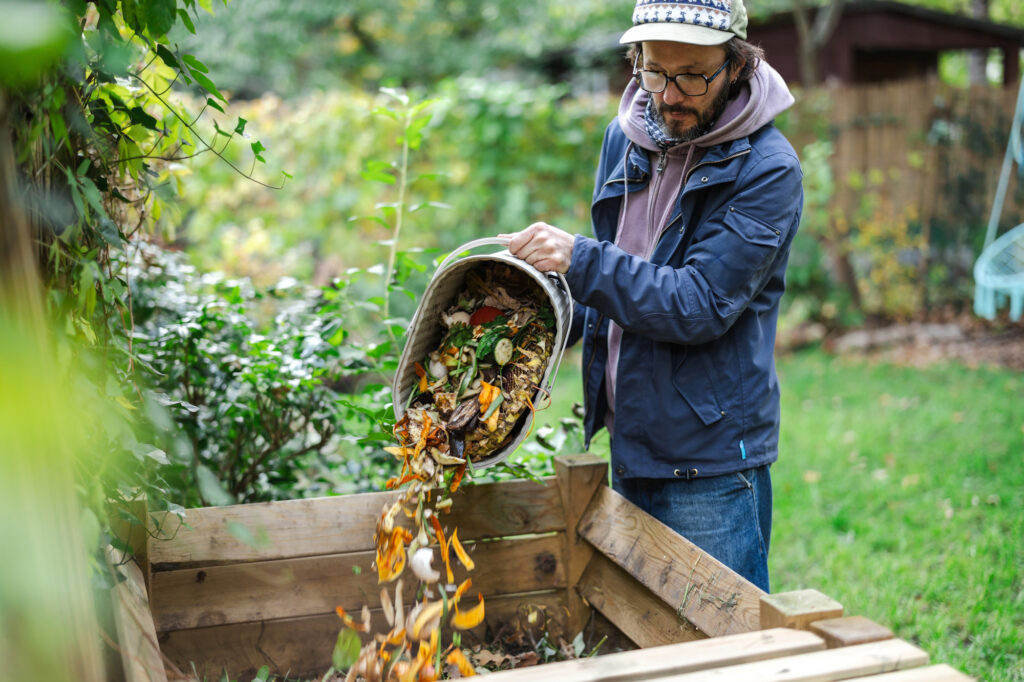
Composting is one of the easiest ways to turn materials that might otherwise become waste into something useful for the garden.
Dry leaves, small twigs, untreated plant material, fruit and vegetable scraps, coffee grounds, and many other organic materials can be composted under appropriate conditions.
A healthy compost pile needs a balance of carbon-rich materials, often called browns, and nitrogen-rich materials, commonly called greens.
Browns can include materials such as:
- Dry leaves
- Small twigs
- Shredded plain cardboard
- Plain shredded paper
- Wood chips in moderation
Greens can include:
- Fruit and vegetable scraps
- Fresh grass clippings
- Coffee grounds
- Green garden trimmings
Water and oxygen are also important because microorganisms perform most of the decomposition.
Composting does not have to involve expensive equipment. A basic backyard pile, enclosed bin, tumbler, or worm-composting system can all work depending on your space and needs.
Finished compost can be incorporated into garden beds, used around established plants, or added to many other parts of the landscape.
🍂 Think Twice Before Throwing Away Leaves
Autumn leaves are often treated as garbage, but they can be one of the garden’s most valuable free resources.
Leaves contain organic material that can return to the soil as they break down. Instead of automatically bagging every fallen leaf for disposal, consider using some of them as mulch, adding them to a compost pile, or allowing them to decompose in appropriate parts of the landscape.
Shredded leaves can be particularly useful because they break down faster and are less likely to form dense mats.
Leaves can also provide habitat for insects and other organisms during winter.
That does not mean every leaf must remain exactly where it falls. Thick layers on lawns can smother turf, and leaves may need to be removed from walkways, drains, and other areas.
The goal is simply to begin seeing leaves as a garden resource rather than automatically as waste.
💧 Use Water More Thoughtfully
Water is essential for gardening, but much of the water applied to landscapes can be lost through evaporation, runoff, poor irrigation placement, or simply watering when plants do not need it.
Before turning on a hose or sprinkler, check the soil.
Plants growing in heavy soil may require watering less often than those growing in fast-draining sandy soil. Established plants may need less frequent irrigation than newly planted ones. Weather, temperature, wind, mulch, and root depth all influence how quickly soil dries.
When watering is necessary, aim to deliver moisture where plant roots can use it.
Soaker hoses and drip irrigation can be useful because they apply water directly to the soil rather than spraying large areas of foliage, pavement, and empty space.
If you use sprinklers, periodically check their pattern. Water landing on a sidewalk or driveway is not helping the garden.
🌧️ Make the Most of Rainfall
Rain is free irrigation.
One of the simplest sustainable gardening habits is allowing natural rainfall to do as much of the watering as possible before supplementing it.
A rain gauge can help you understand how much precipitation your garden actually received rather than relying on guesswork.
Mulching garden beds helps slow evaporation so rainfall remains available to plants longer.
In some locations, rain barrels or other rainwater-capture systems may also be appropriate. Regulations and practical considerations vary, so check local requirements before installing a large collection system.
The landscape itself can also be designed to slow and absorb water rather than sending it immediately toward streets and storm drains.
Healthy soil rich in organic matter generally handles water better than severely compacted or degraded soil.
🍃 Use Mulch to Protect the Soil
Bare soil is exposed to sun, wind, heavy rain, erosion, and rapid moisture loss.
Mulch creates a protective layer between the soil and the surrounding environment.
Organic mulches such as shredded leaves, wood chips, bark, straw, and other plant-based materials can reduce evaporation, suppress many weeds, moderate soil-temperature fluctuations, and gradually contribute organic matter as they break down.
Different parts of the garden may call for different materials.
Wood chips may work well beneath trees and shrubs, while straw or shredded leaves can be practical in vegetable beds.
Avoid creating deep piles of mulch against trunks and stems. Mulch belongs over the root zone, not wrapped around the base of the plant.
A modest layer is generally more useful than an enormous mound.
🌿 Choose Plants Suited to Your Conditions
One of the most environmentally friendly things a gardener can do is choose plants that naturally fit the site.
A plant suited to your sunlight, soil, drainage, climate, and available space is more likely to thrive with less intervention.
Plants constantly struggling against unsuitable conditions may require extra irrigation, fertilizer, pesticides, pruning, or replacement.
Before planting, consider:
- How much sunlight the location receives
- Whether the soil drains quickly or slowly
- Your winter temperatures
- Summer heat
- Typical rainfall
- Mature plant size
- Whether the plant is appropriate for your region
This principle applies to flowers, vegetables, shrubs, herbs, fruit, trees, and houseplants.
The Gardening Basics hub can help you evaluate these conditions before choosing plants.
🌼 Include Native Plants
Native plants can play an important role in wildlife-friendly and lower-input landscapes.
A plant is considered native when it occurs naturally in a particular region without human introduction. Because native plants developed alongside local insects and wildlife, many have valuable ecological relationships with those species.
Native plants can provide nectar, pollen, seeds, foliage, and shelter.
But “native” is not a universal category. A plant native to one part of North America may not be native to another.
When choosing native plants, look for recommendations specific to your state, region, and growing conditions rather than relying on a generic national list.
You also do not need to replace every ornamental plant in your garden overnight. Adding appropriate native species gradually can increase habitat value while allowing you to retain favorite established plants.
🐝 Grow Flowers for Pollinators
Bees, butterflies, moths, beetles, flies, hummingbirds, and other animals help pollinate flowering plants.
A pollinator-friendly garden provides food throughout as much of the growing season as possible rather than producing one enormous burst of flowers followed by months with nothing in bloom.
Choose plants with overlapping flowering periods so something is blooming during spring, summer, and fall.
Different flower shapes support different pollinators, so diversity matters.
Coneflowers can be a useful addition to many North American gardens. Our Coneflower Care guide covers growing these hardy flowering perennials.
Black-eyed Susans, asters, goldenrods, milkweeds, bee balms, blazing stars, and many other plants may also contribute to pollinator habitat when appropriate for your region.
For more flower-growing ideas, explore the Flower Gardening hub.
🦋 Support More Than Adult Butterflies
A butterfly garden should provide more than nectar-producing flowers.
Butterflies have several life stages, and caterpillars often require particular host plants for food.
Monarch caterpillars, for example, depend on milkweeds.
Other butterfly species rely on different host plants.
A garden that supports the entire life cycle may therefore include both nectar plants for adults and host plants for caterpillars.
Some chewing on leaves is part of a functioning wildlife garden.
Instead of expecting every plant to remain completely untouched, decide which areas of the garden can tolerate some feeding by insects.
A few imperfect leaves may represent something much more interesting than damage—they may indicate the garden is supporting wildlife.
🐦 Create Habitat for Birds
Bird-friendly gardening involves more than hanging a feeder.
Plants can provide natural food, shelter, nesting areas, and places for birds to escape predators.
Trees and shrubs with berries or seeds can contribute seasonal food. Dense vegetation may provide shelter, while flowers and native plants support insects that many birds rely on, especially when feeding young.
Leaving some flower seed heads standing through winter can provide additional food.
A clean water source can also attract birds.
Try to create several layers of vegetation rather than relying entirely on one type of plant. Ground-level plants, shrubs, and trees provide different forms of habitat.
Gardening for birds often benefits many other animals at the same time.
🐞 Welcome Beneficial Insects
Not every insect in the garden is a pest.
Lady beetles, lacewings, parasitic wasps, predatory bugs, ground beetles, spiders, and many other small creatures prey on organisms gardeners consider pests.
A garden that supports these predators can develop a more balanced ecosystem.
Flowering plants are especially valuable because some beneficial insects rely on pollen or nectar during part of their life cycle.
Avoid treating an unidentified insect simply because it is present.
Before reaching for a pesticide, determine:
- What insect is this?
- Is it actually damaging the plant?
- How much damage is occurring?
- Are natural predators already present?
- Does the damage justify treatment?
Sometimes the most eco-friendly action is simply to observe.
🐛 Practice Integrated Pest Management
Eco-friendly gardening does not mean ignoring serious pest problems.
Instead, it means beginning with the least disruptive effective solution.
Integrated Pest Management, often shortened to IPM, emphasizes identifying the problem, monitoring its severity, preventing favorable conditions for pests, and choosing controls carefully.
That might involve:
- Selecting resistant varieties
- Rotating vegetable crops
- Removing heavily diseased plant material
- Using physical barriers
- Hand-picking certain pests
- Encouraging natural predators
- Improving spacing and airflow
- Adjusting watering practices
- Applying targeted treatments only when necessary
A small amount of insect feeding does not automatically require intervention.
The goal is not a garden containing no insects. It is a garden where plant damage remains at an acceptable level without unnecessary disruption of beneficial organisms.
🚫 Avoid Routine Pesticide Use
Pesticides can be useful tools in certain situations, but applying them routinely or without identifying a problem can affect organisms other than the intended target.
This is especially important around flowering plants visited by pollinators.
Begin with prevention and identification.
Healthy plants growing in appropriate conditions are often better able to tolerate modest pest pressure. Diverse landscapes can also support predators that help keep some pest populations under control.
When treatment is necessary, choose a product appropriate for the specific pest and plant, follow the label exactly, and consider timing carefully.
More is not better.
A pesticide label is a legal use document as well as a set of application instructions.
🌾 Reduce Unnecessary Fertilizer
Fertilizer is not plant food in the way many advertisements imply.
Plants create sugars through photosynthesis, while mineral nutrients from the soil support growth and other biological processes.
Adding nutrients that the soil does not need can be wasteful and may contribute to environmental problems when nutrients move away from the garden.
A soil test provides a much better basis for fertilization than guessing.
Compost and organic matter can support soil health, but they should not be treated as unlimited substances either. Even organic nutrient sources can be overused.
The best approach is to understand what your soil and plants actually need.
🌳 Plant Trees for the Long Term
Trees can be among the longest-lived plants in a garden.
They can provide shade, wildlife habitat, seasonal interest, and structure while helping transform the character of a landscape.
Because trees are long-term investments, careful placement matters.
Consider mature height and width, overhead utilities, underground infrastructure, buildings, sidewalks, soil conditions, and available root space before planting.
A tree planted in the wrong location may require decades of corrective pruning or eventually need removal.
Our How to Plant a Tree guide provides a starting point for establishing trees successfully.
Choosing an appropriate species and giving it enough space may be far more sustainable than repeatedly trying to control a tree that was never suited to the location.
🥕 Grow Some of Your Own Food
A home food garden can provide fresh herbs, vegetables, berries, and fruit close to the kitchen.
You do not have to try to become completely self-sufficient for gardening to be worthwhile.
A few tomato plants, a bed of greens, fresh herbs, strawberries, or a small fruit tree can all contribute useful food.
Start with crops you actually enjoy eating.
The Vegetable Gardening hub covers raised beds, tomatoes, root vegetables, leafy greens, potatoes, onions, peas, corn, watering, crop rotation, and succession planting.
Our Herbs & Fruit hub explores culinary herbs, strawberries, brambles, apples, pears, plums, and other perennial edible plants.
Even a small edible garden can make productive use of space that might otherwise be ornamental alone.
🏙️ Make Small Spaces Productive
Eco-friendly gardening is not limited to large suburban yards.
Balconies, patios, courtyards, rooftops, community gardens, and small urban spaces can all support plants.
Containers can grow herbs, vegetables, flowers, and even certain compact fruit plants.
Vertical gardening can make use of walls, fences, trellises, and other structures.
Our Small Space, Big Impact: How Urban Gardening Revolutionizes Sustainable Living explores ways limited spaces can still become productive gardens.
The environmental value of a garden does not depend entirely on its size. A small collection of well-chosen flowering plants can still provide food for insects, while a few containers can produce herbs and vegetables for the kitchen.
🌱 Use Raised Beds Thoughtfully
Raised beds can solve genuine gardening problems.
They can improve accessibility, allow gardeners to control soil conditions, provide defined growing spaces, and make gardening possible where existing soil is difficult.
However, raised beds do not automatically make a garden environmentally friendly.
They require materials and often need imported soil or growing media. Some can also dry more quickly than surrounding ground.
Build them where they provide a real benefit rather than assuming every vegetable garden must be raised.
If existing ground soil is healthy and workable, traditional in-ground gardening can be equally productive.
For gardeners who do need raised beds, our Raised Bed Gardening for Beginners guide covers planning, construction, soil, planting, and maintenance.
🧱 Reuse Garden Materials When It Is Safe
Gardens can consume a surprising amount of material.
Pots, stakes, labels, trays, fencing, supports, paving, lumber, and decorative items often get replaced even though they still have useful life remaining.
Reuse what makes sense.
Nursery pots can often be cleaned and reused. Fallen branches may become simple plant supports. Sound bricks or stones can sometimes be repurposed in paths or edging.
However, not every discarded material belongs in a food garden.
Avoid using materials that may introduce harmful chemicals, contaminants, sharp edges, or other hazards.
Repurposing should be practical and safe rather than simply moving waste from one place to another.
🌿 Reduce Plastic Where Practical
Plastic is deeply embedded in modern gardening.
Plant pots, seed trays, irrigation fittings, garden tools, landscape fabric, fertilizer bags, and numerous other products may contain plastic.
Eliminating all of it may be unrealistic, but reducing disposable plastic is possible.
Reuse sturdy nursery pots and trays rather than discarding them after one season. Choose durable tools instead of inexpensive versions that break quickly. Avoid replacing functional containers simply for cosmetic reasons.
Think carefully before installing landscape fabric beneath garden beds. It may appear to offer a permanent weed solution, but soil and organic matter can accumulate above it, weeds can eventually root into that layer, and removing old fabric can become difficult.
Sometimes a thick layer of organic mulch is a simpler long-term approach.
🌱 Avoid Invasive Plants
A plant can be beautiful in a garden and still cause ecological problems beyond it.
Invasive plants are species that spread aggressively outside cultivation and cause ecological or economic harm in areas where they have been introduced.
The same plant may behave very differently in different regions.
Before planting something known for rapid spreading or prolific reseeding, check whether it is considered invasive where you live.
State invasive-species councils, university Extension services, botanical gardens, and government agencies can provide regional guidance.
If you discover an invasive species already growing on your property, research the appropriate removal method before acting. Some plants spread more aggressively when cut incorrectly or when pieces of roots or stems are left behind.
🌼 Replace Problem Plants With Better Choices
Removing an invasive or poorly suited plant leaves an opportunity.
Instead of leaving the area bare, replace it with a plant suited to the same conditions.
Native plants can be excellent replacements, but they are not the only possible choices. A well-behaved nonnative plant may also fit certain gardens.
Consider what the original plant was doing for the landscape.
Was it providing privacy? Flowers? Groundcover? Shade? Erosion control?
Choose a replacement that fills the same functional role while causing fewer problems.
Gardening becomes much easier when plant choices are based on both beauty and function.
🌾 Let Part of the Garden Be a Little Wild
A perfectly manicured landscape offers surprisingly few places for wildlife to live.
Leaving selected areas somewhat less tidy can increase habitat without turning the entire yard into wilderness.
You might leave certain perennial stems standing through winter, allow seed heads to remain, maintain a small brush pile in an appropriate location, or leave leaves beneath shrubs.
Dead wood can provide habitat for insects and other organisms where it does not pose a safety hazard.
The key is intentionality.
A wildlife-friendly section can coexist with neatly maintained paths, patios, vegetable beds, and formal garden areas.
Eco-friendly gardening does not require choosing between nature and a garden you enjoy looking at.
🍁 Delay Some Fall Cleanup
The urge to clear every garden bed immediately after the first frost is understandable, but not all fall cleanup needs to happen at once.
Standing stems and seed heads may provide winter structure, food for birds, and overwintering habitat for insects.
Diseased plant material may still need to be removed, particularly when leaving it could contribute to future disease problems.
But healthy perennial stems do not automatically have to disappear in October.
You can often leave some until late winter or spring.
Our October Gardening and November Gardening guides provide more ideas for managing the transition into winter.
🌷 Plant for More Than One Season
A sustainable garden is more useful when it provides interest and habitat throughout the year.
Spring bulbs can feed early pollinators. Summer flowers provide abundant nectar and pollen. Late-blooming plants extend resources into fall, while seed heads, berries, evergreen foliage, and plant stems can contribute during winter.
Planning for several seasons also produces a more enjoyable garden for people.
Rather than purchasing plants only when the garden center is filled with summer flowers, think about what your yard looks like in February, April, August, October, and December.
The Flower Gardening hub can help you create a longer succession of blooms.
🏡 Consider Reducing High-Maintenance Lawn Areas
Lawns have useful purposes.
They provide spaces for children, pets, games, walking, and outdoor gatherings. There is no reason every environmentally conscious gardener needs to eliminate grass entirely.
But lawn areas that are rarely used may be candidates for something different.
Garden beds, shrubs, native plants, groundcovers, vegetable beds, trees, or meadow-inspired plantings can add diversity to portions of the landscape.
Start small.
Expand a flower border slightly, replace a difficult strip of turf with appropriate plants, or create a bed beneath a tree where grass already struggles.
Reducing lawn does not have to mean replacing the entire yard in one weekend.
✂️ Maintain Plants Instead of Replacing Them
Gardening can easily become a cycle of buying, planting, losing, and replacing.
Better plant selection can reduce that cycle.
Choose species suited to the location and allow them enough room to reach their mature size. Prune because the plant needs pruning, not because it was planted in a space much too small for it.
Divide healthy perennials when appropriate and reuse the divisions elsewhere or share them with other gardeners.
Propagate plants you enjoy.
Our Indoor Plants hub includes propagation principles that can help you create additional plants rather than always purchasing replacements.
Keeping healthy plants thriving is usually more resource-efficient than repeatedly starting over.
🌱 Save Seeds When It Makes Sense
Saving seed can be an enjoyable way to continue favorite plants from one season to the next.
Open-pollinated flowers, vegetables, and herbs can be particularly suitable candidates.
Hybrid plants may not produce offspring identical to the parent plant, so understand what you are growing before expecting exact results.
Some garden plants also cross-pollinate readily, which can create surprises in the next generation.
Seed saving does not have to become a complicated preservation project. Even collecting a few seeds from favorite annual flowers can reduce purchases and add continuity to the garden.
Store properly dried seeds in a cool, dry location and label them with the plant name and collection year.
🌻 Share Plants and Garden Materials
Gardening naturally creates opportunities to share.
Perennials need dividing. Spider plants produce plantlets. Seed packets contain more seeds than some gardeners need. Extra tomatoes appear in August. Pots accumulate in sheds.
Sharing these resources can keep useful materials in circulation.
Local plant swaps, seed libraries, community gardens, neighborhood groups, and gardening clubs can all provide opportunities to exchange plants and seeds.
Just be careful not to share known invasive plants, diseased material, or plants carrying insect pests.
A healthy plant division given to a neighbor can have a much longer useful life than one discarded during routine garden maintenance.
📝 Observe Before You Intervene
One of the most sustainable gardening habits costs nothing.
Wait and observe.
A plant may wilt briefly during the hottest part of a summer afternoon and recover by evening without irrigation. A caterpillar may chew a few leaves without threatening the plant. A small number of aphids may soon attract predators.
Not every garden change requires immediate intervention.
Look closely before deciding what to do.
Ask whether the problem is actually harming the plant, whether it is temporary, whether conditions can be adjusted, and whether natural processes are already correcting it.
Gardening becomes less dependent on products when observation replaces automatic treatment.
🌎 Make Changes One Garden Bed at a Time
Eco-friendly gardening is not an all-or-nothing project.
You do not need to remove your lawn, replace every plant with a native species, install an elaborate rainwater system, produce all your own compost, and stop using every garden product overnight.
Choose improvements that make sense for your property.
Perhaps this year you begin composting and add several pollinator plants.
Next year you improve irrigation and replace one poorly performing shrub with a better-adapted species.
Later, you might convert an unused section of lawn into a flower or vegetable bed.
Small changes accumulate.
A garden that uses a little less water, produces a little less waste, supports more wildlife, and develops healthier soil is already moving in the right direction.
🌿 Create a Garden That Works With Nature
The most sustainable garden is often not the one requiring the most products or the most work.
It is the garden where plants fit their locations, soil becomes healthier over time, water is used thoughtfully, beneficial insects are welcome, and natural materials are allowed to cycle back into the landscape.
There will still be weeds.
There will still be pests.
Some plants will still fail.
Eco-friendly gardening is not about eliminating every imperfection. It is about creating a garden resilient enough that every small problem does not require a major intervention.
Build healthy soil. Grow plants suited to your conditions. Compost what you can. Protect pollinators. Use water carefully. Learn before spraying. Reuse useful materials. Leave a little room for wildlife.
Those individual decisions can gradually create a garden that is productive, beautiful, and alive in ways that extend far beyond the plants themselves.
🔗 Related Articles
- Gardening Basics
- Flower Gardening
- Vegetable Gardening
- Herbs & Fruit
- Indoor Plants
- Gardening Soil 101: Enhancing Your Garden’s Growth and Vitality
- Raised Bed Gardening for Beginners
- Coneflower Care
- How to Plant a Tree
- Small Space, Big Impact: How Urban Gardening Revolutionizes Sustainable Living
- October Gardening: Your Complete Guide to Fall Success
- November Gardening: Winter Preparation and Late-Season Success
📚 Sources & Further Reading
- U.S. Environmental Protection Agency — Composting at Home
- U.S. Environmental Protection Agency WaterSense — Outdoors
- U.S. Environmental Protection Agency WaterSense — Landscaping Tips
- USDA Natural Resources Conservation Service — Soil Health
- Xerces Society — Pollinator Conservation in Yards and Gardens
- Xerces Society — Bring Back the Pollinators