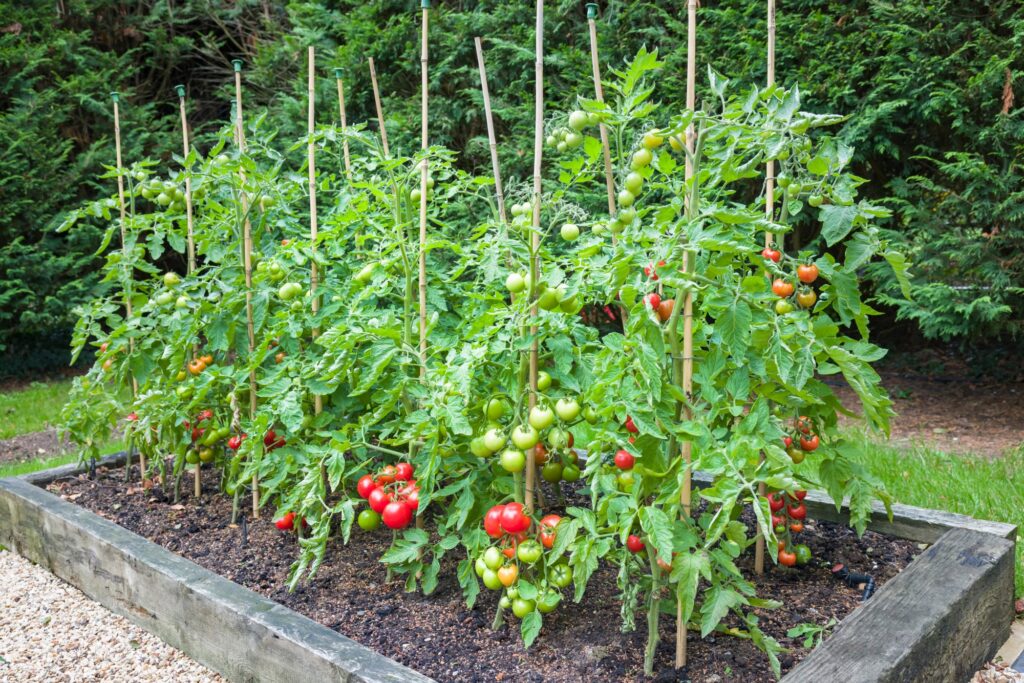
Coffee grounds are one of the most commonly recommended kitchen scraps for the garden. Save them from your morning coffee, sprinkle them around your tomato plants, and supposedly they will add nitrogen, acidify the soil, repel slugs, attract earthworms, prevent disease, and produce enormous tomatoes.
Unfortunately, many of those claims are exaggerated.
Used coffee grounds do contain organic matter and plant nutrients, including nitrogen. That makes them potentially useful garden material. But the safest and most effective way to use them around tomatoes is usually after they have been composted, rather than dumping fresh grounds directly around the plants.
Coffee grounds are also not a reliable way to make soil acidic, and there is little reason to use them as a homemade pesticide. Thick layers can actually create problems by compacting, restricting air and water movement, and potentially interfering with plant growth.
So should you throw your coffee grounds away? Not at all. They can be a useful addition to a compost pile and, once properly decomposed, become part of the organic matter you return to your tomato garden.
The key is knowing what coffee grounds can realistically do — and what they cannot.
☕ Are Coffee Grounds Good for Tomato Plants?
They can be, but composting them first is the better approach.
Used coffee grounds contain organic material and nutrients that become available as microorganisms break them down.
Composted coffee grounds can contribute to healthy garden soil by adding organic matter and becoming part of a diverse finished compost.
What coffee grounds are not is a complete tomato fertilizer.
Tomatoes need an appropriate balance of:
- Nitrogen
- Phosphorus
- Potassium
- Calcium
- Magnesium
- Micronutrients
The amounts already present in your soil matter too.
Adding coffee grounds cannot tell you which of those nutrients are deficient.
A soil test is a much more reliable starting point when you’re trying to improve tomato nutrition.
🌱 What Nutrients Are in Used Coffee Grounds?
Used coffee grounds retain several plant nutrients after brewing.
These may include:
- Nitrogen
- Potassium
- Phosphorus
- Magnesium
- Calcium
- Trace minerals
The exact composition varies according to the coffee and brewing process.
Nitrogen is one of the reasons coffee grounds receive so much gardening attention.
But there is an important distinction.
Much of that nitrogen is contained within organic compounds. It does not instantly dissolve into the soil and become an immediate nitrogen feeding for your tomatoes.
Microorganisms need to decompose the material first.
Coffee grounds therefore make more sense as a compost ingredient and soil-organic-matter source than as a substitute for a properly selected tomato fertilizer.
☕ Are Used Coffee Grounds Acidic?
Not reliably.
This is probably the most persistent gardening myth surrounding coffee grounds.
Brewed coffee itself is acidic, so it seems logical to assume the grounds left behind must also make garden soil more acidic.
In reality, used coffee grounds do not have a consistent enough pH to be treated as a reliable soil acidifier.
As coffee grounds decompose, their pH can also change.
If your soil is too alkaline for tomatoes, adding random quantities of used coffee grounds is not an accurate way to fix the problem.
Test the soil first.
🍅 What Soil pH Do Tomatoes Prefer?
Tomatoes generally perform well in slightly acidic to near-neutral soil.
A range of approximately pH 5.5 to 7.0 is suitable, with somewhere around the mildly acidic part of that range often being ideal.
If your tomatoes are already growing in appropriate soil, there is no reason to try to acidify it simply because tomatoes are sometimes described as acid-loving plants.
Soil that is too acidic can create just as many nutrient problems as soil that is too alkaline.
Use a soil test before attempting to change pH.
For complete growing instructions, see How to Plant Tomatoes.
🚫 Should You Put Fresh Coffee Grounds Directly Around Tomato Plants?
I wouldn’t recommend making this your normal practice.
Freshly used coffee grounds have not yet gone through the decomposition process that makes them a more predictable soil amendment.
Research has found that undecomposed coffee grounds can suppress seed germination and plant growth in some circumstances.
Used grounds can also retain biologically active compounds, including small amounts of caffeine.
Rather than treating fresh grounds as fertilizer, put them into the compost pile and allow microorganisms to process them first.
Once incorporated into finished compost, their nutrients and organic material become part of a much more balanced amendment.
🌿 Can Fresh Coffee Grounds Harm Plants?
Potentially, yes.
One of the reasons gardening advice around coffee grounds has changed is that research has found phytotoxic effects from fresh spent coffee grounds.
Phytotoxic simply means that a substance can interfere with normal plant growth.
The effect depends on:
- Concentration
- Plant species
- Soil conditions
- Decomposition
- Other materials present
A few stray coffee grounds are unlikely to destroy a mature tomato plant.
The greater concern is repeatedly dumping thick amounts around plants or incorporating large quantities directly into garden soil.
When there is a safe and useful alternative — composting them — there is little reason to take that risk.
🌱 Don’t Use Coffee Grounds Around Germinating Tomato Seeds
Coffee grounds are particularly inappropriate for seed-starting mixes.
Young seedlings are much more sensitive than mature plants.
Fresh coffee grounds may interfere with germination or early plant growth.
Start tomatoes in a proper seed-starting medium instead.
Once seedlings have matured and eventually move into the garden, finished compost containing some decomposed coffee grounds can become part of the soil-improvement strategy.
♻️ The Best Way to Use Coffee Grounds for Tomatoes
The simplest recommendation is:
Compost them first.
Instead of carrying the day’s grounds directly to the tomato bed, add them to your compost pile along with a broad assortment of other materials.
Coffee grounds work well with materials such as:
- Dry leaves
- Small plant trimmings
- Vegetable scraps
- Shredded cardboard
- Other appropriate compostable garden materials
Once everything has decomposed into mature compost, spread that finished compost around the garden.
Your tomatoes receive the benefits of many different organic materials rather than an excessive concentration of one ingredient.
🍂 How Much Coffee Can Go Into a Compost Pile?
Coffee grounds should be only one component of a diverse compost pile.
A useful upper limit is approximately 20% of the pile by volume.
That means you don’t want a compost pile made almost entirely from coffee grounds.
Diversity helps create a healthier decomposition process.
Combine the grounds with plenty of other compostable materials rather than collecting enormous amounts and assuming that more coffee automatically means better compost.
☕ Are Coffee Grounds a Green or Brown Compost Material?
Coffee grounds are generally treated as a nitrogen-containing, or “green,” compost ingredient, even though they are literally brown in color.
Pair them with carbon-rich materials such as:
- Dry autumn leaves
- Shredded cardboard
- Paper
- Straw
- Woody plant material
A varied mixture provides a better environment for composting microorganisms than coffee grounds alone.
🌿 Can Composted Coffee Grounds Improve Soil?
Yes.
Once properly composted, coffee grounds become part of the organic matter in finished compost.
Organic matter can help improve:
- Soil structure
- Moisture retention
- Nutrient cycling
- Microbial activity
- Soil aggregation
These benefits are not unique to coffee.
Finished compost made from leaves, garden debris, kitchen scraps, and other appropriate materials provides many of the same advantages.
Think of coffee grounds as one useful compost ingredient, not a miraculous soil treatment.
💧 Can Coffee Grounds Help Soil Retain Water?
Organic matter generally improves the ability of soil to manage moisture.
Composted coffee grounds can contribute to that effect as part of finished compost.
This can be useful around tomatoes because they perform best with relatively consistent soil moisture.
However, there is a major difference between decomposed organic matter incorporated into a healthy soil system and a thick layer of finely textured coffee grounds sitting on the surface.
The latter can compact.
⚠️ Don’t Make a Thick Coffee-Ground Mulch
One of the worst ways to use coffee grounds is piling several inches of them directly around plants.
Individual coffee particles are very fine.
As a thick layer dries and compacts, it can form a dense surface that interferes with:
- Water penetration
- Oxygen movement
- Normal soil gas exchange
This is the opposite of what you want around tomato roots.
Traditional coarse organic mulches are much better.
Options include:
- Shredded leaves
- Straw
- Wood chips in appropriate garden areas
- Other coarse plant materials
🌱 Can You Use Composted Coffee Grounds as Mulch?
If you are using composted coffee grounds separately, keep the layer very thin.
A layer of approximately ½ inch or less can be used when additional organic material is appropriate, followed by a thicker layer of coarse organic mulch.
There is usually no need to make this complicated.
If your grounds have already become part of finished compost, simply use that compost the same way you normally would in the vegetable garden.
🍅 Will Coffee Grounds Make Tomatoes Grow Bigger?
There is no good reason to expect coffee grounds alone to produce unusually large tomatoes.
Tomato size depends on factors such as:
- Variety
- Sunlight
- Soil fertility
- Temperature
- Water
- Root health
- Pollination
- Plant spacing
- Pest and disease pressure
A cherry tomato will not become a beefsteak because coffee grounds were added to the soil.
Even within the same variety, inconsistent watering and poor nutrition can limit fruit size.
Focus on complete tomato care rather than searching for one magic amendment.
🌿 Do Coffee Grounds Provide Enough Nitrogen for Tomatoes?
No.
Coffee grounds contain nitrogen, but that does not make them a complete or immediately available nitrogen fertilizer.
Tomatoes require enough nitrogen to build healthy stems and foliage, but excessive nitrogen can create another problem.
A heavily fertilized tomato may become a huge, dark-green plant that produces relatively few fruits.
Soil testing helps determine whether additional fertilizer is actually necessary.
Coffee grounds cannot replace that information.
⚠️ Too Much Nitrogen Can Be Bad for Tomatoes
Gardeners sometimes assume that if some nitrogen is good, more must be better.
Not with tomatoes.
Excess nitrogen can produce:
- Large amounts of foliage
- Long stems
- Delayed flowering
- Reduced fruiting
If your tomato plants are already enormous, green, and vigorous but producing few tomatoes, adding more nitrogen-rich materials is unlikely to solve the problem.
Balanced fertility matters more than maximum fertility.
🍅 Will Coffee Grounds Prevent Blossom-End Rot?
No.
Coffee grounds are not a reliable treatment for blossom-end rot.
Blossom-end rot appears as a dark, sunken area at the blossom end of developing tomatoes.
It is associated with inadequate calcium reaching the developing fruit.
However, that does not automatically mean your soil lacks calcium.
Problems that interfere with calcium uptake include:
- Irregular watering
- Drought
- Root damage
- Excess fertilizer salts
- Rapid changes in plant growth
Maintaining consistent moisture is often more useful than adding random calcium amendments — and coffee grounds are not the solution.
☕ Do Coffee Grounds Repel Slugs?
There is no strong evidence that ordinary spent coffee grounds scattered around plants provide reliable slug control.
Coffee and caffeine are not the same thing as used grounds.
Even if you read about concentrated caffeine affecting slugs, that does not mean yesterday’s espresso grounds will form an effective slug barrier.
If slugs are damaging tomatoes or neighboring plants, use established management methods instead of depending on coffee grounds.
🐜 Do Coffee Grounds Repel Ants?
Coffee grounds are frequently recommended online as an ant repellent.
Evidence for ordinary garden use is weak.
Ants may temporarily move around disturbed areas or unusual materials, but that does not mean coffee grounds eliminate a colony.
If ants are present around tomatoes, first determine whether they are actually causing a problem.
Ant activity sometimes increases because aphids or other sap-feeding insects are producing honeydew.
Addressing the underlying insect issue may be more useful.
🐌 Do Coffee Grounds Repel Snails?
Do not depend on them.
As with slugs, coffee grounds are not a dependable snail-control method.
A physical layer of grounds may seem unpleasant for snails to cross under some conditions, but rain, decomposition, and moisture quickly change that barrier.
Use proven management strategies if snails are causing significant damage.
🐈 Will Coffee Grounds Keep Cats Out of the Garden?
This is another frequently repeated claim without strong evidence supporting it.
Some animals may dislike certain odors, but individual responses differ.
Do not rely on coffee grounds to protect seedlings or keep cats out of garden beds.
Physical barriers are much more dependable.
🐛 Do Coffee Grounds Repel Tomato Hornworms?
No reliable evidence supports using coffee grounds to control tomato hornworms.
These large caterpillars can be managed effectively in a home garden by inspecting plants and removing them by hand.
You can often find them by looking for missing leaves and dark droppings.
Before treating a hornworm, check for small white parasitoid wasp cocoons attached to its body. Parasitized hornworms can be left in place so beneficial wasps can complete their development.
Coffee grounds add nothing useful to that process.
🪱 Do Coffee Grounds Attract Earthworms?
This claim needs some nuance.
Earthworms can consume decomposing organic materials, including coffee residues, under appropriate conditions.
But sprinkling coffee grounds around tomatoes should not be thought of as a guaranteed method for summoning earthworms into your garden.
Healthy soil with:
- Organic matter
- Moisture
- Minimal disturbance
- Appropriate pH
- Plant residues
is generally a much better strategy for supporting soil organisms.
Coffee grounds are only one possible food material within that larger ecosystem.
🪱 Should You Put Coffee Grounds in a Worm Bin?
Be cautious.
Although earthworms can encounter coffee materials in soil and compost, concentrated coffee grounds in a confined vermicomposting system may create unfavorable conditions.
If you maintain a worm bin, follow established vermicomposting guidance rather than assuming the worms should receive unlimited coffee grounds.
A garden compost pile is a safer place for larger quantities.
🍄 Can Coffee Grounds Prevent Tomato Diseases?
This claim is intriguing but should not be overstated.
Research has found that microorganisms associated with decomposing coffee grounds may suppress certain plant pathogens under controlled conditions.
Some research has included organisms affecting tomatoes.
However, that does not establish coffee grounds as a reliable tomato fungicide in a home garden.
Do not use them instead of basic disease prevention.
Much more important practices include:
- Rotating crops
- Spacing plants properly
- Watering near the soil
- Removing diseased foliage
- Mulching to reduce soil splash
- Choosing resistant cultivars
- Cleaning garden tools
Coffee grounds should not be marketed as a cure for tomato disease.
☕ Can Coffee Grounds Prevent Weeds?
Not in a way that makes them a good weed-control strategy.
A thick layer might physically suppress some tiny seedlings, but that same layer can interfere with air and water movement and potentially affect desirable plants.
If you want to control weeds around tomatoes, use an appropriate mulch.
Straw or another suitable coarse organic material is much more predictable.
🌱 Should You Mix Coffee Grounds Directly Into Garden Soil?
Fresh grounds are better directed to the compost pile.
Don’t assume that digging large quantities into the tomato bed automatically improves the soil.
Organic materials undergo microbial decomposition, and concentrated fresh residues can have unpredictable effects on plants and nutrient availability.
Use finished compost to improve garden soil instead.
This gives decomposition time to occur before the material comes into close contact with tomato roots.
☕ What About a Tiny Amount of Coffee Grounds?
A light accidental scattering of used grounds around an established plant is unlikely to cause catastrophe.
The problem is turning that into a regular practice and gradually building a dense layer.
If you occasionally empty a small amount into a garden bed, don’t panic.
But if you regularly produce coffee grounds, the compost pile is a much better destination.
🪴 Can You Use Coffee Grounds on Container Tomatoes?
I would be even more cautious.
Containers have a limited soil volume.
Anything added to them can have a much greater effect than the same quantity spread through an open garden.
Fresh coffee grounds can:
- Stay wet
- Compact
- Encourage fungal growth
- Alter drainage
- Contribute to excess organic material
Container tomatoes are better grown in quality potting mix and fertilized according to their actual needs.
Finished compost can be used when appropriate, but don’t turn the pot into a disposal place for coffee grounds.
🌱 Coffee Grounds and Tomato Seedlings
Avoid using grounds in seed-starting trays or around newly germinating tomatoes.
Seedlings need:
- Sterile or clean growing medium
- Reliable moisture
- Air around the roots
- Strong light
- Appropriate nutrients
Coffee grounds do not improve those conditions.
A high-quality seed-starting mix is designed specifically to create the balance young roots need.
Save the coffee for composting.
🍅 What Tomatoes Actually Need
If you want healthier tomatoes, focus first on the fundamentals.
Tomatoes need:
Full Sun
Aim for at least 6 to 8 hours of direct sunlight.
Warm Conditions
Plant after frost danger has passed and the soil has warmed.
Good Soil
Use fertile, well-drained soil with plenty of organic matter.
Consistent Water
Avoid repeated cycles of severe drought followed by heavy watering.
Appropriate Fertility
Use soil testing and plant performance to guide fertilizer applications.
Good Airflow
Allow enough spacing to reduce prolonged leaf wetness.
Support
Stake, cage, or trellis plants before they become enormous.
These practices have a far greater effect on your harvest than coffee grounds.
For a complete guide, see How to Plant Tomatoes.
🌿 A Better Way to Use Kitchen Scraps
Coffee grounds illustrate a useful gardening principle:
Kitchen waste does not automatically equal fertilizer.
Many organic materials become much more useful after composting.
A compost pile allows microorganisms to break materials down, transforming a mixture of kitchen and garden waste into a more stable soil amendment.
Instead of giving tomatoes repeated doses of one material, composting creates a more balanced mixture.
♻️ A Simple Coffee-Ground Composting Routine
If your household produces coffee grounds regularly, try this approach:
- Empty used grounds into a kitchen compost container.
- Include the paper filter if it is compostable and free of non-compostable material.
- Transfer everything to the compost pile.
- Mix grounds with dry leaves and other carbon-rich materials.
- Avoid letting coffee grounds become more than about 20% of the pile.
- Maintain appropriate moisture.
- Turn or manage the compost normally.
- Wait until the material becomes mature compost.
- Apply that finished compost to the garden.
This turns a waste product into a genuinely useful soil amendment without asking fresh coffee grounds to perform jobs they aren’t suited for.
🍂 How to Use Finished Compost Around Tomatoes
Finished compost can be incorporated into the garden before planting or used around established tomatoes according to your soil’s needs.
You can also use it as part of a broader mulch system.
Avoid piling compost directly against tomato stems.
A healthy tomato bed may combine:
- Compost-enriched soil
- Consistent irrigation
- A coarse organic mulch
- Appropriate fertilizer when needed
This approach provides a much more stable growing environment than repeated applications of kitchen scraps.
☕ Can Decaf Coffee Grounds Be Used?
Yes.
Decaffeinated grounds can also be composted.
The same principle applies: compost them as part of a diverse mixture rather than making them a concentrated amendment around tomatoes.
Decaf grounds should not be treated as a special fertilizer simply because much of the caffeine has been removed.
☕ What About Unused Ground Coffee?
Do not intentionally add unused coffee grounds to the garden.
Fresh unbrewed coffee is different from spent coffee grounds and contains substantially more compounds that have not been extracted during brewing.
It is also an unnecessarily expensive soil amendment.
Brew the coffee.
Enjoy it.
Compost the spent grounds.
🫖 What About Tea Leaves?
Used tea leaves can also be composted.
If composting tea bags, check what the bag itself is made from.
Some contain synthetic fibers or plastic components and should not be placed in home compost.
Loose tea leaves can simply become another component of a varied compost mixture.
As with coffee, diversity is preferable to concentrating large amounts of one material.
🧪 Soil Testing Beats Garden Myths
One of the most useful habits a gardener can develop is testing rather than guessing.
If tomato plants look unhealthy, don’t immediately assume they need:
- Coffee grounds
- Eggshells
- Epsom salt
- Baking soda
- Banana peels
The actual problem could be:
- Incorrect pH
- Excess nitrogen
- Potassium deficiency
- Poor drainage
- Root disease
- Drought
- Overwatering
- Herbicide exposure
Adding unrelated amendments can make the situation worse.
Start with the growing conditions and, when necessary, test the soil.
🥚 What About Coffee Grounds and Eggshells Together?
Another popular homemade tomato amendment combines coffee grounds and eggshells.
Both are often promoted as solutions for tomato nutrition.
Eggshells contain calcium carbonate, but they break down slowly unless processed very finely and still do not provide a quick cure for blossom-end rot.
Coffee grounds contain organic nitrogen but are not an instant fertilizer.
Both materials can go into compost.
That is usually a more sensible use than placing handfuls of them into every tomato planting hole.
🍌 Coffee Grounds and Banana Peels
Banana peels are often promoted as a homemade potassium fertilizer.
Like coffee grounds, however, they are organic plant material that needs to decompose.
Putting whole banana peels around tomato roots does not instantly transfer all their potassium into the plant.
Add both banana peels and coffee grounds to compost instead.
Let decomposition do the work before returning those nutrients to the garden.
❓ Do Tomatoes Like Coffee Grounds?
Not specifically.
Tomatoes benefit from healthy soil containing appropriate nutrients and organic matter.
Composted coffee grounds can contribute to those conditions as one component of finished compost.
There is no special biological relationship between tomato plants and coffee grounds.
Your tomatoes do not need coffee.
❓ Can I Sprinkle Coffee Grounds Around My Tomatoes?
A tiny amount is unlikely to cause serious damage, but there is little advantage to doing it.
Regularly sprinkling fresh grounds can eventually create a compacted layer.
Composting them first is the better practice.
❓ Will Coffee Grounds Acidify Tomato Soil?
Not reliably.
Do not use coffee grounds as a substitute for testing and properly adjusting soil pH.
Used grounds vary in pH, and their chemistry changes as they decompose.
❓ How Often Should I Put Coffee Grounds on Tomato Plants?
There is no recommended weekly or monthly schedule because fresh coffee grounds do not need to be applied directly to tomato plants at all.
Put them in the compost instead.
Use the finished compost according to your soil’s needs.
❓ Can Too Many Coffee Grounds Hurt Tomatoes?
Yes, potentially.
Large quantities can:
- Compact
- Reduce water infiltration
- Interfere with air movement
- Affect plant growth
- Create undesirable concentrations of undecomposed material
More is definitely not better.
❓ Do Coffee Grounds Replace Tomato Fertilizer?
No.
Coffee grounds do not provide a reliably balanced nutrient profile for fruiting tomato plants.
Use soil testing and an appropriate fertilizer strategy when additional nutrients are required.
❓ Do Coffee Grounds Prevent Pests?
There is no good evidence that ordinary used coffee grounds reliably repel common garden pests such as slugs and other animals.
Do not depend on coffee grounds as pest control.
Identify the pest first and choose a management strategy that actually addresses it.
❓ Are Moldy Coffee Grounds Safe for Compost?
White fungal growth on coffee grounds waiting for the compost pile is often part of normal decomposition.
However, avoid keeping large containers of wet coffee grounds indoors for long periods.
Add them to the compost pile and mix them with other materials.
A balanced pile provides better conditions for decomposition.
🌱 Are Coffee Grounds Worth Saving?
Yes — for compost.
That distinction is important.
Coffee grounds are a readily available organic waste product that doesn’t need to go straight into the trash.
When combined with other compost materials and allowed to decompose, they can ultimately contribute nutrients and organic matter to garden soil.
That is a real benefit.
There is no need to inflate it into eight or ten supposed miracle effects.
☕ Coffee Grounds for Tomatoes: Myth vs. Reality
| Claim | Reality |
|---|---|
| Coffee grounds fertilize tomatoes | They contain nutrients, but composting first is preferable |
| Coffee grounds acidify tomato soil | Not reliably |
| Coffee grounds repel slugs | Not supported as dependable control |
| Coffee grounds attract earthworms | Don’t treat them as an earthworm attractant |
| Coffee grounds prevent tomato disease | Interesting research exists, but garden disease control is unproven |
| Coffee grounds cure blossom-end rot | No |
| Coffee grounds make tomatoes bigger | Not by themselves |
| Coffee grounds are good compost material | Yes, in moderation |
| Thick coffee-ground mulch is beneficial | No; it can compact |
| Fresh grounds are ideal around seedlings | No |
✅ The Safest Way to Use Coffee Grounds Around Tomatoes
If you’d like to reuse your morning coffee grounds in the tomato garden, this is the approach I recommend:
- Save the used coffee grounds.
- Add them to a varied compost pile.
- Keep coffee grounds to no more than about 20% of the compost volume.
- Mix them with plenty of carbon-rich materials such as dry leaves.
- Allow the compost to mature fully.
- Test your garden soil when fertility or pH is uncertain.
- Apply finished compost where additional organic matter is appropriate.
- Mulch tomatoes with a suitable coarse material.
- Maintain consistent moisture.
- Fertilize according to actual plant and soil needs.
This approach gives you the genuine benefits of recycling coffee grounds without relying on gardening myths.
🌿 Final Thoughts
Coffee grounds do have a place in the tomato garden — but that place is usually the compost pile first.
Used grounds contain organic matter, nitrogen, and other nutrients that can eventually contribute to healthy soil. Once they become part of mature compost, they can help improve the soil environment in which tomatoes grow.
What they cannot reliably do is acidify your soil, repel slugs, cure blossom-end rot, replace tomato fertilizer, or guarantee a bigger harvest.
Fresh grounds can even create problems when applied heavily. Their fine texture allows them to compact into a dense layer, and undecomposed grounds have demonstrated phytotoxic effects under some conditions.
So keep saving your coffee grounds. Just don’t treat them as a miracle amendment.
Combine them with leaves and other compost materials, allow nature to break everything down, and eventually return the finished compost to your garden.
Your tomatoes don’t need coffee.
They need sunlight, healthy soil, consistent moisture, appropriate nutrition, good airflow, and time — and those fundamentals will do far more for your harvest than any single kitchen scrap.
🔗 Related Articles
- How to Plant Tomatoes
- Vegetable Gardening
- Raised Bed Gardening for Beginners
- Mastering Horticulture: Innovative Ways to Grow a Garden
📚 Sources & Further Reading
- Washington State University Extension — Using Coffee Grounds in Gardens and Landscapes
- Oregon State University Extension — Coffee Grounds Boost Soil Health
- Cornell Cooperative Extension — Coffee Grounds for Nitrogen
- University of Maine Cooperative Extension — Can Coffee Grounds Be Used to Fertilize Plants?
- Ask Extension — Tomato Plants and Coffee Grounds
- University of Maryland Extension — Soil Amendments for Vegetable Planting