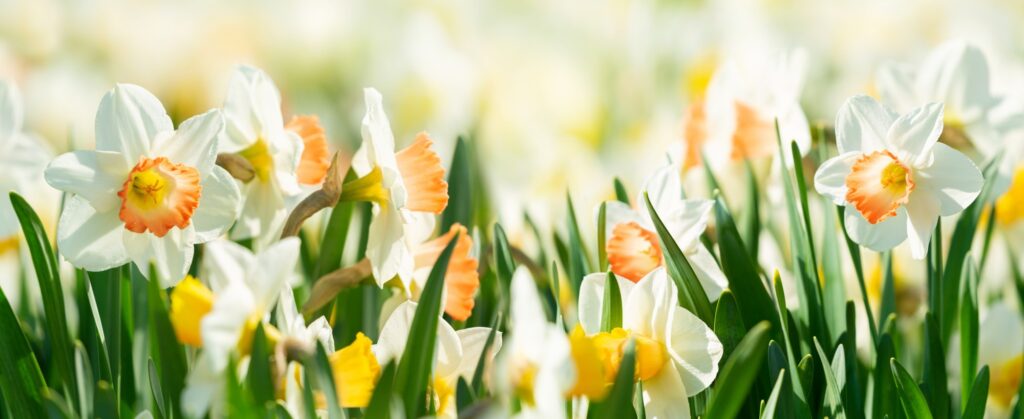
Few flowers announce the arrival of spring as unmistakably as daffodils. Their yellow, white, orange, cream, and even pink-accented flowers can appear while much of the garden is still waking from winter, often returning year after year with remarkably little attention.
Daffodils belong to the genus Narcissus, a diverse group of perennial bulbs containing thousands of named cultivars. Although the classic yellow trumpet daffodil may be the most familiar, gardeners can choose from miniature daffodils, fragrant jonquils, double-flowered forms, white poeticus types, large-cupped cultivars, multi-flowered tazettas, and many other forms.
They are also among the easier spring-flowering bulbs to grow successfully. Daffodils generally prefer sun to partial shade, well-drained soil, and enough moisture while actively growing. Once planted in a suitable location, many can remain undisturbed for years, gradually developing into larger clumps.
The most important part of daffodil care actually happens after the flowers are gone. Allowing the leaves to remain until they naturally yellow gives the bulbs time to rebuild the energy needed for next spring’s flowers.
Get that basic cycle right, and daffodils can become some of the most dependable plants in your garden.
⚡ Daffodil Quick Care Guide
Botanical name: Narcissus spp. and hybrids
Common names: Daffodil, narcissus, jonquil
Plant type: Perennial bulb
Light: Full sun to partial shade
Soil: Well-drained garden soil
Planting season: Fall
Bloom season: Late winter through spring, depending on cultivar and climate
Flower colors: Yellow, white, cream, orange, pink-accented, and combinations
Height: Approximately 6 inches to 2 feet or more, depending on cultivar
Water: Moisture during active spring growth; avoid persistently saturated soil
Maintenance: Low
Best uses: Flower borders, woodland edges, naturalized lawns, rock gardens, beneath deciduous trees, cutting gardens, and spring bulb displays
Important: Daffodils are toxic if eaten, and the bulbs contain particularly concentrated toxins. Keep bulbs away from children and pets.
🌼 What Is a Daffodil?
Daffodils belong to the genus Narcissus in the amaryllis family, Amaryllidaceae.
The characteristic flower has six outer petal-like tepals surrounding a central structure called the corona. In trumpet daffodils, that corona forms the familiar long trumpet. In other types it may be a short cup, split into unusual shapes, or appear in multiple layers.
Although gardeners commonly use the words daffodil, narcissus, and jonquil somewhat interchangeably, they are not technically identical terms.
Narcissus is the botanical genus.
Daffodil is the general common name used for plants within the genus.
Jonquil more specifically refers to Narcissus jonquilla and closely related types, which tend to have narrower foliage and often carry several fragrant flowers on one stem.
For ordinary garden purposes, however, you will often see the names used loosely.
🌷 Daffodils Come in Many Forms
Daffodils are much more diverse than the familiar large yellow trumpet type.
The Royal Horticultural Society classification system traditionally divides cultivated daffodils into several divisions based primarily on flower form and ancestry.
Gardeners may encounter:
- Trumpet daffodils
- Large-cupped daffodils
- Small-cupped daffodils
- Double daffodils
- Triandrus daffodils
- Cyclamineus daffodils
- Jonquilla daffodils
- Tazetta daffodils
- Poeticus daffodils
- Bulbocodium types
- Split-corona daffodils
- Species and wild forms
You do not need to memorize the classification system to grow them successfully, but knowing that different types bloom at different times and reach different sizes can help you create a much longer and more interesting spring display.
☀️ How Much Sun Do Daffodils Need?
Daffodils generally perform best in full sun to partial shade.
A location receiving at least six hours of direct sunlight is excellent, but spring-flowering bulbs have one useful advantage: they complete much of their growth early in the year.
That means daffodils can often be grown successfully beneath deciduous trees.
A spot that becomes fairly shady in June may receive substantial sunlight in March or April before the tree canopy fully develops.
This makes daffodils particularly useful for woodland edges and beneath deciduous shrubs.
Deep shade is less successful. Daffodils growing with inadequate light may produce healthy-looking leaves but few or no flowers.
This failure to flower despite producing foliage is sometimes described as daffodils coming up blind.
For more help evaluating your garden’s light and soil conditions, visit our Gardening Basics hub.
🌎 Best Soil for Daffodils
Good drainage is more important than creating exceptionally rich soil.
Daffodil bulbs need enough moisture to grow roots and support their spring foliage and flowers, but they can rot when planted in soil that remains waterlogged for long periods.
A fertile, well-drained loam is ideal, but daffodils can adapt to several soil types.
Before planting, observe the site after heavy rain.
If water stands for days, choose another location or improve drainage before installing a large collection of bulbs.
Adding suitable organic matter can improve the structure of many garden soils, but avoid creating isolated planting holes filled almost entirely with compost.
The bulbs eventually need to grow in the surrounding garden soil.
Our Gardening Soil 101 guide provides more information on drainage, soil structure, organic matter, and soil testing.
🧪 Should You Test the Soil?
A soil test is especially useful if you are preparing a large permanent bulb bed.
Instead of automatically adding fertilizer, bone meal, lime, or other amendments, find out what the soil actually needs.
Daffodils do not require gardeners to maintain an extremely narrow pH range, but severely unsuitable soil conditions can affect performance.
A laboratory soil test can provide information about pH and nutrient levels and help prevent unnecessary amendments.
This is generally a better approach than adding fertilizer every year simply because bulbs are present.
📅 When Should You Plant Daffodils?
Daffodil bulbs are planted in fall so they can develop roots and experience the cool period necessary for spring growth.
The exact planting date depends on climate.
In colder regions, bulbs may be planted during September or October. Gardeners in somewhat milder areas may continue planting into November or even later while the soil remains workable.
A useful general rule is to plant after soil temperatures begin cooling but before the ground freezes solid.
Do not wait until spring to plant ordinary garden daffodil bulbs if you expect them to flower normally that same season.
They are part of the fall-planted, spring-flowering bulb cycle.
Our October Gardening: Your Complete Guide to Fall Success and November Gardening: Winter Preparation and Late-Season Success guides cover bulb planting as part of the larger fall garden routine.
🛒 How to Choose Healthy Daffodil Bulbs
Start with firm, healthy bulbs.
Larger bulbs within a particular cultivar generally have more stored energy and may produce a stronger initial display than undersized bulbs.
Avoid bulbs that are badly shriveled, soft, rotting, or severely damaged.
A little dry papery outer covering coming loose is generally not a concern. That outer tunic naturally becomes dry.
Purchase bulbs from reputable nurseries and suppliers where cultivar names, bloom times, and planting information are provided.
Knowing the cultivar is especially helpful if you want to build a sequence of early-, mid-, and late-season flowers.
🌱 How Deep Should You Plant Daffodils?
Planting depth varies somewhat with bulb size, soil, and cultivar.
A common guideline is to place the bulb so the soil above it is roughly twice the height of the bulb. Larger garden daffodils are therefore often planted several inches deep, while miniature types may be planted more shallowly.
Some Extension recommendations place large daffodil bulbs around 6 to 8 inches deep overall.
Follow the instructions supplied with the bulbs when available.
In colder climates or light soil, somewhat deeper planting can provide additional protection and stability, while extremely heavy soil may call for adjustments.
The pointed end normally faces upward and the flatter root plate goes downward.
If you accidentally plant a bulb sideways, it can often correct its growth direction, but planting it properly makes the process easier.
📏 How Far Apart Should Daffodil Bulbs Be?
Spacing depends on the effect you want.
Bulbs planted relatively close together create a dense display quickly but will become crowded sooner.
Spacing them farther apart gives each bulb more room to multiply before division becomes necessary.
Approximately 4 to 6 inches between standard bulbs is a useful starting point for many permanent plantings.
For an informal garden, avoid planting daffodils in perfectly straight military rows unless that style is intentional.
Groups, drifts, and uneven clusters usually create a more natural effect.
🌼 Plant Daffodils in Groups
A single daffodil is cheerful.
Twenty daffodils flowering together can transform an entire section of the garden.
For greater visual impact, plant bulbs in clusters or broad drifts rather than scattering individual bulbs randomly across a large bed.
Odd-numbered groups often create an attractive informal arrangement, but there is no strict rule.
For a naturalistic design, scatter a handful of bulbs gently over the planting area and plant them where they land, adjusting only where necessary for spacing.
This produces a less rigid pattern than measuring every bulb into a geometric grid.
🌳 Planting Daffodils Under Trees
Daffodils can be excellent bulbs for planting beneath deciduous trees because they emerge before the trees develop a full summer canopy.
Avoid heavily disturbing major tree roots when planting.
Instead of excavating an entire deep bed beneath an established tree, use smaller planting holes between significant roots.
Remember that large trees also compete for soil moisture.
While daffodils complete much of their active cycle before summer drought develops, new bulbs still need enough moisture to establish roots after fall planting.
🌲 Can Daffodils Grow Under Evergreen Trees?
Evergreens create a much more difficult environment.
Unlike deciduous trees, they continue shading the soil throughout the year, and dense roots may compete heavily for water.
Some daffodils may survive near the edge of an evergreen canopy where enough spring sunlight reaches them, but deep shade directly beneath dense evergreen branches is unlikely to produce the best flowering.
Choose the location according to actual light conditions rather than assuming all tree-covered sites are equivalent.
💧 Water Daffodils After Planting
Water newly planted bulbs after installation if the soil is dry.
This helps settle soil around the bulbs and provides moisture for early root development.
After that, autumn rainfall may provide much of the necessary moisture in many climates.
Avoid keeping the planting area saturated.
Dormant bulbs do not benefit from sitting in constantly wet soil through winter.
The goal is adequately moist, well-drained soil rather than dryness at one extreme or saturation at the other.
💦 How Much Water Do Daffodils Need in Spring?
As daffodils emerge and begin active growth, they benefit from consistent moisture.
Spring rainfall may provide everything they need.
During unusually dry springs, supplemental watering can help support flowers and foliage.
Check the soil rather than watering according to a calendar.
Once the foliage naturally dies back and the bulbs become dormant, their water requirements decline substantially.
This seasonal difference is important.
A location that remains extremely wet throughout summer may cause bulb problems even though the plants appreciated moisture while actively growing in spring.
🍂 Should You Mulch Daffodils?
A moderate layer of mulch can help stabilize soil temperatures, conserve moisture, and suppress weeds.
New fall bulb plantings in cold regions can also benefit from mulch after the soil cools.
Avoid applying an enormous layer that keeps the bed unnecessarily wet or delays spring emergence.
As shoots begin pushing upward, they can normally grow through a reasonable organic mulch layer without assistance.
Shredded leaves can work particularly well in informal woodland and perennial beds.
🌱 Do Daffodils Need Fertilizer?
Daffodils growing in healthy soil may require little supplemental fertilizer.
If soil testing indicates a nutrient deficiency, apply fertilizer based on the recommendation rather than guessing.
Repeatedly applying high-phosphorus amendments such as bone meal without knowing whether phosphorus is needed can cause unnecessary nutrient accumulation.
The bulb already contains stored energy when you purchase it.
Long-term performance depends more on good sunlight, healthy foliage, suitable soil, drainage, and allowing the leaves to replenish the bulb after flowering.
🌷 When Do Daffodils Bloom?
Depending on cultivar and climate, daffodils may bloom from late winter through late spring.
Some miniature and cyclamineus types appear very early.
Other trumpet and large-cupped daffodils flower during the traditional mid-spring period.
Late varieties such as some poeticus types can extend the season considerably.
Choosing cultivars from several bloom periods is one of the easiest ways to enjoy daffodils for much longer than the two or three weeks provided by a single variety.
Your Seasonal Gardening plan can incorporate these different bloom periods so something new is always appearing.
🌼 Early, Midseason, and Late Daffodils
When purchasing bulbs, look for descriptions such as:
- Early spring
- Early to mid-spring
- Mid-spring
- Mid- to late spring
- Late spring
These categories are more useful than expecting the same flower to bloom on a particular calendar date every year.
Weather affects bloom timing significantly.
A mild winter and warm early spring may accelerate flowering, while prolonged cold can delay it.
By planting several cultivars with different seasonal windows, you create a succession that is more resilient to unpredictable spring weather.
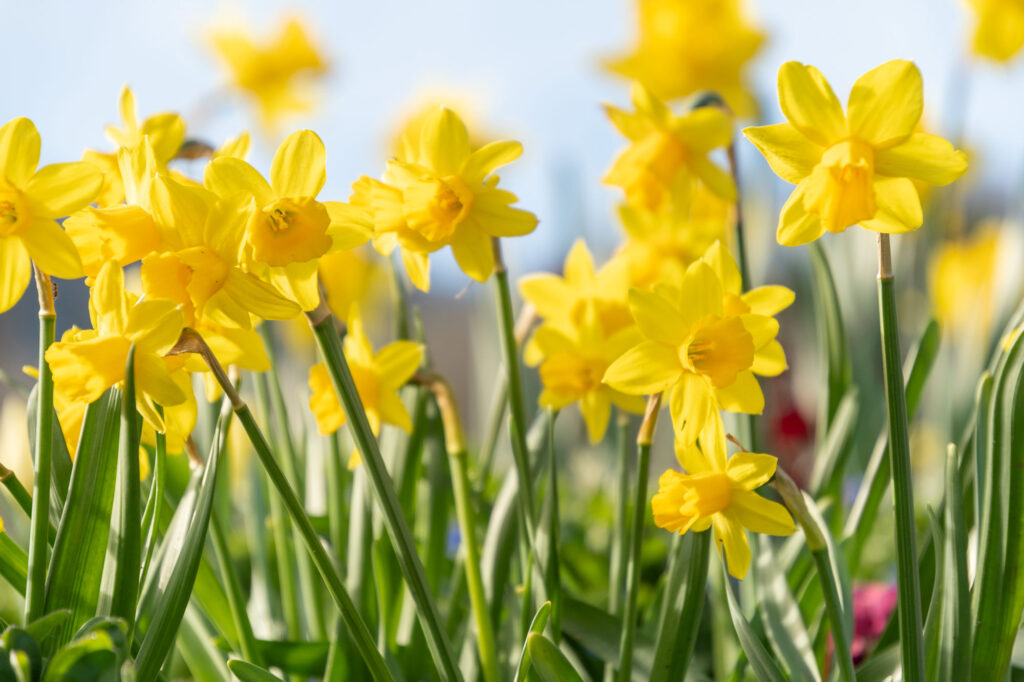
💛 Trumpet Daffodils
Trumpet daffodils have one flower per stem and a corona that is approximately as long as—or longer than—the surrounding petals.
They produce the traditional daffodil shape most gardeners recognize instantly.
Many large yellow cultivars fall into this group, although other colors and combinations are available.
Their substantial flowers make excellent focal points in spring borders and large naturalized plantings.
They also combine beautifully with smaller bulbs that flower at approximately the same time.
🌼 Large-Cupped Daffodils
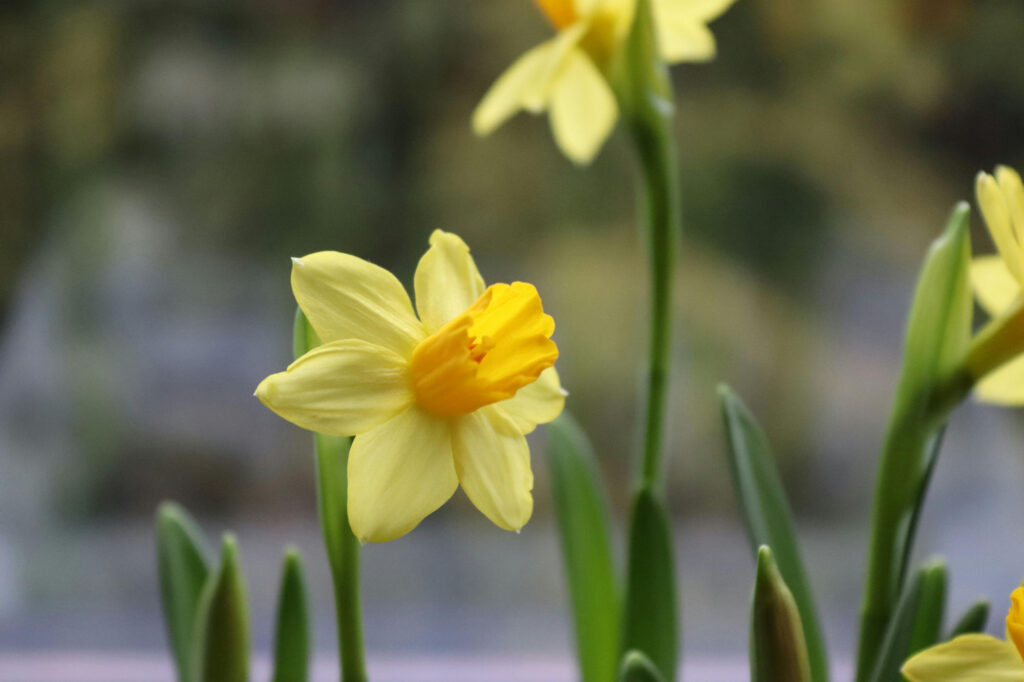
Large-cupped daffodils have a central cup that is substantial but shorter than the surrounding petal segments.
This is one of the largest and most varied groups of garden daffodils.
Flowers can contain combinations of yellow, white, orange, salmon, pink, and other shades.
They work especially well in mixed spring borders where gardeners want more color variation than the classic all-yellow trumpet form.
🌸 Small-Cupped Daffodils
Small-cupped daffodils have a shorter central cup, creating a somewhat flatter appearance.
Many are particularly elegant when viewed at close range.
Their subtler shape can work beautifully in naturalistic gardens and among other spring perennials.
As with other daffodils, cultivar size and flowering period vary, so check individual descriptions rather than assuming every small-cupped variety behaves identically.
🌺 Double Daffodils
Double daffodils produce additional petals, corona segments, or both, creating a fuller and sometimes almost peony-like appearance.
Their flowers can be spectacular, but heavy blooms may sometimes bend after intense rain.
Planting in reasonably sheltered locations can help.
Double forms are excellent where you want especially showy flowers near a path, patio, or entry where their unusual structure can be appreciated up close.
🌿 Jonquils
Jonquil daffodils are associated with Narcissus jonquilla and related cultivars.
They typically have narrow, rush-like foliage and often carry more than one flower per stem.
Many are notably fragrant.
Jonquils can be especially attractive in informal and naturalized plantings where their smaller flowers appear in generous groups.
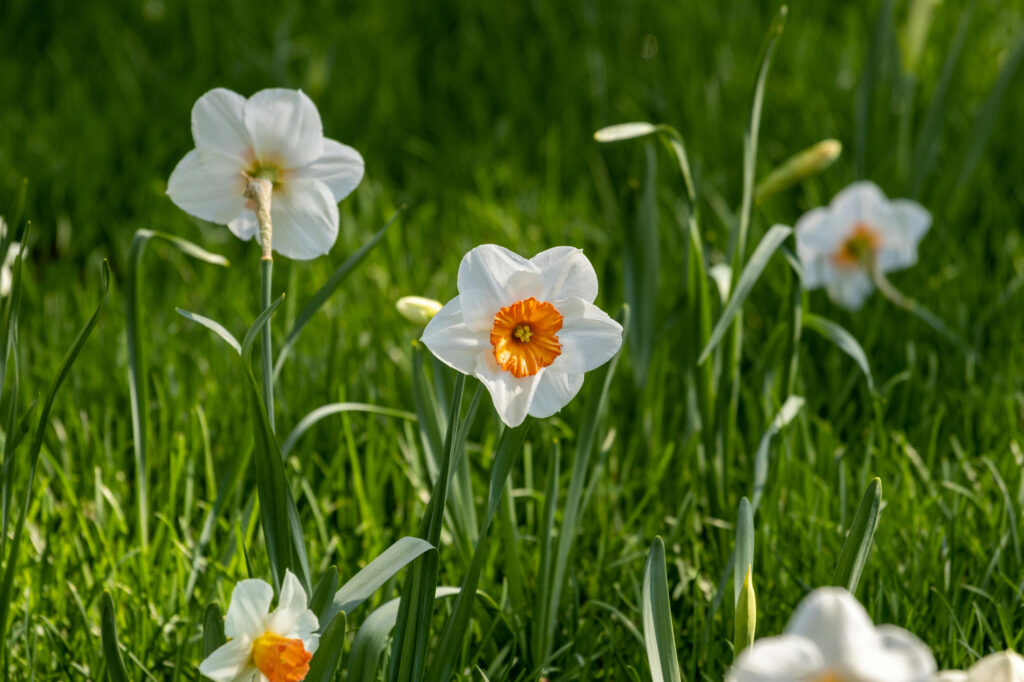
🤍 Poeticus Daffodils
Poeticus daffodils are among the most distinctive later-flowering types.
They are often recognized by white outer petals surrounding a small yellow cup edged with red or orange.
Many are fragrant.
Their later season makes them particularly useful for extending the daffodil display after many of the large early and midseason types have finished.
🌱 Miniature Daffodils
Miniature cultivars bring all the character of a daffodil to much smaller spaces.
They are excellent choices for:
- Rock gardens
- Small flower beds
- Containers
- Bed edges
- Alpine-style plantings
- Small yards
Compact daffodils can also look wonderful planted in large groups where their small flowers create a broad sweep of early color.
🌸 What Should You Do After Daffodils Finish Blooming?
Post-bloom care is one of the most important parts of successful daffodil growing.
Once flowers fade, you may remove the spent flower heads if you wish to prevent the plant from using energy to produce seeds.
Do not remove the green leaves.
The foliage continues photosynthesizing after flowering. Energy produced by those leaves is stored in the bulb and contributes to the following year’s growth and flowers.
Removing foliage prematurely weakens that process.
Allow the leaves to remain until they naturally turn yellow and begin dying back.
✂️ Should You Deadhead Daffodils?
Deadheading daffodils is optional but can be useful.
Removing the faded flower prevents seed formation, allowing the plant to direct more energy toward the bulb rather than producing seeds.
Cut or snap off the spent flower while leaving the green foliage intact.
There is no need to cut every flower immediately if the garden is large. Established daffodils can still persist without meticulous deadheading.
Foliage management matters much more.
🚫 Don’t Cut Daffodil Leaves Too Early
This is probably the single most important daffodil-care rule.
Do not cut healthy green leaves after the flowers fade.
Do not mow them.
Do not braid them.
Do not tie them into knots.
Do not fold them over and secure them with rubber bands.
Those practices reduce the leaf area exposed to sunlight and interfere with the plant’s ability to rebuild energy reserves.
Let the foliage remain upright and functional until it naturally yellows.
Once it has substantially died back, it can be removed easily.
🌿 Hide Daffodil Foliage With Other Plants
The main disadvantage of daffodils is that their declining leaves can look untidy for several weeks.
Rather than cutting them prematurely, plan the surrounding garden to hide them.
Plant daffodils among later-emerging perennials whose foliage expands as the bulb leaves begin declining.
Suitable companions might include:
- Hostas in appropriate light
- Daylilies
- Hardy geraniums
- Catmint
- Peonies
- Ferns in suitable shade
- Perennial grasses
- Other spring and summer perennials
The exact combination depends on sunlight and soil conditions.
This layered approach allows the garden to change naturally from spring bulb season into the summer perennial display.
🌷 Companion Plants for Daffodils
Daffodils work with almost any spring garden palette.
Combine yellow daffodils with blue or purple spring flowers for strong contrast.
White daffodils create a softer combination with pastel pinks, blues, and pale yellows.
Later-emerging perennials are particularly useful because they help conceal aging bulb foliage.
For more ideas about building flower combinations across several seasons, explore our Flower Gardening hub.
❄️ Pair Daffodils With Other Early Bulbs
Daffodils are only one part of the early-spring bulb display.
They pair beautifully with smaller flowers that emerge around the same period.
Consider combining them with Crocuses, Glory of the Snow, or Snowflake Flowers.
Using bulbs of different heights and bloom times creates a gradual spring progression rather than one short burst of color.
Small bulbs can flower first, followed by large daffodils and then later perennials.
🌱 Do Daffodils Multiply?
Yes.
Healthy daffodil bulbs commonly produce offsets, or smaller bulbs, around the original bulb.
Over several years, a small planting can develop into a substantial clump.
This multiplication is one reason daffodils are so useful for long-term gardens.
Eventually, however, an overcrowded clump may contain so many bulbs that flower production begins to decline.
When that happens, dividing the planting can restore space and give you bulbs for new parts of the garden.
✂️ When Should You Divide Daffodils?
Daffodils can remain undisturbed for years when they continue flowering well.
Division becomes useful when:
- Clumps become extremely dense
- Flower production declines
- Many leaves appear but relatively few flowers develop
- You want to move or spread the bulbs
The best time to dig is generally after flowering once the foliage has begun yellowing or dying back.
At that point, you can still identify where the plants are located, but the bulbs are moving toward dormancy.
Lift the clump carefully with a garden fork or shovel, working far enough away from the bulbs to avoid cutting through them.
🌱 How to Divide Daffodil Bulbs
After lifting a mature clump, gently separate the bulbs.
Many offsets will pull away naturally from the mother bulb.
Discard badly damaged, soft, or diseased bulbs.
Healthy bulbs can be replanted promptly at the proper depth or stored temporarily under suitable dry, ventilated conditions until normal fall planting time.
Smaller offsets may require several growing seasons before they reach flowering size.
Do not be disappointed if newly separated tiny bulbs produce leaves before they produce flowers.
They are still building energy.
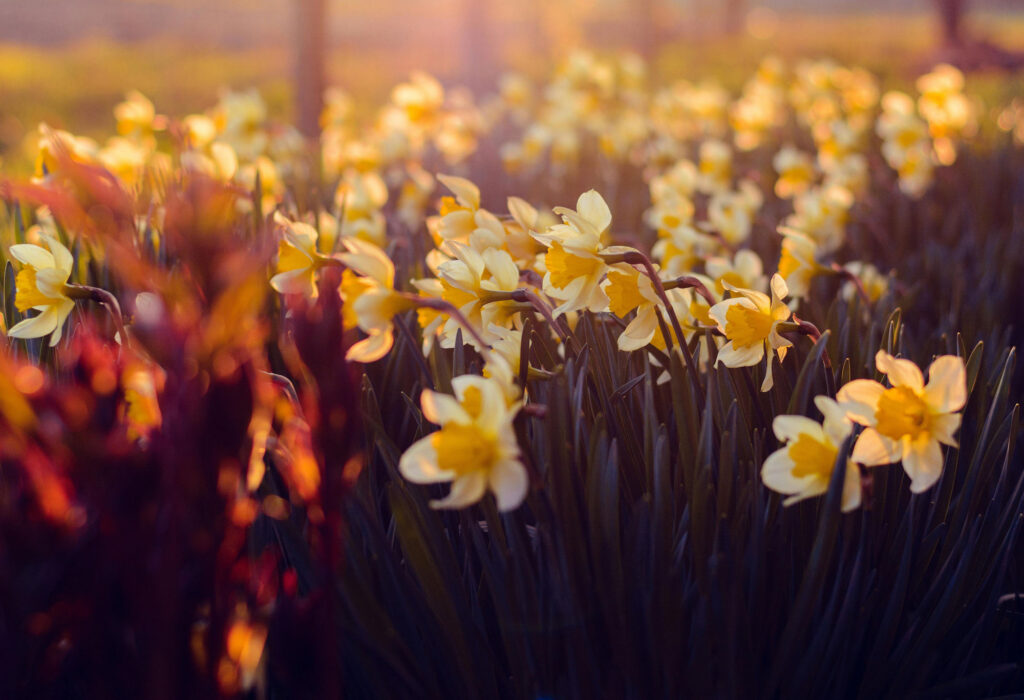
🌾 Naturalizing Daffodils
Daffodils are among the best bulbs for naturalizing, meaning they are planted in an informal area and allowed to multiply and persist with relatively little disturbance.
They can work beautifully in:
- Meadow edges
- Open woodland
- Beneath deciduous trees
- Informal lawns
- Large perennial beds
- Roadside-style landscapes
- Orchard areas
Choose cultivars known to persist well and allow the foliage to complete its full growth cycle every year.
In lawns, this means postponing mowing until the daffodil foliage has substantially yellowed.
If you need a perfectly manicured lawn beginning early in spring, naturalizing daffodils throughout the turf may not be the best choice.
🌱 How to Naturalize Daffodils in Grass
For a natural appearance, avoid evenly spaced straight lines.
Scatter groups of bulbs over the grass and plant them approximately where they land.
Plant more densely in some areas and more loosely in others.
The result should look as though the flowers arrived naturally rather than being laid out with a ruler.
The critical maintenance rule is mowing.
The grass must be allowed to remain uncut—or at least tall enough that the daffodil leaves remain functional—until the bulb foliage yellows naturally.
That temporary untidiness is the price of a strong display the following spring.
🦌 Are Daffodils Deer Resistant?
Daffodils are notably resistant to browsing by deer compared with many other spring bulbs.
Their tissues contain toxic alkaloids that make them unpalatable.
That makes daffodils particularly useful in landscapes where tulips regularly disappear to deer.
No landscape plant should be treated as absolutely immune to every animal under every condition, but daffodils are generally among the more dependable spring bulbs for deer-prone gardens.
🐇 Do Rabbits and Squirrels Eat Daffodils?
Rabbits generally avoid daffodils because of their toxic compounds.
Squirrels also tend to be less interested in eating daffodil bulbs than tulips or crocuses.
However, squirrels may still dig in recently disturbed soil simply because digging is what squirrels do.
One useful strategy is to combine daffodils with more vulnerable bulbs. The daffodils will not necessarily create a magical protective barrier, but they themselves are less attractive food.
Physical barriers remain the most dependable solution when animals repeatedly excavate bulb beds.
🐛 Common Daffodil Pests
Daffodils are relatively trouble-free compared with many ornamental plants.
Potential problems can include bulb mites, slugs, snails, and certain region-specific bulb pests.
Good sanitation and purchasing healthy bulbs reduce the chances of introducing problems.
Avoid planting damaged or rotting bulbs.
If a mature planting suddenly declines dramatically, dig and examine a few bulbs rather than repeatedly applying fertilizer.
The condition of the bulb often provides valuable clues.
🦠 Daffodil Bulb Rot
Bulb rot is one of the most important daffodil problems and is strongly associated with poor drainage and excessive moisture.
Affected bulbs may become soft, discolored, or fail to produce normal growth.
Prevention begins with planting healthy bulbs in well-drained soil.
Avoid areas that remain saturated through winter or summer.
Do not assume daffodils will thrive simply because they are technically hardy in your climate. Soil conditions can determine whether a bulb persists for decades or gradually disappears.
🌿 Why Do My Daffodils Have Leaves but No Flowers?
A clump that produces foliage without flowers is often described as blind.
Several conditions can contribute.
Too Much Shade
Daffodils need enough sunlight to replenish their bulbs.
Foliage Was Removed Too Early
Cutting green leaves before they naturally decline prevents the bulb from storing sufficient energy.
Overcrowding
Large clumps may eventually contain so many bulbs that flowering declines.
Planting Depth Problems
Bulbs planted dramatically too shallow or too deep may perform poorly.
Poor Nutrition
A genuine nutrient deficiency can reduce flowering, although testing is preferable to guessing.
Recent Division
Small offsets may simply need time to reach flowering size.
Look at the entire history of the planting before deciding on a remedy.
🌼 Why Did My Daffodils Stop Blooming?
A mature planting that once flowered heavily but now produces only a few blooms may simply need division.
Dig the clump after the foliage begins declining and examine the bulbs.
If they are packed tightly together, separate and replant them with more room.
Also consider whether the site has become shadier over time.
A young tree planted fifteen years ago may now cast enough spring shade to reduce flowering dramatically.
Gardens change.
A location that was perfect when the bulbs were planted may no longer provide the same conditions.
🌱 Why Are My Daffodils Coming Up Too Early?
Warm winter weather can sometimes encourage daffodil foliage to emerge earlier than expected.
This is usually less alarming than it looks.
Daffodil foliage is relatively cold tolerant, and bulbs have evolved to cope with fluctuating late-winter and early-spring weather.
Avoid piling soil or heavy mulch over emerging shoots in an attempt to push them back underground.
Let the plants follow the season.
Severe freezes can occasionally damage flowers or buds, but early leaf emergence does not automatically mean the entire spring display has been lost.
❄️ Do Daffodils Need Winter Protection?
Established daffodils planted at an appropriate depth generally require very little winter attention in climates where the cultivar is hardy.
Mulch can help moderate soil temperatures, especially in new plantings.
The bulbs naturally remain underground through winter and respond as conditions become suitable in late winter or spring.
Excessive winter moisture is often a greater concern than cold itself.
Good drainage remains essential during dormancy.
🪴 Can Daffodils Grow in Containers?
Yes.
Daffodils can create beautiful spring container displays.
Choose a pot with drainage holes and enough depth for the bulbs and their roots.
Use a high-quality container-growing medium rather than dense garden soil.
Bulbs can be planted closer together in seasonal containers than they would be in a permanent garden bed, but avoid letting them touch if possible.
Container bulbs need the appropriate winter chilling period unless you are growing a type intended for indoor forcing.
Winter conditions are more severe around above-ground pots than in the ground, so gardeners in cold climates may need to provide additional protection.
🌷 Layering Bulbs in Containers
Large containers can hold several kinds of spring bulbs at different depths.
This is sometimes called bulb layering or creating a bulb lasagna.
Larger, deeper-planted bulbs such as daffodils can form a lower layer, while smaller bulbs such as crocuses or glory of the snow occupy shallower levels.
The result can provide several waves of spring color from one container.
Choose bulbs with compatible growing requirements and make sure the container drains well.
🏠 Can You Force Daffodils Indoors?
Some daffodils can be forced to flower indoors, although their chilling requirements vary.
Paperwhite narcissus are particularly popular because many can bloom indoors without the lengthy cold treatment required by standard hardy garden daffodils.
Ordinary garden daffodils generally require a cool period before they can be successfully forced.
Indoor forcing is a separate process from ordinary outdoor cultivation, so use instructions specific to the type you are growing.
💐 Daffodils as Cut Flowers
Daffodils make cheerful cut flowers and can bring the first real taste of spring indoors.
Harvest when the buds are colored but not necessarily fully open if you want the flowers to continue developing in the vase.
There is one important consideration when mixing daffodils with other cut flowers.
Freshly cut daffodil stems release a mucilaginous sap that can interfere with the vase life of some companion flowers.
Many flower arrangers condition daffodil stems separately in water for several hours before combining them with other flowers, and then avoid recutting the stems afterward.
For a simple bouquet, an entire vase filled only with daffodils avoids the issue completely.
⚠️ Are Daffodils Poisonous?
Yes.
All parts of the daffodil contain compounds that can cause poisoning if eaten, with the bulbs generally posing the greatest risk.
Daffodil bulbs can resemble onions, creating a particular concern when loose bulbs are stored near food.
Keep them clearly labeled and separate from edible bulbs and vegetables.
Daffodils are also toxic to dogs, cats, and horses.
Gardeners with curious pets should prevent animals from digging up or chewing bulbs.
Handling daffodils can also cause skin irritation in some people, particularly after repeated contact with sap, so gloves are sensible when planting or cutting large quantities.
Daffodils are beautiful garden plants, but they are ornamental—not edible.
🐕 Daffodils and Pets
If your dog or cat is prone to digging in garden beds or chewing plants, take extra care when planting daffodils.
The bulbs contain particularly concentrated toxic compounds.
Plant bulbs promptly rather than leaving bags where animals can reach them.
Store unused bulbs securely.
The presence of daffodils in an ordinary garden does not mean pets cannot safely use the yard, but preventing ingestion matters.
If you suspect an animal has eaten daffodil material, contact a veterinarian or animal poison-control service promptly.
👶 Daffodils and Children
Daffodil flowers are attractive to children, but the plant should not be eaten.
Bulbs deserve particular caution because they can be mistaken for onions by someone who does not recognize them.
Keep bags of bulbs labeled and away from food-storage areas.
Teach children not to eat unidentified garden plants.
When young children are helping with bulb planting, supervision can turn the task into an enjoyable garden activity while keeping everyone safe.
🌱 Are Daffodils Native to North America?
No. The genus Narcissus is native primarily to Europe and surrounding regions, with the genus extending into parts of North Africa and Asia.
Daffodils have nevertheless been cultivated in North America for generations and are now familiar features of old homesteads, roadsides, cemeteries, gardens, and abandoned properties.
Their ability to persist can sometimes reveal where a garden existed long after buildings and fences have disappeared.
If your goal is a strictly native garden, choose regionally native spring ephemerals instead.
If your goal is a mixed ornamental landscape, daffodils can provide dependable early-season color.
🐝 Are Daffodils Good for Pollinators?
Daffodils can provide some early floral resources, although they are generally not considered among the highest-value pollinator plants.
Flower form and cultivar matter, and heavily modified double flowers may be less useful to insects.
If supporting pollinators is a priority, combine daffodils with a diverse selection of regionally appropriate spring-flowering plants.
The Eco-Friendly Gardening hub provides more ideas for creating a garden with flowers and habitat through several seasons.
🌷 Daffodils in a Cottage Garden
Daffodils are natural cottage-garden plants.
Their early flowers appear before roses and summer perennials dominate the border, providing another season of interest from the same piece of ground.
Plant daffodils around perennial clumps or between roses where later foliage will conceal the fading bulb leaves.
Our How to Grow a New Rose Garden guide can help you build a mixed planting where daffodils provide spring color and roses take over later.
The combination creates a garden that changes instead of peaking during only one month.
🎨 Designing With Daffodils
Daffodils look best when the planting style fits the surrounding garden.
In a formal landscape, repeated groups of one cultivar can create strong rhythm.
In a cottage garden, several compatible cultivars can mingle with spring perennials.
In a naturalized lawn, large irregular drifts generally look more convincing than perfectly spaced rows.
Consider viewing distance too.
Small, intricately colored daffodils are easier to appreciate beside paths and patios.
Large yellow trumpet daffodils have enough visual strength to be noticed from across a yard.
Design with both the individual flower and the overall display in mind.
💛 Classic Yellow Daffodils
Traditional yellow daffodils remain popular for a reason.
Their strong color is especially effective after winter, when much of the landscape may still be brown, gray, or only beginning to turn green.
Yellow daffodils combine beautifully with:
- Blue grape hyacinths
- Purple crocuses
- White spring flowers
- Early pink blossoms
- Green emerging perennial foliage
A large mass of yellow can also stand alone without needing a complicated companion planting.
Sometimes simplicity produces the strongest spring display.
🤍 White Daffodils
White daffodils create a softer effect and can brighten partially shaded woodland-edge gardens.
Some varieties combine white petals with yellow, orange, pinkish, or red-edged cups.
They work particularly well near patios and paths where subtle color details can be appreciated.
White cultivars also combine nicely with blue and purple spring flowers for a cooler palette.
🧡 Orange and Pink-Cupped Daffodils
Modern daffodil collections include many flowers with orange, peach, salmon, or pinkish cups.
These colors allow daffodils to coordinate with a wider range of spring landscapes than traditional yellow alone.
Remember that catalog photographs can sometimes make pink cultivars appear more intensely colored than they will look in the garden.
Many so-called pink daffodils are best described as having cups with soft salmon, peach, apricot, or blush tones rather than true saturated pink.
🌸 Common Daffodil Care Mistakes
Daffodils are forgiving, but several mistakes can gradually weaken a planting.
Planting in Poorly Drained Soil
Bulbs are vulnerable to rot when they remain saturated.
Cutting Leaves Too Soon
Green leaves need time to replenish the bulb after flowering.
Growing in Deep Shade
Insufficient light can result in foliage without flowers.
Allowing Clumps to Become Severely Crowded
Overcrowded bulbs may produce fewer blooms.
Adding Fertilizer Without Testing
More nutrients are not automatically beneficial.
Mowing Naturalized Daffodils Too Early
Removing foliage before it yellows weakens the bulbs.
Planting Every Cultivar With the Same Expectations
Different daffodils vary in height, bloom time, fragrance, flower form, and suitability for naturalizing.
🌼 Are Daffodils Easy to Grow?
For most gardeners, yes.
Their care requirements are relatively simple:
Plant healthy bulbs in fall.
Choose a sunny or partly shaded location.
Provide well-drained soil.
Water when conditions are genuinely dry during active growth.
Allow the leaves to remain after flowering.
Divide overcrowded clumps when flower production declines.
That basic routine can keep daffodils returning for many years.
Few flowering plants deliver such a noticeable spring display for so little annual work.
🌷 Let Daffodils Become Part of the Garden’s Rhythm
One of the pleasures of growing daffodils is that they gradually become less like something you planted and more like part of the landscape.
You almost forget about them during summer.
The foliage disappears, the perennial garden fills in, and the bulbs rest quietly underground.
Then late winter or early spring arrives, and pointed green shoots appear through cold soil.
Soon there are buds.
Then flowers.
Over the years, a handful of bulbs can become a large clump, and several clumps can become a spring tradition.
Plant them where they receive enough light and drainage, resist the urge to remove their leaves too early, and give them room to multiply.
They will handle much of the rest themselves.
That reliability is why daffodils remain one of the classic signs that another gardening season has begun.
🔗 Related Articles
- Flower Gardening
- Gardening Basics
- Seasonal Gardening
- Eco-Friendly Gardening
- Crocus Care
- Glory of the Snow Care
- Snowflake Flower Care
- How to Grow a New Rose Garden
- October Gardening: Your Complete Guide to Fall Success
- November Gardening: Winter Preparation and Late-Season Success