A good pair of gardening shoes is one of those purchases that can seem unnecessary until you spend a morning walking through wet grass, digging in muddy soil, carrying mulch, or kneeling beside a garden bed in a pair of soaked sneakers.
Garden footwear does not need to be complicated, expensive, or stylish enough to wear anywhere else. It needs to suit the work.
For quick watering and weeding, a waterproof slip-on may be all you need. Muddy spring cleanup is much more pleasant in an ankle or mid-calf boot. Gardeners moving heavy bags of soil, pushing loaded wheelbarrows, or doing more substantial landscaping may want the stability and protection of a traditional work boot.
Comfort matters just as much as waterproofing. Gardening involves standing, crouching, kneeling, walking on uneven ground, pushing shovels, and repeatedly moving between soft soil and hard paths. Shoes that rub, slip, pinch, or feel excessively heavy quickly become noticeable.
The best gardening shoes are therefore the ones that match both your feet and the jobs you actually do.
⚡ Best Gardening Shoes at a Glance
| Best For | Practical Pick | Why It Stands Out |
|---|---|---|
| Best all-around garden slip-on | Sloggers Original Garden Shoe | Waterproof, deep tread, supportive insole, easy to rinse clean |
| Best for wet and muddy gardens | Muckster II Ankle Boot | Fully waterproof ankle coverage, flexible neoprene, substantial traction |
| Best easy-clean clog | Crocs Bistro Work Clog | Enclosed toe, slip-resistant tread, molded construction that washes easily |
| Best for quick yard work | Bogs Digger Slip-On | Waterproof, low-profile design that is easy to get on and off |
| Best for heavier landscaping | Carhartt Waterproof Moc Toe Wedge Boot | More substantial support, waterproof construction, durable work-boot design |
| Best budget-friendly choice | A simple waterproof garden clog or slip-on | Ideal when you mainly need dry feet, traction, and easy cleanup |
There is no reason every gardener needs the most expensive option. A gardener tending containers beside a patio has very different footwear requirements from someone maintaining a half-acre vegetable garden after a thunderstorm.
🌿 Best Overall: Sloggers Original Garden Shoe
The Sloggers Original Garden Shoe is one of the easiest styles to recommend for everyday gardening because it combines the qualities most gardeners actually need without becoming a full-size boot.
It is waterproof, slips on without laces, has a deep-lug outsole for traction, and can be rinsed clean after muddy work. Sloggers also builds arch support and cushioning into the removable insole.
That combination works particularly well for routine garden jobs such as watering, pulling weeds, deadheading flowers, harvesting vegetables, filling bird feeders, walking through wet grass, and taking a quick trip into the garden without changing into heavy work boots.
The low profile is also convenient when you regularly move between the garden and the house.
Its limitation is protection. A low garden shoe will not prevent muddy water from entering over the top if you step into deep muck, and it offers less coverage around the ankle than a boot.
For ordinary backyard gardening, however, that simplicity is exactly what makes this style useful.
🌧️ Best for Wet and Muddy Gardens: Muckster II Ankle Boot
For gardeners who regularly deal with mud, puddles, wet spring beds, or long grass covered in morning dew, an ankle boot offers a useful step up from a low garden shoe.
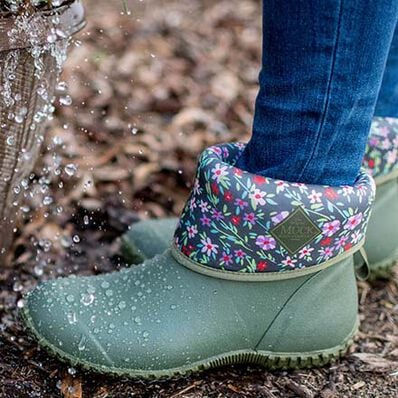
The Muckster II Ankle Boot from The Original Muck Boot Company is designed specifically around wet outdoor work. Current versions use a rubber exterior with a flexible neoprene bootie, a high-traction outsole, and a pull tab for easy on-and-off use.
The higher collar provides more protection than an ordinary garden clog without becoming as cumbersome as a knee-high rain boot.
That makes the Muckster particularly useful for vegetable gardens, muddy pathways, greenhouse work, spring cleanup, rainy-day chores, and properties where you routinely move through uneven wet ground.
Ankle boots are also easier to crouch and kneel in than many rigid tall rain boots.
The tradeoff is warmth and weight. During extremely hot weather, some gardeners may prefer a lighter low-cut shoe.
🧼 Best Easy-Clean Clog: Crocs Bistro Work Clog
Traditional vented clogs can work around the yard, but soil, mulch, and water can enter through all those holes.
The Crocs Bistro Work Clog solves much of that problem by using a more enclosed design.
Although it was developed primarily for workplaces such as kitchens and healthcare settings rather than specifically for gardening, several of its features translate surprisingly well to garden use. The shoe has an enclosed toe, molded construction, contoured footbed, and slip-resistant outsole, and it can be cleaned with soap and water.
That makes it a useful option for lighter garden chores where easy cleaning and quick slip-on convenience matter more than ankle protection.
It can work particularly well for patio gardening, greenhouse work, watering containers, light weeding, and moving between indoor and outdoor spaces.
For deep mud, brush, rough terrain, or jobs involving heavier tools, however, a more protective boot is a better choice.
🌱 Best for Quick Yard Work: Bogs Digger Slip-On
The Bogs Digger Slip-On is another practical middle ground between a casual clog and a taller garden boot.
Its waterproof construction and low profile make it convenient for everyday yard chores while giving more coverage than an open-backed clog.
This style makes sense for gardeners who want something they can leave near the back door and put on quickly for watering, composting, harvesting, feeding backyard animals, or working in damp beds.
A low waterproof slip-on is especially useful if your garden chores tend to happen in short bursts throughout the day.
You may not want to lace up a work boot simply to pick beans or move the sprinkler.
That is where a dedicated back-door garden shoe earns its place.
🥾 Best for Heavy Garden Work: Carhartt Waterproof Moc Toe Wedge Boot
Not every gardening job should be done in a lightweight clog.
If you are moving stone, hauling heavy bags, digging large planting holes, pushing a loaded wheelbarrow over uneven ground, building raised beds, installing landscape materials, or spending an entire day doing physical yard work, a sturdier boot can provide considerably more support and protection.
The Carhartt Waterproof 6-Inch Moc Toe Wedge Boot is built more like a traditional work boot. Current versions use waterproof protection, a supportive insole, a steel shank, and a slip-resistant full-contact outsole.
This is more footwear than most people need for deadheading petunias.
For serious landscaping work, though, the heavier construction makes sense.
A work boot also offers more protection from rough mulch, stones, branches, hand tools, and other hazards found during larger garden projects.
🌧️ Should Gardening Shoes Be Waterproof?
For most gardeners, waterproof footwear is extremely useful.
Gardens are wet even when it is not raining.
Morning dew can soak an ordinary sneaker surprisingly quickly. Irrigation creates puddles. Mulch holds moisture. Freshly watered beds become muddy, and hoses have an unfortunate ability to spray the gardener at least as often as the plants.
A waterproof garden shoe keeps those everyday conditions from turning into wet socks.
Water resistance may be enough if you garden almost entirely in dry conditions, but fully waterproof shoes are much more useful if your footwear regularly encounters saturated grass or mud.
There is a tradeoff.
Waterproof footwear is usually less breathable than a lightweight fabric shoe, so hot-weather comfort matters too.
💦 Waterproof vs. Water-Resistant
These terms are not interchangeable.
Waterproof footwear is designed to prevent water from passing through the protected portions of the shoe under normal intended conditions.
Water-resistant footwear can repel some moisture but may eventually allow water through.
For occasional contact with damp soil, water resistance may be perfectly adequate.
For walking through wet grass every morning or working after rain, waterproof construction is much more useful.
Remember that even a completely waterproof shoe cannot keep feet dry if water enters over the top.
That is where shoe height becomes important.
🥾 Clogs vs. Garden Shoes vs. Boots
The best style depends on the job.
A clog is the quickest option to put on and take off. It works especially well for patio containers, watering, harvesting, and short garden visits.
A closed garden shoe provides more protection from dirt while remaining lightweight and convenient.
An ankle boot adds protection against mud, puddles, wet grass, and debris while still allowing fairly easy movement.
A mid-calf or tall rain boot is useful when the garden is genuinely muddy or you regularly walk through tall wet vegetation.
A work boot is better suited to heavy digging and landscaping where support, traction, and protection matter more than quick slip-on convenience.
There is no universal winner because these styles solve different problems.
👣 Comfort Matters More Than the Brand Name
A highly rated garden shoe that does not fit your feet is still a poor shoe.
Pay attention to the way the footwear feels when you stand, squat, and walk.
Your toes should have enough room to move without sliding excessively inside the shoe.
The heel should not lift dramatically with every step.
The arch should feel comfortable rather than aggressively raised or completely unsupported.
If you use orthotics or replacement insoles, look for footwear with a removable factory insole.
Gardening often involves several hours of intermittent movement rather than a simple walk from one point to another, so minor fit problems can become much more noticeable over time.
🦶 Look for Useful Arch Support
Some people are perfectly comfortable in relatively flat footwear.
Others quickly develop tired feet when a shoe provides little support.
Garden shoes increasingly include shaped or removable insoles rather than the completely flat interior associated with older rubber clogs.
This can make a substantial difference during long periods of standing.
If you already know that particular footwear shapes work better for your feet, use that information when choosing a gardening shoe.
There is little benefit in buying a popular model that has the wrong shape for you.
🧽 Easy Cleaning Is Surprisingly Important
Garden shoes will get dirty.
That is not a possibility. It is their purpose.
Mud, compost, potting mix, grass clippings, mulch, and fertilizer granules all eventually end up attached to garden footwear.
For this reason, smooth waterproof materials have a major advantage.
A garden shoe that can be rinsed with a hose and left to air dry is much more convenient than a shoe that requires brushing dried mud from woven fabric.
Removable insoles are also useful because they can be taken out to dry separately.
Dedicated garden shoes should be easy enough to clean that you do not hesitate to get them dirty.
🪨 Traction Matters on Wet Ground
Gardens contain many slippery surfaces.
Wet grass can be slick. Mud reduces grip. Moss-covered paving stones can become dangerous, and wooden decks may become slippery after rain.
Look for a sole with enough texture to provide useful traction.
Deep lugs are particularly useful on soil and uneven ground.
A flatter slip-resistant outsole can work well on patios, paved paths, greenhouses, and other hard surfaces.
No tread makes a shoe completely slip-proof, however.
Move cautiously on steep wet slopes and unstable garden surfaces regardless of what footwear you are wearing.
🦶 Closed-Toe Shoes Offer Better Protection
Open sandals may feel comfortable in summer, but they provide very little protection from the realities of gardening.
A closed toe protects against:
- Dirt and mulch
- Stones
- Sticks
- Thorns
- Dropped hand tools
- Accidental contact with shovel edges
- Insects and other small garden creatures
For light container gardening, an open shoe may occasionally be adequate.
Once you begin digging, moving materials, or walking through densely planted beds, a closed garden shoe is the more practical choice.
Wear Sturdier Footwear for Digging
Using a shovel places unusual pressure on footwear.
Gardeners often press down on the top edge of the shovel blade with a foot to drive it into the soil.
A thin foam clog or soft casual shoe provides little protection or stability for that job.
If you are doing substantial digging, wear a sturdier shoe or boot with a durable sole and enough structure to support the foot.
The same principle applies when moving heavy materials or performing more physical landscaping tasks.
Your favorite lightweight watering shoes do not need to perform every job in the garden.
🛞 Heavy Landscaping Calls for More Protection
Building raised beds, hauling gravel, moving large rocks, cutting branches, loading soil, and using heavy garden equipment are different activities from routine plant care.
For these jobs, a traditional work boot can be the better choice.
A higher boot protects more of the ankle and foot, while a substantial outsole provides better stability on uneven ground.
Some gardeners may also need protective-toe footwear for particular work.
Choose safety equipment according to the actual task rather than assuming ordinary gardening shoes provide worksite-level protection.
Our Garden Tools & Products hub discusses the same principle for garden equipment: use the simplest tool that safely fits the work.
🌿 Lightweight Shoes Are Better for Routine Gardening
Heavy boots have advantages, but they can also become tiring when the job does not require them.
For ordinary watering, weeding, pruning, planting small annuals, picking vegetables, or tending containers, a lightweight waterproof shoe is often much more comfortable.
The difference becomes particularly noticeable in warm weather.
If the majority of your garden work is relatively gentle, prioritize comfort and easy movement rather than buying footwear designed for construction.
A simple garden slip-on may receive far more actual use.
🌞 Best Gardening Shoes for Hot Weather
Hot-weather garden footwear needs to balance protection with ventilation.
Fully waterproof neoprene boots can become warm during midsummer.
A low garden shoe or lightweight clog provides more airflow around the ankle and is easier to remove during breaks.
Choose light socks that manage moisture rather than wearing thick winter socks inside waterproof footwear.
If conditions are dry and you are doing only light plant care, a breathable closed walking shoe can also work.
Just accept that ordinary fabric shoes are more difficult to clean and may become permanently stained.
🌧️ Best Shoes for Spring Gardening
Spring is where waterproof garden footwear really earns its keep.
Soil is often wet.
Grass remains covered in dew.
Garden paths may be muddy, and beds can stay damp long after rainfall.
A waterproof ankle boot is particularly useful during this period because it provides enough coverage for messy conditions without the bulk of a knee-high boot.
This is where a style like the Muckster II becomes especially practical.
If spring conditions are only mildly damp, a Sloggers-style low slip-on may be enough.
🍂 Best Shoes for Fall Gardening
Fall combines wet leaves, cooler temperatures, muddy soil, and heavier cleanup work.
An ankle or mid-calf waterproof boot can be especially useful.
The extra height keeps leaves and garden debris from constantly entering the shoe, and the more substantial tread can help when walking across damp lawns.
If fall projects include planting trees, building beds, moving compost, or large-scale cleanup, a work boot may be more appropriate.
For the seasonal garden tasks themselves, visit October Gardening: Your Complete Guide to Fall Success and November Gardening: Winter Preparation and Late-Season Success.
❄️ Best Garden Shoes for Cold Weather
Cold-weather footwear should provide enough room for appropriate socks without making the shoe uncomfortably tight.
A snug boot can actually become less comfortable when thick socks compress the foot.
Neoprene-lined waterproof boots can provide more warmth than simple molded garden clogs.
For extended winter work, however, choose footwear specifically designed for the temperatures you expect rather than assuming any rubber garden boot will provide adequate insulation.
Waterproof and insulated are not the same thing.
🌱 Best Shoes for Raised-Bed Gardening
Raised-bed gardeners spend less time walking directly through cultivated soil, so extremely tall boots may be unnecessary.
A waterproof low shoe or clog works well for many raised-bed systems.
You will still encounter wet paths, irrigation, compost, and muddy conditions, but the defined beds keep much of the mess contained.
Comfort becomes especially important because raised-bed gardening often involves repeated standing, bending, and crouching.
Our Raised Bed Gardening for Beginners guide covers bed design, soil, watering, planting, and maintenance.
🥕 Best Shoes for Vegetable Gardening
Vegetable gardens tend to involve more water, exposed soil, and regular walking than many established ornamental beds.
A waterproof closed shoe or ankle boot is particularly useful.
Deep tread helps on soil pathways, while a washable exterior makes it easy to remove mud before going indoors.
Vegetable gardeners also tend to visit the garden frequently.
You may walk outside in the morning to harvest tomatoes, return later to water seedlings, and make another trip before dinner.
A shoe that can be slipped on in seconds is much more likely to become part of that routine.
Visit our Vegetable Gardening hub for more help growing food at home.
🌸 Best Shoes for Flower Gardening
Established flower beds often require less exposure to bare soil than vegetable gardens, but gardeners still spend plenty of time among wet leaves and mulch.
A lightweight slip-on is usually ideal for routine deadheading, weeding, watering, and cutting flowers.
Choose more protective footwear when working around thorny roses or carrying heavy materials.
Long pants and appropriate gloves can provide additional protection in beds containing roses, brambles, or other thorny plants.
Our Flower Gardening hub covers roses, lilies, coneflowers, black-eyed Susans, bulbs, and many other garden flowers.
🌹 Gardening Around Roses and Thorny Plants
Low open-backed clogs are convenient, but they expose more of the ankle.
That matters when working around roses, raspberries, blackberries, and thorny shrubs.
An ankle boot combined with long pants provides more coverage.
Shoes should not be expected to protect your entire leg, of course, but a higher collar can prevent some irritating encounters with low thorns and cut stems.
If you maintain a substantial rose garden, keep both footwear and gloves in mind. Our How to Grow a New Rose Garden guide covers the rest of the care routine.
🪴 Best Shoes for Container Gardening
Container gardening requires the least specialized footwear.
If your garden consists primarily of pots on a patio, porch, or deck, you may not need heavy waterproof boots at all.
A comfortable enclosed clog is often enough.
Look for good grip on wet hard surfaces because patios and decking can become slippery during watering.
Easy cleanup remains useful when working with potting mix.
For indoor container plants, you may not need garden footwear at all—although a dedicated pair near the back door remains useful whenever those plants spend summer outdoors.
👟 Can You Garden in Old Sneakers?
Yes, and many people do.
Old sneakers can be perfectly adequate during dry weather and light garden work.
Their advantages are obvious: they already fit your feet, they cost nothing additional, and you no longer care if they become stained.
Their biggest weakness is moisture.
Fabric sneakers can become soaked by wet grass before you have even reached the garden.
They also hold mud, take time to dry, and may develop unpleasant odors when repeatedly exposed to wet soil.
Using old sneakers is economical, but a waterproof garden shoe is generally more convenient in a wet climate.
🩴 Can You Garden in Crocs?
Yes—with some qualifications.
An enclosed work-style Crocs model such as the Bistro is more practical for gardening than a highly ventilated clog because it provides greater toe coverage and keeps out more debris.
Ordinary vented Crocs can still work for light watering and container gardening.
However, holes allow soil, sticks, mulch, and water inside, and lightweight clogs are not appropriate for every digging or landscaping job.
Use them where their convenience makes sense rather than treating them as protective work boots.
🌧️ Are Rain Boots Good for Gardening?
Rain boots can be excellent garden shoes during muddy weather.
They keep more of the lower leg dry and are easy to rinse clean.
The disadvantage is bulk.
Traditional tall rain boots can feel hot, heavy, and restrictive when crouching repeatedly.
They may also be unnecessary for ordinary summer gardening.
For many gardeners, an ankle or mid-calf waterproof boot provides the most useful compromise between protection and flexibility.
👢 Do You Need Tall Gardening Boots?
Not usually.
Tall boots are most useful when working in genuinely muddy conditions, walking through tall wet grass, cleaning animal areas, or dealing with standing water.
For ordinary flower and vegetable gardening, they can be excessive.
A lower shoe is easier to put on, cooler during warm weather, and often more comfortable while kneeling.
Buy tall boots because your garden conditions require them—not because they look like what a gardener is supposed to wear.
👣 What About Wide Feet?
Sizing deserves special attention with molded waterproof footwear because many styles do not come in a traditional range of widths.
If you have wide feet or a high instep, check the manufacturer’s sizing guidance and customer feedback before ordering.
Do not assume that sizing up will always solve a width problem.
An oversized shoe may still pinch at one point while allowing the heel to slide excessively.
Where possible, try garden footwear on with the socks you normally wear outside.
🧦 Wear the Right Socks
Socks have a surprisingly large effect on garden-shoe comfort.
Moisture-managing socks can reduce the damp feeling that develops inside waterproof footwear.
Avoid wearing socks so thick that they make an otherwise correctly sized shoe tight.
During cool weather, slightly heavier socks can add warmth.
During summer, lightweight breathable socks are usually more comfortable.
If you regularly spend hours outside, keeping a dry spare pair nearby can also be useful.
🧼 How to Clean Gardening Shoes
The easiest maintenance routine is to remove mud before it becomes a permanent part of the footwear.
Allow very heavy mud to dry slightly if rinsing it immediately would simply spread it everywhere.
Then use a hose or water and a soft brush to remove soil from the outsole and upper.
Follow the manufacturer’s care directions for the particular material.
Many molded garden shoes can simply be rinsed.
Leather work boots require different treatment.
Remove insoles when appropriate so the interior can dry more thoroughly.
☀️ Let Shoes Air Dry
Do not assume that placing wet garden footwear directly beside intense heat will help it last longer.
Excessive heat can damage certain rubber, foam, adhesive, and leather components.
Allow shoes and boots to air dry according to the manufacturer’s recommendations.
Remove insoles when possible.
Stuffing very wet footwear loosely with absorbent paper can help draw moisture from the interior, although the paper may need to be replaced.
The goal is to dry the footwear completely without baking it.
🏠 Keep a Pair Near the Garden Door
One of the best features of a dedicated gardening shoe is convenience.
Keep the pair near the door you normally use to reach the garden.
That removes the temptation to walk through wet grass in house slippers or ruin good sneakers because you only intend to be outside for two minutes.
Slip-on shoes are particularly good for this purpose.
A dedicated pair also prevents mud and garden debris from following you into other parts of your day.
🔄 When Should Gardening Shoes Be Replaced?
Garden shoes can become unattractive long before they actually stop working.
Mud stains and scratches are normal.
Replacement becomes more important when the functional parts begin failing.
Watch for worn tread, cracks that allow water inside, a compressed or damaged insole, separated soles, or a fit that has become unstable.
If a formerly grippy outsole has become smooth, the shoe may no longer be a good choice on wet ground even if the upper remains intact.
Durable footwear that accepts replacement insoles can often remain useful longer.
💰 How Much Should You Spend on Gardening Shoes?
You can find useful garden footwear across a broad range of prices.
A basic molded slip-on may be perfectly adequate if you garden casually and mainly want waterproof protection.
Spending more becomes easier to justify when you garden for hours every week, need greater support, encounter severe mud, or expect the shoe to double as work footwear.
Think about cost per use.
A comfortable $80 pair worn several hundred times may ultimately provide better value than a $25 pair you dislike enough to leave beside the door.
But expensive footwear is not automatically better.
Fit and function come first.
🛍️ How to Choose the Best Gardening Shoes for You
Begin with your actual garden.
If you mostly tend containers, prioritize a lightweight easy-clean clog.
For ordinary flower and vegetable beds, a waterproof slip-on with good tread is an excellent all-purpose choice.
For persistent mud, choose an ankle or mid-calf boot.
For major landscaping, choose sturdier work footwear.
Then consider comfort, fit, traction, cleaning, temperature, and how quickly you can get the shoes on and off.
The best gardening shoe is not the one with the most features.
It is the pair you automatically reach for every time you walk outside.
🌻 Our Practical Take
For most home gardeners, a low waterproof garden shoe is the most useful first purchase. It handles wet grass, soil, ordinary mud, watering, weeding, and harvesting while remaining light enough to wear throughout the growing season.
The Sloggers Original Garden Shoe is a particularly practical example of that category.
If your property stays muddy or you garden frequently during spring and fall rain, moving up to an ankle boot such as the Muckster II makes sense.
Gardeners who primarily work on hard surfaces may prefer an easy-clean clog such as the Crocs Bistro.
And if your version of “gardening” regularly includes hauling stone, digging major holes, and building landscape features, skip the lightweight garden shoes for those jobs and wear an appropriate work boot.
You may eventually discover that two pairs make more sense than searching for one shoe that does everything: a lightweight slip-on for everyday gardening and a sturdy waterproof boot for the messy jobs.
That is often the most practical garden-shoe collection of all.
🔗 Related Articles
- Garden Tools & Products
- Gardening Basics
- Raised Bed Gardening for Beginners
- Vegetable Gardening
- Flower Gardening
- Seasonal Gardening
- October Gardening: Your Complete Guide to Fall Success
- November Gardening: Winter Preparation and Late-Season Success