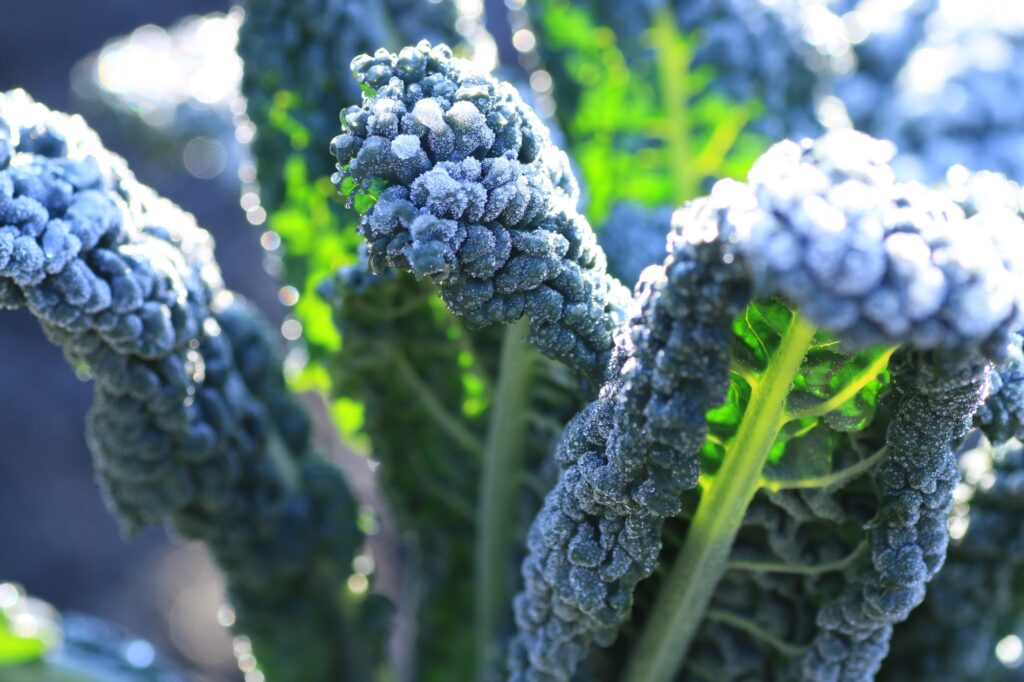
Frost and freezing temperatures can both damage garden plants, but they aren’t exactly the same thing. Understanding the difference can help you decide when to cover your vegetables, bring potted plants indoors, or prepare your garden for a sudden cold snap.
A light layer of frost on the lawn might look harmless, while a night of freezing weather can leave tender plants wilted and blackened by morning. Sometimes frost forms without the air temperature officially dropping below freezing. Other times, temperatures fall well below 32°F without any visible frost appearing.
These differences matter because the conditions that create frost aren’t always the same as those that cause a widespread freeze. The amount of damage also depends on how cold it gets, how long those temperatures last, and which plants are growing in your garden.
Learning what frost and freeze warnings actually mean makes it easier to protect vulnerable plants without worrying unnecessarily about every chilly night.
❄️ What Is Frost?
Frost is a thin layer of ice crystals that forms on exposed surfaces when those surfaces become cold enough for water vapor in the surrounding air to turn directly into ice.
You might notice frost on grass, leaves, rooftops, or car windows early in the morning. It often appears as a delicate white coating, especially after a clear, calm night.
Frost forms when the surface temperature reaches 32°F (0°C) or lower and atmospheric moisture conditions are favorable.
However, the official air temperature doesn’t necessarily have to reach freezing for frost to develop. Weather observations are generally taken above the ground, while leaves and other exposed surfaces can become several degrees colder.
This explains why you might wake up to frost-covered grass even though the overnight forecast predicted a low of 35°F.
Frost is most common during clear nights with light winds. Without clouds to help limit radiational cooling, exposed surfaces lose heat more quickly. Calm conditions also allow colder air to remain near the ground rather than mixing with warmer air above it.
Low-lying areas, sheltered valleys, and open lawns are especially susceptible to these temperature differences.
For gardeners, the important point is that visible frost indicates freezing conditions have developed on exposed surfaces, even if the official air temperature remained slightly above 32°F.
🧊 What Is a Freeze?
A freeze occurs when the air temperature reaches 32°F (0°C) or below.
Unlike frost, which describes ice crystals forming on surfaces, a freeze describes freezing temperature conditions. It can happen with or without visible frost.
When temperatures drop below freezing, water within and around plant tissues can form ice. Ice formation outside cells can draw water out of them, causing dehydration and cellular injury. Under some conditions, ice may also form inside cells, resulting in severe damage.
The longer freezing conditions persist, the greater the potential for injury, especially in plants that aren’t adapted to cold weather.
A brief drop to 31°F may cause relatively little damage to certain plants, while several hours at 28°F can be devastating to frost-sensitive crops.
However, not every freeze is destructive. Cold-hardy vegetables, established perennials, and trees suited to the local climate can tolerate temperatures well below freezing.
Kale, spinach, and some cabbage-family vegetables are examples of crops that may survive conditions that would severely damage tomatoes or peppers.
Our Best Vegetables to Grow in Winter guide explores several crops that can tolerate cold weather.
🌡️ Frost vs. Freeze: The Main Differences
The simplest distinction is that frost refers to ice forming on surfaces, while a freeze refers to air temperatures reaching 32°F or below.
Although the two often occur together, neither automatically guarantees the other.
Here is a quick comparison:
| Frost | Freeze | |
|---|---|---|
| What it means | Ice crystals form on exposed surfaces | Air temperature reaches 32°F or lower |
| Typical conditions | Clear skies, light winds, favorable moisture | Any weather pattern that brings freezing air temperatures |
| Can occur above 32°F air temperature? | Yes | No |
| Is visible ice required? | Yes | No |
| Potential plant damage | Tender leaves and flowers may be injured | Damage may extend through more plant tissues |
| Common garden response | Cover sensitive plants | Protect or move tender plants; prepare for prolonged cold |
The most important practical difference is that frost often presents a localized threat to exposed plant surfaces, while a freeze may affect a larger area and continue for a longer period.
However, a heavy frost can still cause serious injury, and a brief freeze may cause little damage to plants that are sufficiently cold-hardy.
The actual temperature of the plant tissues and the length of exposure are more important than whether you can see ice on the leaves.
🌙 Can You Have Frost Without a Freeze?
Yes. Frost can form even when the officially measured air temperature remains above 32°F.
On a clear, calm night, leaves and grass can lose heat rapidly through radiation. Because these exposed surfaces cool faster than the surrounding air, their temperatures may fall below freezing while the air several feet above them remains warmer.
For example, the forecast might call for an overnight low of 36°F. If conditions are favorable, the temperature of exposed leaves near the ground could still drop to 32°F or below.
When sufficient moisture is available, frost crystals may form on those cold surfaces.
This is why frost advisories are often issued when temperatures are expected to fall into the middle 30s rather than strictly below freezing.
Gardeners should take these advisories seriously if they have tender plants outdoors.
A tomato seedling, basil plant, or newly planted annual flower may be damaged even when the reported overnight temperature never officially reaches 32°F.
🌬️ Can You Have a Freeze Without Frost?
A freeze can occur without any visible frost.
This often happens when the air is very dry or when freezing temperatures arrive with strong winds.
Frost formation requires appropriate moisture conditions. If the air is too dry, there may not be enough water vapor available to create the familiar white coating of ice crystals.
A mass of cold, dry air can therefore cause temperatures to fall well below freezing while leaves and other surfaces remain visibly frost-free.
Wind can also change how cold conditions develop. During a windy freeze, cold air mixes more thoroughly near the ground, and plants may be exposed to sustained freezing temperatures rather than the localized surface cooling typical of a calm frost event.
These conditions can be particularly damaging because gardeners sometimes associate danger only with visible frost.
If the forecast predicts freezing temperatures, protect vulnerable plants whether or not frost is expected to form.
🌨️ What Is the Difference Between a Light Freeze and a Hard Freeze?
Not all freezes have the same potential for damaging plants.
Weather services commonly distinguish between ordinary freezing conditions and more severe freezes using temperature thresholds.
Light Freeze
A light freeze generally refers to temperatures near or just below 32°F, often in the range of approximately 29–32°F (-2–0°C).
Tender annuals, tropical plants, and warm-season vegetables may suffer damage during these conditions.
However, many cool-season vegetables and established perennials can survive a light freeze with little or no injury.
The length of exposure is important. Temperatures that remain slightly below freezing for only a short period may cause less damage than temperatures that persist for several hours.
Hard Freeze
A hard freeze is commonly associated with temperatures around 28°F (-2°C) or lower, particularly when those temperatures persist for several hours. The exact threshold used in weather warnings can vary by National Weather Service office.
Hard freezes can damage or kill many unprotected warm-season plants, including tomatoes, peppers, cucumbers, beans, and tender annual flowers.
Even some cool-season plants may suffer injury during prolonged exposure.
However, a hard freeze doesn’t mean everything in the garden will die. Established hardy perennials, dormant trees, and vegetables adapted to cold weather may survive much lower temperatures.
The important question is whether the plant is adapted to the conditions it experiences.
🥬 Which Is More Dangerous for Garden Plants?
A prolonged or severe freeze generally presents a greater threat to tender plants than a brief, light frost, but either can cause serious damage under the wrong conditions.
Warm-season vegetables are especially vulnerable. Tomatoes, peppers, eggplants, cucumbers, squash, and basil may be damaged by frost and can be killed by freezing temperatures.
Their leaves and growing points contain tissues that aren’t well adapted to ice formation or prolonged exposure to cold.
Cool-season vegetables such as kale, spinach, cabbage, and collards can tolerate much lower temperatures, particularly after gradually adjusting to autumn weather.
Flower gardens contain similar differences. Zinnias, impatiens, and begonias are frost-sensitive, while pansies and certain other cool-season flowers can survive light frosts.
Established perennial flowers may lose their leaves and stems during a freeze without dying. Their roots and crowns often remain protected underground, allowing them to return when warmer weather arrives.
Trees and shrubs are another consideration. Dormant, cold-hardy trees may survive temperatures far below freezing, but newly emerging spring leaves and flower buds can be injured by a relatively mild freeze.
This is why a late spring frost or freeze can sometimes cause more noticeable damage than much colder temperatures during midwinter.
If you grow tomatoes, our How to Plant Tomatoes guide explains why waiting for reliably warm conditions is important.
🌱 Why Spring Frosts and Freezes Can Be Especially Damaging
Spring cold snaps are particularly troublesome because plants may already have resumed active growth.
During winter, many trees, shrubs, and perennials are dormant. Their tissues have undergone changes that help them tolerate cold temperatures.
As spring temperatures rise, plants gradually lose some of that cold tolerance. Buds swell, leaves emerge, and new stems begin growing.
If freezing weather returns unexpectedly, this tender new growth may be much more susceptible to injury than the dormant plant was during winter.
Fruit trees are a familiar example. A dormant apple or peach tree may tolerate extremely cold winter temperatures, but its flower buds and open blossoms can be damaged by a much milder spring freeze.
The severity of damage depends on the stage of flower development, temperature, and duration of exposure.
Vegetable gardeners face similar problems when warm-season seedlings are transplanted outdoors too early.
Even if daytime temperatures feel pleasant, nighttime frost remains possible until the local growing season is sufficiently established.
For this reason, average last-frost dates are useful planning tools, although they should never be treated as guarantees that freezing weather is finished for the year.
🍂 Why the First Fall Freeze Matters
The first fall freeze often marks a major transition in the vegetable garden.
Warm-season crops that have been producing throughout summer may be damaged or killed when temperatures drop below freezing.
In some regions, the first frost arrives several weeks before the first widespread freeze. This can give gardeners an opportunity to extend the growing season by covering vulnerable plants during occasional cold nights.
However, once temperatures begin falling below freezing regularly, protecting warm-season crops becomes more difficult.
At that point, harvesting remaining produce and preparing garden beds for winter may be more practical than continuing to cover plants every night.
Cool-season vegetables may remain productive much longer, especially with row covers, cold frames, or other season-extension methods.
The October Gardening Guide and November Gardening Guide explain how to adjust garden tasks as temperatures fall.
⚠️ Frost Advisory vs. Freeze Watch vs. Freeze Warning
Weather forecasts use several different alerts to help gardeners and growers prepare for damaging cold.
Understanding what these alerts mean makes it easier to decide how urgently your plants need protection.
Frost Advisory
A Frost Advisory indicates that conditions are favorable for frost formation that could damage sensitive vegetation.
The National Weather Service commonly issues these advisories when temperatures are expected to fall into approximately the 33–36°F range, combined with suitable conditions such as clear skies and light winds.
If you have frost-sensitive plants outdoors, this is a good time to bring containers inside or cover vulnerable garden beds.
Freeze Watch
A Freeze Watch means that freezing temperatures are possible within the forecast period, but the timing or extent of the freeze remains uncertain.
It gives gardeners an opportunity to prepare supplies, check plants, and plan protective measures before conditions become more urgent.
A watch doesn’t necessarily mean freezing weather is guaranteed.
Freeze Warning
A Freeze Warning means temperatures are expected to reach freezing levels that could damage sensitive vegetation.
A warning deserves prompt attention because unprotected plants may be injured or killed.
In some areas, especially during the growing season, a freeze warning may be issued when temperatures are forecast to reach 32°F or below for a sufficient period.
Weather offices may also use specific hard-freeze criteria when particularly severe temperatures are expected.
These advisories and warnings are generally issued during locally defined frost and freeze seasons. They may stop after the growing season has ended, even though additional freezes will occur throughout winter.
Always pay attention to the actual forecast temperatures, not just whether an official warning appears.
🛏️ How to Protect Plants From Frost
A light frost is often manageable with simple protective measures.
For small gardens, breathable frost cloth, old bedsheets, or lightweight blankets can help reduce heat loss around vulnerable plants.
Place coverings over plants before temperatures fall, ideally during the late afternoon or early evening. Extend the material down to the ground and secure the edges to help trap warmth rising from the soil.
If plants are tall or delicate, use hoops, cages, or stakes to support the covering.
Avoid placing plastic directly against leaves. Plastic can trap condensation, transfer cold where it touches foliage, and overheat plants quickly once the sun returns.
For a few individual seedlings, overturned buckets or sturdy containers can provide temporary protection overnight.
Remove opaque coverings after temperatures rise safely above freezing so plants receive sunlight and adequate ventilation.
Potted plants are often easiest to protect by moving them into a garage, greenhouse, or another sheltered location.
The goal during a frost is to prevent vulnerable plant tissues from becoming cold enough to suffer freezing injury.
❄️ How to Protect Plants From a Freeze
Protecting plants during a freeze requires greater attention to the expected temperature and how long the cold will last.
The same coverings used for frost protection may help during a brief, light freeze, but their effectiveness has limits.
Frost cloth and row covers work by reducing heat loss and retaining some warmth from the soil. They don’t generate heat on their own.
During a prolonged hard freeze, temperatures beneath a basic covering may eventually fall low enough to damage tender plants.
Move vulnerable containers indoors whenever possible. Tropical plants and sensitive houseplants may need a heated indoor location rather than an unheated garage.
If garden plants cannot be moved, use appropriate frost fabric and secure it carefully. Heavy-duty row covers or properly constructed low tunnels may offer additional protection under suitable conditions.
Make sure the soil has adequate moisture before freezing weather arrives. Moderately moist soil can store and release more heat than very dry soil, although watering alone cannot protect plants from severe freezing temperatures.
Mulch can also help moderate temperature fluctuations around roots and perennial crowns. It is especially useful for hardy plants overwintering in the ground, but it won’t prevent tender foliage from freezing during a hard cold snap.
During prolonged severe freezes, protecting every plant may not be realistic. Prioritize valuable specimens, newly planted shrubs, tender perennials, and crops that can realistically survive with protection.
For a broader seasonal approach, our Winter Gardening Checklist covers additional cold-weather garden care.
🍃 How to Tell if Frost or Freezing Temperatures Damaged Your Plants
Frost and freeze damage often produce similar symptoms, making it difficult to determine the exact cause simply by looking at a plant.
Leaves may become wilted, water-soaked, darkened, or unusually soft after exposure to freezing conditions.
In some cases, the damage appears immediately after the plant thaws. Other symptoms develop over several days as injured tissues deteriorate.
Frost injury may be concentrated on the most exposed leaves and flowers, especially when temperatures were only briefly below freezing.
A more severe freeze can damage stems, growing points, and other tissues, potentially killing the entire plant.
However, the location of damage isn’t a reliable way to distinguish frost from freeze injury in every situation.
The plant’s natural cold tolerance, moisture conditions, and length of exposure also influence what happens.
Hardy perennials may lose their aboveground foliage while their roots remain alive. Tender annuals may suffer irreversible damage after a single freezing night.
If you’re unsure whether a plant will recover, avoid immediately cutting everything back.
Wait until temperatures stabilize and watch for new growth. For woody plants, it may take several weeks or until spring to determine the full extent of the injury.
Remove material that is clearly rotting when necessary, but avoid heavy pruning or unnecessary fertilization while plants are still recovering.
🌡️ How to Know Whether Your Garden Is at Risk
Checking your local forecast is the easiest way to anticipate frost and freezing weather, but your property’s actual conditions may differ from the reported temperature.
Weather stations generally measure air temperature above the ground in standardized locations.
Your garden may be colder or warmer depending on its elevation, surrounding structures, nearby water, vegetation, and exposure to wind.
Low spots can collect cold air, making them more susceptible to frost. Sheltered courtyards and areas near buildings may remain slightly warmer, although the effect varies.
A simple outdoor thermometer can help you understand your garden’s microclimate.
If frost is a recurring problem, consider placing a thermometer near the plants you’re most concerned about, at an appropriate height and away from direct sunlight.
Pay attention to clear, calm nights when surface temperatures may fall below the forecast air temperature.
Also remember that frost and freeze dates are historical averages, not guarantees.
An unusually early autumn frost or late spring freeze can occur even when the calendar suggests the growing season should be safe.
Our Seasonal Gardening Guide offers more guidance for adjusting your gardening routine to changing weather conditions.
❓ Frequently Asked Questions About Frost and Freezing
Is Frost the Same as Freezing?
No. Frost is ice that forms on exposed surfaces, while freezing refers to temperatures reaching 32°F or lower. Frost can occur when the officially measured air temperature remains slightly above freezing, and a freeze can occur without visible frost.
Which Is Worse for Plants, Frost or a Freeze?
A prolonged or severe freeze is generally more dangerous to tender plants than a brief light frost. However, either can cause damage, and the outcome depends on the plant’s cold tolerance and the actual temperature of its tissues.
Can Frost Happen at 35 Degrees?
Yes. Frost can form when the forecast temperature is 35°F because exposed surfaces may cool below 32°F during clear, calm weather. Low-lying areas can be especially vulnerable.
Does Frost Always Mean Plants Will Die?
No. Many plants tolerate light frost without serious damage. Cold-hardy vegetables, dormant perennials, and established landscape plants may survive easily, while frost-sensitive annuals and vegetables can be injured or killed.
Does a Freeze Always Cause Frost?
No. Freezing temperatures can occur without visible frost, particularly when the air is dry or windy. Plants may still suffer freezing injury even when their leaves aren’t coated in ice crystals.
What Is a Killing Frost?
A killing frost is an informal gardening term for a cold event severe enough to kill susceptible plants or bring their growing season to an end. It doesn’t refer to one universal temperature, because different species have different cold tolerances.
What Temperature Is Considered a Hard Freeze?
A hard freeze is commonly associated with temperatures around 28°F or lower, especially when the cold persists for several hours. National Weather Service offices may use somewhat different thresholds, so local warnings should take priority.
Should I Cover Plants During a Frost Advisory?
If you have frost-sensitive plants outdoors, covering them is generally a good precaution. A Frost Advisory indicates that conditions are favorable for potentially damaging frost, even if the official air temperature is expected to remain slightly above freezing.
Can Plants Recover After a Freeze?
Some can. Hardy plants may recover after losing their leaves or stems, while tender annuals may die if freezing damages their growing points and other essential tissues. Wait until the weather stabilizes before deciding whether a damaged plant is beyond recovery.
🌷 Understanding Frost and Freezes Makes Gardening Easier
Frost and freezing weather may occur together, but they describe two different things. Frost refers to ice forming on exposed surfaces, while a freeze occurs when air temperatures reach 32°F or below.
Both can damage sensitive plants, and neither should be judged solely by whether visible ice appears on the leaves.
For gardeners, the most important factors are the expected temperature, the duration of the cold, and the plants growing outdoors.
A brief frost may be manageable with a simple fabric covering, while a prolonged hard freeze may require moving vulnerable plants indoors or accepting that some warm-season crops have reached the end of their growing season.
By learning the difference between frost and freezing conditions, watching local forecasts, and choosing plants suited to your climate, you can protect your garden more effectively throughout spring, autumn, and winter.
🔗 Related Articles
- October Gardening: Your Complete Guide to Fall Success
- November Gardening: Winter Preparation and Late-Season Success
- Winter Gardening Checklist: Essential Tasks to Prepare for Spring
- Best Vegetables to Grow in Winter: Cold-Hardy Crops for the Garden
- How to Plant Tomatoes: When, Where & How to Grow Healthy Tomato Plants
- Seasonal Gardening
- Indoor Plants
- Gardening Basics
📚 Sources & Further Reading
- National Weather Service — Understanding Cold Weather Alerts
- National Weather Service — Frost and Freeze Information
- National Weather Service — Frost and Freeze Dates and Conditions
- National Weather Service — Frost and Freeze Information for the Tallahassee Area
- University of Minnesota Extension — A Minnesota Guide to Garden Timing
- University of Minnesota Extension — Extending the Growing Season
- University of Georgia Extension — Protect Plants From Winter Freezes